
Translated material
Psychologists in the "Red Zone"
They save doctors from emotional burnout, and help patients find mental balance
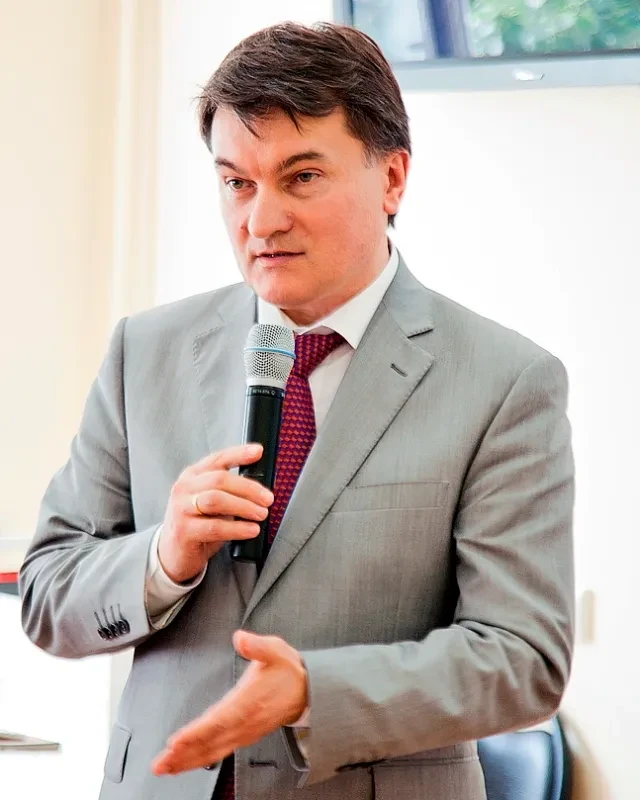
Doctors today have every reason for the loss of mental balance: overwhelming loads, heavy clumsy clothing, excluding the possibility of a deadly risk of making at least a sip of water. Many of them had to part with their families for a long time so as not to expose their loved ones to the risk of infection. Understanding this, psychologists came to the help of doctors to hospitals. How do they work? This was stated by the chief freelance medical psychologist of the Ministry of Health of Russia, Dean of the Faculty of Psychology of Moscow State University, President of the Russian Psychological Society, President of the Russian Academy of Education, Academician of RAO, Professor Yuri Zinchenko.
- At first, we were involved in, but mainly remotely, in interaction with doctors and medical staff. Pandemia is a great challenge not only of psychological practice, but also in psychological science, therefore, with the support of the Ministry of Science and Higher Education of the Russian Federation, the Russian Union of rector of the consortium of leading universities in the country (Moscow State University, St. Petersburg State University, RANEPA, Higher School, TSU, KFU, etc.) launched the All -Russian research project called “Studies at home”.
This is a large -scale work on the study of changes in the emotional and cognitive fields among students, graduate students, teachers and other social and professional groups during the period of self -isolation. All leading universities in the country participate in the project. Initially, we were faced with the fact that we did not have many methods on the topic, so we had to develop something, adapt something so that we could catch the characteristics of the state relative to the current situation.
It was possible to develop methods that we now use not only in Russia, but also in other countries. Our foreign colleagues from the European Federation of Psychological Associations and the International Union of Psychological Science under UNESCO simultaneously conduct a study using our methods in various social groups in their countries. At the exit we will receive global tools and norms. For us, this is the situation of the included experiment. We did not plan it, as we usually plan and organize our scientific experiments, and this experiment itself began!
And we turned to colleagues from the RANEPS, the Moscow Institute of Psychoanalysis and other leading regional universities - let's record what and how where it happens, to decide with what tools we can make this situation the subject and object of science. We are already passing the second level. We plan that by tracking the dynamics of changes in all areas of life of a person on self -isolation, we will be able to develop personified recommendations to minimize the negative consequences of the pandemic.
Even members of the Russian psychological society (RPO) thought how to help all people in new difficult circumstances. And we decided to create recommendations with maximum accounting of all risks.
- There are recommendations on the RPO website, let's give a link to our readers.
- Yes, we turned out about 10 different directions, and we quickly have orphaned part of these recommendations. Separately, for those who are self -isolation with children: how to organize a life schedule for children of different ages in order to avoid overwork, how and how to occupy them in conditions of restrictions and taking into account reduced physical activity. And about how to build relationships with children and adolescents in order to maintain trust and their authority, but at the same time ensure personal space for each family member.
We paid special attention to recommendations aimed at increasing motivation and involvement in the remote process of teaching children and separately students. We also presented recommendations for those who are experiencing self -isolation with older people, where we talked about the features of the emotional and cognitive spheres of the older generation and how to build communication with them so as to avoid conflicts in conditions of increased anxiety and uncertainty. Another category is those who are experiencing self -isolation alone. There are also psychological characteristics here. It is extremely important that such people find support sources to reduce anxiety and stress.
A large cycle of recommendations was designed specifically for doctors, medical staff and heads of medical institutions. We understand that these social groups are in special psychological conditions, where the load and fear can negatively affect both their personal psychological well -being and the atmosphere in the team. We tried to take into account all the specifics of the situation and proposed specific practical technologies and techniques that will allow to stabilize the psychological state of those who save lives and those who are sick and fighting for it.
-How did psychologists began to work directly in hospitals, where they treated Covid-19?
- Everything was organized in parallel, while the hospitals were re -profiled, in addition to the recommendations, we created several new lines of trust and psychological assistance. The newly known readers of the “New”, my colleagues from Moscow State University, academics of RAO, Alexander Asmolov and Galina Soldatova, as well as specialists of the RANEPA and the Moscow Institute of Psychoanalysis, took part in this. There are not so many qualified psychologists as it turned out to be in the pandemic situation. But there is another problem, as soon as the additional hot lines of psychological assistance were opened, psychologists-meshiki appeared immediately, who offer pseudo-help for money on the Internet. Taking this opportunity, I want to say - seek psychological help only on official hot lines, the phones of which you can find on official sites. This assistance is provided by qualified psychologists-volunteers for free!
That is, at first we worked in remote support for Russians - those who were in trouble, and especially for those who lost loved ones. And then, when the doctors organized in teams in re -profiled hospitals, we came to the conclusion that now it is necessary to take care of them. They had to do everything as soon as possible, arrange everything for infectious diseases, and, of course, it is not easy to work in almost re -equipped clinics. There are many highly qualified resuscitators, infectious disease specialists, epidemiologists, but many other specialists who had never been engaged in infectious patients before.
And the new groups are quite promptly cope in a difficult situation. Of course, in this work there is a lot of tragic, there are no magic pills, and a disease of a small percentage of patients takes on an irreversible character. It is also very difficult for doctors to experience. Everyone has an emotional situation, including the maintenance staff, but nevertheless they should help people who continue to hurt and be in the clinic. And we see that doctors and medical staff do everything they can.
- Italian doctors suffered most of all from sorting when they had to decide who to live, who was not - this is a hellish situation. And of course, they did not come out of this situation without a post -traumatic syndrome.
- Fortunately, we still do not have sorting, at least as far as I know. This may begin if all the places in the intensive care unit are filled and all the devices are busy, then the new patients will not have enough help. While there are enough beds and there are enough equipment. But our doctors also have a colossal load. They perfectly understand all responsibility for what they are doing, and fight for everyone's life. Many doctors from those who had the opportunity sent their families out of town so that it was possible to return home after a shift, at the same time by the probability of infection of their loved ones. And they have been at a distance from their families for quite some time, and this is also a stressful situation. Plus an incredibly large load at work and actually daily stress,
In such circumstances, issues of emotional burnout, professional deformation may well arise.
This is a completely natural process in the position in which our doctors were. Our goal was to help in a stressful situation to stabilize their internal state, to return emotional stability, self -regulation to doctors and medical staff - all these points are important for them now.
- How exactly does your work happen, are you directly inside the hospital?
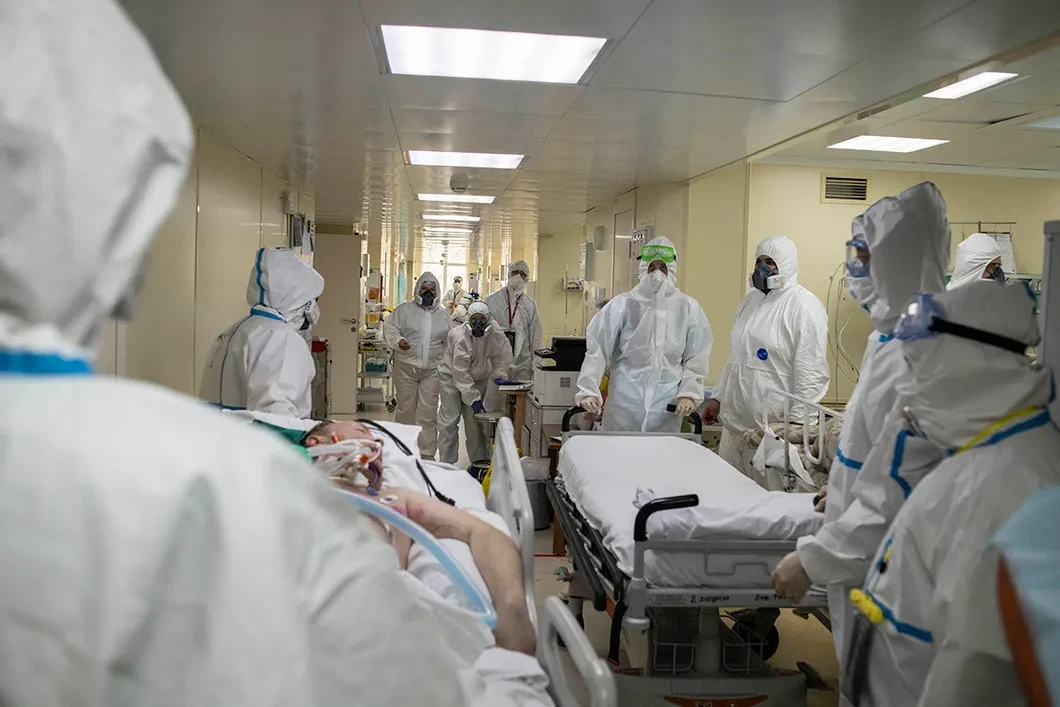
- I personally provide assistance to doctors and patients in the center of cerebrovascular pathology and stroke, which is re -profiled by an infectious clinic. Now we have psychological assistance in all clinics that are engaged in sick coronavirus. Separate work with staff - nurses, nurses. They are no less, or maybe even more interact with severe patients who need to put a dropper in time and give tablets and have time to cope with many other different procedures. Despite the fact that working conditions are not the simplest, they are also in these costumes of astronauts, where the temperature is difficult to regulate.
- Where do you accept doctors for psychological consultations, do you have your own office in the hospital?
- Yes, there is an office, and now psychological unloading rooms are being created. We will organize the space of a quiet zone, where doctors and medical staff will be able to come and just take a nap. Or stay alone with you, relax, taking a moment. This is a physical vacation, it is necessary for such loads. And on the other hand, uniting games are also needed, such as table tennis, billiards, something that would allow people to diversify at least a little day, would switch attention from heavy long-term stress work.
And therefore, we will separately organize a loud area where they can play games.
The clinic also has its full -time psychologists, a person of 10 who take part in our work, and plus our teachers from Moscow State University. We have connected 6 people from different departments - clinical, psychology of labor and engineering psychology, and organizational psychology. This is a very important support for the clinic to the leadership, which in a difficult situation, to correctly build all the processes of interaction between people, many of whom were first in these walls. And they had no time to get acquainted, they immediately joined the work. We have now practically made a single system of psychological support.
- Only for doctors or for patients too? Have you had to be in the red zone?
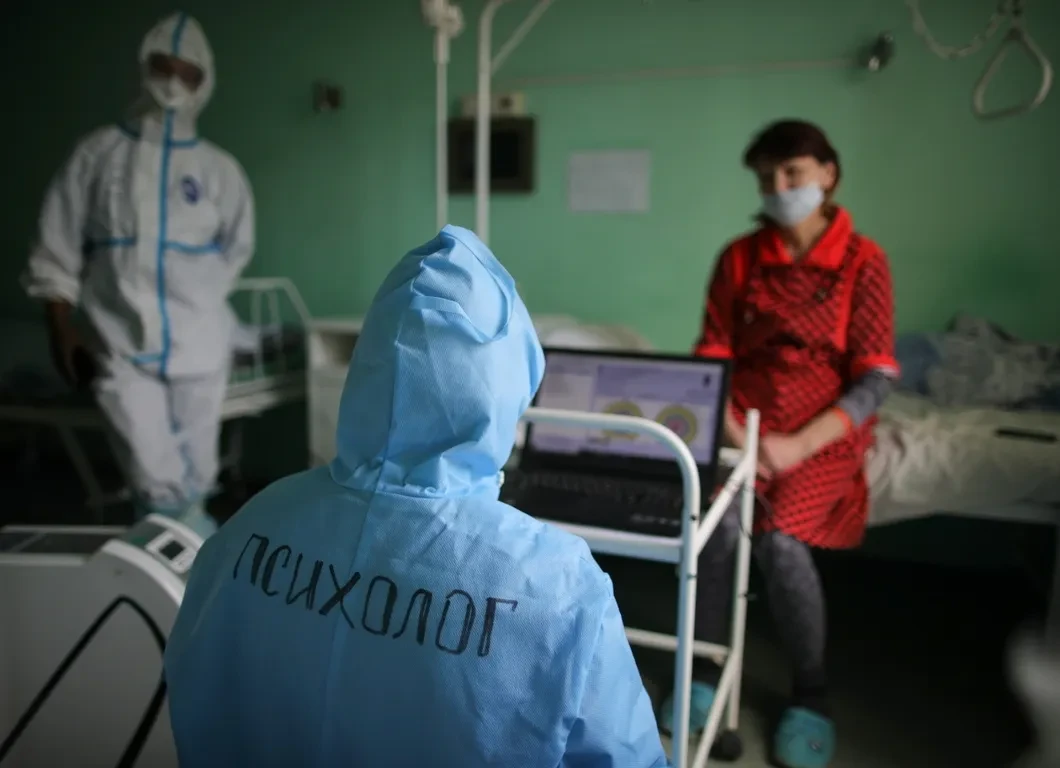
- Yes, I, together with the director of the Center for Cerebrovascular pathology and stroke, went into the red zone, where patients with coronavirus are lying. It was important for understanding in which they and doctors are. We also work with patients, for this there are distance forms - video cameras in the computer. And you can in reality conduct some conversations with patients, in the appropriate equipment-to work directly with patients, personally. I talked like this with three patients, but this, of course, is unusual.
The psychologist is accustomed to face to face, eyes in the eyes. And here you go to the spacesuit and communicate as an alien.
But the patients of the hospital did not have any rejection, obviously, due to the fact that they were already used to seeing doctors and medical staff in such costumes, and they adequately made contact.
- How did you feel when you talked with patients with coronavirus? There was no fear?
- I have been immersed in the topic for a long time, first communicated with foreign colleagues, when Russia has not yet been such a large spread of the virus. I understand that, probably, the most important thing is to follow the recommendations that doctors give: masks, gloves, disinfection, hand washing, social distance.
Fear occurs only when you did not fulfill one of the necessary instructions, for example, grabbed the door handle and did not rub his hand, forgot or was lazy.
I have a rationalized state, this does not mean that I cannot get sick. But anxiety, turning into fear, has not somehow reflected. Moreover, in such a suit, you put on all this, went in, and there are two more employees who check how correctly you put on, how hermetically you tie everything, tie it. There all this is monitored, they have a clear algorithm, so much so that you cannot make a mistake.
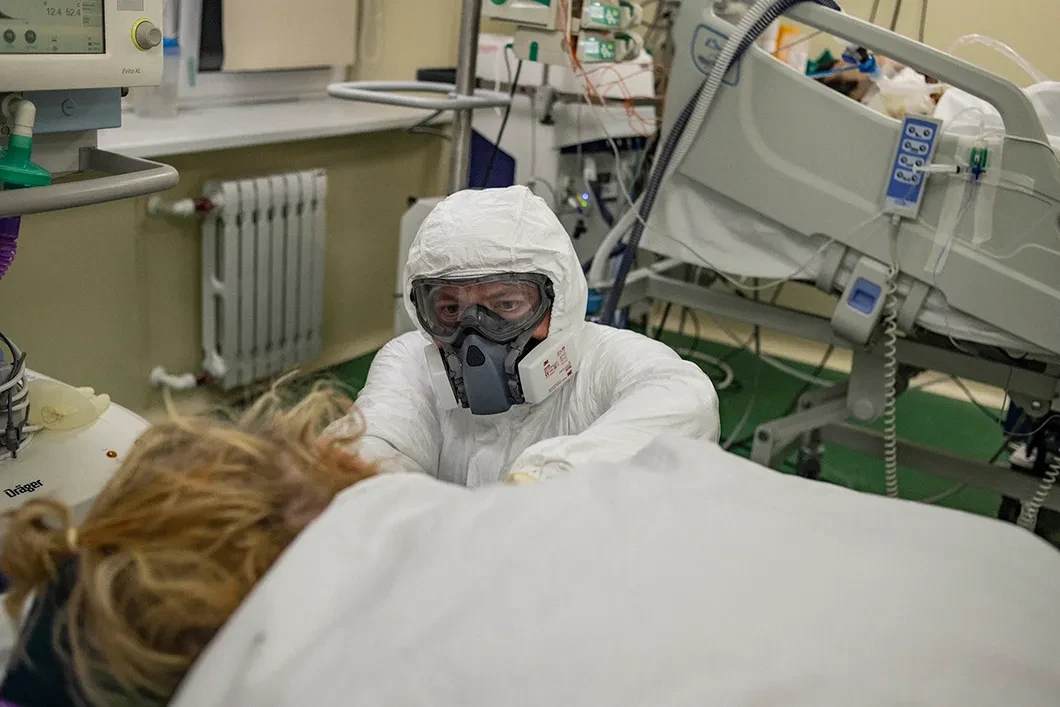
Everything is painted to automatism, and these two people stand nearby, if you have forgotten something somewhere, they help, completely dress like an astronaut. Then you go through the appropriate gateways and get there and there, accompanied by employees. It is impossible to go in order to carry something with you there, although there is already enough Covid inside and so. The tightness is checked so that there are no additional infections. And at the exit it is also impossible to go in such a way that something with you to take out something with you.
- And inside this costume you felt?
- Well, I can’t say that this is a super -lowering comfortable clothing, but nevertheless these are the clothes in which you can work. Of course, it is difficult to heat exchange. Imagine if you are in a fairly warm room in warm clothes. Additional heat will interfere, which this clothing does not allow you to remove from the body. For about an hour I stayed in the red zone, and it is hotter than usual. In the center of the stroke, where I was, the change of doctors and health workers lasts 8 hours, and this is very difficult. Every day for 8 hours, they simply accomplish a feat.
- What did the patients contact you, what scares them the most?
-Not to say that something scares them, they are mainly in a situation of reduced mood, so there is no agitation. Nothing much depressive, because most of the patients who fall into the clinic often lie with high temperature and weakness. There is more fatigue and some aggressive or sharply emotional state. Although there are different cases, and depending on how the disease proceeds, there are single bright reactions to what is happening. Doctors there are ready for everything.
- And what do the doctors treat?
- Doctors are just the smallest, probably because their degree of self -regulation, self -organization is quite high. More nurses and nurses turn more, who help to nurse the patients. They have a natural alarm for being infected to bring home. But this anxiety is repaid by constructed security measures, which they themselves experience.
The clinic for the medical staff sets all the same restrictions as for us in self -isolation - this is a social distance and everything else. There, if they enter the zone where you can have a bite, they see how clearly the tables are placed at the required distance from each other. The approach to refrigerators or to preheated food is organized so that they move people away as much as possible from each other. That is, masks, gloves and a social distance, despite the fact that they are no longer in the red, but in the green zone, are required for everyone. The surfaces are constantly processed, in this sense, everything is quite rigid and tougher than you and me.
This, by the way, is my most vivid impression: the fact that I did not feel any increase in anxiety or fear, because the degree of protection from the epidemiological situation is very high. All to one clearly follow all the recommendations. At first I also thought, well, this is the clinic, a large concentration of those who carry the virus in themselves. And when he came, there was no feeling that you were in the hearth, which means that you would become infected, tomorrow you will not come here yourself, but you will be brought. There was no anxiety, because he saw with his own eyes and felt all the measures of protection that are being taken.
-Did anyone have helped someone in the hospital as a psychologist now?
- Of course, but I will not tell stories, because if I even change a lot in them, people will recognize themselves, and my task is not to add stress, but to reduce it. But I’ll tell you with pleasure that I had a myth that the doctors work “under the muzzle of a machine gun”, because if they refuse, they will fire.
In the clinic, the leadership came like this: everyone who is ready to continue to work with patients Covid-19 continues to work.
Those who, because of age, or any concomitant diseases, cannot work virtually. And it cannot be otherwise-how long can you work under fear of fulfilling your professional duties, realizing that your choice between deadly risk or loss of work?
The doctor comes to work, there are patients who need his help - this is a powerful motivation. He is hard, but there is a sense of duty. So I came to the red zone when the doctors have been working there for more than seven hours. I thought that there would be tired, exhausted people - no, they are very cheerful. In relation to patients, they know how to create an atmosphere of professional help, attention to them.
This is also a vivid impression that, despite the seventh hour of work, the doctors have such a lively reaction to patients and they are so involved in the work that they cannot do without high words - this is self -control, self -sacrifice - this is a low bow.
Ask a question!
🔔 How do doctors cope with stress and what is most annoyed in the news about coronavirus?
Завтра, 13 мая, в 19:00 в прямом эфире обозреватель «Новой» Наталья Чернова поговорит с руководителем Центра ЭКМО 52-ой больницы Михаилом Кецкало .
ЭКМО — экстракорпоральная мембранная оксигенация. Если легкие не работают даже на ИВЛ, остается вывести кровь наружу — и насытить ее кислородом принудительно, без участия легких и сердца. Это очень сложный, очень дорогой метод, но он позволяет спасти 50% тех, кто не может дышать даже на ИВЛ.
Михаил Кецкало расскажет о последних данных о COVID-19, о том, почему не носит защитные очки, и о проверке на прочность для всех медработников.
Присоединяйтесь и задавайте вопросы в комментариях во время эфира.