
Translated material
Features of crisis shopping
Russians began to spend otherwise even before the pandemic - expert

Romir and Boston Consulting Group found out that the Russians included the regime of rigid savings, reducing the expenses of 90% of goods and services, and in the coming months they intend to move in the same direction. The market may not only return to the previous indicators not only in 2020, but never in general. “The matter is not only in financial problems in the country: purchasing preferences have changed dramatically over the past two months - at the price and value of the product, assortment, method of purchase,” emphasizes the co -founder of the FixPrice shopping network Sergey Lomakin. “Perhaps the trends will remain after everyone forgets about Koronavirus.”
Expert card
Sergey Lomakin is a Russian entrepreneur, co -founder of the first food discounter in Russia “Kopeyka”. From 1998 to 2007, the businessman held the position of General Director of the Store chain. After, having sold all the actions of the Kopeyka network belonging to him, in the investment company he created in conjunction with foreign investors, he headed the direction for the organization of startups in Russia in the retail and investing in existing projects.One of these projects invested by the entrepreneur is the Fix Price trading network. To date, Fix Price includes more than 3,000 stores in Russia, Georgia, Belarus, Kazakhstan and Latvia.
From denial to depression
Food on foods plan to reduce about 15% of citizens, on clothes and shoes - from 19 to 37%, and 51% minimize the costs of entertainment. Analysts are waiting for the restoration of demand not earlier than 2021, and the pace of return to pre -crisis levels directly depend on the duration of the self -isolation regime operating in the country.
In four weeks, the Russians have gone from excitement demand to failure of expenses. The beginning of the crisis in Russia has traditionally symbolized the short -term shortage of buckwheat. The population in a panic bought all the current reserves of retailers, and temporarily empty regiments launched the next wave of panic. However, the current crisis has its own characteristics.
“We did not see the queues for household appliances, as it was in 2014, when people were in a hurry to purchase three TVs for all savings, and after a few months we tried to sell them.
And this is good - the Russians learned crisis shopping, ”said Sergey Lomakin.
According to him, the psychological stages of the adoption of the situation are well traced behind the waves of purchasing activity. The first surge in such activity arose on March 9-15, when an increased readiness regime in Moscow was already introduced. Due to the fear of the introduction of quarantine, the Russians bought up long-term storage products-cereals, canned food, personal hygiene and animal feed. The sales volume grew both offline and online. According to the Nielsen study, since the beginning of 2020, consumers spent more money only during the New Year week.
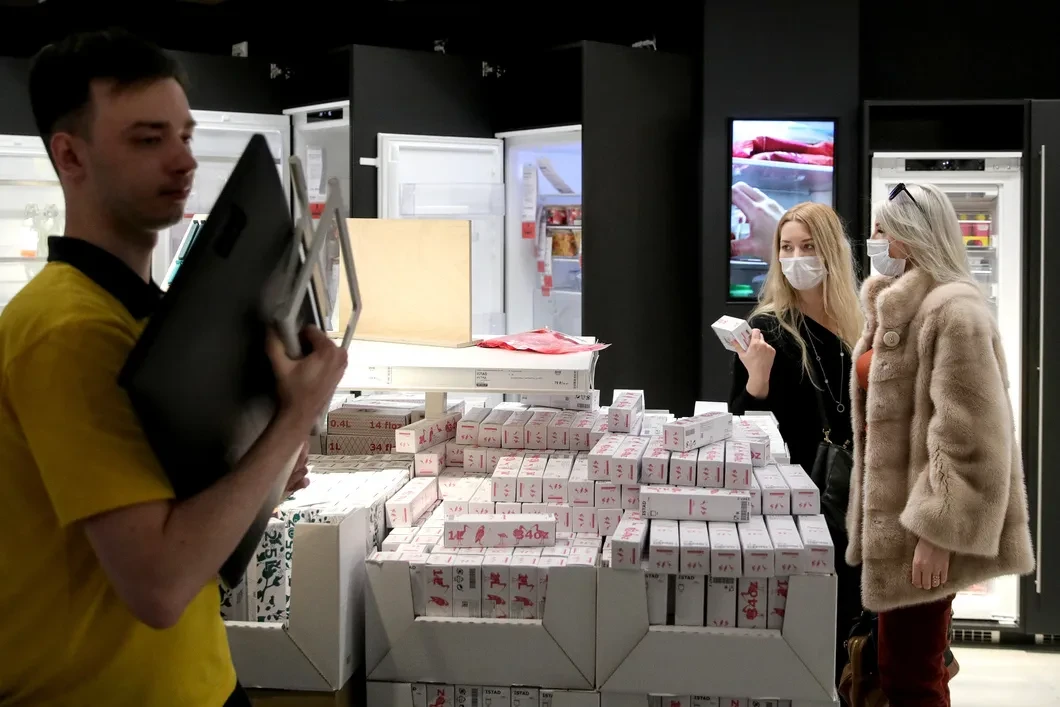
“At the start, no one believed that quarantine was seriously and first days perceived as unexpected vacation - purchases of books, goods for needlework and drawing grew, there were unexpected bursts, such as an increase in the sale of condoms and adult goods. Also in self-isolation, Russians needed screwdrivers, manicure apparatus, seeds ... An increase was on two-three-digit numbers. But hemorous optimism replaces uncertainty and anxiety, ”says Sergey Lomakin.
As Kristina Narykova, head of the consumer research department of GFK RUS, notes, the perception of the situation with coronavirus changes every week.
The consumer went through all the stages of taking the problem, starting with denial and bargaining, and is now in the period of depression.
If at the first week of self -isolation there was an increase in optimistic forecasts for the development of the situation with coronavirus and measures to combat the epidemic found great support, then at the second week of self -isolation, when it became clear that at home to sit for a long time, a decrease in support of rigid measures of self -insulation was recorded and evaluations of their effectiveness went down. In the third week, the opinion on the exaggeration of the danger grew, and this coincided with a decrease in trust in various sources of information, including WHO and the government.
High -growth growth in the fall of sales
In April, a paradoxical situation was recorded in retail - the average check is growing, and sales volumes fall. According to Infoline, in April, buyers left up to a store a half times more money during each trip to the store than in February. But they began to go to the store less often: people seek to reduce the number of exits from the house, so the total volumes of revenue are falling.
For the first half of April, the universals at the house lost about 20% of the revenue, and in the segment of hypermarkets losses reach 50%.
Hypermarkets, by the way, became an unexpected victim of a pandemic. At the start of the self-isolation regime, some of them were closed due to an incorrect interpretation of what exactly falls under the restrictions. In addition, a psychologically large store causes more fears, which is not always justified: nevertheless, it is much easier to observe the social distance on hyperflows. Certain difficulties are caused by residents of the metropolitan region, which also deprives the stores of a large flow of customers.
However, according to analysts, the situation will strike at non -laching small shops and local retailers, which have several stores in managing several stores. If the largest federal players will be able to talk with suppliers and manufacturers from the position of strong, when they want to raise vacation prices due to inflation and growth in the exchange rate, small networks and loners can only accept this for granted. The consumer will definitely notice a change in price list.
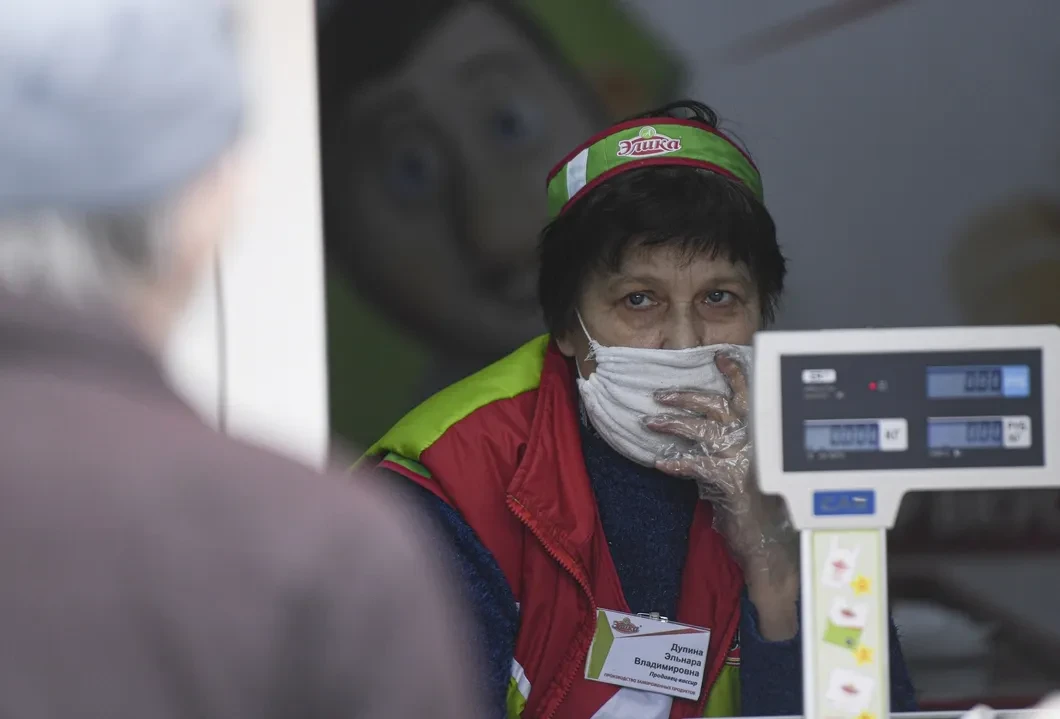
Coronavirus also influenced the way of making purchases. According to the director of analytics and consulting Nielsen Russia Marina Volkova, buying for the future and the increase in demand for personal hygiene products (they show three-digit growth rates) are not the only trends that the epidemic has launched: the number of online purchases is growing, and this is a stress test for retailers. “At the exit of quarantine, life will certainly change in comparison with what was before him. People will keep the habits that were acquired in two to three months of the epidemic. Like, for example, love for online purchases. Once having tried this channel (the experience of other countries also speaks of this), consumers will remain in it, ”says Marina Volkova.
The usual life in a new way is to accelerate the growth of online sales, including by connecting the older generation, it is a review of the assortment of the first necessity in favor of products with a long shelf life and hygienic goods.
The price comes first
Obviously, the price factor is becoming more and more significant for Russians. “Most began to consciously abandon expensive purchases. But sometimes people still allow “pampering themselves” in grocery supermarkets. Although the delicacies became simpler, due to the fact that money, shoes and entertainment are not spent on clothes, shoes and entertainment, this remains accessible to shopping joy, ”said Sergey Lomakin.
Retailers note that purchases of vegetables, fruits, baking, and semi -finished products and ready -made dishes in the baskets of buyers were reduced by cereals, flour, fresh meat. The Russians are learning to cook at home again.
Long home self -isolation for many has become real stress, this expectedly led to an increase in demand for alcohol. According to the director of the Center for Research of the Federal and Regional Alcohol Markets Vadim Drobiz, the current crisis is similar to a long weekend. According to the results of March, the consumption of alcoholic beverages increased by 20%.
This feature, according to Drobiz, cannot be called national: during the epidemic in Europe, sales of alcohol increased by 30%, and in the USA - by 50%.
However, this cost of expenses falls in the future for reduction. According to the Romir study, 28% of Russians are going to reduce expenses for alcohol in the next six months.
Analysts await the restoration of demand for all goods no earlier than the second half of 2021. However, it will not be possible to just wait out the difficult period for retailers. “Consumers become more picky both to themselves and to brands: the need for each purchase should be proved, so the retailers need to learn to hear their client, speak the same language with him,” emphasizes Sergey Lomakin.