
Translated material
Black, you will die now!
Why voting through mail and "public services" will destroy the elections in Russia
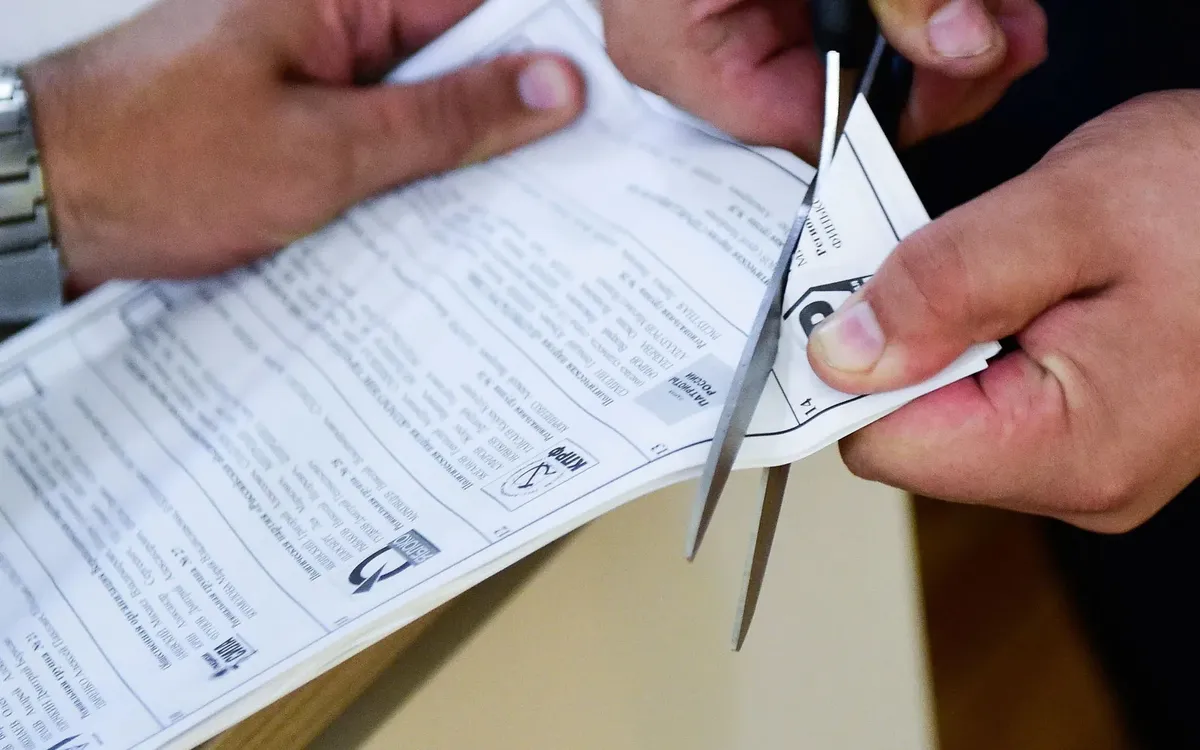
Well, it happened! The bill on the possibility of Internet voting (and even voting by mail) was adopted by the State Duma. Which actually means: the project “Elections” in Russia can be closed.
Why is it so categorical, you ask? After all, there is an electronic vote, for example, in Estonia, in Switzerland? In response - several “because” at once.
“Because” number one : where the Internet voting exists now, it is combined with the usual vote. Initially, it was generally done in order to attract young people to the polls-they say, with their feet to the site, these lazy men-milenials would never go.
Voices on the Internet traditionally make up a small percentage of ordinary votes cast using paper ballots. Therefore, even if any hackers or corrupt civil servants used it for falsifications, this would not have a very significant impact on the results.
Now we are talking clearly about switching to the vote predominantly remote - due to the fact that the pandemic supposedly will not make it possible to vote with a proven grandfather’s method, in the booth and with a pen. And then everything will be decided at the electronic level.
Hence the second problem : unfortunately, Internet voting cannot be trusted. For example, Switzerland has been conducting experiments with electronics for 20 years. Initially, they let citizens abroad vote. And it seemed to work well. First of all, again because the percentage of the voters was insignificant, and in general, everyone did not give a damn.
But when it was a question of making an Internet voting mass, problems were discovered. Owing unnecessary details: at the beginning of 2019, Switzerland’s poster announced a competition among official “white” hackers - who will find vulnerability in our voting system, we give a monetary prize to this (they have such a state superstit: it will manage the movement of the buses, and she was going to engage in elections).
Vulnerabilities were immediately found!
Sarah Jamie Lewis, a former employee of the Great British government center (this intelligence service), together with two other scientists, conducted a study that found that there is a critical vulnerability in the system code of the electronic electoral system that allows various manipulations with the results of the will.
The discovered vulnerability was analyzed by the specialists of the Switzerland’s mail itself and objected: they say, only mail employees will be able to use it. Scientists answered this: which was required to prove.
In fact, a group of people appears - high -ranking officials of Switzerland - which can uncontrollably affect the voting results. Supply everything that is needed, or stole the data of voters.
And this, my friends, Switzerland! Even the posters on a blue eye pretend that they do not understand what opportunities they open before. If the situation is transmitted from wild alpine meadows to our native spaces ...
By the way, Sarah Lewis also noted that her team analyzed only a small fragment of the software code - and immediately found vulnerability. How many of them are there - God news.
Third . Based on the foregoing, all experts unanimously say: if you are introducing an Internet voting, then the software should be open code. This is at least some replacement for observers, the position of which in this case, in principle, is eliminated. Because - how are you going to observe the streams of electrons?
So, the program should be in the public domain so that independent specialists have the opportunity to explore it along and across. And if they find the “back door” in it, chop it out to the whole world. In order for either the backdor to be covered, or the whole idea of the Internet voting is finally buried as not justified.
You still imagine that Russian officials make a piece of the code of their public services dedicated to voting open? This is a state secret.
Fourth : By the way, about public services. In the same Estonia, the Internet voting is considered more or less reliable, because the electronic ID system is well and for a very long time (which replace the passport, rights, travel and everything else). The transfer of the entire state to electronic rails was a primary step, and then the elections, but not vice versa. And it is clear that the local system is an order of magnitude more reliable than our “public services”, which only Vladimir Putin just criticized for not being able to cope with the load.
Of course, by September, holes are subject to holes - but it is unlikely that all this works without failures. The first pancake will definitely come out lumpy.
Fifth : voting through public services, as by mail, cannot be anonymous. Rather, we can pretend that it is anonymous, but at the same time calmly collect data about who voted. Hence - the possibility of both pressure on voters, especially state employees, as well as buying votes.
For example: we agreed with the person that he votes “for ours” and we are a hundred rubles for him for this. We checked through their people at public services: yes, the little man voted correctly. You don’t have to sign a hundred rubles, you don’t have to sign (well, or you won’t get it - as a last resort, you can throw a jindide)!
Sixth : it will seem to someone a trifle, but nevertheless-during Internet voting, you cannot ruin the ballot. The system simply will not accept your voice if you try to put more galls than allowed. And "For Navalny!" You can’t write through all the paper.
Thus, the protest voting, which gained strength in recent years, becomes generally impossible.
Some experts express the opinion that all these problems of Internet voting can be overcome if you use blockchain technology. Like, then all the data will be reliably protected from hacking, and besides, it will be impossible to fake it.
It is possible that this is true. The problem is that on planet Earth now, once or twice, people who actually understand what blockchain is, how it works and what it is capable of. That is, they will not only be able to retell an article from Wikipedia, but really understand what can be done in this system and what is impossible. And what are her actually advantages and vulnerability.
Be that as it may, to make a reliable system of Internet voting on the base of the blockchain is clearly a non-trivial task, and it certainly will not be solved for a single voting day in September 2020.