
Translated material
Maxim Rousseau: Yelleztada ship
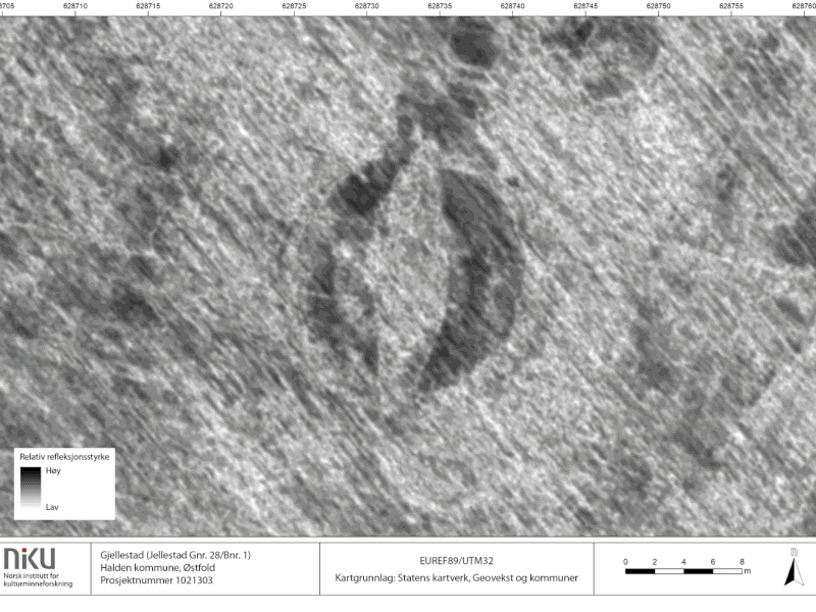
Maxim Russo 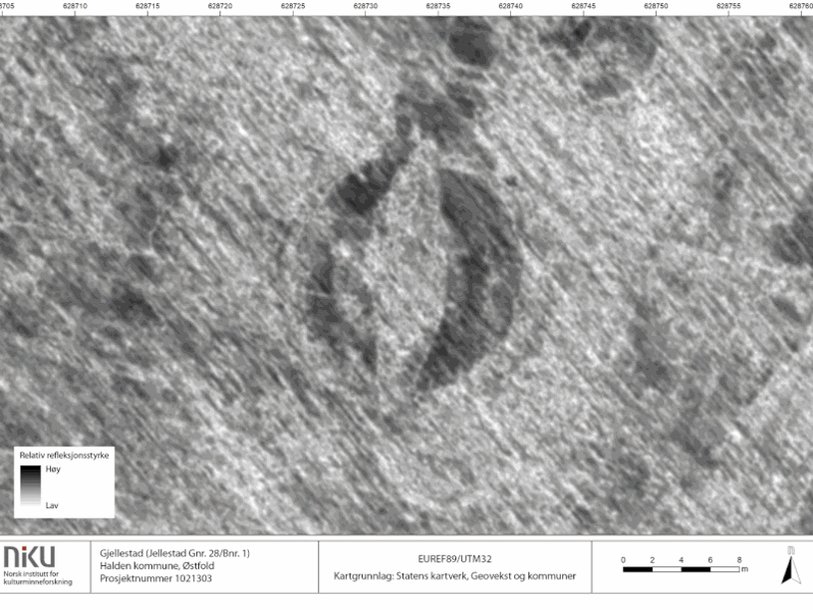 The ship was discovered using the Niku/LBI Archpro georadar
 The ship was discovered using the Niku/LBI Archpro georadar
Norwegian archaeologists plan to excavate the Viking funeral ship in Yelleztad. The last time a similar find in Norway happened in 1904. Now, archaeologists will have the opportunity to carry out complete excavations of ship burial that meet modern standards. The government intends to allocate 15.6 million Norwegian crowns (1.5 million US dollars) for excavations and study of finds. In the near future, the approval of the project is expected by the country's parliament. Scientists are ready to start work in June.
The custom of a ship burial existed among the Scandinavians and some other Germanic peoples in the early Iron Age (from approximately 550 to 1050). The Vikings burials, in which the funeral boats were used, is not so much known in Europe. Most of them were found in Scandinavia, three in Norway, four in Sweden and one on the Danish island of Fun. The most famous finds - the Tuning ship (found in 1867), the Gokstad ship (1880) and the Osesberg ship (1904) - are exhibited at the Vikings Museum in Oslo. They belong to the 9th - 10th centuries. Five Viking burial ships were found in the UK, the last time this happened in 2011 (in addition, Saxon ship burials were known in the UK). In 2008 and 2010, near the village of Salma on the Estonian island of Saaremaa, two burial boats of the Vikings were found with the remains of forty -two soldiers who fell in battle.
The ship in Yellestad, in the territory of the Halden municipality in the south of Norway, was discovered in the fall of 2018 by the archaeologists of the Norwegian Institute for the Study of Cultural Heritage ( Niku ) led by Knut Paasche using a georadar. This method allows you to fix the properties of the soil using electromagnetic waves and receive images of structures hidden in the depths of the Earth.
The remnants of the ancient mound, almost imperceptible today, is located in the middle of the field, and the funeral ship is located only about a few tens of centimeters from the surface. Geophysical reconnaissance data suggest that the initial length of the ship is 23–24 meters, the now preserved ship hull has a length of about 20 meters, the ships of the ship have been lost, probably during agricultural work. Scientists noted that the dimensions and construction of the Yellestad ship are similar to the Oserberg ship (its length is 21.5 meters, width - 5.1 meters).
Although the Kurgan today is about one kilometer from the sea, in the Viking era, the sea level was 4.5 meters higher, and the distance from the mound to the sea was only 650 meters, so that the ship dragged the ship to the future burial is hardly a difficult task.
The archaeologists who found the ship did not know whether wooden details were preserved in the soil or the shape of the ship in the images obtained by the georadar reflects only the changed soil structure in those places where the tree used to be. But they were sure that in any case, the shape of the ship could be restored after careful excavations for the remaining nails, as previously was done in the Anglo-Saxon burial of Satton-hu and in other cases. It is also not yet clear whether the Kurgan was plundered in antiquity or whether the burials made there have survived to this day. There was another mystery - the exact date of burial.
Test excavations of burials were carried out in August last year. Traces of rotten wood and surviving remnants of the keel were discovered. Kil turned out to be quite narrow, so scientists suggest that the Yellestad ship could be a rowing boat, and not a sailing ship. During the excavations, samples of wood for dating were taken, and then the excavation was again closed by the earth for preservation.
Also last year, the researchers, again using the georadar, found nearby mounds with a ship's burial the remains of several long houses and mounds, which led them to the assumption that the burial place was part of the Vikings cemetery. “The funeral ship does not exist in isolation, but is part of the cemetery, which is clearly intended to demonstrate strength and influence,” said Niku archaeologist Lars Gustavsen.
It should be noted that directly south of the field where the ship's burial is found is located Kurgan Ellhaugen , which today has a height of only 9 meters and dimensions of about 85 by 70 meters, which makes it the second largest mound in Norway after the mound of Rakheugen . Among the local residents there was a legend that the “King Hell” was resting in the mound in his ship. But the excavations of Erliga Johansen (Erling Johansen) in 1968 and 1969 showed that there were no ships in the mound, but there are two looted burials that belong to 426–598 and 692–896.
“The project has been important because more than a century has passed since we excavated the ship's burial similar to this,” says Jan Bill, the keeper of the Viking ships in the Museum of the History of Culture of the University of Oslo. “Thanks to the technologies that we have now, and we will get a great opportunity to understand modern equipment how these burials were made on ships.”
Researchers must rush. In January, Jan Bill discovered that wooden details suffered from infection with a fungus. A drainage ditch passes next to the burial, which increases soil moisture, in combination with the exposure of air after the trial excavations of 2019, this can accelerate the rotting of wood.
See also: Maxim Rousseau Burial Rook in Scotland Maxim Rousseau “Dragon Harald Grand-haired” floats in America in Egypt discovered a funeral boat of 4,500 years Maximos Kurgan Satton-huh