
Translated material
Take the oath and sanitizer
How is an draft in the army during quarantine
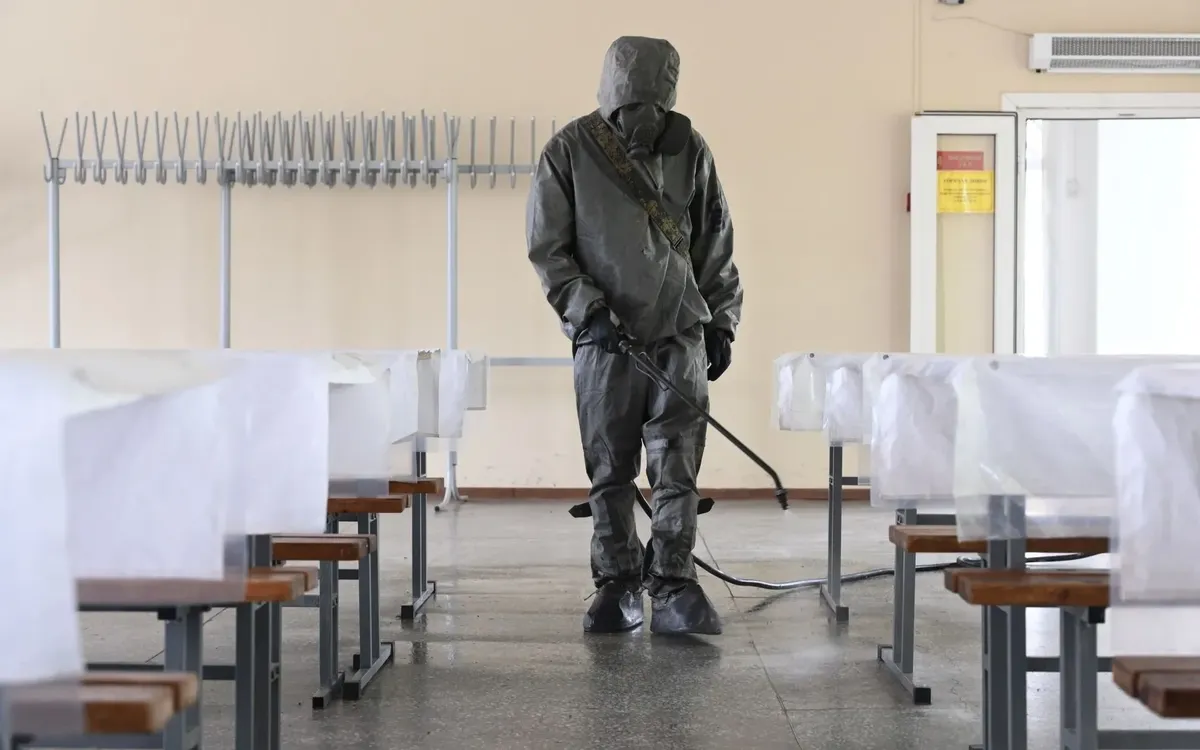
On the first of April, a spring appeal began in Russia - despite the pandemic, 135 thousand people should be called up to the army, 3,000 more people than last spring. The Ministry of Defense reported that they took “all the necessary measures to exclude the introduction of infection” at the draft and prefabricated points, and the sending of recruits in terms of security will begin not earlier on May 20 and only after conducting the tests for coronavirus. As the Minister of Defense Sergey Shoigu promised, upon arrival in military units, recruits will pass a two -week quarantine.
From the editorial office
“New” already wrote about how the spring appeal in the province was going on - our sources reported that there were no shifts in mobilization events, they began on April 1, medical commissions were strengthened by additional specialists, including virus and epidemiologists, and sets of protective masks for the calls to the military enlistment office. In addition, after the medical board, it was provided for the delivery of tests for coronavirus and the sending of recruits to home quarantine.During the preparation of the material, it turned out that, for example, in the Vladimir region, some of the draftees would go into the army today, May 15.
If it is not so difficult to observe security measures in small cities, then in Moscow and St. Petersburg, where this year 6,000 and 2988 people, respectively, may arise with security, may arise problems. The correspondents of the "Novy" were versed in how the call in the capitals on paper takes place, and how - in reality.
In Moscow and St. Petersburg, the military enlistment offices opened only on May 12 - before that, the military commissars should have studied the personal affairs of the draftees remotely.
The implementation of events in Moscow should regulate the invented "Regulation of the call of citizens of the Moscow for military service in the spring of 2020 in the context of the spread of a new type of coronavirus infection." This document, approved by the military commissar of Moscow, Viktor Shchepilov and agreed with the head of the metropolitan department of regional security Sergei Khlebnikov, was sent to municipalities back in April. The “priority task” in this document is the prevention of “citizens who are coronavirus infection or its carriers”.
DOCUMENT
From the "Rules of the call of citizens of Moscow for military service in the spring of 2020 ..."
According to the regulations, conscription measures in Moscow are divided into 5 stages: before going to serve, the conscript will need to visit the military registration and enlistment office four times , and then spend the unknown amount of time at the prefabricated point, waiting for the part to send.
The first stage is preceded by the medical examination and meeting of the district’s draft commission: the conscript is summoned by the summons or SMS report to the military registration and enlistment office to give him a referral for testing. The warning of the turnout should be accompanied by the recommendation “to ensure yourself a disinfection for hand processing”, as well as “observe a safe distance of at least 1.5 meters”. When moving around the city, the conscript should have a passport and agenda with him. Apparently, in the absence of the agenda, the Sesemsk from the military commissar will do.
Upon the arrival of the conscript to the military enlistment office, he should measure the temperature and collect an epidemiological history. The young man should ask if he had recently abroad, did he have contacts with those who recently returned from abroad, did not communicate with citizens, sick or “suspicious of the disease”, as well as (attention!) Whether there is a conscript or one of his family members in quarantine at the moment. If everything is in order, then the conscript must issue a mask and skip into the military registration and enlistment office equipped with “hand processing points” and a special marking to follow the distance.
If the conscript has a high temperature, he should give him a mask and send him home, notifying the head physician of the clinic, to which the conscript is attached, "about the identified sick." If the high temperature of the conscript is fraught with signs of SARS and the “epidemiological history of coronavirus infection”, then such a young person should be placed in an insulator (pre -built in the military enlistment office), call doctors and notify everyone, even to the military commissar Viktor Shchepilov.
These security measures must be observed during each visit to the military registration and enlistment office. At the same time, at the stage of a medical examination and a meeting of the draft commission, as well as at the stage of “control turnout”, when the conscript checks the availability of all “necessary documents”, the regulation obliges the military enlistment office to ensure the presence of “at a distance of 2 chairs from each other” and no more than 50 people indoors.
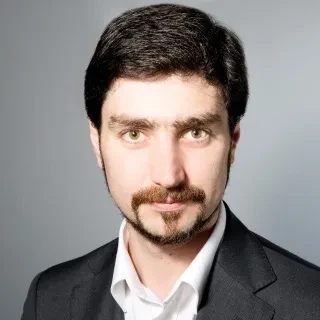
The head of the municipal district of Yakimanka and the chairman of the recruit commission of the district Andrei Morev told about how visits to the military enlistment office are arranged in practice about how to visit the military enlistment office.
“The temperature at the entrance to the military enlistment office is measured by contactless thermometer,” says Andrei Morev. - There are two employees: one is a medical worker, the second is a controller that fixes in the journal. The conscript writes his data at the entrance and writes the temperature that he was identified. Sanitizers are treated with his hands and is allowed to be in masked and gloves on the draft item. I did not see the masks and gloves to be issued, but, given that we are now a mask-duct regime, everyone comes to them.
According to Morev, there are no problems with ensuring a social distance at their military registration and enlistment office: “We have a small number of conscripts enough - the area itself is small, so the call is small. We did not have mass accumulation of people, and those few people who were calmly provide a distance. ”
The main problem, according to Morev, is to examine conscripts who have any diseases: “If a person has diseases, then by law we must send it for examination, but because of the virus, the medical institutions with which we work do not conduct these examinations. The person comes and says: "I have asthma." By law, you must send it to a medical institution in order to confirm this diagnosis. There is a stupid situation: in fact, people who have health difficulties, now cannot be called up. There was a proposal to transfer such conscripts to the fall, but by law there is no such option, so we transfer to the end of the draft, to July. To pass tests is also a problem. To send a conscript somewhere to take tests is also at risk. ”
The head of Yakimanka believes that “the call must be stopped until the pandemic is over”:
“Questions are significantly more about the need to call during the pandemic than real answers to them. This really does not lead to anything. I talked with other draft commissions: in Ramenki on May 12 there were 12 draftees, somewhere there were 15 people. Today [May 13] we had only two calls to the commission. This is several times less than on ordinary commissions. People are now thinking not about a call, but about how to preserve health. ”
A doctor who is a member of the Military Medical Commission spoke about the situation in one of the military enlistment offices of St. Petersburg, (the hero wished to remain anonymous, his full name and other data are known to the “new”).
CERTIFICATE
The story of a member of the military medical commission
- From this week we began a real call. A stream of [conscripts] went the same as last year, ”our interlocutor shared observations. - We examine a person thirty a day, until this week we examined a person for five. This was due to quarantine. The draftees, apparently, were invited at a certain time, and they did not immediately come all, but with a large interval - at half an hour or an hour.
Now the draftees are all in masks and gloves, but, nevertheless, they spin in the corridor, they have no social distance. They communicate, are very close to each other.
Employees of the military registration and enlistment office who are engaged in the extract of the summons are trying to sort conscripts: do not call, for example, students, do not call those who are sick and there are no prospects to call him so that as few people can be in the military enlistment office. And this partly works. Defined efforts are made, I can’t say that everything is like last year: more and more rationally and carefully.
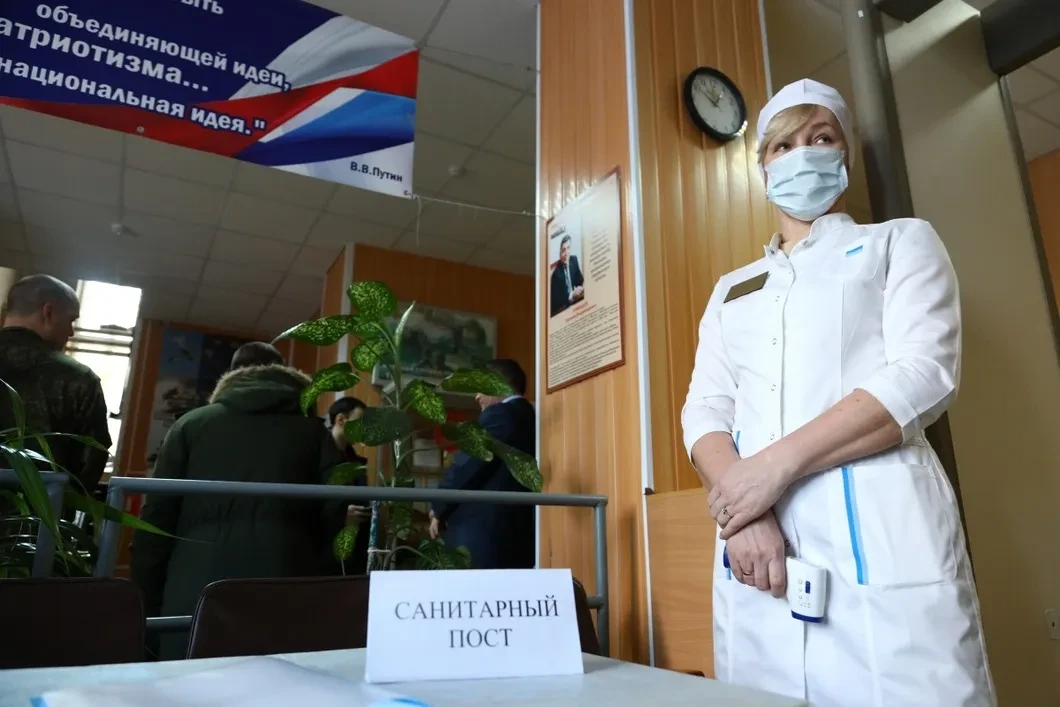
There is a constant post at the entrance. Doctors take turns on duty: they check the temperature, look at the appearance, write it down in the magazine, who has passed, in which office, to which floor and what is its temperature. There are also sanitizers and gloves [for conscripts]. Gloves lie for view simply - one pack. Nobody, of course, asks them from the conscripts, but we ourselves give out, because if we give out, then they will instantly end.
Doctors were provided with special products with liquid with chlorine -containing substances - we constantly spray everything by the hour several times a day. Doors' handles, doors themselves. And we conduct a special tablet where we sign that we sprayed at 9 o’clock, at 12 o’clock, at 15 o’clock.
It’s very scary, in fact, because doctors are sick, die-every day the news of the dead doctors of St. Petersburg, famous doctors come.
At the request of “New” about his campaign in the Military Commissariat of the Nevsky District of St. Petersburg, the 20-year-old conscript Vitaly spoke (the name was changed at the request of the interlocutor of “New”, his full name and other data are known for the editorial office). Vitaly has two diseases, due to which it is registered (one of them is congenital asthma).
Tested on yourself
Vitaly, a resident of St. Petersburg, the diagnosis: "Congenital asthma"
According to Vitaly, first of all, he was sent to the clinic from the military registration and enlistment office to receive extracts about the confirmation of the disease.
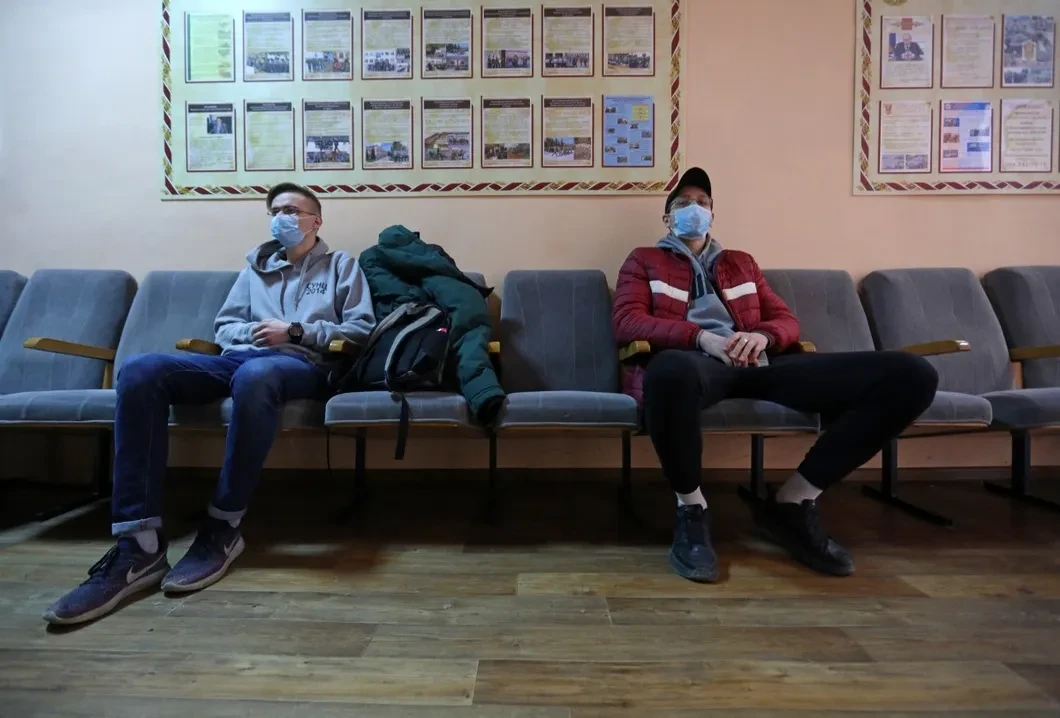
“Then he went back to the military registration and enlistment office. At the entrance, one at the entrance was launched, checked the presence of masks, gloves. It seems that I was alone in gloves, and with masks it was stricter - I even saw one guy who was given a mask, but at the same time most doctors were without protective equipment, in masks - everything seems to be two, ”Vitaly said.
He clarified that he tried to come early, so there were about ten draftees with him who did not come close to each other. “In fact, how does the military registration and enlistment office work? You come, hand over your agenda in the window, they say “go down” to you, and your personal business is attributed there. That is, you do not even intersect with the first person. Then you go to the doctors. Here we sat at a neurologist about one and a half meters from each other,
And the doctor was without a mask and talked about the fact that the diseases were given to me illegally, and in Soviet times and me, and he would have been shot for it, ”Vitaly shared.
“Everyone who needs an investigation is sent to the end of June, because now hospitals do not work. And only after will the call commission itself will be, ”the guy said. According to Vitaly, he will have to visit the military registration and enlistment office several more times: at the end of June, then go to the clinic again, after which again to the military registration and enlistment office, then to the hospital, and then return to the military commissariat, where the draft commission will already receive the draft commission. Such paperwork is associated directly with the presence of diseases, which, however, do not guarantee a “white ticket” at all.
However, the adventures of conscripts will not be limited to regular campaigns to the military registration and enlistment office. Before sending in terms of draftees, they will be taken to the assembly point. Here, as describes the “regulation of the call of citizens of the Moscow for military service in the spring of 2020 in the conditions of the spread of a new type of coronavirus infection”.
DOCUMENT
From the "Rules of the call of citizens of Moscow for military service in the spring of 2020 ..."
The document says that the assembly point should be divided into two zones: “clean” and “dirty”. After the arrival of the draftees, they should be tested for the presence of a coronavirus infection in the “dirty” zone (35 army tents will be installed there). It turns out that the first tests on the Covid-19 will make Muscovites only at the prefabricated point.
Recruits with a negative result will be moved to a “clean” zone.
Upon receipt of a positive result, “The whole team is subject to evacuation from the prefabricated point”: the sick person will be taken to the “ambulance” to the hospital, and the contacting people will be unheated home and obligated to observe the self -insulation regime.
With healthy conscripts, employees of the assembly point will hold a “clarifying conversation”, after which they will be sent to representatives of military units. In the end, Muscovites will be dressed in military uniforms, photographed against the background of the bus (the head of the General Staff of the Russian Armed Forces Valery Gerasimov emphasized that sending to military units will be held without celebrations), will be given three masks to each and take to the station or to the airport.
Even before the call, the press service of the Western Military District reported that the chemical troops conducted a special processing of the prefabricated point in Moscow. It was also reported that all the military commissariats of Moscow were provided with masks and tests for determining viral diseases (then it is not very clear why the first tests will make conscripts only at the prefabricated point).
How the safety of the conscripts will be ensured on the way before they arrive in the unit, the regulation does not report, however, as the head of the General Staff Valery Gerasimov emphasized, “all transportation is planned so as to exclude the contacts of military personnel with civilians”: “For this, railway transportation will be carried out by separate railway cars in accordance with their traffic or military echelons, military traffic. Moreover, the number of military personnel transported in one car will be reduced by a third. ” Civil aviation aircraft, according to Gerasimov, "will be used subject to loading them only by military teams."
Upon arrival in the units, according to the assurances of the Ministry of Defense, all recruits will be placed on a two -week quarantine in a separate barracks or on a separate floor. At the same time, according to Gerasimov, during quarantine, "medical examinations, psychological examination and socio-psychological study will be carried out." The ceremony of the military oath will also change: now the parents of the conscripts will not be allowed to.
With the participation of Alexandra Georgevich, "New"