
Translated material
Secret for seven seven seals of Rosstat
About the virus of neglect of culture
The television screen is tired of tirelessly: “Why are the amendments to protect culture and the status of the Russian language important?”, In an effort to introduce into the consciousness of Russian citizens the need to approve the Putin's changes in the Constitution. The eloquent formulation of the question raises a counter question - from whom or from what are you urging?
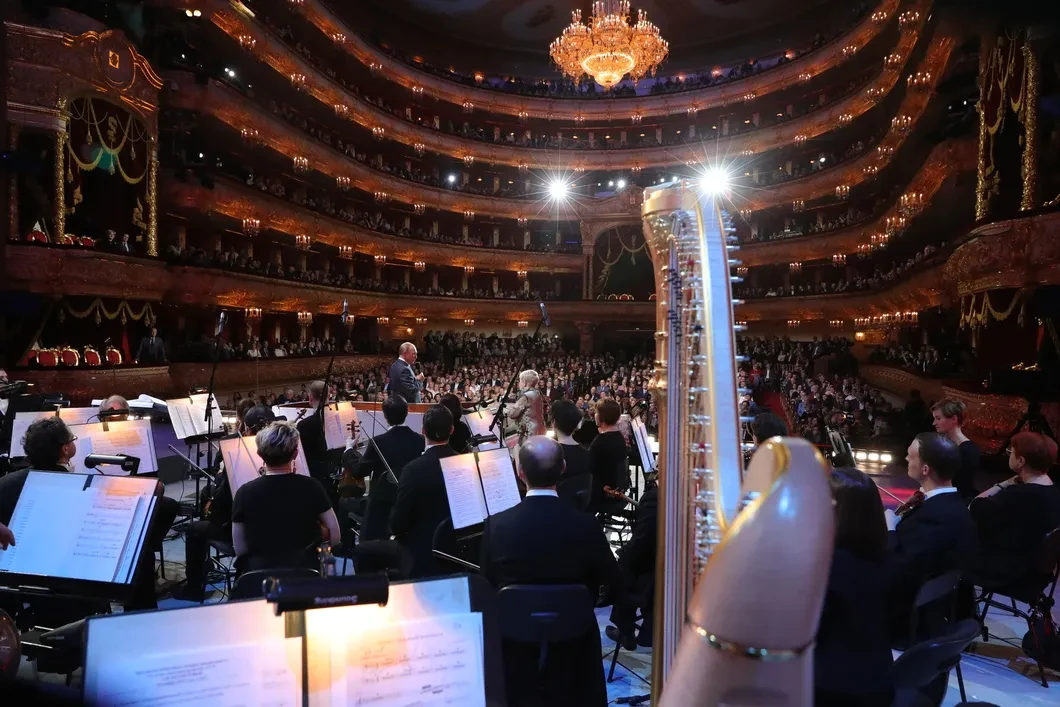
The emotional wave came to naught from the appointment of the Minister of Culture, which in the gusts of reflective striptease on its life path told the world that she hates opera, ballet, museums, excursions and much more. Each of us remained with our assumptions about what directed such an important leader: solidarity in views, complete indifference to Russian culture, or this is a conscious sophisticated slap in the face workers. I admit all the options, although I am more inclined to the latter.
Is it worth it to be surprised or indignant at what happened, if there are not so publicly noticeable and emotionally colored, but much more convincing evidence that the incident is not an accident. It is enough, for example, look at the website of the Federal State Statistics Service (Rosstat) to see at least the most basic information about the state of Russian culture. I immediately inform you to save your time - the search will not be successful.
The state in its law “On the official statistical accounting and system of state statistics in the Russian Federation” claims that the state policy in the field of official statistical accounting is aimed at providing the information needs of the state and society in complete, reliable, scientifically substantiated and timely provided for official statistical information about demographic, about environmental and other social processes in the Russian Federation ".
The paramount principle of the state statistics system is “the completeness, reliability, scientific validity, timeliness of the provision and the general accessibility of official statistical information (with the exception of information, access to which is limited by federal laws)”.
According to the law, official statistical accounting is carried out in accordance with the federal plan of statistical work, which is approved by the Government of the Russian Federation. Having looked into this plan and looking at the history of amendments to it, it is not difficult to discover that earlier it provided for the preparation of status in the direction of “activities of cultural and rest institutions” in 4 positions: museums, organizing a cultural and leisure type, public libraries and theaters. They should have been provided annually, including separately in the Far North and equivalent to them, and since 2017 it was supposed to separately take them into account in the Arctic zone of the Russian Federation. But the matter did not come to this zone-by order of the Government of the Russian Federation dated 07.02.2017 No. 213-r from the plan excluded completely the entire direction “The activities of cultural and rest institutions”.
Either the cultural process was excluded from among the public processes in the country, or the statders about it went into the category of state or military secrets - it remains to be guessed. But from that moment in the main official state mirror of statistics - on the Rosstat website - it is not possible to look out how many theaters and spectators we have in them, how many libraries and readers they have, and even more so how many symphonic orchestras, exhibition halls or bookstores. Well, since the “Culture” section on the official website of Rosstat disappeared, then archival data during the years when such statistics were conducted, it will not be possible to find. What was such a terrible secret that you need to hide?!
Having rummaged in the hunched hairpins of departmental sites, with great difficulty grains you can collect some statistics. True, it will hurt a person to see her worried about Russia.
In our huge country, there are only 671 theaters (this is like in two cities-New York and London), and 26% of the buildings in which they are stirred require major repairs or are in disrepair.
It is important that 21% of these buildings are objects of cultural heritage of federal or regional significance, that is, they are also of value in themselves besides their purpose. The number of spectator seats is this (232 081) that even if the theater was for a person in territorial accessibility, then the probability of getting to this place is very small, since 632 spectators claim to be claimed.
We have a delicious with museums of all types of departmental affiliation - there are only 1902, with branches 2861. Each second building is an object of cultural heritage, while every third requires overhaul. The indicator of the security of the Russian population of Russia is one of the lowest in Europe - 1.9 museums per 100 thousand inhabitants.
Russian museums do not have modern stock storage facilities, they do not have enough exhibition premises, museum science is almost not supported, they have nothing to replenish museum collections and restore existing exhibits. I also know this as a deputy of the regional parliament, who with battles pierced the budget in the amount of only 1 million rubles for the purchase of the work of Karelian artists for the Museum of Fine Arts and the restoration of work.
The Republic of Karelia is preparing for its centenary, and almost nothing has acquired almost nothing in the post -Soviet history in the museum. Of the 2700 icons that make up the excellent collection of the northern icon painting of this museum, only 289 are restored, and the rest are waiting in the wings. Or centuries. And so everywhere.
At the end of 2019, there were 37,033 libraries in Russia. From 2015 to 2019, their number decreased by 1931. Despite the fact that you will not surprise anyone as an information company as an information company as an information, 30% of Russian libraries have no seats for users with access to electronic resources, 79% have neither a site nor the page on the Internet and only 8.5% of them create electronic catalogs. Libraries experience an acute shortage of funds for the replenishment of the book fund, subscription to periodicals. Nevertheless, every third resident of the country is recorded in departmental statistics as a library user and visits it on average 8 times a year in the hope of touching modern information resources under the leadership of professionals.
The situation is approximately the same with cultural-leisure-type institutions (clubs), children's art schools, musical and art schools-20% of their buildings require overhaul or in disrepair, 61% of clubs do not have Internet access, the meager salaries of employees and their coercion to work at the rate, the lack of money for equipment and musical instruments, until it will say in good time. The president will not write an order, the low availability of services for the population.
The listed cultural institutions are at the very least calculated and at least in the departmental hidden corners you can get some data about their condition. The fact that the provision of Russians by bookstores is 5-6 times lower than European indicators, you can learn from the Association of Book-Stop of Independent States. According to the Association in France, 66.0 million people account for 3,500 bookstores, in Germany, 83.0 million-4,500 in Germany. In Russia, there are about 1000 bookstores for 146 million people, of which only 200 bookstores account for 6 million inhabitants in St. Petersburg and 13 million residents of Moscow. For comparison in Tokyo, 1,675 bookstores, in Shanghai - 1,322 and Johannesburg - 1 020. Back in December 2015, Russian Newspaper wrote that "the number of bookstores has declined more than eight times over the past 20 years."
But no one will say how many symphonic, and any others, orchestras, exhibition halls or cinemas. The state of the sphere of culture is so deplorable that it remains to remove the indelible statistics from the public viewing. How, after meeting these data, we can treat the words of V. Putin, said in November 2018 at the opening of the VII St. Petersburg International Cultural Forum: “... Culture is considered as the strategic potential of the state”?! True, it was not specified which state was in question. Perhaps not about ours. More precisely, we would describe words about the limitless potential of culture for endless optimization.
These "successes" are impressive. As a result of non -stop optimization, the number of employees in the field of culture from 2013 to 2020 decreased by 26%. Salary, according to Rosstat, is 41750 rubles. According to the results of January-March 2020 (88% of the average salary in the country). At the same time, there is a significant inequality: employees of municipal cultural institutions receive almost two times less employees of federal institutions, 34,417 rubles. and 65 392 rubles. respectively. For employees of regional institutions - 47 188 rubles. At the same time, it should be borne in mind that official data always cause bewilderment among employees with their inconsistency of the real situation.
You can talk a lot of words about patriotism, but what will better say about his condition as not the state of historical and cultural monuments. Moreover, the Accounts Chamber of the Russian Federation recently checked it, and found that among 69,299 objects of cultural heritage of federal significance in unsatisfactory condition there are 35 percent, or more than 24 thousand objects, including about 5 thousand in the emergency state, and 879 are already in ruins. But besides them, there are still 75 112 objects of cultural heritage of regional and local significance, the fate of which is even more unenviable due to the state of existing budgets and the lack of understanding in the authorities that the unity of the nation is created not by spells from TV screens, but by constructing and saving the general culture. It is difficult to get rid of the musty patriotism, which the president called for, if the child walks past the ruins of the ancient estate daily, the library is offered to be a binder of the Pioneer magazine of the adolescence of his grandmother, to the nearest club you need to go on roads on the road, and you can only climb a tree on a tree at the highest point of the village.
Unfortunately, there is no culture in the system of values of the Russian government and its strategic potential, it does not see. It is enough to look at such an important document from among the recent ones as the spatial development strategy of the Russian Federation for the period until 2025, approved by the Government of the Russian Federation in February 2019. For 84 constituent entities of the Federation (Moscow), promising economic specializations are determined in it, as well as specializations of unpromising, but critical, but critical for the region’s economy, that is, the structure of regional economies is actually enshrined. Clearly and rigidly each territory was issued a list of industries for future life based on the formulations of the all -Russian classifier of types of economic activity (OKVED). And what is noteworthy, not one! There is no Russian region such as "activity in the field of culture, sports, organization of leisure and entertainment." At the same time, most of them have “tourism” in the list of promising industries, the development of which without historical and cultural content even has nothing to discuss. What is this talking about? The fact that Russian bureaucracy is unable to see culture as a resource for the development of territories.
In the last quarter of a century, many cities and regions of the world have successfully overcame the crisis associated with the exit from the industrial era to the post-industrial one, precisely thanks to the use of the historical and cultural potential of their territories. The development of creative industries occupies an important place in the strategic plans of many countries in Europe, Asia and America. With their help, they diversify their economies, create new jobs, make the territories attractive to people and investments. The experience gained by them made it possible to conclude that investments migrate to where the cultural diversity index is higher, in other words, investors follow artists. The "Economics of Impressions" is gaining momentum around the world, bringing, for example, Germany is 8%, and Great Britain 5.5% of GDP annually. Already oil countries are betting on New Oil.
Spontaneously, through the overcoming of many obstacles, with a significant lag from other countries, the development of cultural industries is also in our country, ensuring only 0.5% of GDP. Our oil country does not make a bet on New Oil. Fearing innovation, devoid of strategicity and creativity, incapable of communications with society, imprisoned on a vertical and not perceiving network structures, Russian bureaucracy has become anesthesia mask for both cities and regions and all of Russia.
The reasons for this are understandable. A system working for self -preservation will never work on development, it can only imitate it within the limits necessary for self -preservation. By announcing, for example, the national project “Culture”, which will pour some holes, but will not change the state of culture in the country qualitatively, since it does not have a serious conceptual basis. Or having recorded the norm in the Constitution that "culture is supported and protected by the state." It could be believed if the thesis was confirmed by real cases: a share of culture expenses in budgets of all levels, the state of cultural heritage facilities, employees' wages built by new theaters, museums and concert halls, the replenishment of museum funds and library book funds. In the meantime, reality indicates the residual principle of financing, attention and management actions. The ashes from the recently burned Assumption Church, a masterpiece of wooden tent architecture of the XVIII century, in the Karelian city of Kondopoga is a tragic symbol of the true attitude of the current government to culture. It is dangerous that the economic crisis caused by the pandemia of the coronavirus will make its position even more vulnerable.
To the question of what and whom to protect our culture, so far there is only one answer - from neglect and disrespect of power. Therefore, it will be better for Russian culture if we vote against amendments to the Constitution, the main goal of which is to maintain the power that is so dismissive of it.