
Translated material
Seventeen gentlemen
For which they shot the Chekists awarded the highest award of the homeland with one decree
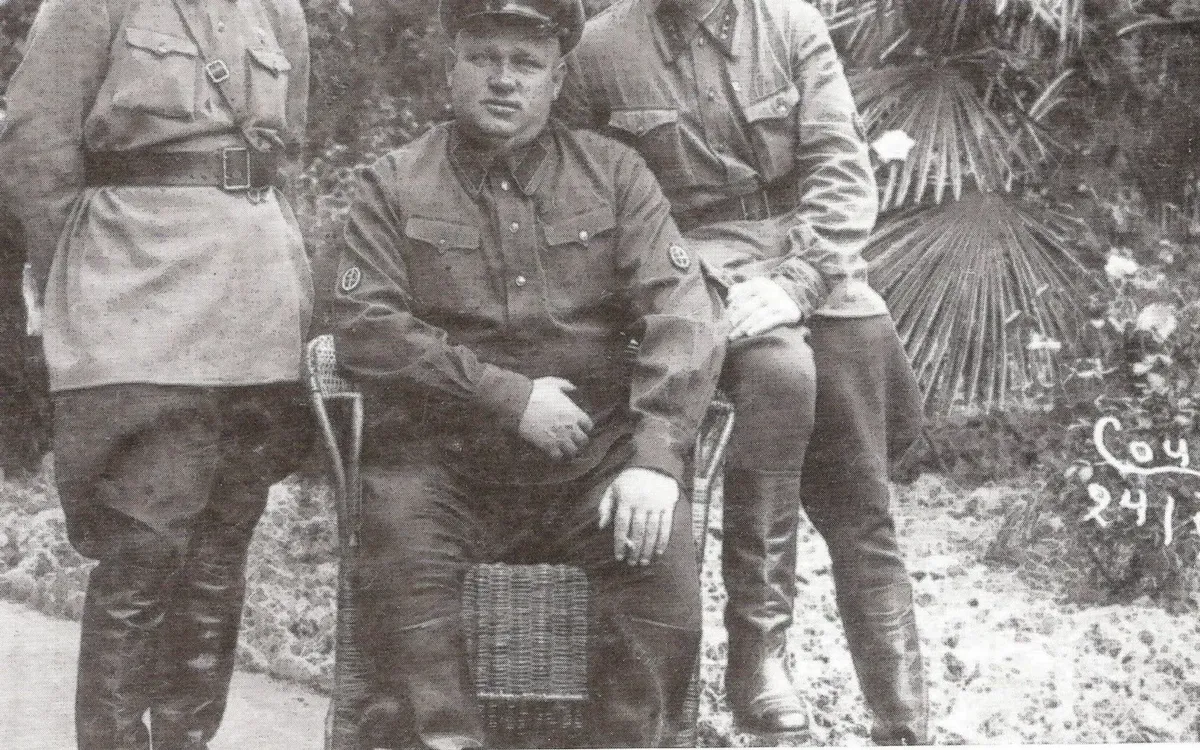
On July 22, 1937, by a resolution of the CEC of the USSR “For exemplary and selfless implementation of the most important tasks of the government”, 17 NKVD employees were awarded, mainly from the central apparatus of the Main Directorate of State Security. The list, published in the central Soviet newspapers, only surnames and initials were indicated.
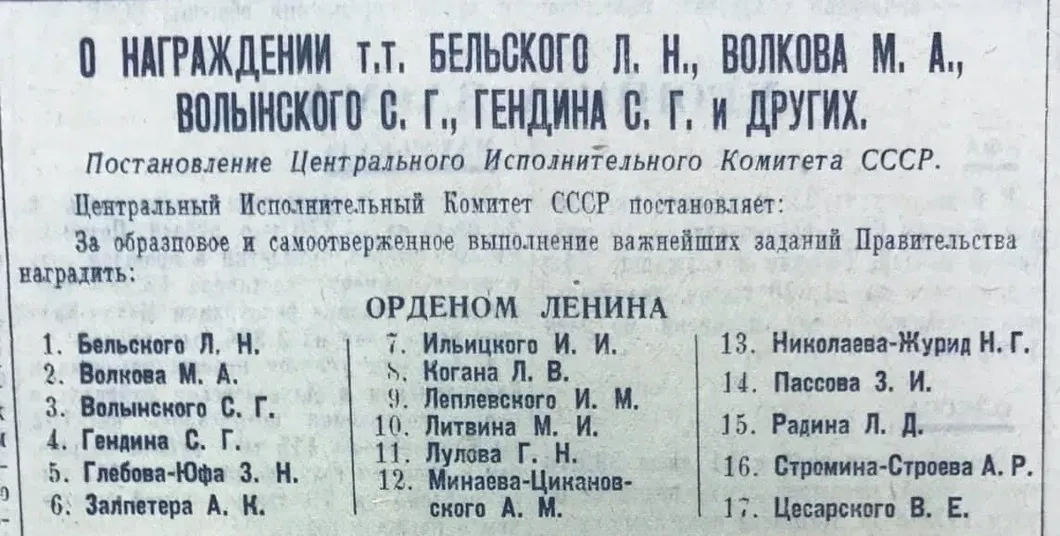
List of awarded
Belsky Lev Nikolaevich. Deputy. People's Commissar of Internal Affairs of the USSR.
Volkov Mikhail Alexandrovich. Head of the 6th Department of the GUGB NKVD of the USSR.
Volynsky Samuel Grigoryevich. Deputy. Head of the 3rd Department of the GUGB NKVD of the USSR.
Gendin Semen Grigoryevich. Deputy. Head of the 4th Department of the GUGB NKVD of the USSR.
Glebov-Yufa Zinovy Naumovich. Head of the 10th branch of the 4th department of the GUGB NKVD of the USSR.
Palpapeter Ans Karlovich. Head of the 2nd department of the GUGB NKVD of the USSR.
Ilyitsky Joseph Isaakovich. Head of the 13th branch of the 3rd department of the GUGB NKVD of the USSR.
Kogan Lazar Veniaminovich. Head of the 2nd branch of the 4th department of the GUGB NKVD of the USSR.
Leplevsky Israel Moiseevich. People's Commissar of the Interior of the Ukrainian SSR.
Litvin Mikhail Iosifovich. Head of the 4th department of the GUGB NKVD of the USSR.
Lulov Grigory Nikolaevich. An employee for special instructions of the 4th department of the GUGB NKVD of the USSR.
Minaev-Zikanovsky Alexander Matveevich. Head of the 3rd Department of the GUGB NKVD of the USSR.
Nikolaev-Zhurid Nikolay Galaktionovich. Head of the 5th department of the GUGB NKVD of the USSR.
Passov Zalman Isaevich. Deputy. Head of the 3rd Department of the GUGB NKVD of the USSR.
Radin Lev Davydovich. An employee for special assignments of the 5th department of the GUGB NKVD of the USSR.
Strimin Albert Robertovich. Deputy. Head of the 4th Department of the GUGB NKVD of the USSR.
Caesar Vladimir Efimovich. Executive Secretary of the Special Meeting of the NKVD of the USSR and the head of the 8th department of the State Unitary Enterprise of the NKVD of the USSR.
The award was the recognition of their merits and a certain advance: a week after the publication of the decree to the People's Commissar of Internal Affairs, Yezhov, the infamous order 00447 “On the operation to repress former fists, criminals and other anti -Soviet elements”, which will start starting the most bloody repressive campaign in Soviet history. And in this campaign, all seventeen ordinances had to play an important role.
Who were these people abandoned by Stalin to a ruthless struggle with the "enemies of the people"? How did their future fate have?
There is a famous phrase of Stalin:
“The Chekist has only two ways - to nomination or to prison.”
The developed material was ruthlessly thrown away. After the replacement of the next People's Commissar of Internal Affairs, the total cleaning of his apparatus and the entire control vertical usually followed. From among the seventeen state security officers of state security 15, awarded on July 22, 1937, 15 were subsequently shot, one committed suicide and only one of them, Lev Radin, died in 1979.
The most famous and odious Chekist in the list of the awarded was Israel Leplevsky , the commissar of state security of the 2nd rank, who at that time held the position of People's Commissar of Internal Affairs of the Ukrainian SSR.
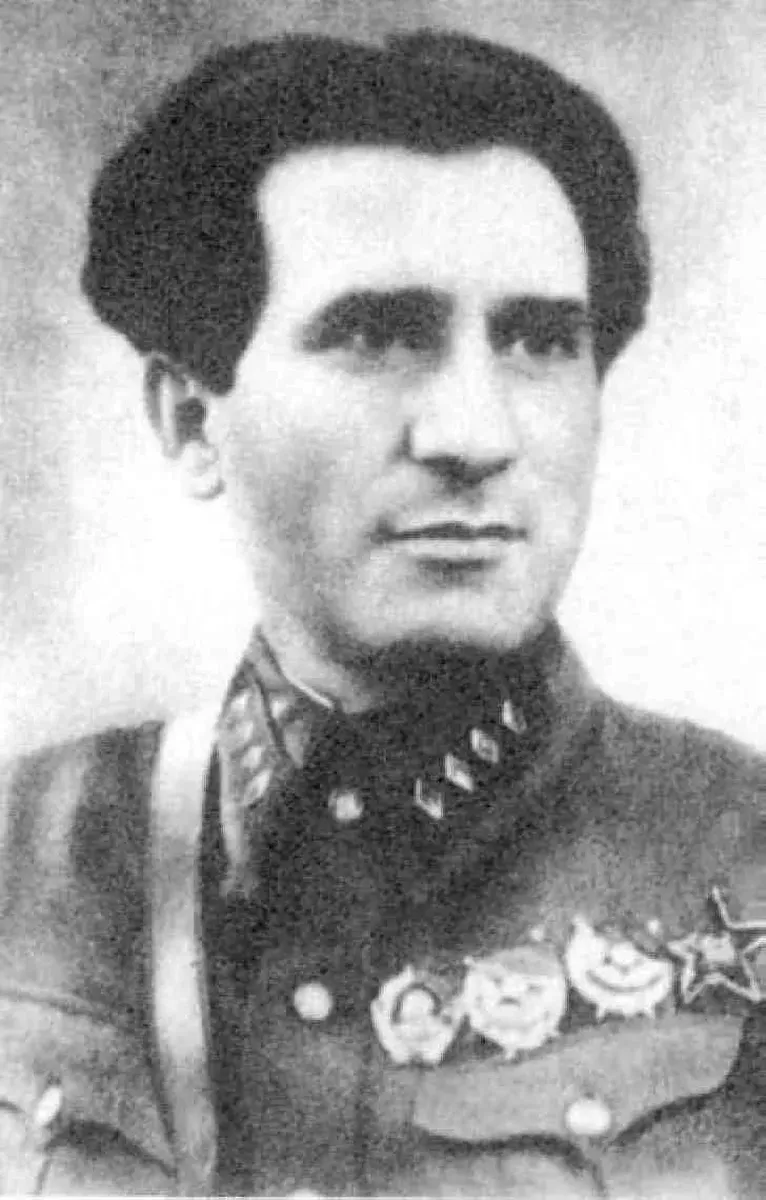
Leplevsky was born in 1896 in a Jewish family in Brest-Litovsk. In the Cheka since 1918. A long way went in the state security organs. He served in Yekaterinoslav, Odessa, Saratov. From 1934 to 1936, the People's Commissar of the Interior of the BSSR. One of the organizers of the process over Zinoviev and Kamenev. He participated in the Vesna case, as a result of which thousands of Red Army officers who previously served in the Russian Imperial Army, as well as former white officers were repressed. A key figure in conducting repressions in Ukraine in 1937. The certification in the personal file of Leplevsky states that he was sick with "neurasthenia and psychostenia."
In the SBU archive, a encryption was found, sent by Leplevsky on October 17, 1937 to the district department of the NKVD of the Ukrainian SSR:
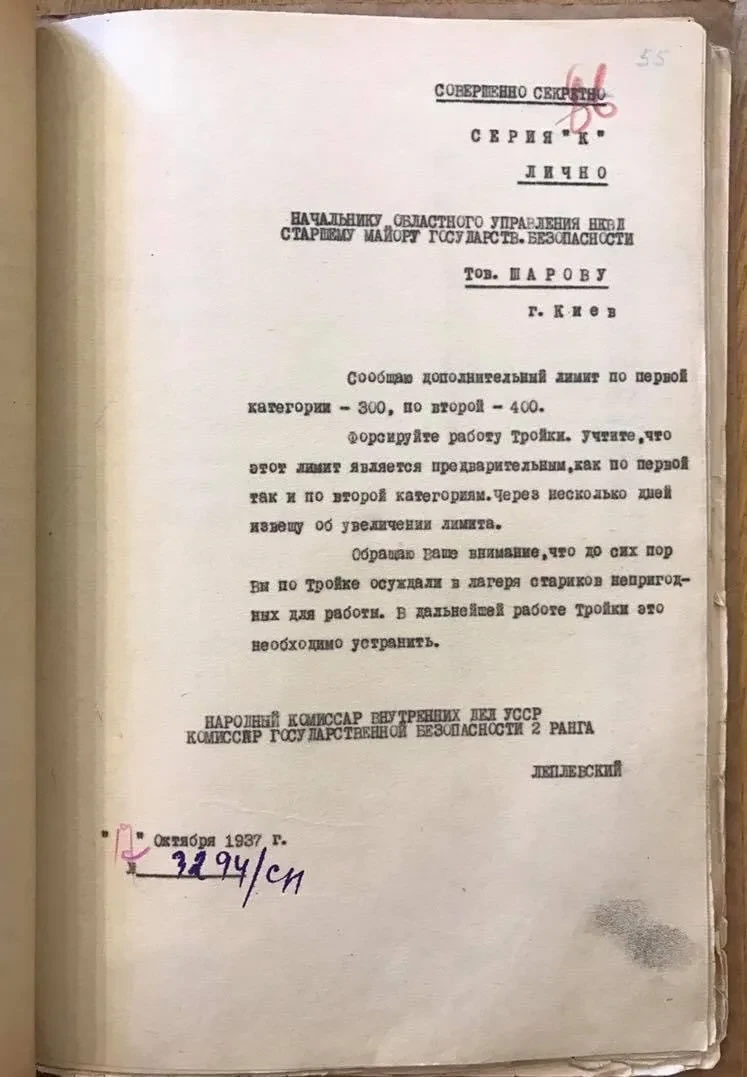
“I draw your attention to the fact that so far you have condemned the old men in unsuitable for work in the three. In further work, the triples must be eliminated. ”
Leplevsky held the post of People's Commissar of Internal Affairs of Ukraine until January 25, 1938. By this time, from the beginning of the operation, about 70,000 people were sentenced to execution in the republic.
On April 28, 1938, Leplevsky was arrested on charges of participating in a “fascist conspiracy” and shot exactly three months later.
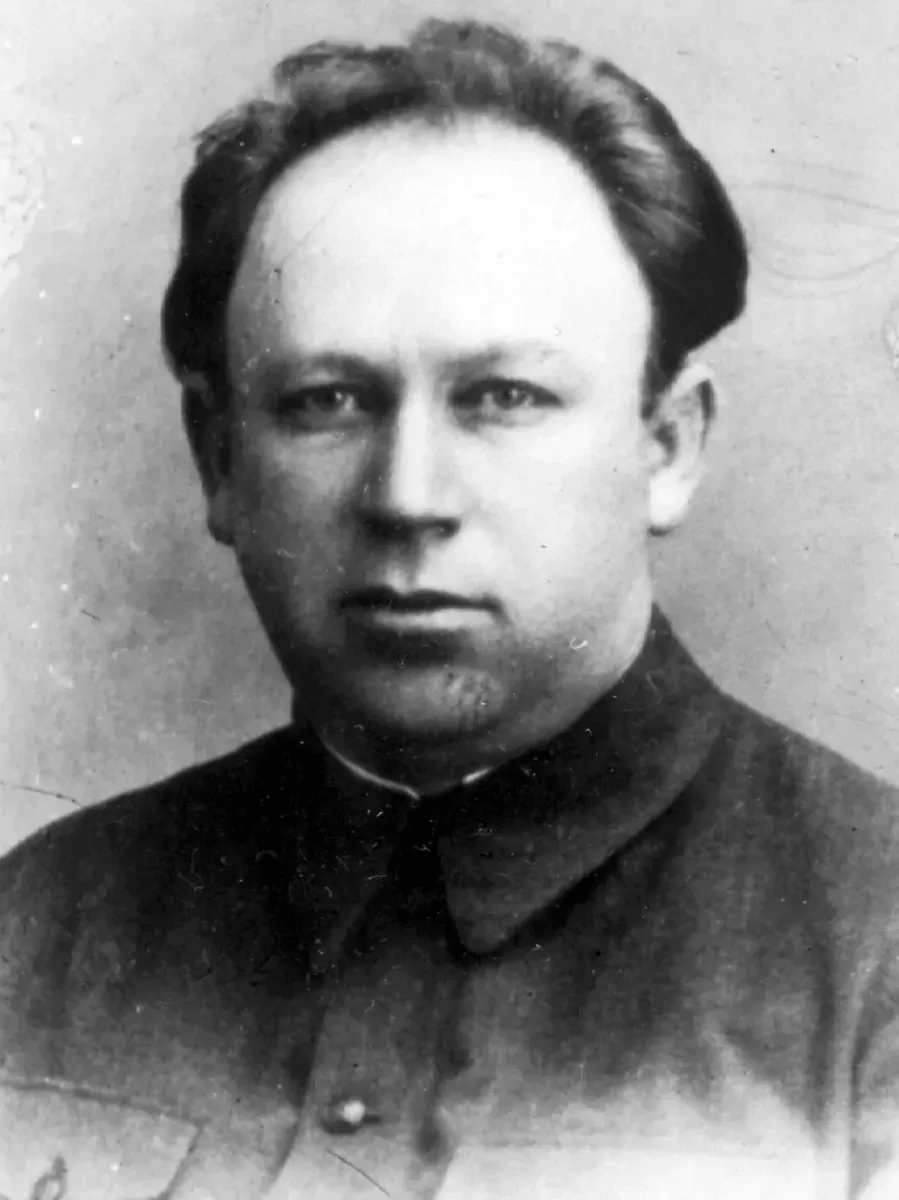
A significant figure in the system of large terror was Vladimir Tsesarsky , another Order of the List. Born in Odessa in 1895, worked at the factory, served in the Red Army. Until 1935, at party and economic work. In 1936 he became an assistant to Yezhov, and a little later-the head of the 8th (accounting and registration department) of the GUGB NKVD of the USSR. In addition to the NKVD, known to all the Tricks, operating in the framework of order 00447, there was a “deuce”, it is also the “Commission of the NKVD and the Prosecutor of the USSR”, which consisted of the People's Commissar of Yezhov and the prosecutor of Vyshinsky. This extrajudicial repressive body was condemned by citizens on the so -called “national operations”: Polish, German, Harbin and others.
In the republics and regions on the accused, they made up brief certificates that were recalled into albums, where only one page stood out for each accused: the figure “1” or “2” was placed on it with a pencil in a special column. The first meant execution, the second - the camp. Albums, along with lists, were sent to Moscow for consideration by the Yezhov -Vyshinsky commission, which was supposed to study these certificates and approve the decision. In fact, neither Yezhov nor Vyshinsky did not delve into these documents and did not even spend time studying them.
In Moscow, the head of the 8th department of the GUGB Vladimir Tsesarsky, the head of the 3rd department Alexander Minaev-Zikanovsky (also awarded the Order of Lenin) and the head of the secretary of the People’s Commissar of Yezhov-Isaac Shapiro, were engaged in the consideration of the albums and lists from the regions of albums and lists. They made a final decision on the fate of people from the "albums": they could approve a preliminary sentence, but they could also change the camp for execution. They were preparing lists that went to the signature of Yezhov and Vyshinsky. In fact, the Trinity, led by Caesar, was the top of the fate of tens of thousands of people.
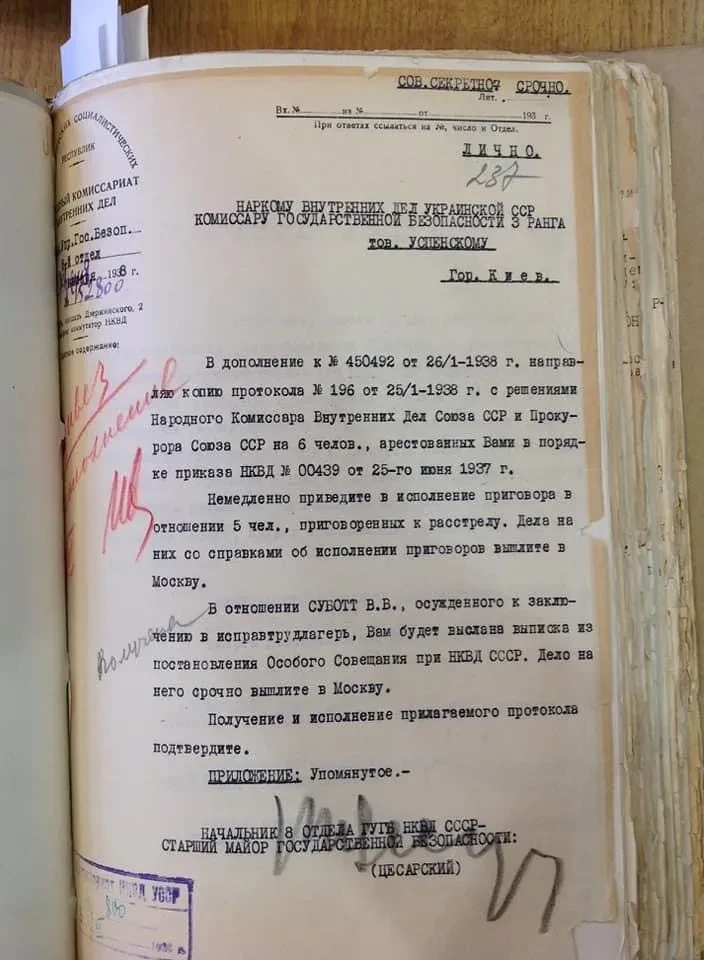
Simultaneously with the consideration of album inquiries on “national operations”, Caesar was engaged in the preparation of the so -called “Stalin lists”. Since February 1937, the Politburo, headed by Stalin, approved the measures of punishment on the lists of especially important persons whose affairs went to the military collegium of the Supreme Court of the USSR. Oppositionists, Trotskyist, party nomenclature, Red Army commanders, NKVD employees were sent to the military collegium.
Stalin personally looked at these lists, and the punishment, as a rule, was approved before the court. Most often it was an execution.
This happened on January 16, 1940. In the accompanying letter of Beria in the name of Stalin, it was said that the NKVD of the USSR ended the investigation against the group of enemies of the party and Soviet power. A list of traitors and spies of 346 people who are subject to execution was attached to the letter. On the first page of the list is Stalin's visa: “For”.
The irony of fate: This time, the list was not prepared by the Cesarian list - it himself was listed in this list at number 315 as an enemy of the people and was subject to execution.
In the same list was his brother David, inspector of the People’s Commissariat of State Farmers, as well as Isaac Shapiro, who, together with Tsesarsky, approved the sentences to Soviet citizens and prepared documents for the “deuce” of Yezhov and Vyshinsky. On January 21, 1940, Vladimir Tsesarsky was shot. In 1957, his relatives sent a request for rehabilitation, but received a refusal.
From the resolution of the Main Military Prosecutor's Office in the case of V. Caesar Dated May 15, 1957
“It was established that the Cesarsky, working in 1936-38 At the leading work in the NKVD bodies, he directly participated in the falsification of criminal cases on innocent Soviet citizens, applied physical measures of coercion to the arrested, without checking the materials included in the lists for execution and to imprisonment for the long term of persons, cases in respect of which were considered out of court.So, the Cesarsky himself showed that he led the preparation of decisions on persons whose affairs were considered extrajudicial order. The Cesarsky also showed that he and others “deliberately expanded the scope of mass operations in Latvians, Poles, Greeks living in the USSR. We authorized direct falsification and dubs, when instead of criminals of Poles or Latvians, they were arrested and sentenced to death without sufficient grounds. ”
Of the 17, awarded the Order of Lenin on July 22, 1937, five people were at once in one shot list, scorched by Stalin on January 16, 1940: Glebov-Yuf, Lulov, Nikolaev-Zhurid, Passes and Tsesarsky. The honorary company was made by the People’s Commissar of the Interior Nikolai Yezhov, who was there at number 94. By the way, Yezhov received the Order of Lenin in 1937. The text of the decision on the award of Yezhov says: “For outstanding successes in the leadership of the NKVD bodies to fulfill government tasks.”
Leplevsky and Litvin will be shot in 1938. In the same year, Ilyitsky’s suicide will commit suicide. In 1939, Volkov, Volynsky, Ganddin, salvo, Kogan, Minaev-Zikanovsky and Strogin were executed. In 1940-the five mentioned above, led by Caesar. The former deputy -brim of the internal affairs of the USSR Belsky will be shot in July 1941.
Another mass award of state security officers took place on December 19, 1937 on the 20th anniversary of the Cheka-OGPU-NKVD. Then 10 Chekists were awarded the Order of Lenin. In addition to the People’s Commissar of the internal affairs of the BSSR, Berman, the list included 9 chiefs of the UNKVD of the Omsk, Sverdlovsk, Dnipropetrovsk, Moscow, Irkutsk, Donetsk, Odessa, Chita and Chelyabinsk regions. Subsequently, seven out of ten were shot, one committed suicide, one died under investigation.
The fate of the only survivor - Major of State Security Pavel Chistov was surprisingly.
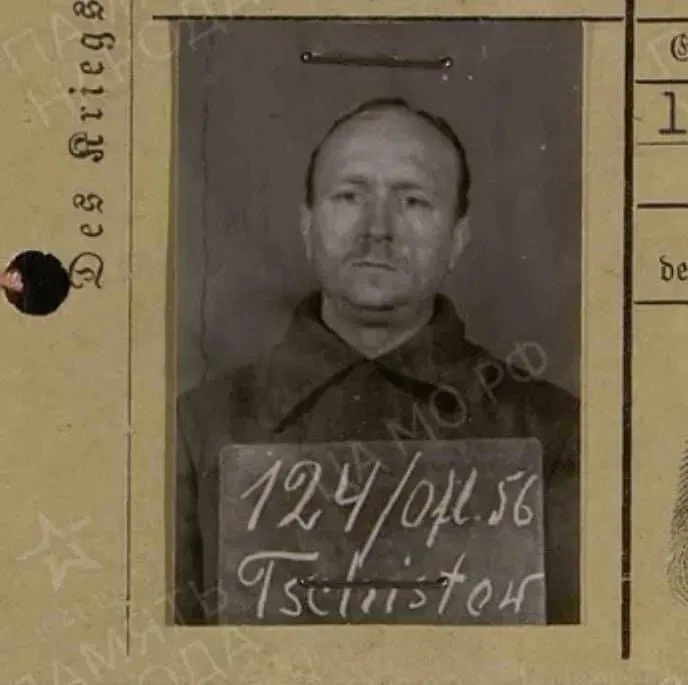
He was born in the suburbs in 1905. In the organs since 1923. Since 1937 - Head of the UNKVD of the Chelyabinsk Region, was part of the Troika.
With his direct participation, the Troika sentenced almost 6,000 Soviet citizens to the execution.
Chistov was elected as a deputy of the Supreme Council. After Chelyabinsk, he was appointed head of the UNKVD in the Stalin region. In 1939, he was transferred to work in the Gulag system. By the beginning of the Great Patriotic War - the head of the Office of the Vytegorsky ITL NKVD (Vologda region). In September 1941, he surrendered near Konotop and testified to the Germans. The fact of the captivity of Chistov was even used by German propaganda. He held almost the entire war in the camps, was in Mauthausen, where he was liberated by the Americans in May 1945. He was sent to the USSR, received 15 years of camps, and was released on parole in 1955. During the investigation, he tried to hang himself in a Butyr prison. In total, he spent 14 years in a row in prisons and camps: almost four in German and ten in the Soviet. After the release, he worked as an accountant. He died in Moscow in 1982.
In total, in July 1937, 42 Chekists were awarded the Order of Lenin by nine decisions of the CEC of the USSR. Of these, 32 were shot before the war. Two died in prison. One committed suicide. Three people were shot after the death of Stalin. One died in forced treatment. The head of the NKVD department in the Far East, Henry Lyushkov, who fled to Japan, was shot by the Japanese in 1945. Only two of the 42 could avoid a shooting or prison.