
Translated material
Their "honor"
Judge, having lied once, who will believe you?
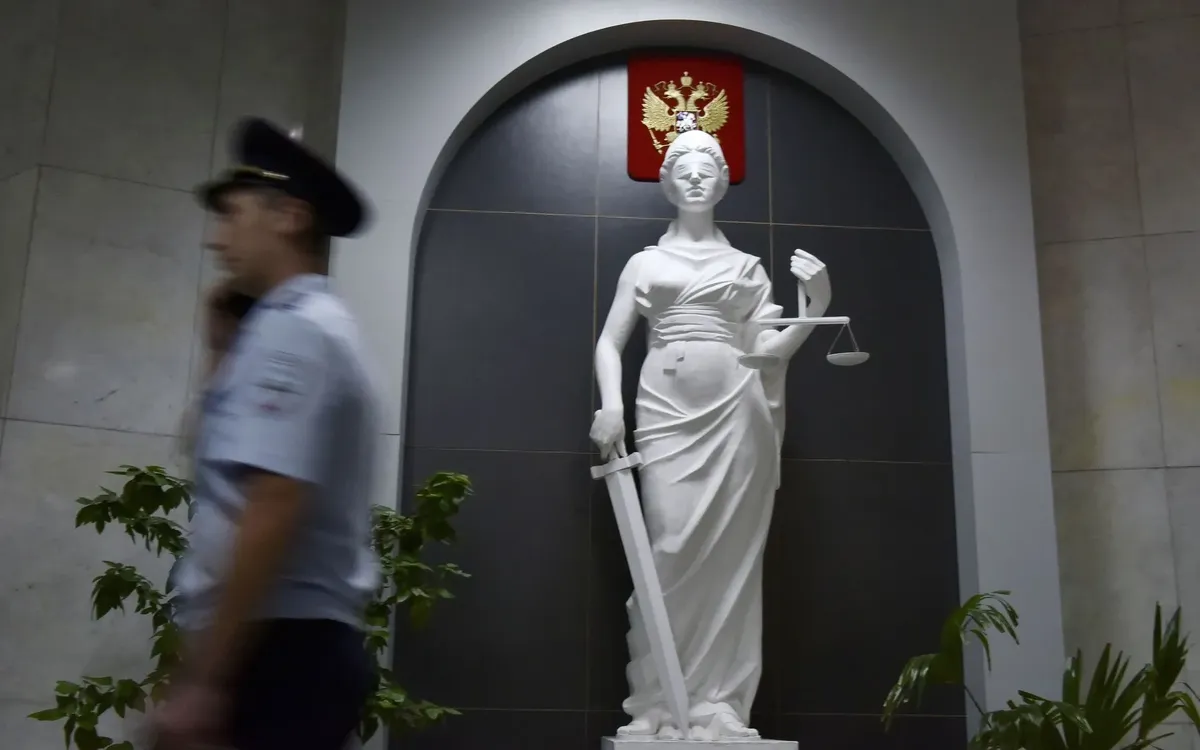
On May 19, a television conference was held on the basis of the Sakharov Center in Zoom, dedicated to the report of Dissernet on plagiarism and bad borrowing in the dissertations of judges (including a number of judges of the Supreme Court of the Russian Federation). On behalf of "Dissernet", his co -founder Andrei Zayakin spoke. From the point of view of Dissernet, the time of the discussion is associated exclusively with the fact that the voluminous, “Icended” report could not be prepared before. But the judges, to whom this information comes in one way or another (despite the fact that they traditionally did not take participation in the discussion), of course, they will raise the question differently: “Why at such a difficult time for the country ... when everyone is fighting an epidemic ...” - and so on.
The courts with the epidemic just did not fight and nothing new, except for making their life more convenient, did not offer. For example, it is much easier for judges to consider cases in a quarantine without a public, although this contradicts the principle of publicity and violates the rights of the accused and the parties-but decisively, in order to ensure at least some publicity in the new conditions, has not been done.
And on the third party - on the part of the society, which, I dare to hope, constantly and for many years illuminating the trials, I now imagine, the moment of the appearance of this generalization about the judges (despite the fact that a number of examples of examples previously caused wide discussions) looks very successful.
The fact is that at the exit of quarantine, society expects a reassessment of the reputation of power - both in general and in the form of its individual institutions and individual carriers, among which judges occupy far from the last place. The battles with the Higher Attestation Commission and with the judicial community for the deprivation of the scientific degrees of those judges, in the dissertations of which the "disserter" was found still lost-mainly due to references to the expiration of the statute of limitations for liability for plagiarism.
However, from the point of view of the reputation, a lie is a lie regardless of prescription, but there are professions - and this is, first of all, just the profession (title) of the judge - where "once lies, who will believe you?"
Along with the report of Zanakin, interesting considerations in Zoom were expressed by Kirill Titaev (the Institute for Law Problems of the European University in St. Petersburg) and Roman Bevzenko, who led the apparatus until the destruction of the Supreme Arbitration Court in 2014. Titaev drew attention to the fact that plagiarism in the dissertations of judges in comparison with other groups of responsible employees in the Russian Federation is not so much for the simple reason that they have few dissertations themselves. And is it worth it to be surprised if up to half of the current judges have an absentee education, and they have no other experience of their previous work, except for the role of judges or secretaries of court hearings? As Bevzenko explained, understanding the system from the inside, the candidate degree not only does not give any advantages from the point of view of the judicial career, but vice versa, it can cause oblique views from the career authorities.
And this is also about the reputation of the judicial system as a whole. What is still important here - in this long -embraced system there is no impulse to self -cleaning.
Lies - whether in dissertations, in biographies, in the testimony on which many of their decisions and sentences are based in the decisions of judges and the judicial system - has become commonplace.
Participants in the discussion also proposed specific measures to combat the plagiarism of judges - for example, to consider illegal “use” to a scientific degree of a lasting misconduct. In my opinion, here and now it is necessary to raise the issue not only about such purely legal instruments, but also about what is the reputation of the judicial system from the point of view of society.