
Translated material
"April failure will be the most serious"
The fall of Russian GDP in the first non -working month has reached a record values
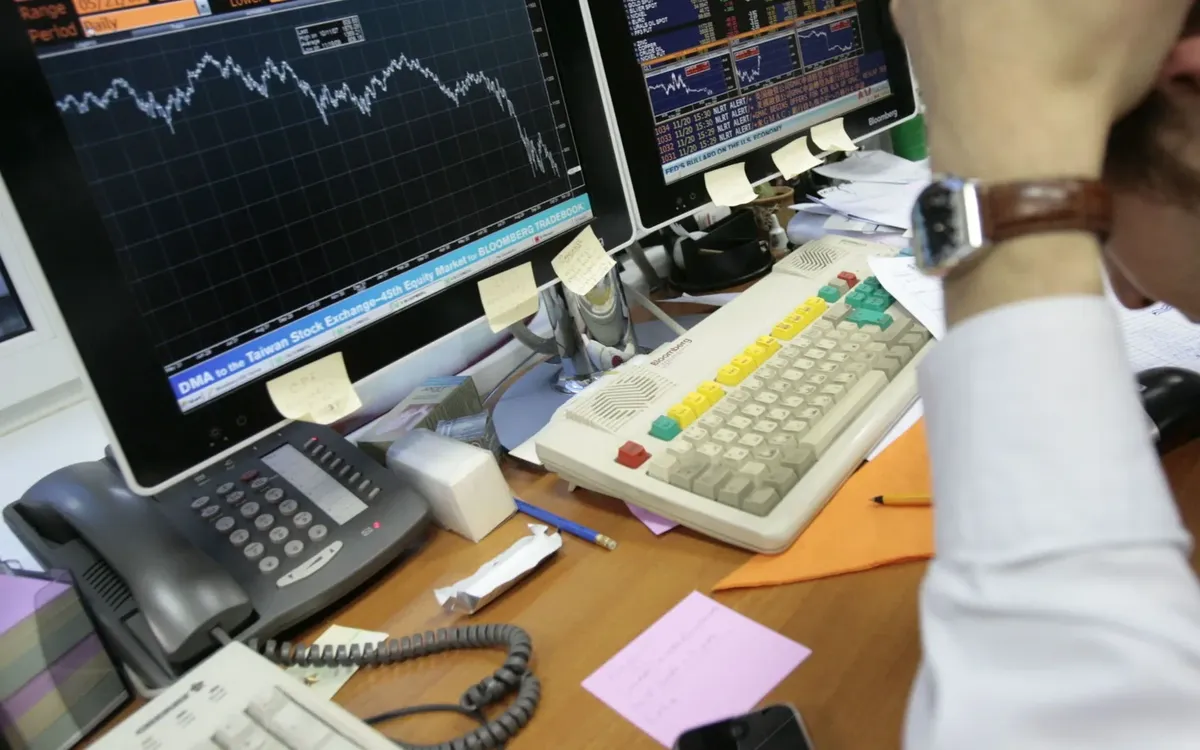
In April, announced by non-working coronavirus, the nominal GDP of Russia, according to the Ministry of Finance, amounted to 6.3 trillion rubles. This is 28% less than the indicator of the same period last year. The general compression of the economy in the second quarter, according to Bloomberg, can be 16%-these are the worst indicators from the beginning of the 1990s. Experts told Novaya, how disastriferous this fall and how the Russian economy will be restored as quarantine weakens.
Georgy Ostapkovich
Director of the Center for Conjuctions to the Higher School
- This is a very evaluative indicator. In the 20th of May, it is still impossible to evaluate the April GDP. In our country, GDP is considered a quarterly, according to the law, and the official counter is one - this is Rosstat. And Rosstat has not yet given April data. It will give them later, and then not according to GDP, but in other indicators that make up GDP.
I believe that 28% is an overstated assessment. The main economic -forming industries do not go to quarantine or distance.
We create industry, construction, agriculture and trade. These industries did not sank for such a huge value. Maybe by 5%, 10%, 12%, but as a metallurgical plant, the shoe factory worked, so they work, as oil pumped, they continue to download, maybe in a slightly smaller volume.
The services, including transport (aviation, ground transport), tourism, practically nourished the entire hotel-restaurant business, the entire entertainment industry, the entire exhibition industry-but these industries do not create GDP. This is a virtual indicator that should be treated with caution.
But the fact that April will fall is not necessary to go to the fortuneteller. And the April failure will be the most serious. GDP shows how many goods and services have been created, their market value for a certain time. And the economy is now standing still because of this "great distance."
With all due respect to the government, to the Ministry of Economy, to the State Duma - they do not produce, build, sow and plow, bring and provide services. All this is created by people - the main defendants in the growth of the economy. Some people are now under psychological pressure. There are complete misunderstandings: some say so, others. In people, against the background of this cognitive dissonance, labor productivity falls, even in those who continue to work.
I think that if everything ends successfully, then somewhere in June or in July we will begin to work again, including the service sector. Then the economy will be restored quickly enough, in one, two, maximum - three years, the fall can be compensated.
Unlike 2008-2009, when the crisis was financial, banking and debt, now we have huge reserves for the FNB and minimal public debt. We had such a macroeconomic situation either in Russia or in the USSR.
The main thing is to hold four indicators.
The first is jobs, the second is the real disposable cash incomes of the population, the third is the poverty level and the fourth is the differentiation of the population in terms of income.
All economic, social and even political adversities arise precisely because of these four indicators, and not because we will make less tower cranes, tractors, turbines or missiles with tanks this year.
Now about 2.5 trillion rubles-or 2.3-2.5% of GDP-are going to the aid of the population and business. I would think that this is only a starting position. Apparently, they look at the government and expect: God forbid, the second wave will go, all this will last, and it is important now not to squander it all, the FNB cannot be thrown away. I think there will be the second and third stage of help. And for the start, this, perhaps, is even normal, it would be possible to act more likely.
The main thing now is to help people so that they do not go depressed and, God forbid, deprivation.
Valery Mironov
Deputy Director of the Institute "Development Center" Higher School
-This is not a very accurate assessment, it is built on the report of the Ministry of Finance on income-extracts and budget deficit for January-April. And if we accept the estimates of the Ministry of Finance, which in the nominal terms of GDP fell by 28%, then in real terms it will turn out about 20-22%.
Oil production should be very reduced in accordance with the agreements in OPEC+, but this should happen in May. There are operational data from the Ministry of Energy, where it is clear that in April, production relative to the same period last year even increased by 0.9%.
Therefore, the main fall in GDP is still associated with quarantine, with a huge blow to the service sector: air transportation, sector of household services, tourism, etc.. Considering that the service sector is two -thirds of GDP, and the industry is in the region of one third, it is extremely important for the dynamics of GDP.
If we talk about trends that are related to the exit of quarantine, it is clear that our growth rate of the sick no longer grow. Of course, this is still an unstable situation, but in theory, if this trend is preserved, then we will gradually get out of quarantine.
Then in May there will be, for example, not a 20% drop in GDP, but 10% in annual terms.
In June, if Moscow, Moscow Region, Peter and other large cities will leave quarantine, there will be 5% in annual terms and so on. In total, there may be a fall of 6-8%in the year, it’s still difficult to speak for sure.
The authorities began to increase government departments. If you take all measures at all, including loan guarantees, which are likely to not be repaid, you will turn out in the region of 2-3% of GDP. They say that this is not enough, and in some countries the support is 10% of GDP. But it should be borne in mind that the blow came mainly on the sector of small enterprises, and we have small businesses just three times less: it produces 20% of GDP, and in developed countries - 60%.