
Translated material
Simona Weil: Effect
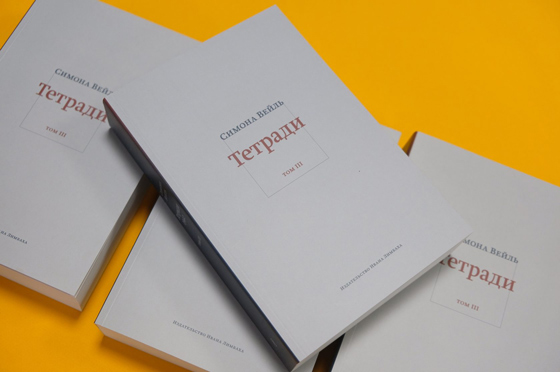
At the end of 2019, the third volume of the “notebooks” of Simona Vale (1909–1943), one of the most significant Christian thinkers of the New Age, was published in the publishing house of Ivan Lumbach. (The first two were published in the same publishing house three years earlier.) Despite the fact that Vaile’s intellectual heritage is put on a par with the “experiments” of Montean and “thoughts” of Pascal, she was not heard during her lifetime (the main thing, however, did not publish) and, it seems, remains not too heard so far. The full edition of her written, began in France more than thirty years ago, in 1989 , it is coming out to this day.
Simone is one of those who are difficult to accommodate. Protective mechanisms do not allow.
Thought and act, thought and lifestyle, metaphysics and ethics were not only inseparable for her, but simply the same thing: it was possible to think only with the whole life as a whole, otherwise the thought was felt not just incomplete, but untrue. In everything that she lived, Simon was extremely, selflessly, unbearable for those around her consistent - and at the same time incorrectly paradoxical. A fundamentally non -partisan Bolshevichka. Sent to the war (in Spain, on the side of the Republicans in the Anarchist detachment) pacifist. The Christian is fundamentally eliminated from the baptism. (She accepted Catholic baptism only a couple of months before his death, secretly, in the hospital, by the hands of her friend, Catholic Jewish Catholics of Simona Deitsa. This secret of Deits, at the request of Simona’s mother, kept until the 1970s .) With visible paradoxes, the path of Simona is actually exceptionally logical: she always lived only in the limit of her requirements for compliance with the essence and appointment of man.
“She does not spare herself in efforts to embody,” wrote Angelika Krogman, the author of her German -speaking biography “Simon Vale, which testifies to herself,” published in the Russian translation by Mark Bent in Chelyabinsk in 2003. Her Russian biographer and translator Peter Epifanov explains this: “To be incarnated for her to become “ someone ” ; This meant becoming “nothing”, “dissolve in the universe” and thereby join the embodied God - for only the God of the embodied, suffering, who came to the bottom of the possible human misfortune Simon was ready to recognize the true God. ”
“Let the body for the human soul,” she wrote, “will become the whole universe. To identify with the universe itself. ”
The third volume of Russian translations of “notebooks” incorporated notes for February -June 1942. Now in the same publishing house the fourth, last, in July 1942- August 1943 is being prepared.
About the personality of the author of these records and her posthumous fate, our correspondent Olga Balla-Gertman speaks with the translator Peter Epifanov, whose works in addition to all the volumes of the “notebooks” of Simona appeared in the Russian language of its texts “Forms of implicit love for God” (SPb.: His publishing house, 2012) and the article “Personality and the Holy” (St. Petersburg: St. Petersburg: St. Jaromír Hladík Press, 2019). He also supplied the Limtakh edition of Tetrades with the thorough historical, cultural and philosophical comments.
- Please tell us how your work on the translations from Simone Weil began: what led (who brought you) to the idea of this work, what attracted you in Simon and from what texts did you start translating it?
- In about 2000-2001, the name of Simona Vale met for the first time in two, it seems, articles by Sergey Averintsev. I didn’t just remember the name, but for some reason attracted, something promised. In 2006 , it seems, Olga Aleksandrovna Sedakova gave me the first separate Russian-speaking publication of the two works of Simona (Simone Weil. Frone. The letter to the clergy.-Kiev: Spirit and LIITER, 2000).
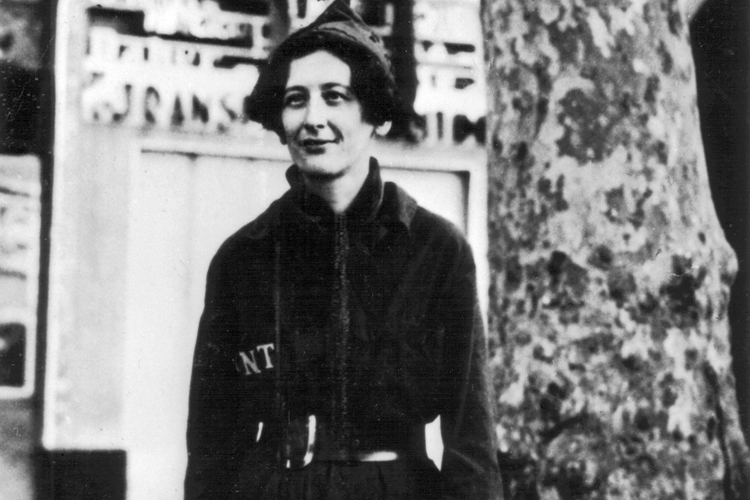
Read there left me a feeling of annoyance. Not knowing French and not having the original in my hands, I could only appreciate the degree of fidelity of the translation in the slightest part. Only rude flaws were striking: in places it was even clear to me that Simon could not be so to say. I had a feeling that translators do not like Simon; Her very voice was transmitted in the book very unsympathetically. However, in those reading in the original language, Simon sometimes causes severe irritation; Therefore, perhaps the share of my annoyance should not be attributed to the account of translators. In the book I certainly liked one thing: Simona’s photograph, as it turned out later, made at the age of thirteen. Her face, her eyes immediately and firmly pulled me to this soul. I began to think a lot and even pray for her.
The next important milestone was the evening dedicated to Simone, which was arranged by her first translator in Russia, Natasha Lyquintseva, who was preparing for the press, her collection “Heaviness and Grace” at that time. It was, if the memory does not change, in May or June 2007. After the evening, there was an unexpected one: one of its participants (I say “participants”, because the discussion followed the fascinating story), with whom we were not familiar, came up to me and presented the book by Angeliki Krogman “Simon Weil, testifying to himself”. She came out four years earlier in Chelyabinsk and by that time managed to become a rarity. “Take it, let it be yours,” he said. “For some reason, it seems to me that it will come in handy.” The book really came in handy. It is written popularly and at the same time very carefully and thoughtfully. There is nothing better in Russian as the first acquaintance with Simone.
At the end of January 2008, I went to Paris, where I spent about three months. I was in France for the first time. The goal was simple: buying in stores all the works of Simona Weil, for which there will be enough money, try to transfer one of them. In the reserve, I had scraps of memories of basic, very short, French classes in the fourth year of the university. From this point there was now, twenty -four years later, to start again.
In Paris, five people helped me a lot. In general, there were much more of them, to talk about everyone for a long time, and I will only say about those about whom it is simply not entitled to say.
The first is Galina Pogozheva, a Russian poet, living in Panten, the suburbs of Paris. With her gracious help, I found inexpensive housing there: more precisely, she herself found him for me. It was possible to come to her for any advice and support and simply, as they say, take away the soul. There was another wonderful woman-Nadezhda Sechinskaya, who at that time, who worked at the library of the Parisian St. Sergius Orthodox Institute. In her reading room, I could sit and work in silence from morning to evening (in my attic it was far from so convenient). Nadia surrounded each of her readers with an inconspicuous, but unusually warm, truly maternal care. Far from the homeland, such things are invaluable; I cannot remember some moments of her concern without tears. I was allowed to have lunch in the Sergievsky Compound-a matter of tremendous importance if you have every centitim and you, buying expensive books, as once in a student season, save on food.
Francois Fedier, a famous philosopher, a student of Heidegger (Olga Sedakova also gave me a recommendation to him: she can be called the godfather of my work on Simona), provided me with invaluable help. Recently, a famous critic reproached Pushkin in “school pathos” (in other words, badly) for repeating the poems “from Pindemonti” of five “emotional words” in two lines. But, as you can see, I just can’t do in my story without such words, and therefore I will not be shy. Priceless, I repeat, the help of Fedier was in two things. First: at the second or third meeting, he told me, with a great creak of his first translation from Simona: “And now we must take up her“ notebooks ”. The most important thing in them. ”
It was about four volumes with a total volume of almost three thousand pages with a clean font. It seemed absolutely impossible. But maybe his calm confidence and gave me now, twelve years later, to complete the translation of “notebooks”. The second part of his help: in reinforcement of his words, he simply took out these four volumes for me. At the request of Fedya, his friend, who held an important post in the Gallimar publishing house, gave them to me as a gift.
Florence de Lusi, an employee of the National Library and, briefly say, the chief publisher of the works of Simona Weil in those years, gave me several more volumes. Those who open any volume of the full works of Simona - there are about twenty of them - will understand what colossal work it is, including the organizational one: dozens of scientists - historians of philosophy, antichists, mediaists, Sanskritologists, worshipers and others are involved as consultants and commentators; In a very significant part, this is Florans. Among my main Parisian benefactors should be called the philosopher Philip Arzhakovsky, who kindly agreed to be a translator during our first conversations with Fede, when it was difficult for me to connect a few words in French .
Then, partly in the attic of the house opposite the Church of Saint-Germain de Panten, partly in the reading room of the Sergievsky farmstead, my first translations from Simone were made. These were the articles of 1942 from her posthumous collection “Waiting for God”. It was not so few: after five years, these translations made up the main part of the book “Forms of implicit love for God”, published in St. Petersburg on the initiative of the philosopher and translator Taras Sidash.
“You noticed that even Simon’s brothers in culture“ sometimes causes severe irritation ” - means a misunderstanding and/or a desire to defend herself from what she says? What would you call it the reason for this rejection?
- I do not remember that I used the expression “brothers in culture”. It is not entirely clear to me what it means. This refers to all cultural Europeans (that is, brothers in European culture), European humanities, thinkers?
-I mean something very simple: people of the same cultural circle with her-say, intelligent French (in a rude approximation)-those with whom she had a more or less common symbolic system.
- As for the symbolic language of Simona, it is also not easy. Its symbolic language - this can be seen in the student - developed under the influence of Plato and Spinoza. And fairy tales - for example, brothers Grimm. Tales for her will also forever remain a storehouse in this regard.
In general, Simona announced many and during his life - to dress with a careless manner of dressing (“She regally neglected not only the canons of elegance, but the most elementary rules - to look so that they did not look back on the street,” writes Gustav Tibon), stooping, monotony of speech, harsh, never removed the smell of cheap tobacco ... irritated by impenetrable tobacco ... irritated persistence in the protection of some position. But according to the memories of her, it is clearly visible that this was usually the first reaction, which among many of her interlocutors was gradually replaced by respect and lively sympathy.
It is interesting that it is much better than intellectuals, it was perceived by people simple: workers, peasants, fishermen, and servants. A great many evidence has been preserved about this. Even the police officers who had a search in 1941 ... There is something significant in the fact that the tombstone for her grave fifteen years after death-all this time the grave was not marked in any way-not one of the relatives ordered, but the Parisian worker who once did not work with Simone at the Renault plant.
As for her written, then, first of all, our contemporary is annoyed by the preaching of her articles of the last period. “Again, someone wants to graze the peoples,” said one of my interlocutor. “What a bore” is a review of another reader. Yes, she was sure that something worldly important was opened to her and her duty to literally repeat about it. Her worldview, as it developed by the very end of the thirties-even, rather, somewhere between 1940 and 1941-extremely whole and comprehensive. Such integrity is easy to take for fanaticism.
An irritable and unconditional fidelity of Simone Plato is annoyed. Just as many in the philosophical community are now annoyed by Heidegger's loyalty to such thinkers as Fedier and Bibikhin.
A separate topic for irritation is what is sometimes mistaken in Simon, seeing in this something irrational, even hysterical. I repeat: Simon’s gaze at everything - at religion, politics, national relations - is targeted in themselves. In its universal Christianity, which absorbs what seems to it to be the deep content of all traditional cultures and religions and masses of philosophical schools around the world, there is no place for the idea of the “chosen people” - neither in the traditionally Jewish or traditionally Christian sense. Everything that speaks of “chosenness” and a special assessment of national history (any) is an unacceptable assessment of the national history based on this view, and it speaks of this extremely sharply. The ideas of the “chosen people” represent the reincarnations of both the Marxist doctrine of the “chosen” class and its “infallible” party, as well as the Nazi cult of the Aryan race.
It is known that, living in Marseille in 1940-1942, Simon gave a lot of effort to save Jewish refugees from the occupied territories. Ferling English well and having certain acquaintances, including among the functionaries of the Vichy regime, she tried to seek for many people permission to enter America on different channels. In addition, it was associated with the circle of local Catholic activists who also served as the salvation of Jews. At the same time, in his writings, Simon almost (namely: at least one such place I know) does not speak anywhere about the extermination of Jews as a separate head of the crimes of Nazism. She herself wanted to die in the fight against Nazism, protecting all his victims, Jews and non -Jews - but not as a Jew (as, for example, Edith Stein died). Even this seems to her a isolation, lurking the thought of chosenness.
I would consider all her statements on this subject in the context of her religious views and her entire philosophy, figuring out as deep as possible, which is behind it. There is a desire for the creation of an unconditional human, even the God -human fraternity. The goal is at least humanly unattainable, but implicitly inherent in all aspirations for the beautiful. The same as is the basis of Christian teaching; But Simone greatly extends the concept of his “universal” - more precisely, comprehensive - nature. (I mean the interpretation of the ancient term Katholikos , from which the name “Catholic (that is, all, universal) is the name. This term exists in Orthodoxy, only the content of it is invested somewhat different than in Catholicism.)
But now I risk starting the retelling of Simona with some common, too pathetic words, and this will be a very bad service on my part. Let the reader try to figure it out.
-Do you think someone continues among the French thinkers, what has been started by it?
- Unfortunately, I am not at all well -read in modern French philosophy. Even in existing translations. I do not know about attempts to such a continuation from one of modern thinkers whose names by ear. At the universities, as I were told, now they are not studied. I know firmly that she greatly and diversely influenced such a famous poet as Philip Zhakota. Can Jacott be considered a thinker, philosopher? I think yes.
- I also think so (in the end, the thought not only and not in the first place of academic forms). And how would you appreciate the perception of Simona by today's Russian readers?
- Judging by most reviews that reach me over all these years, the perception of Simona by Russian readers is in captivity of templates and so far does not want to get out of it. People like to adjust her itself, her thoughts and words under the previously certain categories. The fact that she herself considered the regrettable evasion of truth. As a rule, we want not to learn something, before the unknown, not to discover the thinker as a kind of big, new world, but to “smash” the author: your own? stranger? We (this can be said about almost everyone) have a set of indicators that allow as quickly as possible, saving time and effort, reading diagonally, determine the author - “good” he or “bad”. Or this way: "I like this, but this is nonsense." In the best case, somehow “classify” the thinker, again based on a pre-finished scheme. I think that Simon will not be able to understand this. In this way, nothing can be understood in the field of the human spirit. So it will not work to be attentive, fair and wise - but this is the main thing that Simona wants from us.
- Do you see in our culture thinkers close to it or comparable to it?
- I do not see close to her (as far as I know and understand it), but this is the result, possibly my little well -read. Comparable? It depends on what to compare. I did not specifically engage in such a comparison. I find some individual thoughts, intuitions to her in thinking contemporaries and contemporaries, often. About eight years ago, I wrote one young poetess that I see such proximity in some thoughts that she publishes on her blog. She replied: "I can’t stand this fool."
Why wouldn't I want to compare her with one of the living? After all, Simone is not just two dozen volumes of written: it is also (and maybe, first of all) a life lived ...
И все-таки, по моему ощущению, в русской культуре у Симоны есть как бы далекий брат — конгениально близкий ум, близкая душа. И даже близкая судьба, при всем внешнем несходстве обстоятельств жизни и смерти. И, мне кажется, имей они случай видеть или читать друг друга, они признали бы друг в друге «своего» в самом глубоком смысле. Это Осип Мандельштам. Возьму ли я «чердынские» и «воронежские» стихи, «Стихи о неизвестном солдате» — я чувствую, как в них буквально бьется сердце Симоны. Это мысль о безличном растворении в тайне времени, истории, среди бессчетных ее жертв. И еще — в какой-то возрождающей силе земли. И не только мысль, а экстатическое переживание этого — общее у обоих. Многие мысли и интуиции «Разговора о Данте» тоже буквально звучат мне голосом Симоны. И его четырехлетнее, начиная с первого ареста, медленное схождение в ад, и конец в лагерной яме среди сотен безвестных мертвых тел — это мысленно пережито, осмыслено и принято Симоной, в том числе для себя. Это понимаешь, стоит вчитаться в ее работу «Любовь к Богу и несчастье» и во многие места «Тетрадей». Симона не могла хотеть для себя такого конца (она сама говорила, что вне самообмана желать Креста невозможно), но она приняла бы его как высший из возможных даров. Страшно сказать, смерть Мандельштама для нее — эталонная смерть. В ее идее не единократного (как в каноническом христианстве), но постоянного, извечного распятия, умерщвления воплощенного Слова Бога такая смерть — воплощение божественной Жертвы, стоящей в центре бытия мира.
Поэтому я считаю совсем не случайным, что столь глубокий читатель, как Филипп Жакоте, вспоминает Симону Вейль, говоря об одном из поразивших его стихотворений Мандельштама («Умывался ночью на дворе…» (1921)).
«Редко у меня возникало, как с его поэзией, чувство, будто я шагаю по некоему пути — шагаю бок о бок с Неопровержимым и Правдивым и благодаря ему », — писал о Мандельштаме в одном из своих писем Пауль Целан. Именно это ощущение возникает у меня при чтении их обоих — Осипа Мандельштама и Симоны Вейль.
— А лично для вас здесь и сейчас что важно в мысли и мироотношении Вейль?
— В течение последнего столетия мы видим нарастающее размывание цельности традиции во всех христианских вероисповеданиях. И в католицизме, и в православии, и в протестантских течениях накопилась и продолжает копиться взрывоопасная масса внутренних противоречий. В значительной степени это подстегивается желанием руководства церквей следовать, как они считают, повестке дня. Ведущие деятели церквей, их руководящий аппарат, круги, ответственные за религиозное образование и проповедь, чрезмерно политизированы, подыгрывают массмедиа и охвачены малодушным желанием удержать массу — не как каждую из верующих душ, а именно как массу. Все эти побуждения, которые Симона, беря слова Платона, называла исходящими от Великого Зверя — духа коллектива, снижают, а то и вовсе угашают то единственное устремление, которое должно быть по определению свойственно любому религиозному братству, — устремление взора к истине, источник которой верующему свойственно сознавать в Боге и Его воле. Внимательный и терпеливый взгляд на истину (по Симоне, это первостепенный критерий отношения к любой проблеме — теологической, нравственной, научной, художественной и проч., вплоть до повседневных бытовых) подменяется высказываниями, мероприятиями, кампаниями на потребу дня. Тем самым религиозные организации утрачивают смысл и основу своего существования, полностью переходя к обслуживанию самих себя в качестве именно земных организаций, то есть систем власти и распределения материальных богатств. Симона отмечала это в истории христианства, видела нарастающую опасность этого в ХХ веке, видела, как ни христианские церкви, ни сама христианская традиция, сохранявшаяся в иерархии и в народе, никак не воспрепятствовали сложению в недрах христианской Европы тоталитарных идеологий и практик, глубоко враждебных христианству и античеловечных. Более того, тоталитарные начала, внедренные в саму церковную жизнь сначала в эпоху после Константина, когда церковь вступила в союз с Римской империей, а затем в зрелом Средневековье, по убеждению Симоны, в немалой степени поспособствовали возникновению тоталитаризма политического, послужив для него моделью.
От порочной борьбы за «массы» и за «монолитное единство рядов» Симона зовет и религиозного деятеля, и политика к труду внимания, к терпеливому взгляду, устремленному на истину как на центр любого теоретического знания и любой жизненной практики. Только при усилии личного внимания, при мужественном воспитании этой способности и в себе, и в ближних, в тех, за кого ты отвечаешь, она и считает возможными и подлинную духовную жизнь, и нравственную, не циничную, политику, и настоящую науку, и настоящее творчество, и доброе сотрудничество в любой сфере труда и быта. Оно же совершенно необходимо для контакта между людьми разных национальностей и культур. Более того, Симона уверена, что школа воспитания такого внимания заложена как семя в каждую национальную культуру и в каждую духовную традицию и лишь где-то подавлена больше, где-то меньше; где-то выражена более ясно и определенно, где-то более смутно.
Задача истинного христианства, считает Симона, заключается в том, чтобы выявить и взрастить это начало в человеке любой расы, нации и религиозной традиции. Тогда возникает вопрос: а зачем это называть христианством? На него Симона отвечает. Христианство исповедует важнейшие, по ее убеждению, истины: триединство Бога, воплощение Бога, страдание и смерть воплощенного Бога. Симона уверена, что все эти истины содержатся в любой духовной традиции. Более того: что они имплицитно, неявно пронизывают собой все человеческое бытие снизу доверху. Что они являются сокровенным содержанием любой из человеческих наук, любого подлинного художественного творчества, что о них молчаливо свидетельствует любой физический труд.
Симона даже математику считает хранительницей откровения. Для нее богословие христианства — не как отрешенная от жизни дисциплина церковного знания, а как содержание всего, что делает в жизни христианин, — находит свое предельно сконцентрированное выражение в идее «посредства», которую разрабатывали еще греческие философы-досократики, считая ее математическим символом простую арифметическую или геометрическую пропорцию. Она восклицает: «Как изменилась бы наша жизнь, если бы мы увидели, что греческая геометрия и христианская вера истекают из одного источника!» Но «посредство» проявляет себя и в самой природе человеческого труда, в использовании любого орудия. Таким образом, любой инструмент — плуг, молот, корабль, электродвигатель — превращается в символ боговоплощения, союза Бога и человека.
Тем самым человек, действуя в этом мире, пусть не сознавая этого, по призванию во всех сферах своей жизни является проповедником, священником, поэтом.
Это представление Симоны я разделяю и считаю очень плодотворным. В религии эта идея от размывания и политизации возвращает к подлинному духовному созерцанию. В политике она создает основу для новых концепций развития и для каждого региона, и для каждой страны, и для всего мирового сообщества, для одухотворенной, творческой работы над их осуществлением. Она возвращает достоинство простому физическому труду и его носителю — рабочему, крестьянину, ремесленнику. (Вы обратили внимание, как невероятно в последние десятилетия унижается в «массовом» сознании физический труд? Такого в человеческой истории, в человеческой идеологии не было никогда. При том что основная масса населения Земли продолжает жить этим физическим трудом, подчас самым тяжелым, грубым и нищенски оплачиваемым.)
Я не знаю доподлинно, что имел в виду Сергей Аверинцев, когда на рубеже второго и третьего тысячелетий написал, что XXI век, если ему суждено сбыться, будет в каком-то важном смысле веком Симоны Вейль. Мысль свою Аверинцев не разъяснил подробно. Но с его словами я полностью солидарен. Для этого и работаю.
— А есть ли что-то в текстах Симоны, с чем вы не согласны, что так и осталось вами непринятым?
— В частности, ее отношение к семье, к супружеству. Симона была одиноким человеком; она ни разу в жизни не пережила физической близости с любимым. У нее была огромная, полная нежности и очень романтичная душа, жаждущая отдать себя в любви, но ей не случилось быть любимой. Во всяком случае, о такой любви к себе она не знала. Впрочем, смотрите, что о ней говорят современники-мужчины. Жорж Батай: «Ее бесспорное внешнее безобразие отпугивало, но лично я считаю, что в ней была и самая настоящая красота. <…> Она пленяла властью очень нежной и очень простой; это было удивительное создание, бесполое, с долей чего-то рокового. Всегда черная — в черной одежде, волосы как вороново крыло, смуглое лицо. Вне сомнения, она была очень добра... <…> Ей явно не хватало юмора, однако уверен, что внутренне она была больше с сумасшедшинкой, более живой, чем думала о себе сама…» Поэт Жан Тортель: «Она имела очень большой и искривленный рот; но даже с этим ртом, если бы к ней тянуло физически, она была бы невероятно сексуально и чувственно привлекательной». Итак, Симона могла быть любимой, но что-то (долго выяснять и говорить, что именно) мешало ей это в себе открыть.
Кроме того, у нее были весьма неоднозначные отношения с родителями. С одной стороны, она их нежно и преданно любила, а они не чаяли в ней души, веря в ее гениальность. С другой стороны, она страшно тяготилась зависимостью от них — и материальной, и моральной, и даже физиологической. Ее смерть (смерть — казалось бы, простое событие, но в случае Симоны этого не скажешь: ее смерть сложилась из такого множества факторов, что насыщена всякими смыслами не меньше, чем вся ее жизнь) в большой — даже, думаю, в решающей — степени была следствием разлуки с ними. Девять месяцев жизни в Лондоне были первым и последним в ее жизни опытом длительного пребывания без родителей. Пять месяцев из этих девяти, с апреля по август 1943 года, стали для нее временем медленного неотвратимого умирания. Так вот, зависимость, ощущаемая ею с невероятной силой, по контрасту с огромностью призвания, которое она в себе носила, приводила ее к очень пессимистичному взгляду на семью. У нее, слава Богу, нет на этот счет какого-то систематически выраженного учения; но сохранившиеся ее высказывания на этот счет и принятая (не без борьбы с собой) жизненная позиция кажутся мне противоречащими ее собственному религиозно-философскому синтезу. С тем же самым фактором я связываю и то, что положенная ею в основу ее аскетизма теория «рассотворения» (об этой теории «Тетради» дают полное представление) была доведена ею до опасной крайности.
Серьезная, на мой взгляд, слабость Симоны, особенно в ее исторических размышлениях, — в том, что ей не хватало серьезной школы историка-источниковеда. Она легко берет на веру сомнительные, недостаточно обоснованные теории, что не раз вызывало справедливую критику в ее адрес. Этот очевидный недостаток ее добросовестный интерпретатор и продолжатель, конечно же, обязан исправлять.
Несистематичность исторических знаний Симоны (надо сказать, что вина за это лежит не на системе преподавания гуманитарных дисциплин в École normale , лучшем вузе Франции: еще в ее студенческие годы преподаватели отмечали за ней недостаточно глубокое и тенденциозное отношение именно к истории!), отсутствие навыков исторического исследования имели следствием то, что у нее легко складывались в этой сфере предубеждения, избавляться от которых самостоятельно было крайне трудно. Многие ее представления, причем по важным для нее темам (древний Израиль, Египет, эллинизм, Римская империя, движение катаров и другие), были упрощенными и схематичными. Впрочем, историческое познание углубляется постоянно. Послевоенный период дал колоссально много, в частности, в области библейской археологии. Открытие подлинных катарских рукописей прояснило представления о том, каким на самом деле было вероучение альбигойцев, и т.д.
Должен подчеркнуть следующее: исторические заблуждения Симоны не подрывают во мне доверия к ее учению. Труд по исправлению ее несовершенств (всякий человек несовершенен!) должен быть, согласно ее же правилу, глубоким, терпеливым усилием внимания, неуклонно устремляемого на истину.
— И — я не знаю, вправе ли я задавать такой личный вопрос, но рискнем: что в вас самом изменили работа над ее текстами и их понимание? (Совершенно не сомневаюсь в том, что работа такого рода не может оставить самого переводчика неизменным.)
— Когда я прочел уже самые первые статьи, попавшие мне в руки на языке оригинала, я понял, что моя жизнь после этого не может оставаться прежней, хотя мне было сорок пять и я считал ее ход практически предопределенным. Что изменится мое отношение к тому канону церковного вероучения, который я до тех пор в течение почти трех десятилетий считал для себя обязательным и, как мне казалось, готов был отдать саму жизнь за любую, даже малую его часть.
Как уже сказано, крайний аскетизм Симоны (именно в выбранной ею форме) я не считаю необходимо вытекающим из ее учения, относя его причины, скорее, к обстоятельствам биографического плана. И меня знакомство с этим учением, напротив, развернуло в противоположную сторону. В частности, это выразилось в том, что, долгое время прожив вдовцом и считая, что сам ход моей судьбы привел меня к монашеству, я решил для себя, что должен создать семью.
С тех пор прошло двенадцать лет. В моей жизни случилось очень много всего. Куда больше произошло в жизни мира и России. Пока все, что происходит, все, что узнаю, новости каждого дня только повышают в моих глазах ценность сделанного когда-то открытия — встречи с Симоной Вейль и ее мыслью. И я по-прежнему работаю над тем, чтобы эта мысль стала доступнее нашему читателю. Думаю, что России Симона нужна как-то по-особенному . Кстати, это говорил и Аверинцев. Может быть, потому, что на других путях у нас совсем плохо получается…
Буду счастлив, если и у кого-то, лучше меня способного вместить эту мысль и то действие, к которому она побуждает, произойдет такая же встреча, которая станет началом большой судьбы. Историей правят не одни стремления материального порядка; если говорить об изменениях, о том, что фундаментально отличает одну эпоху от другой, то меняют мир идеи. И — да, идеи Симоны кажутся мне способными изменить его. This time.