
Translated material
"Copper in the lungs with us - on a nickle"
Declaratively inconsistent outline about the image of Yekaterinburg in literature and life
The publicist, translator, an employee of the Ural Biennale Dmitry Bezuglov gave his native Yekaterinburg with a plowed look and came to the conclusion that the myth of a single image of the city can be opposed to an attempt to outline him in a patchwork manner - as a conglomerate of legends, subjective interpretations and literary versions. The essay was prepared as part of the Gorky project and the Mikhail Prokhorov Foundation “Little Russia” - studies of the great literature of non -metallic cities.The urban planner Kevin Lynch noted that “most often our perception of the city is by no means sequentially,” and this essay declares intentional inconsistency and torn. There were enough monolithic myths about Yekaterinburg, and I rather want to climb for official obelisks, go through the fog that David Stubbz wrote about: “Our mind is enveloped in fog; The fog of uncertainty, which does not allow us to create new connections. ” I believe that the immersion in this fog, the isolation of small plots, their lighting is not an even glow of enlightenment, but with chaotic flashes - allow you to detect unobvious and strange relationships. I hope I can designate them.
The poet Fedor Korandei in the essay on Tyumen calls her “eternal” Russian literature; Yekaterinburg can be represented by an eternal factory, Leviathan, who offers worker Luda immersion underground and gives some hope for a return possible from under it.
In the harsh years of the city branding in Russia, the books of Charles Landry and Richard Florida flashed, and behind them smiling people, offering - not alarming local historians - as soon as possible to find the identity of the city. It was then that the Mifoderer Aleksey Ivanov, who at first shaking into the text decently Perm, and then drew a lot of Yekaterinburg through himself, released the photo book “Mountain Physics Civilization”.
Ivanov reconstructed the stories of two hundred Ural plants that worked before the revolution, including the plant from which the Katyrynburgs came out, as Empress Catherine I, found the city of de Gennin, in a letter to the founder of de Gennin.
In this book, Ivanov lovingly lays out cast -iron bricks, from which this same civilization consists, and on the first pages the reader was severely chopped: the Urals was mining, there was nowhere to run, the worker could buy freedom, but it was not possible to expel the factories out of sight. “The life of the workers was built“ according to the factory beep ”, and the biblical question about the“ person for Saturday ”had a definite answer: of course, a person for the plant.”
Such a sharpness of judgments dissolves the city where a person’s obedient to the plant flounders, leads the city to the background. At least, the Chekhov did not see a specific figure in Yekaterinburg everywhere and about everything poisonously responding in Yekaterinburg: “In Russia, all cities are the same. Yekaterinburg is the same exactly as Perm or Tula. ” However, the writer made a reservation, pointing to the special, industrial nature of the inhabitants. “The local people inspire a visiting something like horror. Holy, lobele, broad -shouldered, with small eyes, with enormous fists. They will be born in local cast -iron plants, and at birth they are not a midwife, but a mechanic. ” Anton Pavlovich did not write more about the city.
Chekhovsky cursive, notes about three days of stay in 1890, draws a dirty provincial anywhere in which the cabmen are not suitable for anything. In 1917, Boris Pasternak saw in Yekaterinburg a clean and sedate city - "like in Europe." This is exactly how he will appear in the story “Childhood of Schures”, published in 1922. The father of the main character, Zhenya Shuvers, ignoring the family dinner, did not touch the fork and knife, and " his device remained clean and bright, like Yekaterinburg."
Perhaps the city seemed clean and bright to the poet and former mayor Evgeny Roizman - in 2014 he found the interlocutor with a capacious tweet: "You have dirt in your soul." In 2018, the team of the Gornozavodsk civilization project squeezed the listed plots, releasing a series of postcards about Yekaterinburg, on which Roizman's tweet and Chekhov’s replicas flaunt. But back to Pasternak.
In the evening, his Zhenya, who survived during the day, moving to a new apartment in Yekaterinburg, is tired - "as if she had participated in the impression and moving of those heavy beauties and torn." She was hurt. A day full of important events, and dear to her the image of the city began to go into the past. In search of her own, her native Urals, she decided to run through the living room to the kitchen, “she forgot why she ran, and did not notice that her Urals were not in Yekaterinburg, but she noticed how gradually, in Yekaterinburg and how they sing below, below them.”
And so I, not being Zhenya, without running from the living room to the kitchen, trying to see the one, my native Urals: to find out the image of the city, to accommodate it with how it is recorded in my memory; With how it is in the texts. And I also don’t notice him, I can’t recognize myself in the vignette of Sergei Dovlatov in the “Suitcase”, which for several years I was given by new acquaintances: “I knew for a long time. He was a kind of man. Originally from Sverdlovsk. " It sounds like, but it's not right.
I don’t notice because it is possible that the city does not fit into the fireproof and still image of the endless plant, which Vladimir Mayakovsky rejoiced and which he filled up with the exclamations of “Hurray!” Louis Aragon. The city does not fit into this design only. From it, a sparkled by Aleksey Ivanov Yoburg is broken out ( “The name is evoked, arrogant, whilly, almost obscene” ); His predecessor, Sverdlovsk cannot settle in it.
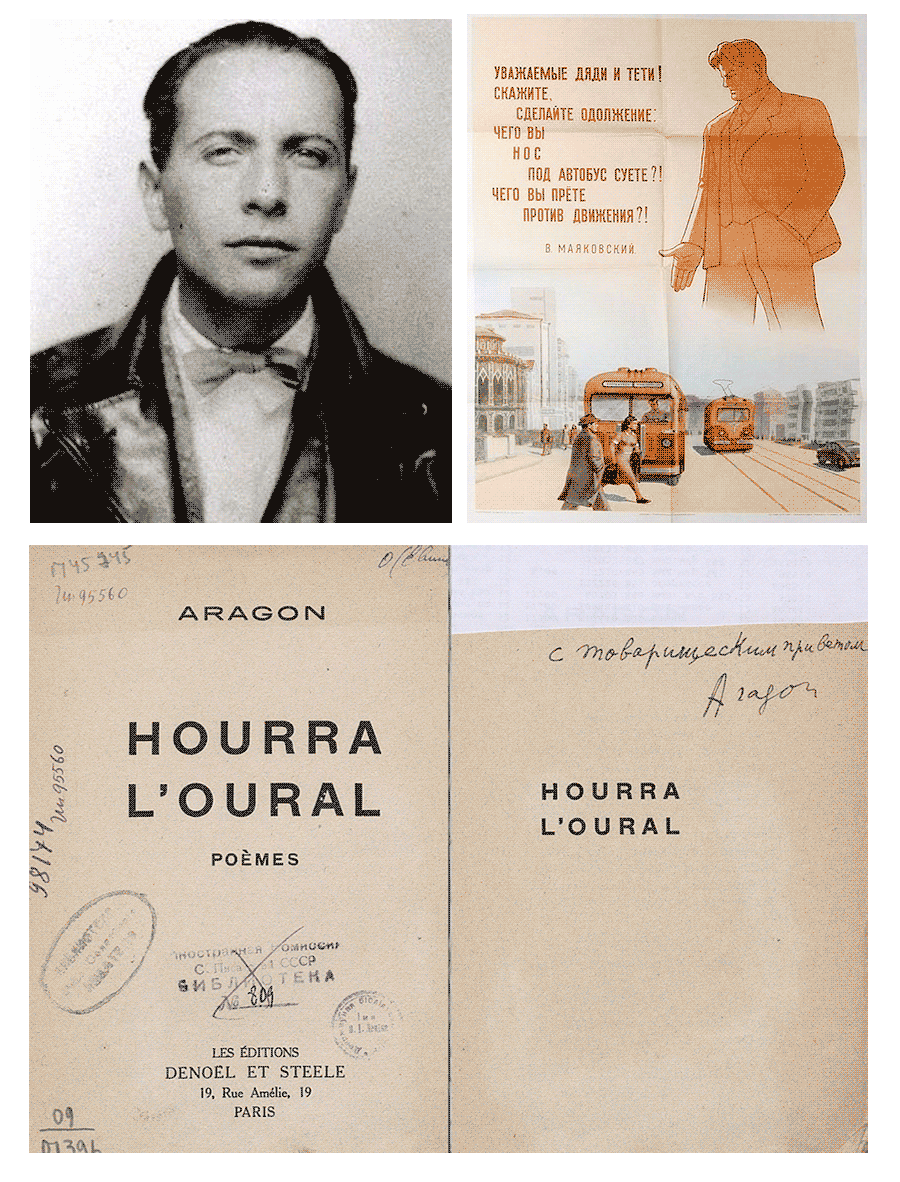
Portrait of Louis Aragon and his autograph on the publication Hourra L'Oural / Soviet poster with the image of Sverdlovsk and a quote from Mayakovsky
Photo: Archive of the National Library of the Republic of Belarus / uraloved.ru
In both hypostations, the city created its own centers of broadcasting, "party". Belonging to them charged the participants, turned household squabbles to the battles for the right to speak for sure. Other of them turned out to be All-Union-All-Russian-famous: as the Sverdlovsk rock club (Ilya Kormiltsev rose bile about it: “The famous Sverdlovsk rock in reality was a person out of ten, among the long and firmly quarreling” ) or legendary magazines-the thick “Urals” and important for the science fiction writers, which existed under the science fiction. Middle-Ural book publishing house.
Therefore, probably, I am closer to the Dovlatov vignette, but the nervous, excessive text of the writer Andrei Matveev, during the years of rock club of the Little songs of the Ural groups. Dmitry Bavilsky, in the necrologist of “Memory of Andrei Matveev, Private Person”, writes about the January issue of the Urals of 1988, in which the forces of Matveev and other editors published informal and non -printed writers: “The“ experimental number ”of the Urals officially launched a chain reaction of updating the entire literary infrastructure.”
The mimeoographic revolution of the 1960s in the USA, which cannot be imagined without Lawrence Ferlingetti, Jack Kerois and partly Burrose-the uprising of young prose writers and poets who took up the attack of thick magazines and print their Zins-turned into the Soviet Union with a rebel, and Matveev was one of the instigators.
That January number simultaneously marked the break of the era and represented the audience of authors who recently could change texts only with friends. And just in Matveev’s novel “Loneliness Castle”, published in the same same journal “Ural” (No. 10 for 1990), a dreary life story appears.
“And the next day, by the way, I bought a jeans jacket for myself, they asked for one hundred and eighty for it, but Zyuzevyakin was with me, and I bought it ninety, I had thirty, Bezuglov added me more, and I bought a gift to my daughter, I was forty -one, I was the author of four novels and then I thought that I was still thinking that I would have remembered him. initial plan) fifth. And I rejoiced as a child that <...> I bought a medium-sized jeans jacket and a gift to my daughter, for some reason I remember this very often, look at the sky, and then I take my eyes off, although-who would tell me that I was wrong? ”
This Bezuglov, unlike Dovlatovsky, is close to me. Firstly, the case happens in the nineties, which is easier to look at, secondly, this is my father, and thirdly, this is evidence from within one of the many parties, which was full of a city, experiencing a cheerful and evil fall into a free market.
Each of these parties created its own field, which allowed to move away from the monomifa, affirmed from the outside: not to be a "city-plant", but to be a center of rock music; introduce yourself to an alternative center of a fantastic fandom .
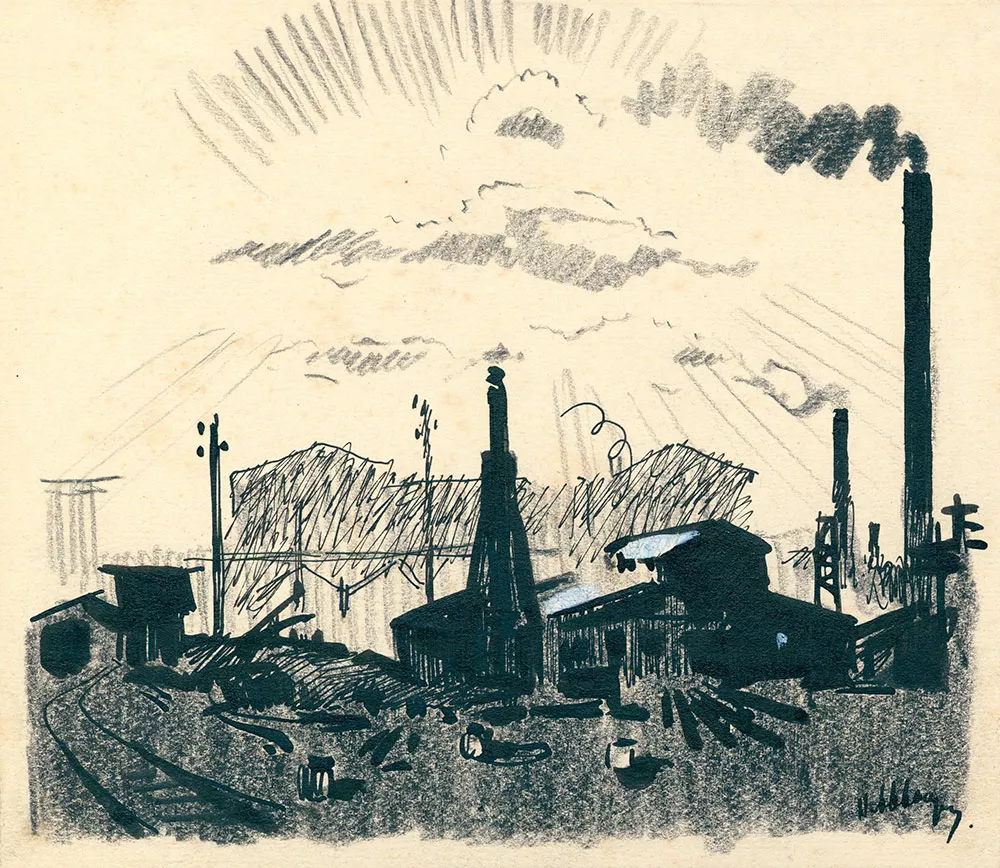
Nikolai Avvakumov. Factory yard. Early 1930s.
Photo: Emia
Later, the city temporarily managed to become the center of the evil, deliberately regional hip-hop; It is a pity that this city legend did not gain the sonority, which was filled with a similar story in Rostov. In the middle of the zero grouping “Mountain Shield”, certifying itself “Urals Wu-Tang-Clan”, in the track “G.E.T.T.T.O (city of Ekaterina slums goods turnover)” produced a local variation of a classic plot about a cruel megapolis. “When choosing a turn, I am not sure of anything / at least we have already suffered losses / in May the same as in April / calculating only fed / catch up with the sky on the roof and coughing the plan.” In the last piece of the Zhka, the “Evil” sorting out the key tags: “Reinforcement / hack / culture / stones / I don’t have to rub me, I saw all this myself”, fixing the image of the mining city in the transition period.
Finally, Yekaterinburg managed to appropriate the stupid replica of Vladimir Solovyov about the “city of demons” - and even make it a visiting card.
Of course, decisions on crystallization of a new image were made by separate voices in each individual party; I will not get the strength to offer a historiographic essay, I only want to outline the boundaries.
At the end of the thesis, I will turn to the words of Kir Bulychev, who responded to readers' letters in April 1988 on the pages of the Ural Rastype: “Talents just like that, overnight, do not appear. For the emergence of a whole direction in the literature, not only social, but also organizational conditions should be created. ”
 They were enough in Sverdlovsk-Yekaterinburg. The contacts of contacts - as it happens in friendly parties - cleared, weaved again, burst, but, importantly, they found fixation on audio cassettes, records, magazines and books, on stickers, T -shirts and other media. They opposed attempts to outline the “Symbolic Planning Horizon” , which, according to the culturologist Leonid Salmin, is “set for the time of the seating of certain power officials”.
The above does not cancel the view from the outside; For example, the text of Lydia Chukovskaya “Sofya Petrovna”, which takes place in the late 1930s, terrible with its smooth scriving.
The city city eats the young "party eagle", who came to Sverdlovsk by distribution; His first successes at the advanced enterprise are very happy about his mother, Sofya Petrovna, peacefully clicking on the keys of the machine in the St. Petersburg publishing house. One denunciation is enough to make a wonderful transformation. “Production enthusiast, Komsomolets Nikolai Lipatov, who developed the method of manufacturing felloe fellou in the Ural Machine -Building Plant,” in a couple of days becomes a Trotskyist and a hire, and Sophia Petrovna’s consciousness is experiencing a shock breakdown, a breakdown of a deep pattern: newspapers and official speeches cannot be believed more. He rotes in prison, she is in madness and despair; Uralmash continues to work - this is the variation on the topic "Man for the Plant."
Of course, the remark about internal polyphony, the choice of new images of the city now turns against me. In the texts of the authors from Yekaterinburg-Sverdlovsk there are enough “factory”, “Ural severity”, existing side by side with a sense of death. The chance to return from under the ground is not given to everyone, but everyone is acutely worried about the easting time.
In the novel, unfortunately, the recently departed Igor Sakhnovsky, the “urgent needs of the deceased”, a student of the Sidelnikov, who has been wrecking a reverent heart, who has been pockets, comes to “Mrednovsk” and chokes his military-industrial classicism. "At the pediments of culture houses, workers, soldiers and sailors with an expression of such a threatening innocence were tensely puzzled that the sites, passing under their stone glances, felt wrong and guilty."
Sverdlovsk, closed to foreigners until the nineties, ser and gloomy; The townspeople gave this sovereign the right to represent, but the procedure broke down, and the graphic representation of the city was confused, and with it the self -awareness of the townspeople.
This is noted by Olga Slavnikova in the novel “2017”: “The proportions of the industrial city themselves were classified so that the consequences of distortions, like the consequences of poliomyelitis, affected the structure of the city, both real and depicted, informing the streets of strange dislocations and forcing unreasonably wagging, breaking off wires, urban clumsy trolleybuses.”
Here are not lost by those who are normalized by the hilies of the passing; The rest sometimes has to fall into the gaps of time, to face the other side of industriality, namely, a payment for performance and nameless labor.
Sakhnovsky writes: “This city, founded a little later than St. Petersburg, at first sinned by the stupid imitation of the northern capital, as an older sister, even rhymed with it by names,” and indicates that the city ceased to fake under the Northern Palmyra “even more stringent times, spat on all family resemblance”. During the war years, Yekaterinburg accepted evacuated plants, placed production, and grew in new areas; And then for decades he converted the work in the new Marten’s stoves, residential buildings, walking excavators and military missiles. The sociologist A.K. Thompson remarks: ““ We ”<...> transient, since one generation of workers would never have managed to cope with all the stages of urban and industrial development; <...> The same workshops, erected by the historical “us”, turn out to be the space of extracting dead labor in the present. ” The city city does not remember everyone who built it, but sometimes indicates them.
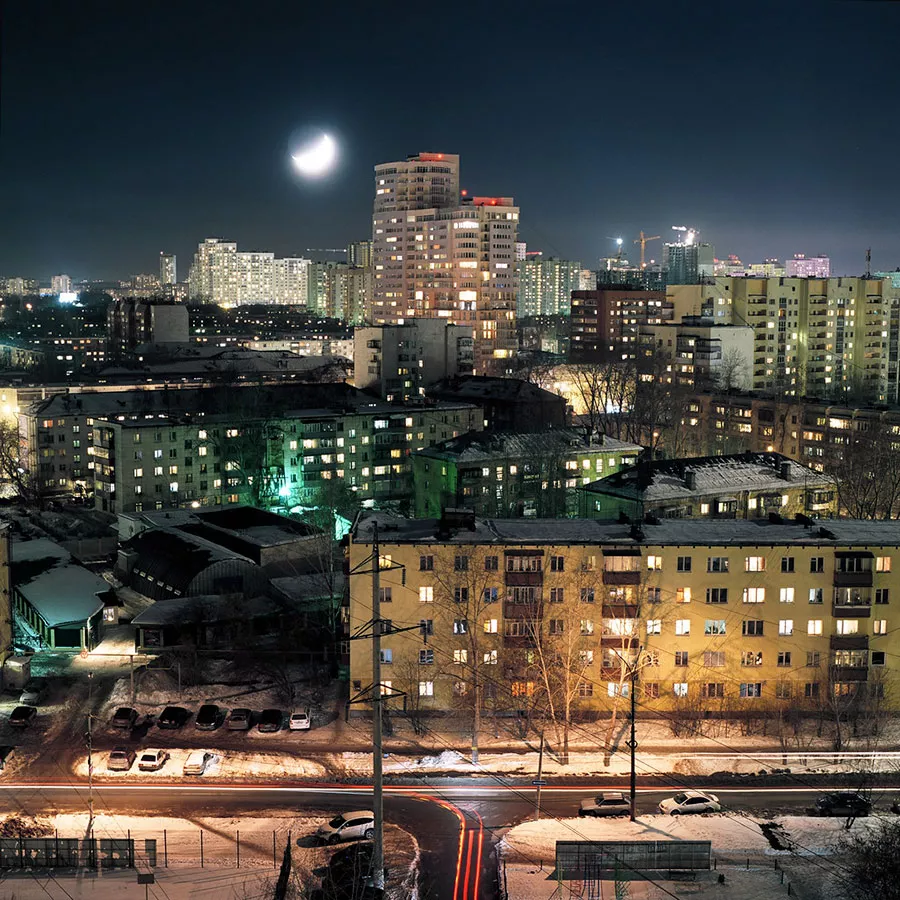
Yekaterinburg, 2014
Photo: Anton Novoselov
A student of the Entertakers in the “urgent needs of the dead”, healing a broken nose, winds the hospital corridors and suddenly descends into the nickname: “Sidelnikov recoiled, hardly took a breath and looked around the jamb again. The dead body seemed languid and warm, as if just out of bed. ” Tormented by a lasaretical timeless time, he visits the dead a couple of times and is heavily experienced by a simple thought - a barely noticeable physically noticeable border between the living and the dead. “And the simultaneity of the observed processes was most striking: these are sitting here, those - lie there. The hospital castle dignifiedly rushed over its cadaveric dungeon, relying on it as the only possible, legal foundation. ” Sidelnikov lives this knowledge, getting out of a restraint of wandering around Midnovsk.
The same border between the underground and above -ground worlds, which is thinned in Yekaterinburg, notes the culturologist Leonid Salmin, referring to the amazing story about the construction of a sunny clock, which, oddly enough, exists outside of novels, stories and stories and probably took place in reality.
In the 1990s, the head of the Verkh-Isetsky district decided to erect a sunny clock on the site next to the eternal flax at the Kommunarov Square stop, where the Kommunars, in fact, were buried.
At his request, the architect made a three -meter marble obelisk with a brass flag: some time later, the flag was torn off, and the clock turned into an incomprehensible monument. His proximity to the eternal fire completely confused the cards, and schoolchildren, newlyweds and other carriers of flowers began to bring them just in case both to the eternal fire and to the obelisk.
The head of the district, having decided to rectify the situation with a ritual name, asked the contractors who erected the clock, to supply them with an explanatory inscription. Salmin writes: “The guys close everything with polyethylene, make the inscription“ Sunny clock ”, and at the same time sign themselves who made:“ Cooperative “marble”. The cooperative is “marble” - their advertisement hung on every fence, and the whole city knew them as monopolists in tombstones ... <...> moreover. This head of the district leaves the place of the head, and by whom he leaves? He leaves the head of the Yekaterinburg Metrostroy. " I’ll only add that this cooperative (and rather LLC) was responsible for the Gargantuan monuments of the alley of criminal authorities in the Shirokorechensky cemetery, through which the city guests often walk.
I will complete the plot by the transition from the architectural apocryph to a poetic prize, which was created by the poets Boris Red, Roman Tyagunov, Dmitry Ryabokon and Oleg Dozmorov; The latter in the text “Marble Prize” writes that it was invented by Roman. <...> The territory of the company in the very center of the city looked like a rehearsal of a small but rich rural cemetery. <...> Roma, on the other hand, this species suggested a literary prize in the field of poetry. It was supposed to borne the winner of the competition for the best poem about eternity was supposed to be a lifetime marble monument in the form of an open book with his winner, a work carved in stone. Имя премии было дано по названию генерального спонсора — ООО „Мрамор”, памятники архитектурных форм».
Премия не состоялась, хотя учредителей стали забрасывать рукописями; спонсоры премии потребовали медиаосвещения, шутка переросла в дрязги, деньги спонсоров загадочно исчезли, а некоторое время спустя Роман Тягунов, предположительно, покончил с собой, а Борис Рыжий покончил с собой точно. Дозморов пишет об этом резко и грустно, отмечая: «заигрывания с лысой так просто не проходят, факт», и там же, но ранее — «только повзрослев, мы научаемся беречь близких и до смерти уже изводим только себя».
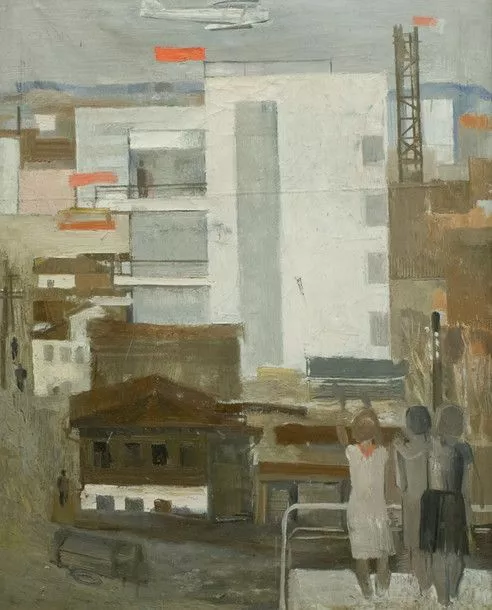 В. Васильев Свердловск
Екатеринбург, утягивающий людей под землю, продолжает стоять на месте, и желающие всегда могут столкнуться с дорогими мертвецами. Годы спустя, в подборке «Позы Ромберга» поэтесса Егана Джаббарова дает четкие указания: «морг, голубой коридор, ГКБ — 40, терапия налево», и стихотворением позже ударяет: «пойдем обниматься в морг / там висят замки новобрачных / вместе не до, а после / в черных покровах Аида».
Наконец, эти разрозненные заметки о городе — о разорванном пространстве, тяжелом труде, попытках оспорить статус-кво и удержаться на границе живого — я завершаю в точке, из которой я, в отличие от Жени Люверс, могу увидеть свой Урал.
Автослесарь Петров из романа «Петровы в гриппе» поэта Алексея Сальникова бесконечно долго едет в «тройке»; троллейбус отходит от конечной станции, в паре шагов от которой находится мой дом. Но если я в этом троллейбусе обычно ехал в школу, постукивая утренне-чугунной головой в стекло, то Петров отправляется, чтобы раствориться в запутанном, слишком внимательно описанном и при этом совершенно размытом Екатеринбурге, распивая водку с опиджаченным Артюховым Игорем Дмитриевичем, которого Ольга Прохорова предлагает считать Аидом.
Петров пребывает в лихорадочном нигде, его город не так нагл, как Ёбург; не так военно-индустриально-классичен, как Свердловск; он прерывист, не совпадает с картами, болезнен и желтоват. В алкогольной буре Петров, кажется, умрет и воскреснет; он столкнется с Цербером лицом к лицу, но память, измученная высокой температурой, не удержит четкий образ в памяти. В его городе найдется место редакции журнала «Урал», фантастическим историям эпохи «Уральского следопыта», паре рок-композиций; его город дезориентирует множество читателей по всей России, и именно этот город — в наибольшей степени — совпадет с моим чувством этого места. Екатеринбурга, после которого с Хароном, видно, придется расплачиваться медными монетами, — ведь, по словам Тараса Трофимова,
«Меди в легких у нас — на пятак.
Влез, тяжелый, насмешкою
И улегся там решкою».
Автор выражает благодарность Ирине Кудрявцевой и всему коллективу ЕМИИ за работу над выставками «Гиганты Урала» и «Передовая передового», иллюстративные материалы с которых использованы в этом материале.