
Translated material
Bicycles and cancellation of passes: how to solve the problem with the accumulation of people in the subway?
The access regime operating in Moscow for more than a month has not reduced the number of Muscovites descending to the metro. Due to the unstable working system at the stations, crowds of people sometimes occur, and some are not at all able to get into the subway.
The number of passengers, according to the Department of Transport of Moscow, decreased only within two weeks after the introduction of the access regime, and now in the subway there are 50 thousand more daily than last week.
After tightening the access control in Moscow on April 15, QR codes became mandatory for moving around the capital in any form of transport. On the same day, the number of metro passengers decreased by 15%, compared with the same day a year ago. However, these figures were reduced gradually and without a access control, for example, on April 10, only 20% of last year’s passengers took advantage of the metro on the same day.
Within two weeks, people used the metro less often, their number decreased by several thousand people daily. But since the end of April, there were more and more passengers in the subway, and after the May holidays and the cessation of “non-working weeks” , about 40-50 thousand people entered the metro more than last week. This is also evidenced by the Yandex self -isolation index , which is noticeable that, starting on May 12, more and more people appear on the streets of Moscow.
The fact that the people who need to use the metro stopped “scared” of the access control, says in their appeal to the mayor of Moscow Sergei Sobyanin, deputy of the Moscow City Duma Daria Besedina.
“If you pay attention to world trends, it is clear that no one is trying to limit the number of people in the subway now,” said Besedina MBH Media. - In the sense that no one drives people out of the subway. People need to move around the city, and we cannot force them not to do this. But we can take a certain number of Muscovites from public transport, give them alternatives. ”

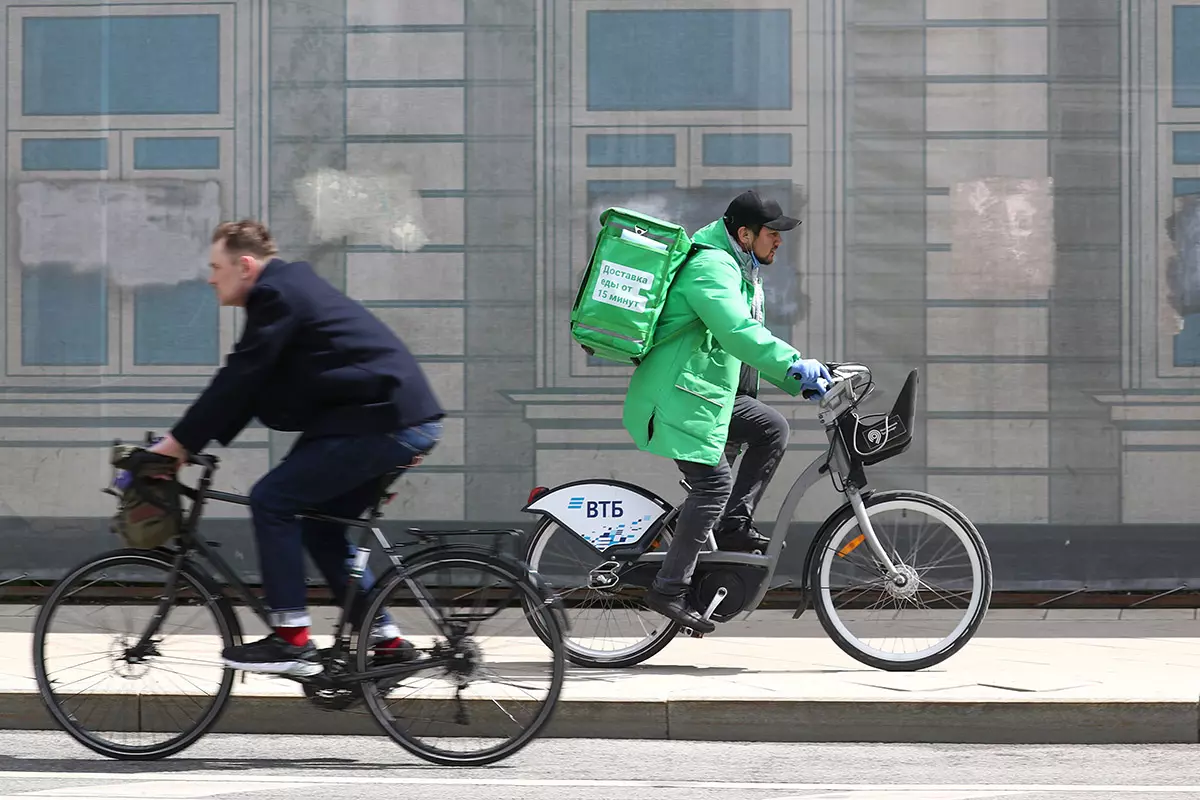
“Now the use of bicycles in cities is growing around the world,” the deputy says. - In Moscow, by the way, there was also news about the record sales of bicycles. But we do not have infrastructure for bicycles. In many cities, they are now making temporary infrastructure so that people can safely, observing the distance, move on a bicycle. This is not done with us and, in fact, this is a big problem. ”
According to Besedin, temporary infrastructure for bicycles can be created in a very short time. To do this, it is enough to use concrete blocks and paint for marking to make improvised bike paths. Moreover, in this way, she believes, it is possible not only parts of the city inside the garden ring, but also sleeping areas with the center.
“It is unfortunate that we do not squeeze things beneficial for the city from this situation,” Daria continues. - Now is the time to develop the infrastructure for bicycles. A lot of people will be afraid to use the metro and other public transport for a long time, and we, as alternatives to the authorities were ignored, are ignored. There are a huge number of examples in the world how to do it quickly and efficiently. This is being built literally during the night and with the help of things that are in the economy of any city. ”
Photos of dozens of people trying to get in the subway at the Komsomolskaya station on May 20, Urbanist Arkady Gershman, published on his blog.
“It was not so easy to make a pass through the site for all residents of the city, ” he told MBH Media. - In Moscow, not only those who treat equipment and the Internet live, but also those who, for example, do not speak Russian at all. Naturally, it is difficult for them to get this pass. In addition, many left Moscow to the cottages even before the introduction of a strict access control and now, coming to the city, they are faced with the fact that the pass should be, firstly, attached to the transport card, and secondly, is designed 5 hours before the metro entrance. If you just bought the Troika card and try to go through it in the subway, you will not succeed. ”
According to Gershman, the failures of the bandwidth occur regularly at different metro stations: “This leads to a large number of situations when people crowded in the lobby of metro stations, because they cannot go inside. This is mainly happening at stations adjacent to the stations - Komsomolskaya on the Square of three stations, “Shchelkovskaya” next to the bus station. ”
“It seems to me that the introduction of gaps is an inconsistent measure in the fight against the spread of coronavirus,” the urbanist believes. - We saw this on the first day when there were huge lines at the stations, and now, when small crowds are periodically occurred. Perhaps it is worth at least to take this regime and remove the binding of the pass to the roadway, check the gaps in selective mode. Naturally, the most logical solution is to cancel the passes in general. ”