
Translated material
Scientists from Hong Kong created an electrochemical eye. He can even distinguish some letters!
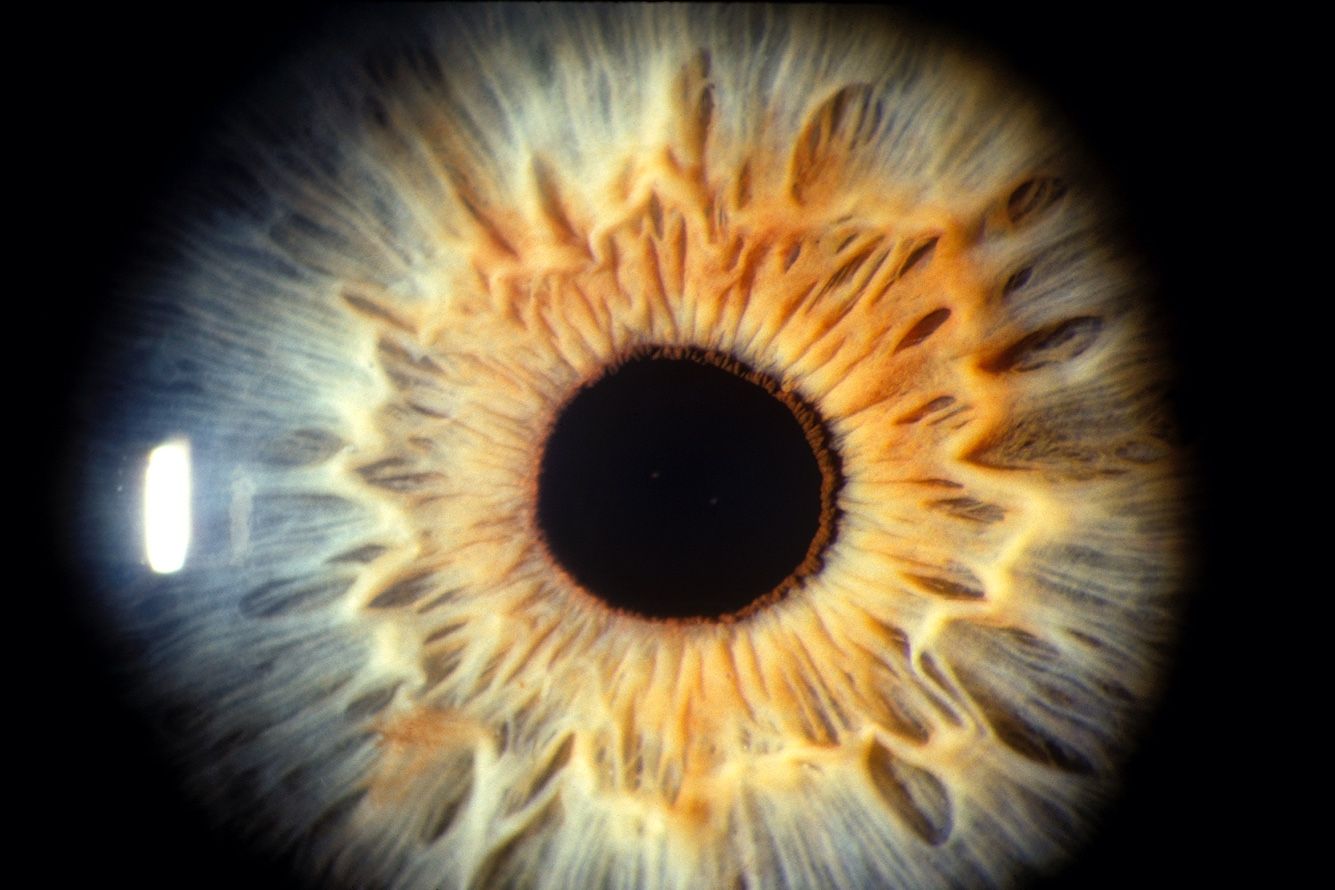
Scientists from the Hong Kong University of Science and Technology presented a prototype of an artificial electrochemical eye, the structure and principle of the work of which are similar to ordinary human eye. Unlike ordinary cameras, which are orders of magnitude exceed bio -onic eyes in detail, photosensitive elements in it are located on a concave spherical surface - this significantly improves its viewing angle and depth of sharpness. The work is published in Nature.
The human eye works as follows: the light falling on it passes through the lens system and enters the receptors in the retina that convert it into neural signals transmitted to the brain. Due to the concave hemispherical form of the retina, the human eye has a wide viewing angle of 150-160 degrees and the best ability to focus.
In their model, scientists from Hong Kong made an artificial mesh of aluminum oxide, on which sensors made of perovskite were applied - material that is widely used in the creation of solar panels. The crystal of the eye was replaced by a regular lens, the vitreous body - with ion electrilite. As threads connecting the retina with the brain, wires from gallium and India were used.
In size, the artificial eye turned out to be approximately the same as an ordinary eye of an adult. For his work, an external power source was required.
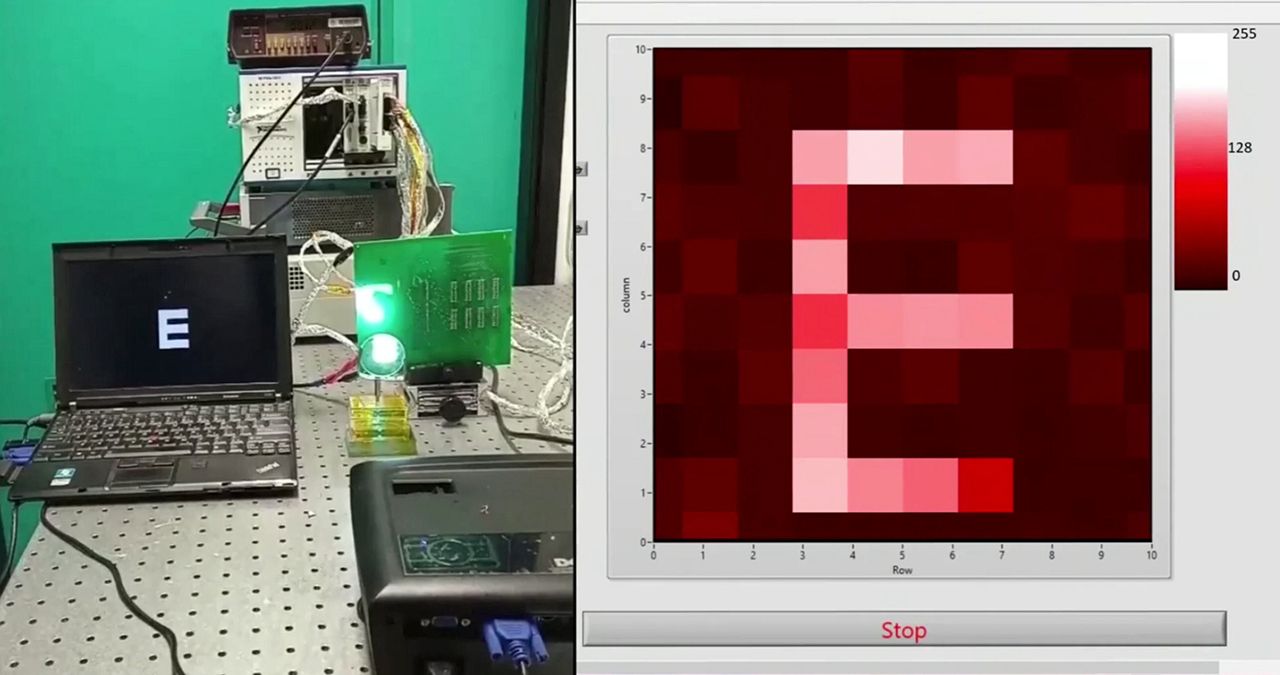
As part of the tests, the device was able to recognize the letters I, U, and E. E. The quality of the image transmitted by it is extremely low - about 100 pixels (the human eye has about 100 million separate photoreceptors, although not all of them work independently of each other). However, according to some parameters, the artificial eye is already surpassing the human: for example, it reacts to changes in lighting within 30-40 milliseconds, not 40-150.
As the authors of the work emphasize, in the future, the technology can be used both in the creation of humanoid robots and to develop improved vision prostheses.
Grigory Levchenko