
Translated material
Konstantin Bestuzhev-Ryumin
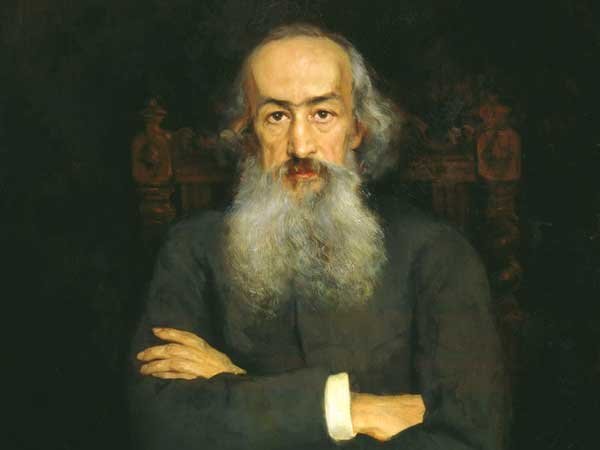
On May 26, 1829, Konstantin Bestuzhev-Ryumin, historian, founder of domestic source studies, founder of higher female courses was born.
Personal business
Konstantin Nikolaevich Bestuzhev-Ryumin (1829-1897) was born in the village of Kudreshka of the Nizhny Novgorod province, where the estate of his parents was located. Until 11 years old he studied at home, enthusiastically reading books from the vast library of Bestuzhevs. He was fascinated by the Iliad, the Orleans Virgin of Zhukovsky, Eugene Onegin, the works of Plutarch and Karamzin. Later, Bestuzhev-Ryumin admitted that Karamzin’s works especially influenced him: according to the “history of the Russian state”, he studied “high morality”, “love his native land, love good, hate evil, despise lies, flattery and treachery.” I was preparing to study the gymnasium in a private boarding house, then he studied at the Nizhny Novgorod gymnasium. After graduating from the gymnasium in 1847, Konstantin Bestuzhev-Ryumin became a student of the law faculty of Moscow University.
At the end of the university course, Bestuzhev-Ryumin lived in Moscow. He served as a teacher in the Chicherins family and in the Cadet Corps, then in 1856 he became an assistant to the editor of the Moscow Vedomosti, and in 1859 - one of the editors of the magazine Moscow Review. Then he moves to St. Petersburg, where he begins to work in the journal "Domestic Notes".
Among the publications of Bestuzhev-Ryumin in these publications there were many articles devoted to the problems of Russian history: “The current state of Russian history as science”, reviews about Solovyov’s works, “Slavophil teachings and his fate in Russian literature” and others. He was the editor of the “Notes of the Imperial Geographical Society”. In 1865 he was elected a member of the archaeographic commission and joined the Russian Historical Society.
In the same year, Konstantin Bestuzhev-Ryumin became a privat-document of the Department of Russian History of the Historical and Philology Faculty of St. Petersburg University. In 1868, he became a professor at the same department, as well as an extraordinary professor of the historical and philological institute. At the University of Bestuzhev-Ryumin, he read the general courses of ancient and new Russian history, as well as the “History of Russia in the 16th century”, “Review of monuments”, “Review of historiography” and a special course “Notes of Russian people”.
In 1868, he graduated from the master's thesis “On the composition of Russian chronicles until the end of the 14th century”, for which, “paying attention to the fact that the study presented to the defense showed the author of a deep expert on Russian history and was knocked out of a number of other master's work”, the University Council decided to award the degree of not a master, but a doctor of Russian history.
In 1882, after a serious illness, Bestuzhev-Ryumin left for Italy, where he lived until 1884. He resigned from a professor’s position and worked in the archaeographic commission until the end of his life and wrote articles and reviews on history, publishing them in the “Journal of the Ministry of Education” and the “Russian Herald”. In 1890, he was elected a full member of the Imperial Academy of Sciences.
Konstantin Nikolaevich Bestuzhev-Ryumin died of pneumonia on January 2, 1897.
What is famous
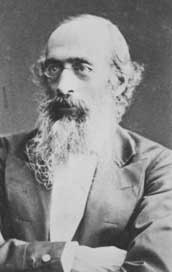 Konstantin Bestuzhev-Ryumin
Bestuzhev-Ryumin became the founder of a systematic study of sources in Russian history. One of his main works “On the composition of Russian chronicles until the end of the 14th century” is devoted to this topic. In the future, the scientist compiled a classification of historical sources, including, in addition to the annals, legal documents, literary and folklore monuments, the lives of saints, the legends of foreigners, letters, material sources. Developed methods for assessing the reliability of the annalistic sources and dating them.
In 1872-1887, the main work of Bestuzhev-Ryumin “Russian History” was published, conceived with the aim of “presenting the results obtained by Russian historical science in the year and a half of its development, to indicate on the path that these results were extracted and obtained, and at the same time, introduce into the circle of sources that are currently available to the scientific activity,” as well as “give more materials and instructions for the formation of their own judgment”. The presentation of domestic history in this work was brought to the election of Mikhail Romanov to the throne. In the book of Bestuzhev-Ryumin, for the first time, not only the history of the leading Russian principalities, but also all the specific principalities separately was considered in detail. The scientist also for the first time in the course of Russian history examined in detail the history of the Grand Duchy of Lithuania.
Konstantin Bestuzhev-Ryumin was also engaged in the popularization of historical knowledge. It was written by several books, as they said “for folk reading”: “On the Baptism of Rus'”, “About Vladimir Monomakh and its descendants”, “On the evil times of the Tatarshchina”, “On how the Moscow state grew”. He actively participated in the preparation of encyclopedic publications. In 1861 - 1869 he was the editor of the department of Russian and Slavic history in the "Encyclopedic Dictionary" of A. A. Kraevsky.
Bestuzhev-Ryumin also translated historical works into Russian, for example, the famous “History of civilization in England” by Henry Thomas Bokle.
What you need to know about
Bestuzhev-Ryumin was the founder and first director of the highest female courses in St. Petersburg to gained a fame called Bestuzhevsk courses. There were three departments in the courses: verbal-historical, physical and mathematical (natural) and specially mathematical. The highest women's courses existed for 40 years, from 1878 to 1918, and in 1918, courses, which were by that time, were united by the Third Petrograd University with the first Petrograd University. Bestuzhev courses went down in the history of Russian education as the only higher female educational institution that survived the reforms of the 1880s. Thanks to the Bestuzhev courses in Russian society, a new social type appeared - a purs user.
Direct speech
K. Bestuzhev-Ryumin about the “official” chronicles: “The chronicle in the Moscow state increasingly received the importance of the official document: already at the beginning of the 15th century, the chronicler, grabbing the times of“ the great Seliverst Izdobuzhsky, unraveling the writer, ”says:“ Our Holders are the most good and non-shaped to the adherents to sign it. ” Prince Yuri Dimitrievich, in his searches of the Grand Ducadial table, relied in the Horde on old annals; The Grand Duke John Vasilievich sent to Novgorod the clerk of Bradatat to prove to the Novgorodians the old chroniclers of their lie; In the inventory of the tsarist archive of the times of the Terrible, we read: “Lists of black what to write in the chronicler of the times of new ones”; In the negotiations of the boyars with the Poles under Tsar Michael, it says: "And in the chronicler we will write this for future births." The best example of how to carefully relate to the legends of the annals of that time is the news of the tonsure of Salomonia, the first wife of Grand Duke Vasily Ioanovich, preserved in the same annals. According to this news, Salomonia herself wished to be cut, and the Grand Duke did not agree; In another story, also, judging by the solemn tone, official, we read that the Grand Duke, seeing the birds in pairs, thought about the inexperience of Salomonia and, having consulted with the boyars, divorced her. Meanwhile, from the story of Herberstein, we know that the divorce was violent.
The historian E.F. Shmurlo about Bestuzhev-Ryumin as the founder of source studies: “In contrast to Solovyov, Kostomarov, later Klyuchevsky, Bestuzhev-Ryumin's lectures were not so much an image of the past from the famous angle and the coverage of the whole set of phenomena of the historical life of the Russian people, but by a critical analysis of other people's views and constructions. Scientific skepticism and a distrustful attitude to theories generally go hand in hand with a caring desire to protect his listeners from the temptation Jurare in Verba Magistri. Its teaching was based on a strict study of sources, the analysis of other people's opinions, especially controversial, careful weighing of opposite theories. <...>
Sources, multi -based assessments and processing, bibliography occupy a prominent place in the book [“Russian History”], and the author himself avoids expressing his own judgment if possible. The reception, by virtue of which the teacher himself kept in the shade, and forward the opinion of others could not create schools, especially since the main understanding of Russian history was the Bestuzhev-Ryumin, despite not some differences, only after Solovyov. Without expressing a new, original thought, Bestuzhev-Ryumin, however, clearly expressed, consistently carried out and introduced into consciousness the principle of comprehensive study of the phenomena of the past, strictly scientific objectivism, the support of which is preliminary criticism and a thorough analysis of facts; This is his merit and the right to a certain place in Russian science. Having paid the first place to the first place, beliefs and the mental development of each era, Bestuzhev-Ryumin practically confirmed his position on the importance of critical study of sources with vast and valuable work (“On the composition of Russian annals until the end of the XIV century.”). By laying the basis of historical work criticism and comprehensive analysis, Bestuzhev-Ryumin, with enormous memory and extensive readiness (he was a great expert on the Bible, Dante, Shakespeare, Russian literature, ancient and new), possessed the talent of the presentation: a harmonious concept, lively, bright images, sensed characteristics added great fascination with university lectures. "
5 facts about Konstantin Bestuzhev-Ryumin
- One of the teachers of Bestuzhev-Ryumin in the Nizhny Novgorod gymnasium was Pavel Melnikov, a future famous writer.
- The first article by Bestuzhev-Ryumin was published by the Nizhny Novgorod Provincial Vedomosti in 1847, when he studied in the graduation class of the gymnasium, and was dedicated to the “selected places from the correspondence with friends” of Gogol.
- Bestuzhev-Ryumin was the author of a number of articles on Russian history in the “Russian Biographical Dictionary” and “Encyclopedic Dictionary of Brockhaus and Efron”.
- Bestuzhev-Ryumin was invited to the Department of Russian History of St. Petersburg University even before he wrote a master's thesis.
- In 1864, Bestuzhev-Ryumin was invited to teach Russian history in a royal family. His students were the future emperor Alexander III and other members of the imperial surname, including Grand Duke Konstantin Konstantinovich , who became a poet in the future.
Materials about Konstantin Bestuzhev-Ryumin
Materials about a scientist on the website of St. Petersburg State University
Konstantin Bestuzhev-Ryumin in the Efron Encyclopedic Dictionary
Works of K. N. Bestuzhev-Ryumin
Article about Konstantin Bestuzhev-Roymin on Russian Wikipedia