
Translated material
Ethics
In what conditions the public collegium for press complaints works
On May 26, the results of the elections were announced to the public collegium on complaints about the press of the fourth composition. In many ways, they reflected the situation that has developed in the Russian media sphere as a whole. The collegium has existed for 15 years (and taking into account the experience of the “Big Journal of Journalists” - more than 20 years) and made 212 decisions during this time, but the general public about its activities, unfortunately, is not known.
To explain the mechanism of work of the college, let's start with the perfect example - the history of the complaint No. 202 of the Chairman of the CEC Ella Pamfilova to the Associated Press news agency. Pamfilova agreed to an interview with the correspondent of AR Natalya Vasilieva, which was recorded on August 27, 2019 about an hour and concerned the acute issues arising in connection with the withdrawal from the elections to the Moscow City Duma of opposition deputies. On August 29, the plot of Vasilyeva was published on the Apnews website, containing excerpts from this interview and the author’s text, which could be perceived by the audience as “rocking quotes” (term from the decision of the board). Pamfilova considered that her synchrons were torn from context, and made a claim to and. O. Director of the News Bureau of the Moscow Bureau AR Harriet Morris. Partly claims were recognized as reasonable, and the head of the CEC apologized.
Pamfilova considered this insufficient and turned to the public collegium for complaints about the press. The CEC and the Associated Press recognized the “jurisdiction” of the collegium and sent explanations, representatives of the CEC, the author of Vasiliev and the lawyer of the Moscow Bureau of the AR at a meeting of the board on September 26, clarified their positions. In the decision, the board expressed the opinion that the media conflict was largely caused by differences in the traditions of submitting journalistic materials in the Russian Federation and in Western countries, as well as translation.
At the same time, part of the reproaches, in particular, in the fact that Pamfilova was not accurately informed about the format of the release of interviews on the air, the collegium recognized as reasonable (decision No. 202 was published on her website).
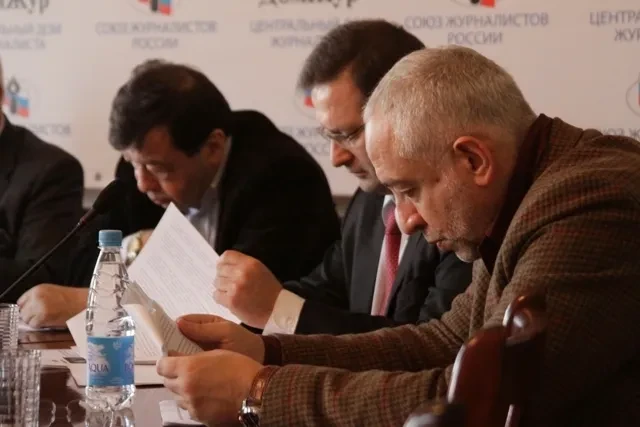
This case is ideal from the point of view that this is the case-in the form of a mediative or arbitration procedure, when both parties agree with the competence of the collegium-the mechanism of work of the collegium was once conceived (mainly Mikhail Fedotov). At the Conference on May 26, its co-chair Yuri Kazakov (journalist, expert on professional ethics, candidate of sociological sciences) spoke about the results of the third composition of the board in 2015–2020-and this is not about what was once conceived, but about how it most often works today.
The collegium evaluates the published materials from the point of view of journalistic ethics and standards only if there is a complaint of a particular person about a specific plot or publication. About two hundred such complaints have received such complaints, but the collegiums belonged to the competence of 86. Twenty-six of them were filed on federal television companies and nine to regional ones-these are more than a third of all complaints (21-print media, 7-online Internet publications, 2-specifically for the radio program of Vladimir Solovyov). The record holder for the number of complaints about the media was the VGTRK - 10 (RENTS - 6, NTV - 4).
At the same time, the VGTRK, each time notified of the receipt of complaints, has never only sent its representatives, but also did not introduce any explanations and does not recognize its “jurisdiction”.
However, other “defendants” are most often the same, citing applicants' right to apply to the court. In fact, no one took this right from anyone, but the collegium is talking about ethical, not legal norms, and in this it is undoubtedly more competent than any court.
This actually suggests what is happening today in the Russian media sphere, where journalism, propaganda and entertainment are confused, which has no relation to journalism, but causes no less claims by ethics violations and direct insults against citizens. At 86 meetings, the collegium did not agree with the arguments of the “plaintiffs” completely or to a large extent only 11 times, otherwise most often it was about the non -fulfillment by the authors and the media of journalistic standards: the information was not checked, the word was not given to the second side of the conflict.
The college attributed 19 challenged texts to propaganda “with elements of the enemy language”, 6 materials were generally recognized as “anti -journalist”.
The typical reaction of the authors and the media mentioned in the decisions of the collegium (and if there is an opportunity to use these very “media”): “And who are you?” - That is, and who are the judges? And this is actually the main issue for our journalism. The criteria and the election mechanism in the wards of the media community and the media audience are quite transparent. I will not list the names of the board members - they can be seen on the site. But to the “heavyweights” and “media stars”, demonstrating a very neglected attitude to the well-known colleagues, in turn, the same question arises: “Who are you?”
Have you won in honest competition in the market of real journalism or yourself - moreover, on the basis of more loyalty than competence - one way or another appointed "stars" and is well contained by the state? Anyone who earned a reputation honestly and continues to adhere to journalistic standards will come to meetings. So, Vladimir Pozner (also a member of the House of Media Party), about which a complaint was filed for the fact that in one of the programs he “spoke with hostility about the representatives of the Chinese people”, not only came as a “defendant”, but also recognized the claims to be fair, apologized, and the complaint was allowed to universal satisfaction (decision No. 189 of February 19, 2019).
I would attribute the main array of “lost” in the face of a collegium of complaints to two categories: “yellow journalism” and propaganda (this is a division quite conditionally because propaganda also most often uses “yellow color”). On the one hand, claims are caused by direct insults, the level of rhetoric, sometimes just vulgarity, and on the other, unverified information, lack of evidence, attributing false statements, failure to provide a word to the second side of the conflict.
The “journalism” with which we have to deal with the college often happen from both of these points of view, monstrous, but most often this is not journalism at all, but propaganda. It cannot be made by other methods - in particular, honestly giving the word to the second side.
Of course, the propagandists will not come to the meetings of the college and will not present arguments, since from the point of view of all the well -known standards they simply do not have no well. But it is they who call themselves and are called “journalists” who feed them power, and all these things, alas, are also confused in the head in the audience (especially the television).
The public board of complaints about the press is a unique and still never the State Institute of Civil Society. It is even amazing how it lasted 15 years in such an organized media space. The ideological “bosses” of her, apparently, apparently sought it - but so, it seemed, it was only so far. In the college’s chambers (each of the 25 members), the members of the Public Chamber (no one passed) (no one has passed); Members of the HRC (not counting those who were already in the previous composition, Irina Kirkora, Natalya Evdokimova and Lev Ambiner, and in the House of Media Parties, Eva Merkacheva) were included in the House of Media Auditors; lawyer chambers (along with those who have already been, Vadim Kluvgant passed); The judicial community, on the contrary, lost one representative of three; The ward of the media community was strengthened in the person of Margarita Simonyan; The Union of Russian Journalists put forward as many as 11 secretaries (from the 23 from the website 23), but a sufficient number of votes (closer to the lower bar in the rating vote) were collected only by two: Julia Zagitova (it is also ONF) and Anatoly Kuzichev, and the chairman of the SHD was not nominated.
On the one hand, the collegium retained the independent composition and basically repulsed the attacks of the simulacra (this, of course, is my personal assessment), but the positions of its opponents from among the propagandists intensified the same. The average success of the Union of Journalists indicates, on the one hand, to evaluate its role in the community, but on the other, it deprives the collegium of the chances of being heard by the authorities that breeds the legislation dangerous to the media sphere. Galina Arapova pointed to the desilation of this kind of exchange in her speech at the conference, but the results of the election of the new composition of the collegium, apparently, are not fully arranged by power.
At the conference, after the announcement of the election results, a distress was discussed in Russian media - mainly dependent on state funding in a direct or indirect form. After quarantine and in connection with the general fall in the population’s incomes, advertising budgets are already cringing, in regions of other sources for the existence of “media”, except for budget money, there is no longer, and dependence on them is objectively increasing.
On the other hand, activists in social networks who do not receive state contracts, who, in the scope of their audience, find themselves closer to traditional media, do not just not observe journalistic ethics and standards, but it seems that they have never thought about what it is.
The digital environment, as Professor Joseph Dzyaloshinsky and the journalist and expert Ivan Zasursky notes, gives the media many advantages, but "these positives discard long and dark shadows." The initiative moves from media to the audience, and the ethics of its requests is still no one at all and has never been discussed. In the yet established new conditions, media environments to talk about reputation and ethics is generally difficult, but the public collegium on complaints about the press will protect journalistic professional standards until it has enough strength.