
Translated material
Do you approve? Nod!
Nobody knows how to vote now - all decisions are made by clerks who have no authority or competence for that
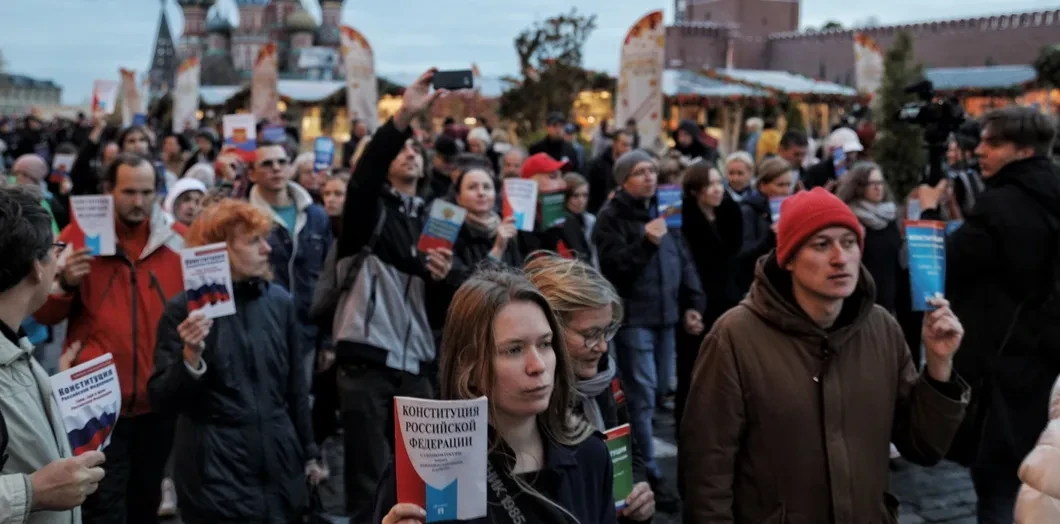
Everything was mixed - both in the heads and in the laws ... on the eve of the popular "constitutional approval" and the next hastily reversed amendments to the electoral laws, no one had completely understood how these "approvals" and subsequent elections would take place. There were many conversations and rumors. As a result, everyone has already finally confused-either it will be a vote by mail, or electronic, or polling stations will appear in the yards and in the parks, or all of us prematurely and vicinally bypassed from the Urnaya at home. Where does the confusion come from? Need to figure it out.
I am a legal bore. There would be no sitting and justify the illegality of a strange action with voting on amendments to the Constitution. Or describe the absolutely fantastic recent disgraces, which the State Duma finally finished off the current electoral laws in such a way that they became generally democratically unrecognizable. But my colleagues have already done this repeatedly. And I want to fix everything in detail to fix the methodology of the Russian authorities, with the help of which she tries to crawl in narrow gaps between constitutional forks,
In order for the noodles that she, hanging on the ears of Russian voters and the international community, looks as less pastoral as possible.
As a noodle in this case, the definition of a point of unenception, having found which, you can start unraveling the whole ball. And this point is available. But in order to get to it, you need to look at the process a little wider - you need to understand where the legs grow from.
A little theory
The Constitution in the modern world is such peculiar cells for the state. First of all, their goals, objectives and principles of their implementation are enshrined in them, which the state must implement exactly as it is established in the basic laws-and nothing else. Secondly, they define the limits of the activities of state bodies-their rights and obligations (powers) on a certain circle of issues (objects of knowledge). United together, they are called competence.
And if in private law the principle of “all that is not prohibited is allowed”, then in public law, on the contrary, “only what is allowed is allowed”.
This means that the state cannot formally go beyond the indicated limits. And informally, and even in the presence of an artificially formed dependent deputy corps and, let’s say, a kind of constitutional court, it is quite possible to bypass these prohibitions. Crookedly, of course, but it turns out. Especially if the conditions are created for the full legal impunity of all participants in the process.
The methodology of constitutional crook in Russia is to manipulate competence.
Its roots go back during the time of Yeltsin. In a quarter of a century, it has been well worked out. How does this happen?
A little story
Initially, it all started with the expansion of the spheres of the president. In the Constitution of Russia, as many as seven articles are devoted to presidential powers (83–89). There are many of them, but they are by no means endless. In the constitutional list, for example, nothing is said about the securities market, about civil defense or the right of the head of state to provide benefits to Cossack societies.
But it was these and many other issues that were regulated by the decrees of the President of the Podputin period * . That is, a significant number of presidential decrees were already issued in the regime of competing competence with the legislative power and the government.
The Constitutional Court made a special contribution to the strengthening of indication in modern Russia -
No one has ever managed to effectively appeal a single presidential decree.
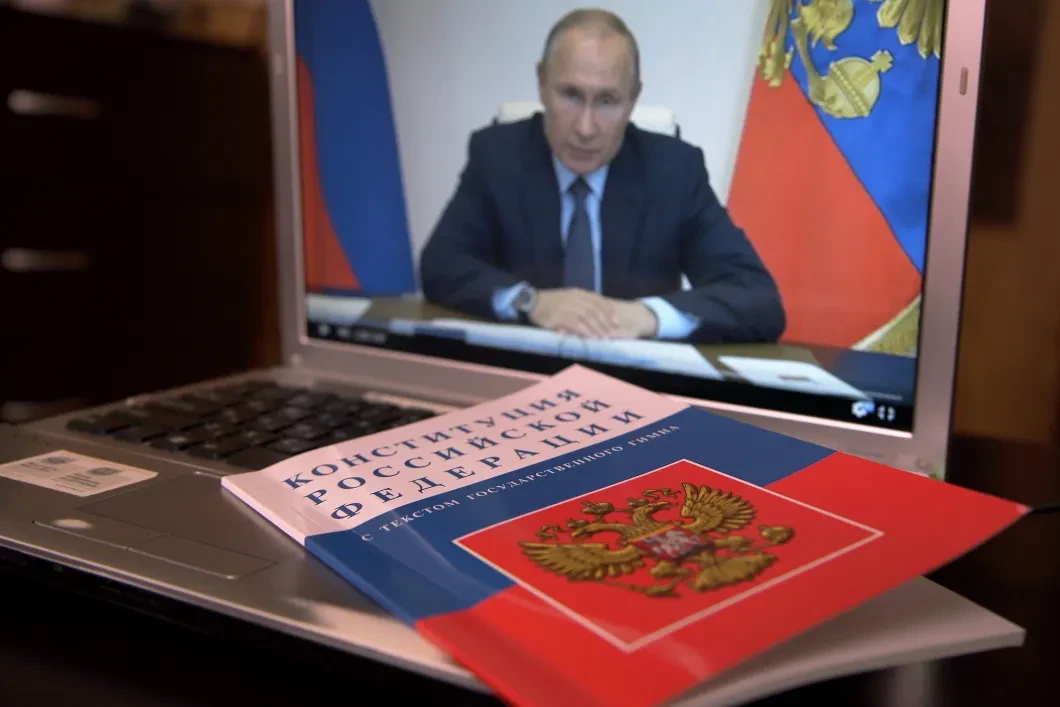
Moreover, in the Decree of the Constitutional Court of April 30, 1996, on the basis that “the president is the guarantor of the Constitution and ensures the coordinated functioning and interaction of state authorities”, it was concluded that “it does not contradict the Constitution of the Russian Federation to the publication of decrees that make up for the legal regulation on issues that require a legislative decision, provided that such decrees do not contradict the Constitution of the Russian Federation of the Russian Federation and federal laws, and their effect in time is limited to the period before the adoption of the relevant legislative acts ” ** .
Over the past quarter of the century, the Extraconstitutional powers of the President of Russia expanded steadily and permanently. By 2008, the authors of the book “Triangle with one angle” Mikhail Krasnov and Ilya Shablinsky counted those for more than four hundred. Now no one was definitely considered, but there is every reason to believe that their number at least doubled.
This was done in several ways. The first is the president of his own acts; the second - the consolidation of new powers in federal laws; The third is the recognition of the Constitutional Court of the Constitution of the Constitution. There are many examples. They can be listed for a long time, but this is not about that now.
It is about the fact that any contagious spreads quite quickly.
From the practice of the Extractical Natural Presidential powers, our legislators smoothly moved to the Extraculation Redistence of the authority to anyone - on the principle of "if so, then why not."
This time, they twice unconstitutionally redirected their own legislative powers of the Central Election Commission (CEC of the Russian Federation).
The confusion with the procedure for voting appeared precisely because the Law of the Russian Federation on the amendment to the Constitution of the Russian Federation dated 14.03.2020 No. 1-FKZ “On improving the regulation of individual issues of the organization and functioning of public power” has appeared that the procedure for all-Russian voting approved T CEC of the Russian Federation (paragraph 1 of part 15 of article 2). A similar rule is contained in amendments to selective laws.
That is, we have two cases at once - the procedure for voting for amendments and new election rules. What is wrong here from the point of view of the Constitution?
Voting for amendments
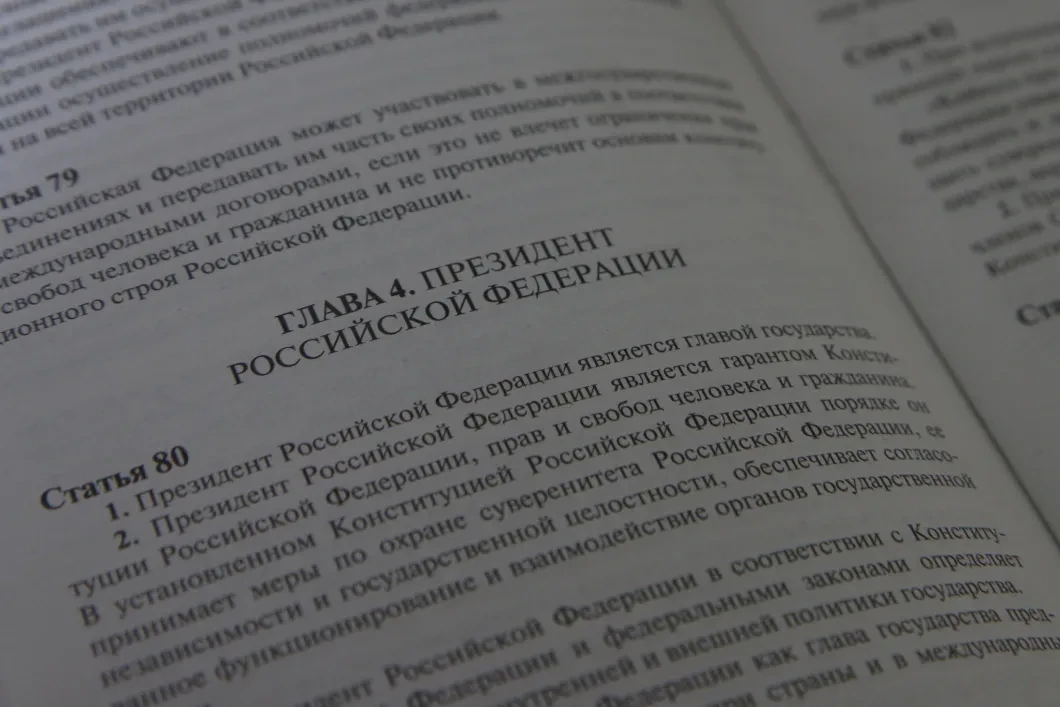
Speaking about this vote, which many call a legal misunderstanding, you still need to decide what it is in essence.
There can be only one answer to this question:
We are dealing with a referendum conducted according to special rules. Yes.
And do not shout in your soul. That is exactly what it is. Because no matter how much the button accordion is called harmonies, he still remains button accordion.
Because from the point of view of the Constitution (part 1 and 2 of Article 32), Russian citizens have the right to participate in the management of state affairs both directly and through their representatives only in two ways: to participate in the referendum and in the elections. And the referendum by definition is a popular vote of citizens of the Russian Federation on issues of state significance (Article 1 of the FKZ “On referendum ...” dated 06/28/2004 No. 5-FKZ as amended on 06/18/2017).
That is exactly what we are offered today. No other “resident voting” (E.A. Pamfilova), no plebiscites and other “approval” by the Constitution, are provided for no other “exceptional and unique procedures”, and no one has the right to invent them. Because only what is allowed is allowed.
And the experience of holding referenda according to special rules that are different from the law, we also have. After all, this is how the Constitution was adopted on December 12, 1993 - by decree of the President, and not by law.
The current FKZ “On Referendum” (part 2 of Article 3) says: “The procedure and terms for the preparation and conduct of referendum are established by this Federal Constitutional Law, other federal constitutional laws, federal laws, as well as regulatory acts of the Central Election Commission of the Russian Federation adopted within its powers established by this Federal Constitutional Law.”
And then we see that in this very “present” law (article 30), many of all powers are established for the CEC. This commission organizes the preparation, controls, provides uniform application, provides legal, methodological and organizational and technical assistance, considers complaints, distributes funds, registers, approves the forms of documents and samples of seals, informs, determines the results of the referendum and carries out their official publication, etc.
But! There is not a word about her right to establish the voting order. And this is quite natural, because it cannot be established by any other act, except the law. The law clearly states that “the procedure and terms for the appointment of a referendum are established by the federal constitutional law” (part 2 of Article 3 of the FKZ “On a referendum ...”). And the CEC, as you know, does not adopt laws in our country.
That is, the deputies did not have the right to transfer their exceptional powers of the CEC, and the CEC did not have the right to accept them. If only because its status and functions are clearly defined by law. By law, she is only an organizer, not a regulator. Moreover, the organizer is only exclusively and referendum (part 1 of Article 21 of the Federal Law “On Basic Guarantees ...”), which is not related to any other types of voting.
New rules for organizing voting
About the same thing happened here. But I will start with the fact that
Electoral legislation in our country is the most unhappy and most often variable part of the legislation.

In total, from 1994 to the present, all of our electoral laws (three editions of the Law on Basic Guarantees ..., four editions of the Law “On the Elections of Deputies ...” and the Law “On Political Parties”), 2641 amendments were made taking into account the May amendments (Evgeny Poroshin counted).
The amendments are made with regular frequency before each electoral cycle, and their content directly depends on the level of electoral support of the party in power and its satellites (parties of the system opposition).
This time, taking advantage of the distraction of universal attention to the fight against pandemia, the deputies brought down the whole three blocks with a total of 91 in all three electoral laws *** on our heads. That is
At the same time, almost a hundred amendments, and let the experts suffer. Where is there an ordinary citizen to figure out what's what!
Each time, the changes are aimed at ensuring the invariability of the state of the official parliamentary palette and at the lack of permission to the political arena of other participants. This is usually done by complicating the procedure for registering unsystematic activists. But here I deliberately omit the analysis of all freshly baked restrictions on the electoral rights of citizens. A lot has already been said about them, including in Novaya Gazeta. With their causes and goals, everything is clear - this is an act of intimidation.
But in modern conditions, deputies, in whom the size of the pension depends on the number of convocations held by them in parliament, this seemed little. Therefore, they decided to tightly insure their irremovability and not only created the conditions of non -participation in the elections of all those whose point of view on Russian reality differs from the deputy, but also extremely expanded the possibilities for falsification of the results in the conditions of uncontrolled voting. Only now they decided to do this by the wrong hands.
The Constitution says unequivocally: the procedure for the formation of the Federation Council and the procedure for election of deputies of the State Duma are established by federal laws (part 2 of Article 96). And nothing else. This, of course, is not the best reference that allows the principles to manipulate, but still quite clear - the entire order in all its details is determined by parliament in a special legislative procedure.
But the deputies judged in their own way. They decided not to bother with the details, but simply immensely expanded the powers of the CEC by transferring the commission part of their constitutional competence. And now a significant part of the order will be regulated not by the law, but by the instructions of this peculiar body, which is popularly called the Election Ministry, but in fact not related to government bodies. Feel the difference?
And in the Constitutional Court these rules will not appeal, because - not the law. Such a tricky manipulation by competence through a reference to the reference.
So how will we vote?
For voting on amendments, the rules have already been established (Resolution of the CEC of the Russian Federation of 03.20.2020 No. 244/1804-7). Here, there are few differences from the usual elections of recent years, except for some expansion of the possibilities of early voting and an incomprehensible remote electronic vote , which is not necessary, but can be carried out by decision of the election commission of the constituent entity of the Federation in agreement with the CEC. The rules of this action will establish the commission of the subject again in agreement with the CEC.
That is, we do not know what it is, or whether it will be, nor how it will be if it is. No wonder they joked in social networks that
We can nod, sitting on the couch in front of the computer, and this will somehow be fixed.
But in relation to the elections that begin in the regions in the fall of this year and the elections to the State Duma-2021, deputy fantasies have been played out in earnest. What is not here! Mass early (read uncontrolled) voting in a variety of variations, supplemented by voting in territories and places suitable for equipment for voting (in adjacent territories, in common areas and in other places), remote electronic voting and voting by mail.
Moreover, we will not find out any details from the law - everything is given to the mercy of the incomplete to resolve such issues of the CEC.
I’ll only add that, in my opinion, Russia is still categorically ready for any remote electronic voting. This cannot be done on existing platforms according to existing rules. Or access to platforms must be completely reset and created again or introduce more complex and more reliable voter verification systems. I completely agree with the opinion of Elena Dubrovina - for us, salvation will be debugging the process of summing up voting results in a traditional format. And only after that, in the distant future, we can talk about digitalization.
- Author - Doctor of Law, Lawyer - especially for "New"
* See, for example, decrees of May 27, 1996 No. 784 “Issues of Civil Defense of the Russian Federation”; dated November 4, 1994 No. 2063 “On measures for state regulation of the securities market in the Russian Federation” (paragraph 4); dated April 16, 1996 No. 564 “On Economic and other benefits provided to Cossack societies and their members who have taken over the obligations to carry out state and other service”.
** see: Decree of the Constitutional Court of the Russian Federation “In the case of verification of constitutionality of paragraph 2 of the Decree of the President of the Russian Federation of October 3, 1994 No. 1969“ On measures to strengthen the unified system of executive branch in the Russian Federation ”and paragraph 2.3 of the Regulation on the head of the administration of the Territory, the city, the city of federal significance, the autonomous district of the Russian Federation, approved by the named decree”. Collection of legislation of the Russian Federation, 1996. No. 19. Art. 2320.
*** Federal Law dated 01.04.2020 No. 98-ФЗ “On Amending Certain Legislative Acts of the Russian Federation on Issues of Prevention and Emergencies Liquidation” (on the possibility of depositing voting in connection with the introduction of an increased readiness or emergency); Federal Law of 23.05.2020 No. 153-ФЗ “On Amendments to Certain Legislative Acts of the Russian Federation” (on the restriction of passive suffrage); Federal Law dated 05.23.2020 No. 154-ФЗ “On Amendments to Certain Legislative Acts of the Russian Federation” (on remote, early and submarine voting and collection of signatures).