
Translated material
"These numbers horrified me"
What led to the understatement of the official statistics of the incidence of coronavirus in Dagestan
In mid -May, the underestimation of the scale of the coronavirus epidemic in Dagestan led to a federal level scandal. It turned out that due to the insufficient number of tests, most cases of the disease are decorated as community-acquired pneumonia. Now the republic is supplied with drugs in direct control, the army deployed hospitals, charitable foundations receive applications from hospitals at personal protective equipment. The official numbers of the sick and the dead began to grow sharply. May 18, on the day of Putin’s video meeting with the leadership of the republic, they amounted to 3460 and 29 people. By May 30, these indicators increased to 4830 and 226, respectively. However, in reality, the peak of the spread of infection seems to be passed - at least the first. The pandemic affected all the Dagestan society: the inhabitants of the capital, the inhabitants of cities and mountain villages. The Medusa correspondent went to the republic to find out how Koronavirus changed Dagestan.
All Medusa materials about coronavirus are open to distribute Creative Commons CC BY for distribution. You can reprint them! The license does not apply to the photo.
On May 23, 2020, the Dagestan newspaper "New Delo" accused the authorities of the republic of the deaths of hundreds of people. According to the lawyer and the permanent author of the publication of Rasul Kadiev, the concealment of data on the explosive growth of the number of community -acquired pneumonia falls under Article 237 of the Criminal Code of the Russian Federation - “Conception of information about circumstances that create a danger to the life or health of people”. Rasul refers to the words of the head of the group sent to the Republic of federal doctors Irina Tragira. She explained the lack of drugs during the peak of the epidemic in that the drugs “distribute throughout Russia, based on the official statistics of incidence and mortality. In Dagestan, 36 deaths from Covid-19 were officially registered [according to the Dagestan operational headquarters on May 20], while unofficially from pneumonia, not registered as coronavirus, 820 people died. ” Tragira made this statement during a visit to Derbent - the only city of Dagestan, whose leadership leads its own statistics of the epidemic, sharply different from the republican one.
Derbent
- Brother, I'll let me go. But I do not promise that they will go back. Recently, even the deputy minister was fined! - explains the policeman at the checkpoint at the exit from Makhachkala to the driver of the Medusa correspondent. Only two days have passed since the input of restrictions, and Dagestan motorists have already mastered a whole set of tricks for their bypass - from maneuvering along narrow alleys to a kilometer throw on the rear gear along a one -way traffic road. On the federal highway "Caucasus" is unusually empty.
In 2018, Khizri Abakarov, the head of the Senator team and businessman Suleiman Kerimov, the former chairman of the board of directors of the Joint -Stock Company “Makhachkala International Airport”, became the head of the Derbent administration. During the peak of the pandemic, the mayor team was responsible for the supply of medical equipment and personal protective equipment to the Republic, on which the senator spent about 1.5 billion rubles. Despite this support, the doctors continued to complain about the lack of distinguishing between green and red zones and the lack of respirators.
In mid -May, Hizri Abakarov filed a memorandum of the situation with coronavirus in the city in the name of the head of the republic, Vladimir Vasiliev. Information in this document, including obtained from official sources, contradicted official statistics.
- We requested data on those sick in municipal institutions. We have more than three thousand workers, with family members this is almost fifteen thousand people. In parallel, they turned to the cult institutions: mosques, church, synagogue, ”the deputy head of Derbent Zaur Eminov explains to the Medusa correspondent. - The leaders of the faiths informed us of the number of sick parishioners and members of their families. Comparing this information, we found out that in the city of at least 9-10 thousand people with signs of pneumonia. With the total population of Derbent - according to official figures, 124 thousand, and according to unofficial ones - more than 150 thousand people - this is not so small. For April and the first half of May 2020, according to official statistics, 50 citizens died from pneumonia and two from Covid-19. And according to our information - 134 people. From May 1 to May 15, 2019 in Derbent there were 1368 ambulances. In the same period of this year, their number increased to 2245. Of which, the number of patients with diagnosed pneumonia increased from 7 to 331, with SARS - from 140 to 538.
“My statement is not unfounded, I say, the language of the numbers received from the official source,” Eminov answers the Medusa correspondent to the question of where such a huge difference with official data. “These numbers terrified me somewhat.”
“On May 20, we held a meeting of the headquarters,” adds Deputy Head of Derbent Shamil Aliyev. - They determined hospitals where relatives pass in the red zone, carry products, take back plates, spoons, things for the sneak. Take it all to the city. We recommended introducing an emergency mode in the hospital territory. Five days have passed. There is still a passing yard.
Crooked streets of Magalov - the ancient regions of Derbent - are now unusually empty. Men are not cut into backgammon in teahouse, women do not discuss the latest news at the gate. On May 29, on the Feast of Shavuott, members of the Jewish community of Derbent were not gathered in the synagogue for the whole night, as usual, and everyone was awake in their house. The head of the community of Derbent Robert Ilishaev, regretfully tells the Medusa correspondent that, since the rules of the Sabbath apply to the holiday, even through Zoom it was not possible to be together.
Makhachkala
“There is a search for a car ... there is a search for a car ...” Ten minutes, the taxi service machine gives the same phrase. On the eve of Uraza-Bayrama, the government of Dagestan and the Makhachkala City Hall introduced transport restrictions. On the streets and near trips from the capital of the republic there were posts. Therefore, drivers from Kaspiysk, the satellite of Makhachkala, refused orders for intercity flights. Only occasionally, passengers managed to squeeze into the old yellow minibus. Many were without masks, some coughing, but there were no other options.
At the time of the holiday, the peak of the Pandemia Coronavirus, which was the head of the Rospotrebnadzor Anna Popova, at the President Putin’s meeting with the leadership of Dagestan, called “the most difficult days for the republic”. Since then, “Covid-Skiptiki” has become much less: according to the observations of the sociologist Rasul Abdulkhalikov, now their percentage in Dagestan is below the average in Russia. According to the results of a survey , published on May 28, 2020, more than a third of Russians consider the pandemic of coronavirus either an invention or an exaggerated danger; In the North Caucasus Federal District, to which Dagestan belongs, people who believe that “there will be no epidemic and will not be, these are fiction of interested parties”, exactly 10% less than in the neighboring South FOR, where there are almost a third of them.
Over the past weeks of May, missing medicines returned to the pharmacies - and buyers, on the contrary, almost disappeared.
“Previously, there were not enough drugs in the hospitals, relatives had to buy, now the supply has improved,” the pharmacist of one of the Makhachkala pharmacies explains to the Medusa correspondent.
True, the streets of the capital of the republic are still full of walking, some Dagestanis are still diving under red barriers and go to rest in parks and to the beach. But mass wake and weddings for hundreds and even thousands of guests stopped, and many villages introduced their own self -isolation rules.
Mudejin, turning his back to the huge hall of the Makhachkala juma, as before, convenes believers to prayer. True, besides him, in the largest mosque in Russia there is not a single person. Usually, on the holiday of Uraza-Bayram, Muslims go to visit each other, exchanging gifts. Now children are released only the most careless. Instead, the Dagestanis send stickers with socks or sweets familiar in votsap-traditional gifts to Uraza Bayram.
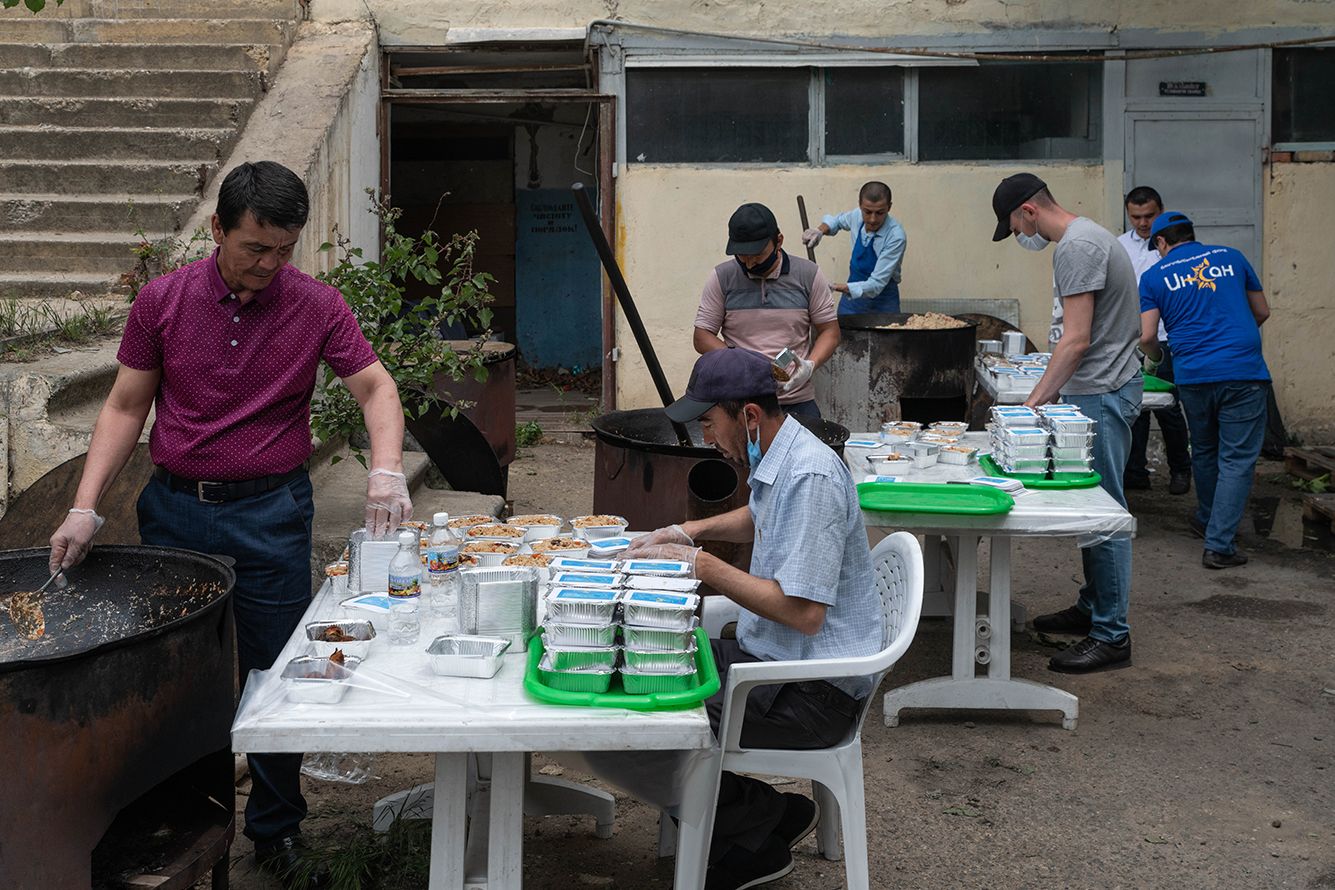
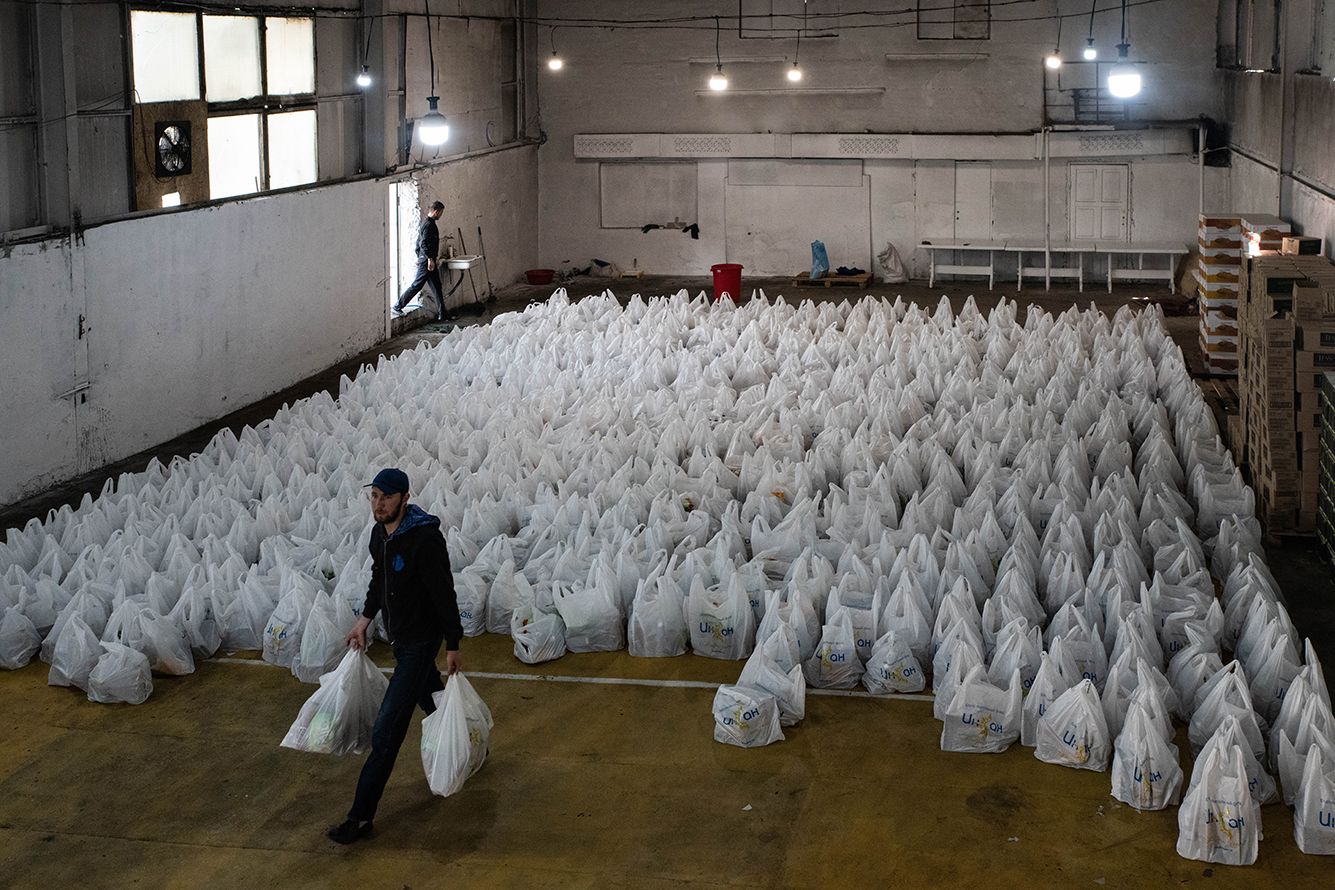
Ramadan's tent near Juma Moseti, where the Makhachkala residents are traditionally accelerated after fasting, this year has not been established. Instead of him, pilaf and products deliver hundreds of volunteers of the Insan charity foundation to the houses. During the pandemic, the fund helped several thousands of low -income families. In addition, philanthropists raised three million rubles to re -equip the city clinical hospital No. 3. On May 12, she accepted the first patients with coronaviral infection.
“About 80 percent of our funds are donated by ordinary people,” Magomedrasul Akhmedov, head of the Insan Foundation, tells Meduza. - The rest is business, philanthropists, large sponsors. Today, many philanthropists themselves need, some Russian funds are on the verge of closing, but our donations have only increased. In difficult times, Dagestanis unite and help each other.
Judging by the news from the regions of the republic - Khunzakh, Gergbilsky, Karabudakhkent - the peak of the epidemic behind, the number of new patients decreases. Makhachkala was no exception. Rasul Abdulkhalikov believes that the main cause of infection was the mass return of the Dagestanis to the republic after loss of earnings in other regions, aggravated by the lack of quarantine measures. Now this wave has been declining - like the number of new coronavirus infected with coronavirus.
“We see a significant decline in calls,” says Magomed Imanaliev, chief physician of the RCB of ambulance, in a conversation with Medusa. - But the hospitalization of severe patients in our hospital has only grown. To the vacant places, we translate the seriously ill from the regions of the republic. We have about 5%mortality.
One of the districts of Dagestan, from where the most severe patients are brought to the Makhachkala RCB of the ambulance-Gergibilsky 100 kilometers southwest of Makhachkala. Official statistics are measuring the number of Covid-pains-but the Gergabilians are sure that most residents of the district managed to get sick.
Gergibil
Usually, the road from Makhachkala to Gergebil takes about an hour and a half. However, now even with permissive documents you have to get there twice as long. At the entrance to the village there are barriers, police posts at the borders of the districts: “You can drive, but your taxi driver is not.” The road on the border of the Akushinsky and Levashinsky districts was blocked by eight concrete blocks installed in the form of a maze. Even a pedestrian with luggage through them is not easy to squeeze.
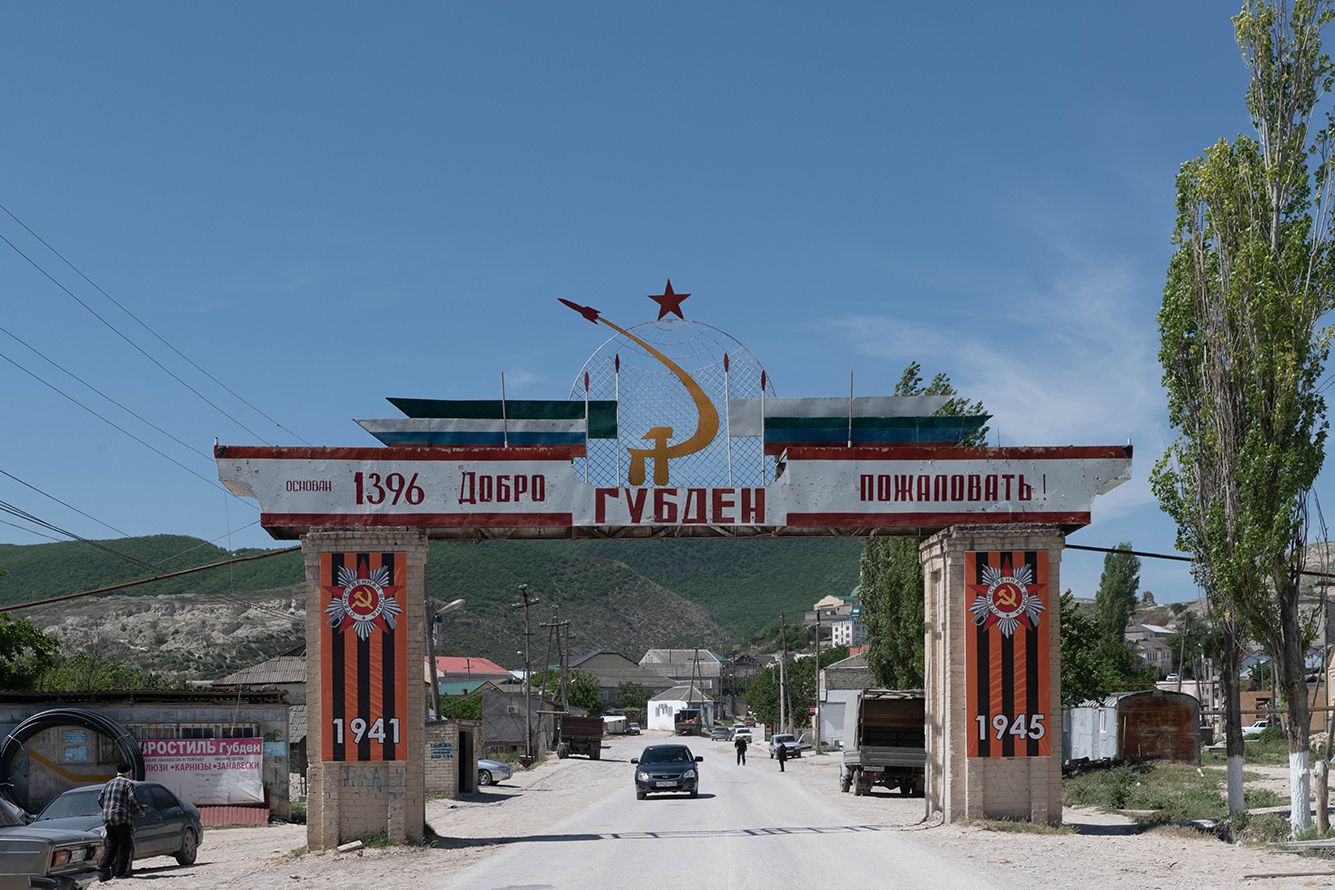
In the village of Gubden, where, according to the head of the administration, during the pandemic more than 40 residents died, it is not easy to enter. But in a small shift at the barrier - a whole warehouse of drugs that anyone can take for free.
Gergibil is a spacious village at the confluence of the Kazikumukhskoye Koisu and Karakoyis rivers. Translated from Avar, its name means “abundantly sown” - Hergubil’s fruit gardens are known to the whole republic. But at the end of April, the district center became famous differently, becoming a large focus of coronavirus infection.
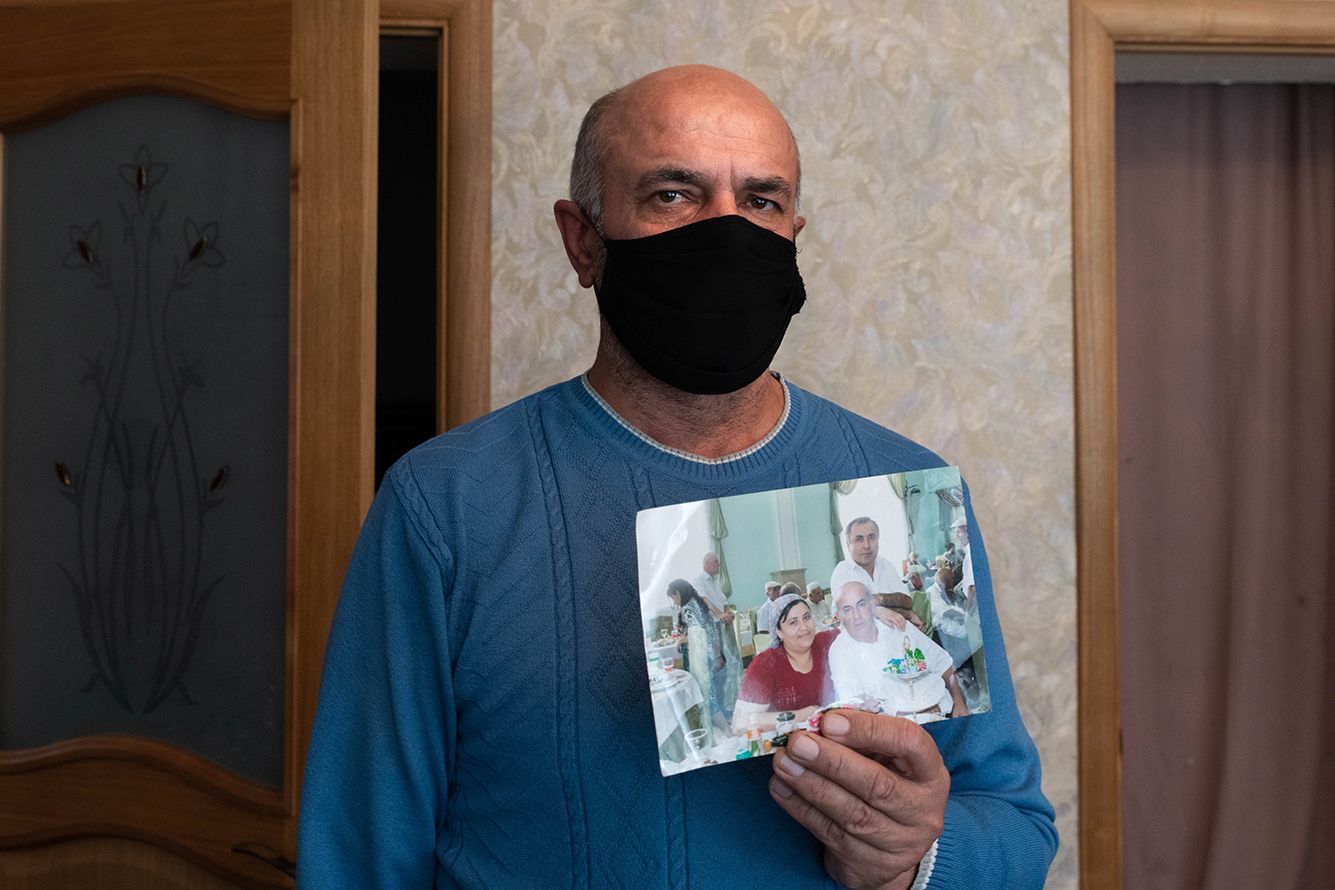
First-grader Bagavudin-youngest son Aminat Medzhidova, X-ray laboratory assistant of the Gergbil Central District Hospital. He climbs a hill near the gates of his parental house and with a laugh moves down on a blue “Desna” bicycle - past sisters who have recently passed a serious illness, past a grandmother sitting on a bench under an apricot tree, towards his father in a black mask who ceased to cough two days ago. Only the mother is missing, which the boy expects from the hospital. Bagavudin is the only four children who have not yet been said that she had died.
“From childhood I wanted to treat people from childhood,” says her husband Magomed Omarov. - But the doctor did not come to a doctor. It was brought up without a father, I had to help my mother. She liked to work. I am an entrepreneur myself. He said: Aminat, I need your help. But she remained in the hospital. And in the last days I told her, a serious wave is coming. Design sick leave, you will stay at home. She is not. People will say that I was scared. And did not abandon the work.
On the phone, Magomed shows a photograph of the late wife - in a homemade gauze bandage to the eyes, blue gloves and an old robe wrapped in oilcloth. Doctors had no other means of protection.
“It all started on April 11,” says Magomed Abakarov, head physician of the Gergbil Central Design Bureau, says Medusa. - Our colleague, the head of the clinic, was brought to the infectious department. On the 16th, we sent it to the republican infectious disease. The 23rd she died there. But by that time, patients began to arrive massively, 15-17 people per day. No one was ready for such an explosive surge of infection. By order of the Minister of Health of the Republic, we should have created a observatory department for forty beds in order to place those who cannot observe the self -isolation of the house on two -week quarantine. Patients were supposed to be taken to a hospital in Buinaksk. They managed to send three, but, apparently, patients also entered from other areas there, and it closed. Then I created an infectious hospital in the therapeutic department. In neurology, pregnant women were put with suspicion of Covid, surgery was made in surgery, and peripheral hospitals were connected in the villages of the district. In total, we discovered 170 new beds. There were not enough drugs, and we only saw protective overalls in the photographs. There were anti -fingers with aprons, as in the old days. Instead of respirators - disposable masks, weak. Then we started to do multilayer, I asked the team.
At the table, the Aminat sits a new employee in a respirator and a protective suit. Black hijab is visible from under the hood. The X -ray is new, it was installed only in last November. On the table is a notebook and a bottle of antiseptic. A white-yellow corridor with a bench for those waiting is adjacent to the cabinet. Now it is empty, but at the end of April, dozens of frightened people crowded in this corridor.
“We and the neighboring Untsukulsky district were the first to take a blow in Dagestan,” says the head doctor. - First, people went to condolences. Hugged. I say - there is no need, and they: "If you are afraid to give us a hand, we do not demand." Laughed at the "shows masks." We did not have a computer tomograph. When it began, everyone rushed here. Healthy, patients - everyone wanted to shoot fluorography. Psychosis. No persuasion acted. 30–40 people in a narrow corridor. Threats, scandals. Someone has a sick mother-let her forward. Someone has a brother, sister.
The main influx of patients with suspicion of coronavirus in the Gergbil Central District Hospital began on April 20–21. And the 22nd hospital was left without a leader: Magomed Abakarov went to be treated to Moscow. The acting head physician, according to him, was appointed the Ministry of Health only on April 30. During this time, the Gergebilians organized the delivery of medicines and protective equipment to the hospital. Help coordinated through the April on April 25, the VOTSAP group, which also included immigrants from the village living outside Dagestan. Activists put things in line for fluorography.
Over the past two weeks of work, the Aminat Medzhidov examined about 1,400 people - more than a hundred per day. 127 of them was diagnosed with pneumonia, but it was impossible to put a more accurate diagnosis of the means that were at the disposal of the hospital: there are no apparatus for computed tomography, on which there are no signs of lung lesions characteristic of the Covid-19, in the Gergbil Central District Hospital.
At the entrance to the intensive care, dozens of oxygen cylinders are composed. Volunteers rest nearby.
“There were more than 130 patients at the same time, more than 20 serious in intensive care,” says Senior Volunteer Javathan Huseynov. - And at first there were four cylinders. Doctors asked to get oxygen and medication. Only thirty percent came out of the medical staff to work. Someone observed quarantine by age, someone was sick, someone was afraid to get sick. There were no protective funds. These are then volunteers, sponsors, familiar from Russia, helped from abroad. Representatives of the muftiyat of medicines and protective costumes brought to 500 thousand, in stores, grocery debts have paid off. The guys worked as noses, dragged cylinders weighing 70 kilos on themselves. Here, in 20-30 days, more than thirty patients died - so much dies over the year.
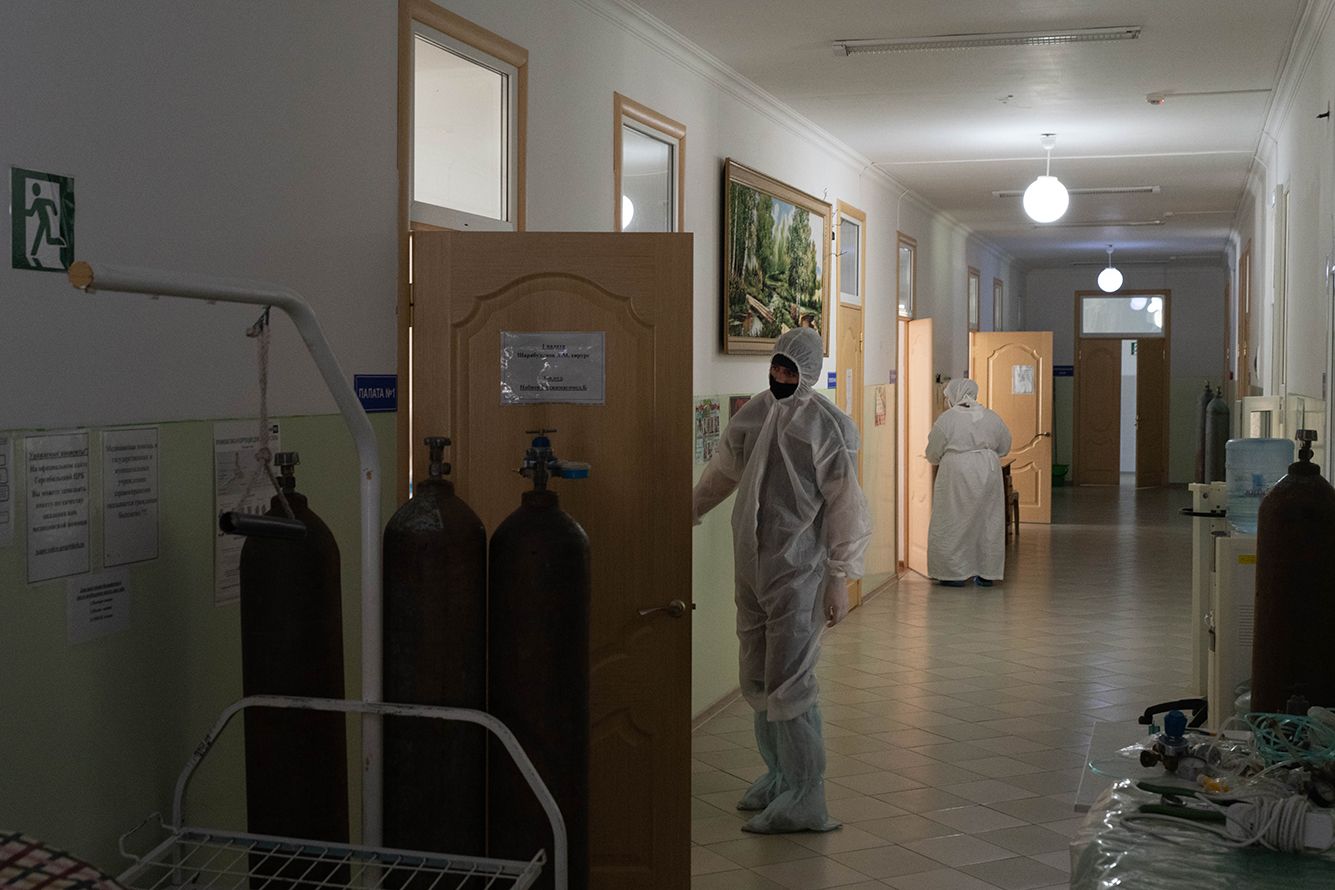
In intensive care, devices are squealing. A motionless body with bare feet spread to the sides is connected to the Ivl apparatus. Doctors in suits and respirators work around him. Of the necessary protection elements, only glasses are absent. Среди белоснежных фигур снует парень в футболке, полосатых трениках и кепке с лихо заломленным назад козырьком. Борода прикрыта простенькой маской. Это — волонтер, из числа переболевших. Таких в Гергебиле сейчас много. По официальной статистике управления Роспотребнадзора на 31 мая, общее число зараженных COVID-19 в Гергебильском районе с 22 тысячами населения — 8 человек (эта цифра не менялась на сайте оперативного штаба по Дагестану как минимум с 27 мая). По статистике, озвученной Абакаровым, заболели 407 человек, в том числе 18 врачей, 22 случая COVID-19 подтверждены, умерло 23. Несмотря на масштаб этих цифр, местные жители уверены, что реальность куда серьезнее и переболело большинство гергебильцев. В статистику же они не попадали, поскольку не обращались к врачам, а порой и не пускали участковых на порог.
— Не меньше 80 процентов заразилось, — уверен волонтер Мажид. — В селе все друг про друга знают, не как в России. Почти в каждую семью болезнь пришла. Своими средствами, народными методиками лечились.
— В больницу обращались только тяжелые, — не спорит с ним главный врач. — Возможно, многие переболели в легкой форме. Четкого учета у нас не было.
Пациенты, способные говорить, на уход не жалуются. Медсестра демонстрирует корреспонденту «Медузы» кладовку, набитую лекарствами, среди которых есть даже дефицитная «Актемра».
По словам персонала больницы, проблемы были решены в последние десять дней, после скандала с занижением цифр статистики, когда 16 мая министр здравоохранения Дагестана в интервью заявил , что в республике уже умерло больше 40 врачей — это больше, чем вся официальная статистика смертей от COVID-19 по республике на тот момент. Теперь, как утверждает главврач гергебильской ЦКБ, коронавирусную инфекцию в диагнозе указывают чаще — даже если не хватает тестов, достаточно результатов компьютерной томографии. Низкое число заболевших в официальной сводке Роспотребнадзора он объяснить не может.
Короткий коридор с распахнутой наружу дверью назван шлюзом. Многие койки сейчас пусты. По словам главврача, сегодня в ЦРБ Гергебиля лежат 50 пациентов, из них 39 — с внебольничной пневмонией. Мало что напоминает о катастрофе, разразившейся здесь в конце апреля. Тогда оставшиеся на работе врачи трудились круглосуточно. Аминат Меджидова принимала пациентов до последнего. Когда появились кашель и температура, дома она пролежала только два дня. Затем ее перевели в больницу и подключили к аппарату ИВЛ. 2 мая рентгенолог умерла. She was 44 years old. Всего в Гергебиле от коронавируса погибло трое медиков.
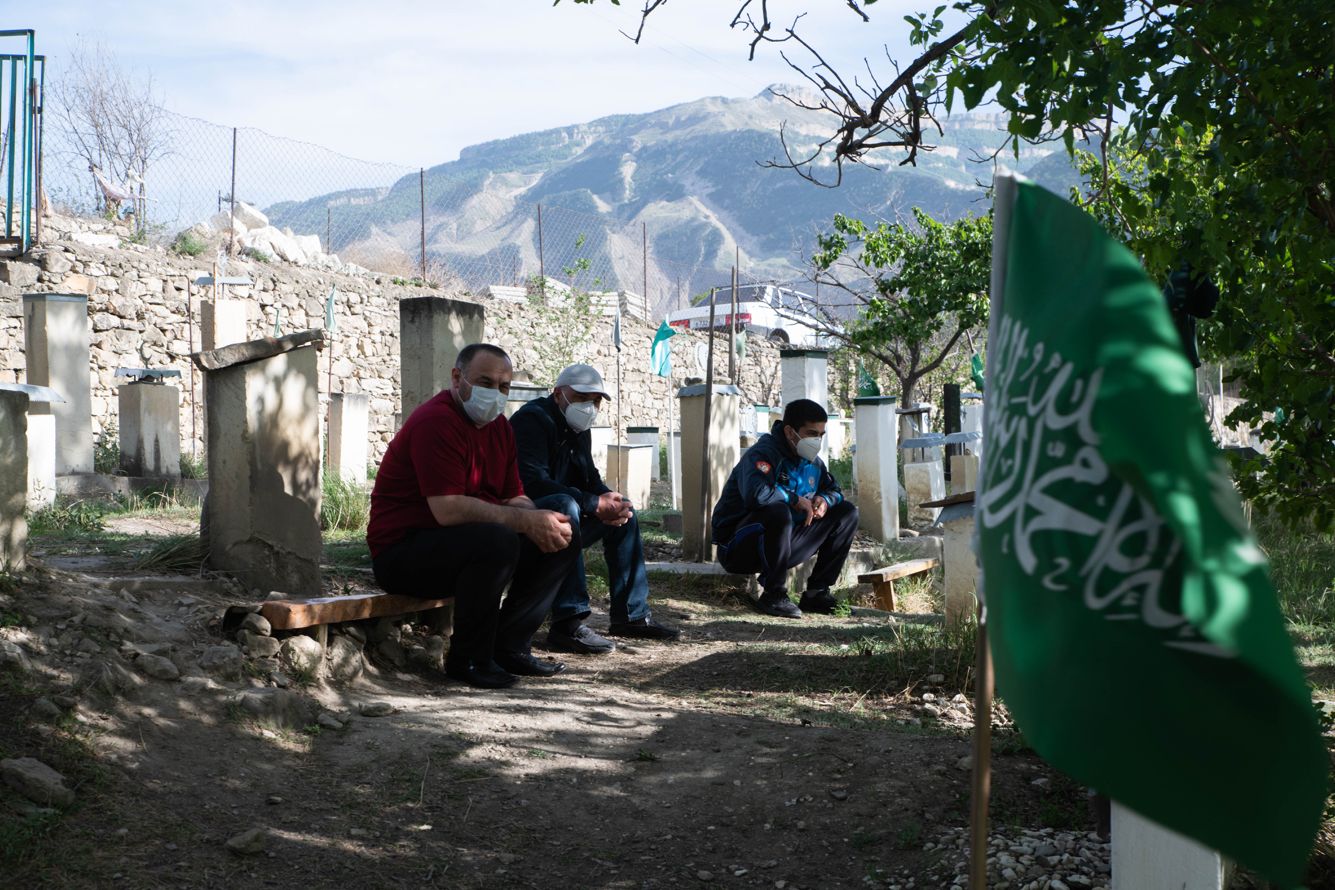
На окраине гергебильского кладбища есть новый участок, недавно пожертвованный жителем села. Там в ряд стоят двенадцать надгробий. Их еще не успели толком закрепить, сбоку они подперты доской и булыжниками. Это лишь часть захоронений погибших от эпидемии. Магомед Омаров устанавливает зеленое навершие на могильном камне жены. Надпись уже процарапана, но еще не залита краской. Дата «2 мая 2020 года» различается с трудом.
— Средняя дочь, Раисат, собирается пойти по медицинской линии, как мать, — говорит Омаров. — После этих событий еще сильнее захотела.
Владимир Севриновский