
Translated material
Avangard and war
On the reaction of art to military disasters and humanitarian disasters
Repeat of the Program of May 20, 2018
What does the war do with the artist and what the artist does with the war? How is the initial patriotic rise of most European creators during the First World War is replaced by the awareness of its anti -humanity and criticism of their own governments?
Blok, Gumilev and Mayakovsky: transformations of poetics after 1914. Futurists and ideas of war and violence in Russia and Italy. Absurdism as a way to realize the war and revolution. Vanguard and the category of explosion.
A descriptive approach to the war of classical art (battal and genre scenes, heroic and mythology, Goya and Vereshchagin) and the analytical method of avant -garde (splitting form, explosion of organic matter, moving masses as a central way of time). Patriotism and "Slavschina", deconstruction and existentialism.
The collection of scientific works “Russian Avangard and War”, published in Belgrade for the 100th anniversary of the First World War.
Oleg Lexmanov , literary critic, professor at the Higher School of Economics; Natalya Zlydneva , art critic, literary critic, culturalist, professor of the Institute of Slavic Studies of the Russian Academy of Sciences; in the record Ekaterina Bobrinskaya , art critic; Cornelia Ichin , Slavist, Professor of the University of Belgrade; Ivan Yesaulov , philologist, professor of the Literary Institute.
Elena Fanailova is conducting the program.
Video version of the program
Elena Fanailova: I am worried about the change of art languages in extreme situations of the war and the revolution of the twentieth century. This is one of the powerful impulses for the development of culture, no matter how these concepts contradict each other.
What does the war do with the artist and what the artist does with the war? I think these are quite relevant conversations in the light of the new patriotism around the Victory Day and the insufficiently reflected First World War in Russia, as well as a very important moment-the Russian-Ukrainian conflict in the Donbass. In Ukraine, art is actively engaged in this, many verses, prose, dramaturgy, cinema, and in Russia there are very modest attempts, they mainly relate to poetry, and if it reaches official discourse, then just in such a completely patriotic wing. So what is changing with the war?
Natalya Zlydneva: The war, of course, changes the language, but first the language arises, and then the war. Artists are like a very subtle seismograph that feels soil fluctuations long before the explosion occurs. All changes in the language over the first decade of the twentieth century are projected onto the events of war, and then they already reflect the war, continuing the language that was laid down before the war as a foreboding. Lotman at one time said that Russian culture is aware of itself in the categories of the explosion.
Elena Fanailova: If we talk about our consciousness, is this something like that of a lasting eschatology?
Natalya Zlydneva: I would call it not with such a term, but with a development with a jerk.
Oleg Lexmanov: The quote from the “Poem without a Hero” Akhmatova about 1914 has already been filled with soreness: “Not calendar - the real twentieth century was approaching.” Indeed, 1914 is the beginning of a huge snow coma, which rolled and changed everything, including the language. It seems to me that this explosion was slowed, because in the era of the First World War brilliant, amazing, wonderful texts were several. Immediately you can recall some verses of Gumilyov or Blok , very bright and interesting poems by Mayakovsky , Mandelstam . At the same time, as it seems, the main texts about the First World War were created later, in the later years. For me, such a very important text is “Dr. Zhivago”, where this topic is very strong, or “Poems about the unknown soldier” by Mandelstam - verses of 1937. During the war, such a power of texts was not created, and this is characteristic, it seems to me.
Elena Fanailova: How does Russian and European culture react to the beginning of the First World War? I have the feeling that the first reactions are quite patriotic, and not only among the Russians, but also among all peoples. I remember very well the Hungarian collection of memory of the authors of the Nyugat magazine, it was a very progressive magazine of the Budapest modernists who start with "Hurray, we will protect our homeland", but then they visited the front, saw blood and horror. They and their flagship Andre Adi , the Hungarian Mayakovsky, very quickly go to pacifist positions. It is a little more complicated with artists, they are difficult to suspect in direct propagandism. Were there any other steps in support of the folk spirit?
The avant -garde developed internal language resources to portray the war from the inside
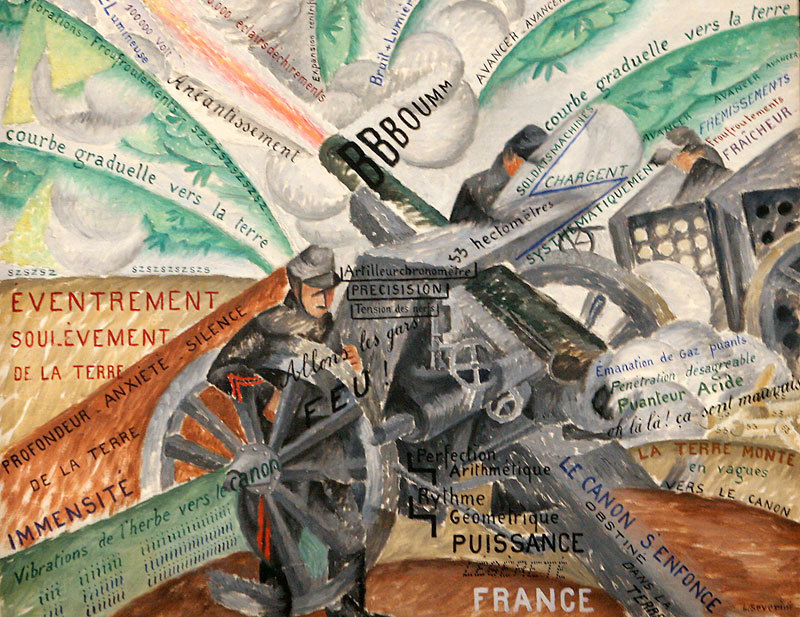
Natalya Zlydneva: The theme of war in art is as ancient as human society itself, but before the vanguard it was depicted descriptively, from the point of view of an external observer. The avant -garde developed internal language resources to portray the war from the inside, the war from the point of view of the subject. And the subject during the First World War can be metaphorically portrayed as an explosion of organic mass. For the first time in the history of mankind, the concept of human mass arose, which can be blown up, torn to shreds, because explosive mechanisms and chemistry of the explosion arose.
Elena Fanailova: This, it seems to me, is also connected with the fact that documentary cinema appears, and you can see the large masses of people who instantly enter the consciousness of the artists, and this also begins to operate.
Natalya Zlydneva: Yes, and they operate with the concept of bodily mass, which is the subject of history. Therefore, the avant -garde shows the explosion from the inside. There is also a splitting of the form of indescribable art, say, Malevich and Kandinsky into many fragments, and there is another way-to split the motive of war, indirectly related to some events of war, disaster, explosion. But all these fragments of motives are formed into a single motive, if you look at all products in total.
Elena Fanailova: Looking at Larionova or someone else from the representatives of the Russian avant-garde, at Olga Rozanov , you can not guess at first what it is, you see just a split shape.
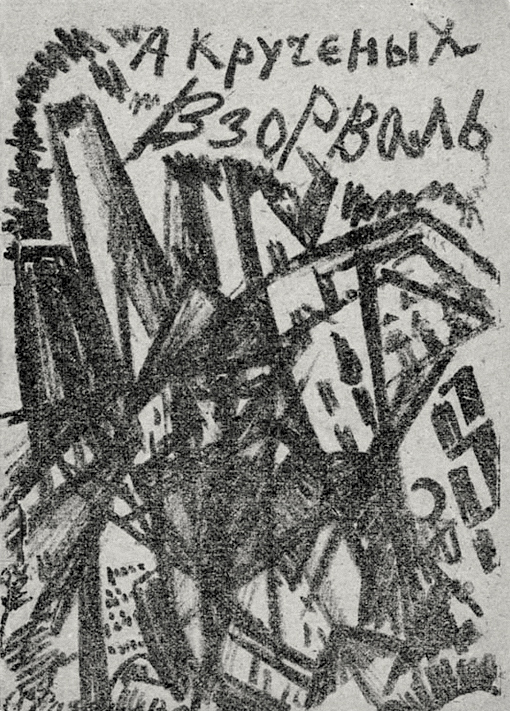
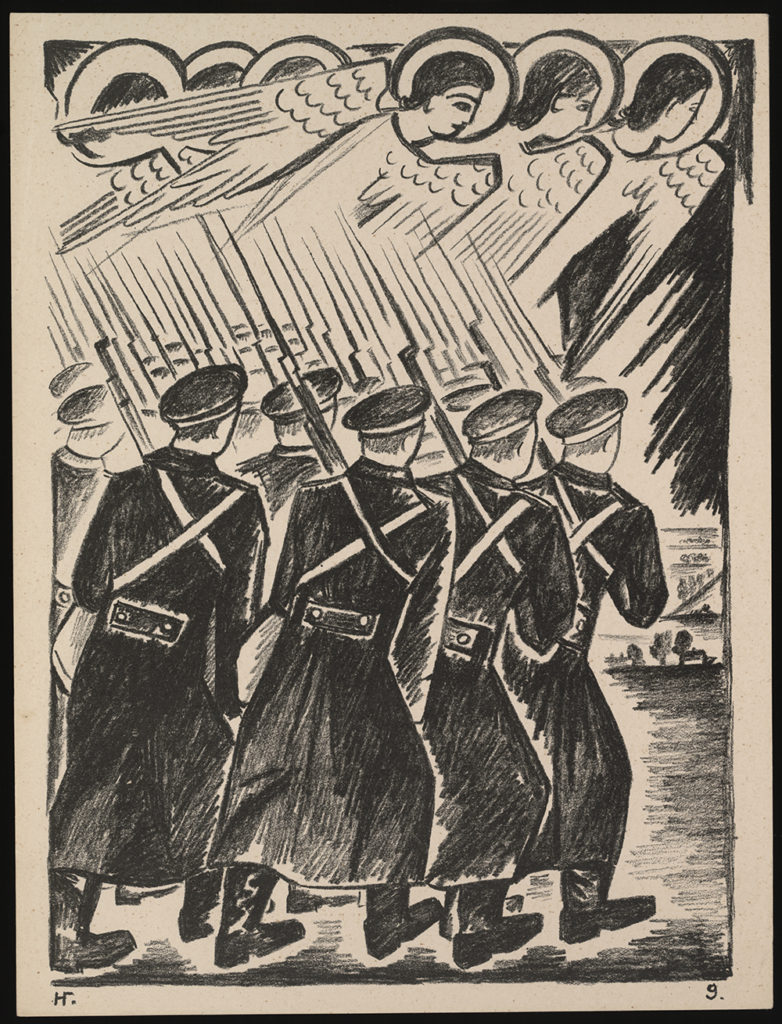
Natalya Zlydneva: Sometimes you can guess, because Rozanova made illustrations, and she has a “war” series, Goncharova has a series of “mystical images of war”. For the avant -garde, the name is very important, because it is included in the very artistic matter. There may be no subscription compositions, well, as, for example, Rozanova’s illustrations for the twisted book “blew up”, and they also convey the theme of war in the form of explosions, split forms, a dispersed body that has scattered into pieces - not a human body, but by evading objectivity in such an ecstatic way.
Elena Fanailova: And what about literature?
Oleg Lexmanov: There are two conditions, one indisputable, and my second consideration may be controversial, which determined the specifics of the language of Russian poetry speaking of the war. The first is that Russian poetry has almost one type of statement - this is a talk that we, Slavs, protect genuine values, and there are Teutons. This opposition of the Slavs and Teutons in painting also arose very quickly, but in poetry a variety of authors, from graphomaniacs to sophisticated symbolists, from Sologub to Khlebnikov , began to use this language. It is clear that each of the authors who did this had their own internal reasons. You open some magazine or military collection, which have begun to go out a lot, especially in the first period of the war, and there is almost no particular difference between some graphomaniac and Georgy Ivanov , Sologub, Sergey Gorodetsky . And the second, about what I wanted to say: a very small number of Russian poets were in war. For example, about the British, for example, there was a whole famous school of " trench poetry ", there someone quickly died, such as Albert Brook, and someone, such as Oldington and Lawrence , then wrote about all this, and they created great enormous literature, throwing a direct bridge to this lost generation. And in these texts - trench truth, naturalism.
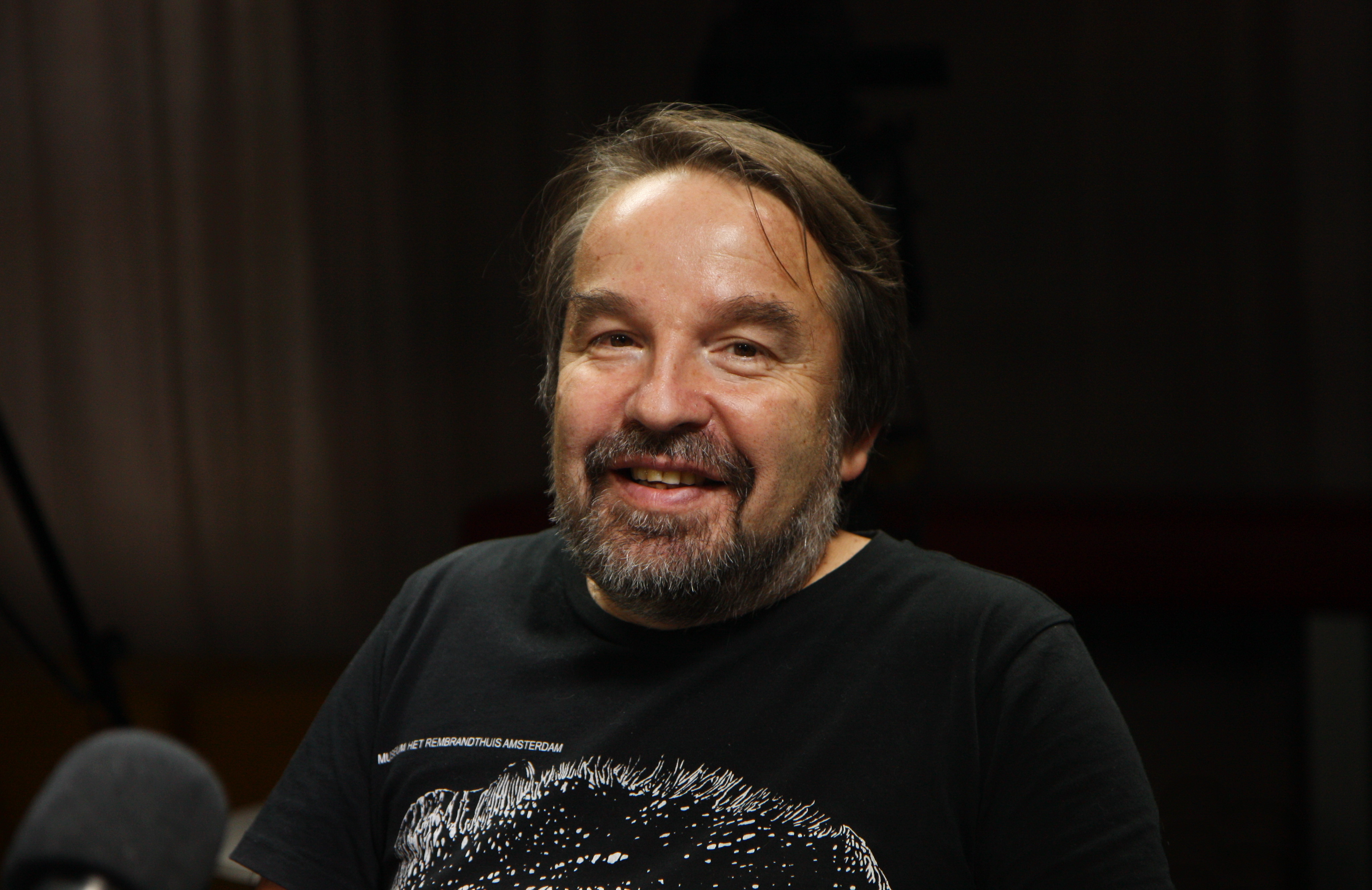
As for Russian poetry, Gumilev is a very interesting, vivid example, he created wonderful and still underestimated military poems. And most poets were in Moscow or in St. Petersburg, Mayakovsky, who, as you know, wanted to sign up with a volunteer, cooled quite quickly and began to write completely different. It seems to me to talk about this fork. It is one thing when Khlebnikov writes a poem with all these Slavic calls, and another thing is when he himself is inside the war, and he, of course, has a completely different attitude towards this.
Elena Fanailova: This Slavschina, the so -called national romance lies in the ideology of the entire national modernity, is the current inside and architecture, painting, and literature, and this is a thing characteristic of all countries of that period. There is exactly the same Germanism when it is proved from the German side that the German spirit is great, and German culture should finally manifest itself in this war.
We listen to Mayakovsky Ivan Yesaulov, in his article it says that the poets who were pacifists in the First World War, suddenly turn into civilian hawks.
Ivan Yesaulov: At first, I ask you just to read in Mayakovsky, pacifist, what was his attitude to the blood in the poem "War is declared":
The newspapers were torn: "Buy evening!
Italy! Germany! Austria!"
And from the night, gloomy in black,
Bagro blood poured and stream poured.
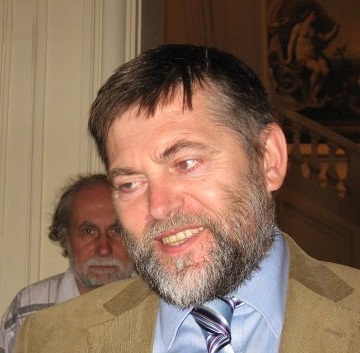
He further has a possible victory of Russia is called a killer. Somewhere, the bomb is tearing his legs with Lieutenant Petrov, "And you have here,-I am angrily throws Mayakovsky to the fellow citizens," an orgy for orgia. " When the civil war is already beginning, Mayakovsky writes the poem "The Last Page of the Civil War":
Glory to you, a red -bearing hero!
Washing the earth with blood
For the glory of the commune,
To the mountain behind the mountain
The Crimea who was walking on the strongholds of the Crimea.
They crawled with tanks of the ditch,
sticking out the guns of the neck, -
with bodies you filled the ditches
By the corpses, crossing the isthmus.
They
The trenches were lifted behind the trenches,
whipped the lead river -
And you
They selected from them Perekop
Almost with a bare hand ...
In one gratitude we drain the words
you,
Red -star lava.
Forever and ever, comrades,
to you -
Glory, Glory, Glory!
Previously, the lieutenant Petrov, the St. George Cavalier, tides his legs, and Mayakovsky is charging with the worthless “you”, and now the ditches are filled with dead bodies, and the remarkable red -farmed characters burst into the Crimea to shoot and kill further and the poet Mayakovsky, the pacifist, says “Glory to you”.
What is written during the war is read in a completely different way during the times of peaceful life, these contexts are very important
Elena Fanailova: I will recall an example from the history of World War II - this is the "kill the German" by Ilya Ehrenburg . At the time of hostilities, the poet, the artist formulates the terrible things from the point of view of peaceful life. It seems to me that what is written during the war is read in a completely different way during a peaceful life, these contexts are very important.
Oleg Lexmanov: The regime that waged war until 1917 was not close to Mayakovsky. And he was an individualist poet. After the revolution, he deliberately went to her service and did what he was ordered, it was just a social order. I would like to recall the poem of Mayakovsky "Emperor". In 1928, he turned out to be Sverdlovsk in the place where Nicholas II was shot, and wrote on this subject a poem, which was largely connected with the Shakhty affair , which then began to unfold. Its meaning was as follows: if you want to be an emperor, then you will get a crown, but only with the mine. The most interesting thing is that this poem has a draft in which Mayakovsky tries a completely different option, writes that even the royal family should not be shot that the Bolsheviks should not be bloodthirsty. And then he removes all this and writes what he writes, because this was the task, about which he was in the poem "He at the top of his voice" directly said:
But me
myself
humbled
Becoming
On the throat
own song.
This is a completely amazing monologue, because we are talking about two completely different situations, and this ardent tone removes the artificiality of the combination of these two completely different Mayakovsky.
Elena Fanailova: If we talk about the Russian vanguard, then except for futurists, as I understand it, few accept Soviet power. Or is everything more difficult? After all, for some time, Malevich works in the Soviet Union for some time, even trying to create a certain art association with the Oberiuts, but in the end leaves his homeland, like Shagal , and many others.
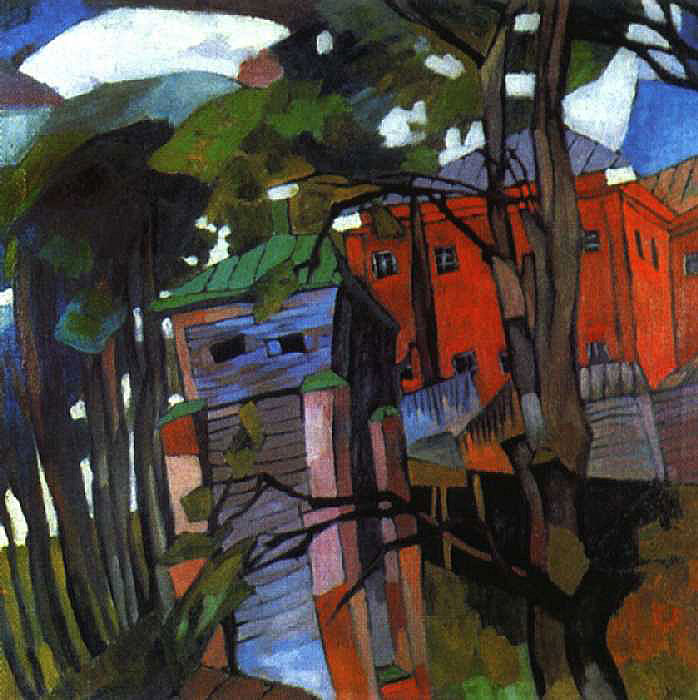
Natalia Zlydneva: Malevich left for a while. Nikolai Ivanovich Khardzhiev in a conversation with me said that Malevich was a very Soviet person, he wanted to integrate, and he accepted this political discourse. He did not know what it would have flown later, he died quite early. And with artists in terms of political engagement, everything is more complicated, because the language describes itself, and the visual arts are silent, therefore it appeals to the iconographic tradition, which is completely on the day before yesterday, and to very large mythological layers. Let's say there was such a motive in art at the turn of the 10-20s as a red house. These are echoes of that initial mythological fire, which led to the main explosion and the beginning of the new world. , By virtue of the features of its language, the visual art is very appealing to the co -creation of the viewer, and the avant -garde especially requires tension not so much knowledge as cultural associations and layers of consciousness.
Oleg Lekmanov: It seems to me that it is more interesting to talk about specific art worlds, and I now remembered two different artists, one of the Blue Rose - Pavel Kuznetsov , and the other from the Bunny Valeta - Mashkov . Both used Soviet, collective farm motifs, and Kuznetsov did it brilliantly, and Mashkov’s monstrous! This is amazingly superimposed on the individuality of the artist, one manages to do this, but the other does not. As Khlebnikov, Slavschina sometimes turned out to be brilliant, and Sergei Gorodetsky did not work out well. And in the case of Mandelstam with military poetry, it seems to me that this is very special and very interesting. Everyone wrote high, and he tried very different. He wrote five or six military poems, and I have a student in the tower - Marseille Hamitov, he wrote a job about Mandelstam's military poems. And he shows that Mandelstam is trying different types of language. He has a poem: “In a white paradise lies a hero ...” - such a Slavic, for Mandelstam is completely not characteristic. There is another text where he is trying to look at the map of Europe and simply describes how the shores change, in the spirit of such political lyrics. And these are all completely different attempts, it is interesting against the backdrop of a sticky common Slavic howl, choir of other poets.
Elena Fanailova: And what happened to Blok and Gumilyov?
Oleg Lexmanov: Blok, on the one hand, was always a h Zibitsa and tried to be independent, it was important for him, on the other hand, he was more or less here in the stream. He has a poem, dated, it seems, on September 1, 1914, where he describes the train with the soldiers who go to the front. It ends with a completely patriotic appeal, because he was, of course, captured by this. And then the evolution of Blok was largely similar to the evolution of all who looked at the war. When defeats began, death, he began to look at it differently. It seems to me that his best lines about the war are from the preface to the “retribution” and the “Retribution itself”, and the poem “Born in the Great Year”, which is addressed to Hippius, where he expresses terrible disappointment with war. Andrei Bely , as you know, in one of the later profiles when he was asked: “What do you think about the war?”, He replied: “I say what I want to say about the war, that I am not writing anything about her.”
Elena Fanailova: Blok is one of the main semantic poets for literary consciousness.
When Blok was going to send to the front, Gumilev said: "It's like frying Soloviev"
Oleg Lexmanov: When Blok was going to send to the front, Gumilyov, who was difficult to treat him, said: "It's like frying Soloviev." Gumilev himself became a volunteer, and, which is largely his charm, he was ridiculous in the first period of his activity. He was ugly, ridiculous, did not know how to ride a horse, had no success with women. All his poetry lies in the fact that, being in a ridiculous position, he still reached victory, defeated women, served in cavalry, was a great traveler. He could not help but go to this war, because it was just another victory that he won over himself. And he really fought, was the gentleman of St. George. He is one of the few Russian poets who, after the revolution, could really not return, he was in London when all this happened. He did not accept the revolution with his friend, lover Akhmatova, Boris Anrepo M, discussed what to do next. Anip said that he would remain, and lived a long life perfectly, became a star there, and Gumilev returned, and what happened happened to him. This is such a ridiculous, but courageous person, in some of his verses it also reflected very well.
Елена Фанайлова: Хочу посмотреть и послушать Екатерину Бобринскую. Это разговор о живописном авангарде и о европейском контексте, Екатерина сравнивает итальянских и русских футуристов и говорит о неизбежности связи авангарда и насилия.
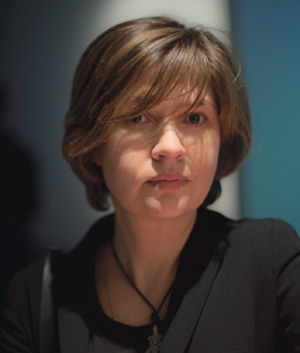
Екатерина Бобринская: Тема насилия к Российской империи начала XX века очень даже применима. В России в эти годы насилие было просто разлито в обществе. Тем не менее, русский авангард очень далек от той мифологии насилия, которая была в итальянском футуризме. Хотя отдельные мотивы, связанные с пластикой, с деформирующей творческой силой, с творчеством как деформацией, разрушением, присутствовали, но воспевания войны и агрессии в русском авангарде не было. До войны и с ее началом были довольно мощные патриотические выступления, многие художники и поэты были настроены очень националистически, патриотически, но агрессивного напора, который был у итальянцев, в русской культуре не было никогда. Мне кажется, ситуация Первой мировой войны охладила пыл буквально у всех. Война показала себя как такое чудовищное, страшное событие, что вся эта игра с насилием, в мифологию агрессии, эти агрессивные жесты, – все это отошло. Война нанесла чудовищную травму, и после нее вся европейская культура и во многом русская обратились к новому состоянию – призыв к порядку, возврату к классическим тенденциям, к фигуративу. История возрождающего и спасающего насилия закончилась после Первой мировой войны.
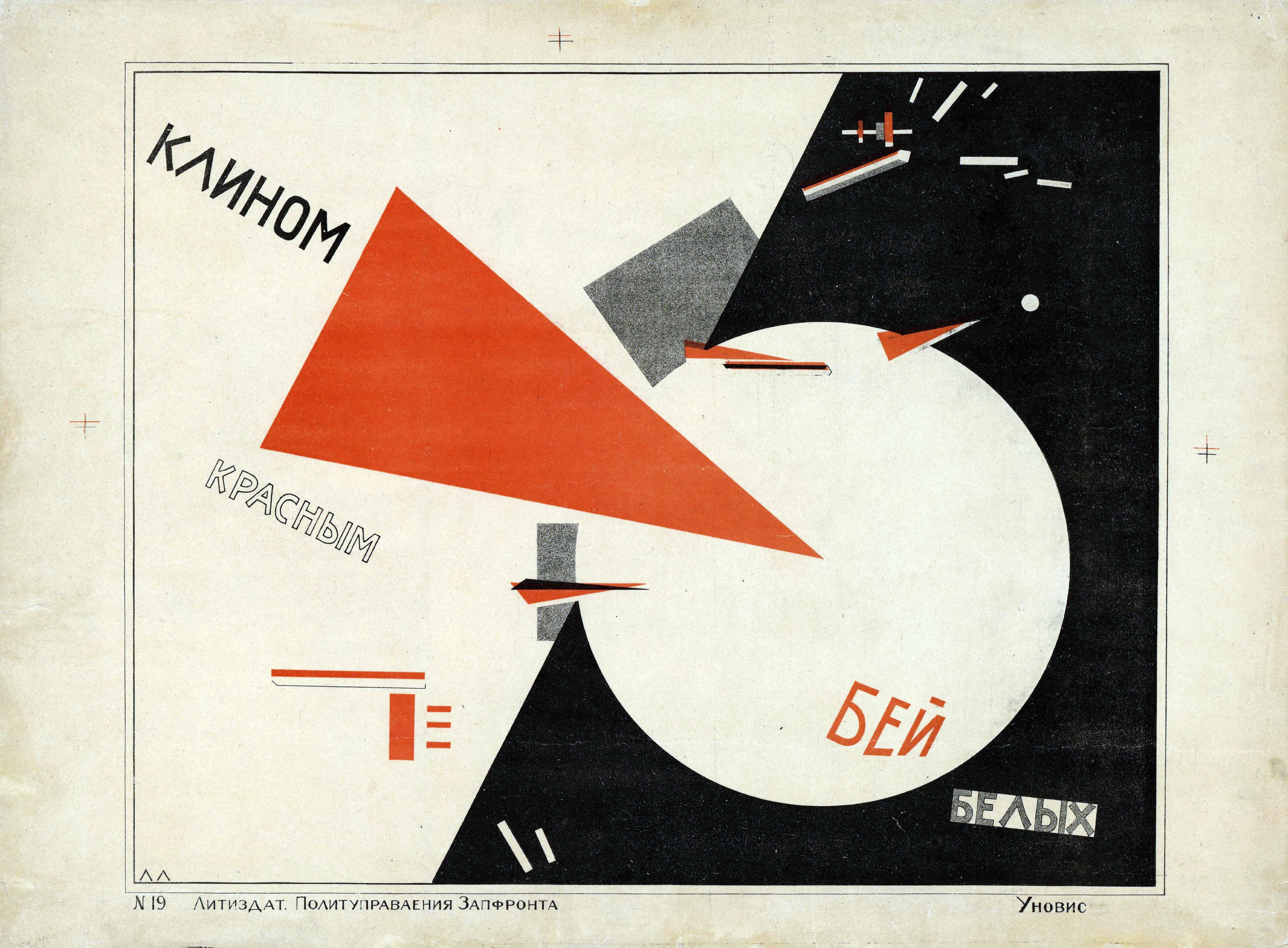
Наталья Злыднева: Конечно, по сравнению с итальянским футуризмом насилие не было в такой явной форме, но мы должны учитывать, что авангард артикулирует себя в терминах молодости, а значит, напора, энергетического выброса. Тут язык немножко сбивает нас, и если мы говорим о насилии, то его нет и быть не может в живописи, но если мы говорим о мифологеме начала, молодости, то мы можем обнаружить некоторые косвенные указания. Например, "клином красным бей белых" у Лисицкого , такая же точно композиция у Малевича. В позднем творчестве, в 20-30-х, даже в 40-х годах все бывшие лидеры авангарда вдруг уходят в натюрморт. Целиком в области натюрморта лежит, например, творчество Татлина , который делает ржавые, увядшие цветы в духе Рембрандта, и это уже поэтика старости и увядания. Кроме Татлина, можно привести и другие примеры, Кончаловского . Но удивительно, что, например, Ларионов, который совершенно не был связан с этими социальными условиями, сидел в это время в Париже, пишет точно такие же натюрморты. Это конец 20-х – 30-е годы.
Елена Фанайлова: То что называется арт-деко.
Я хочу посмотреть выступление Корнелии Ичин. Ее статья "Война со смыслом" – о теме войны в творческое Александра Введенского – разбирает одно из самых утонченных и страшных стихотворений "Четыре опыт умирания", когда четыре голоса рассказывают о своем опыте умирания. Два из них касаются военной смерти, это смерть в Первой мировой войне и в эпоху Гражданской, а также там двое штатских мертвецов все это дело обсуждают.
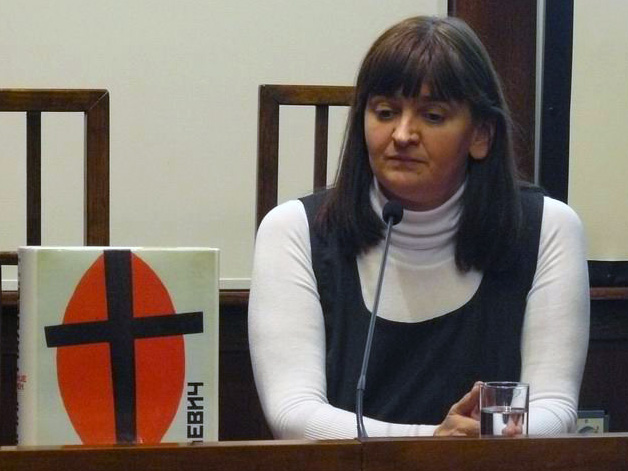
Корнелия Ичин: В этом тексте четыре описания: это смерть на войне, естественная смерть и самоубийство. Введенский пытается совместить эти разные точки зрения, объединяя человека, мир и смерть. Он делает это выбором слова, которое сам придумывает, и это слово "умир", то есть умирающий человек и одновременно мир, который умирает. Для него очень важно показать, как соотносятся человек и мир, человек и война, человек по отношению к другому человеку, и конечно, это вопрос границы, за которой всегда возникает война. Эта граница может быть границей государства, границей национальной, религиозной и так далее, и эта граница всегда абстрактная, выдуманная, потому что ее нельзя материализовать. Для Введенского очень важно показать эту раздробленность мира, нестабильность существования, и с этой точки зрения по отношению к разным типам смерти он подбирает определенный язык. Когда речь идет о войне, которая связана с государствами, это наплыв штампов, которые использует субъект, который зовут "Умир первый". Если речь идет о человеке, умирающем естественной смертью, то это слова абсолютно другого порядка, эмоционально окрашенные, которые говорят о любви, о постели, о расставании и так далее. Но главное для Введенского – это показать, как можно разрушить ту предопределенность, которую подразумевает война. И поэтому он и предлагает нарушать эти институционные подходы, если можно так сказать.
Елена Фанайлова: Я спросила у Корнелии, как Введенский решает эту проблему, и она ответила, что он сталкивает патриотический дискурс и свои личные впечатления, фактически уже полумертвеца.
Корнелия Ичин: Да, для Введенского очень важно было показать целостную картину, и поэтому он пытается показать параллельное существование миров – личного и государственного. Он пытается показать, что на самом деле нет возможности их разделить, потому что на оси времени все эти события, чувства существуют одновременно. Он вводит в текст и то, и другое, и третье, и четвертое. Вся эта динамика, все это наше действие, старания во всем преуспеть, все равно в чем, это всегда имеет начало и конец и в конечном итоге приводит к смерти. При этом для него статичность, как данность, она не имеет начала и конца, и поэтому для него эта система отрешает нас от смерти, она отменяет смерть. И он пытается в рамках этих своих размышлений найти какой-то подход, чтобы разобраться в бытии человека, где эта граница, и можно ли преодолеть смерть.
Елена Фанайлова: Корнелия, как мне кажется, иллюстрирует мысль о том, что авангардный художник пытается разобрать ситуацию войны изнутри. И Введенский пытается деконструировать ужас и воссоздать его полноту для своего читателя, чтобы реально что-то с этим сделать. Он, как один из самых глубоких и философским образом настроенных русских поэтов ХХ века, имел дело с абсолютной метафизикой экзистенциального кошмара и войны. Чем же заканчивается авангардный взрыв? Боюсь, что вся эта история заканчивается Второй мировой войной, и люди не выйдут из этого опыта ни с социальным, ни с культурным багажом, который не допустил бы Вторую мировую.
Наталья Злыднева: Война – это точка неопределенности. Первая мировая могла закончиться революцией, а могла и не закончиться ею. Ситуация в искусстве отражает это даже внешним образом. Например, у Шагала в раннем творчестве есть картина "Ходики", с маятником, который вот-вот займет какое-то другое положение. А в позднем творчестве у него есть картина "Революция", там изображена группа людей, какое-то карнавальное действие, в центре – стол, а на столе на одной руке стоит Ленин. Эта картина удивительна своей наглядной спрямленностью идеи бифуркации, неопределенности, о которой писал Пригожин , а вслед за ним уже и Лотман. Так что война – это страшная катастрофа, и ее никак нельзя допустить, но она несет и некоторое обновление, и в глобальном смысле, и в смысле локальных социальных войн, которые могут вывести к созданию нового космоса из хаоса.
Олег Лекманов: Я сказал бы, что одна из трагедий, связанных с войной, заключалась в том, что из-за последующих Февральской, а потом Октябрьской революции и Гражданской войны военный опыт просто не был осмыслен вовремя, как это произошло в некоторых европейских странах, откуда появилась и вся великая проза, и страх войны, и так далее. Мне хочется в конце снова вспомнить "Стихи о неизвестном солдате", потому что Мандельштам в 1937 году вдруг понял, я думаю, это в какой-то момент: скоро будет новая мировая война, а мы до сих пор не знаем, что было тогда. И этот текст является великой попыткой такого осмысления.