
Translated material
Unprotent business
The story of the non-subsidence of the chairman of the Moscow City Court "and others" illustrates who and how actually solves personnel issues in the judicial system
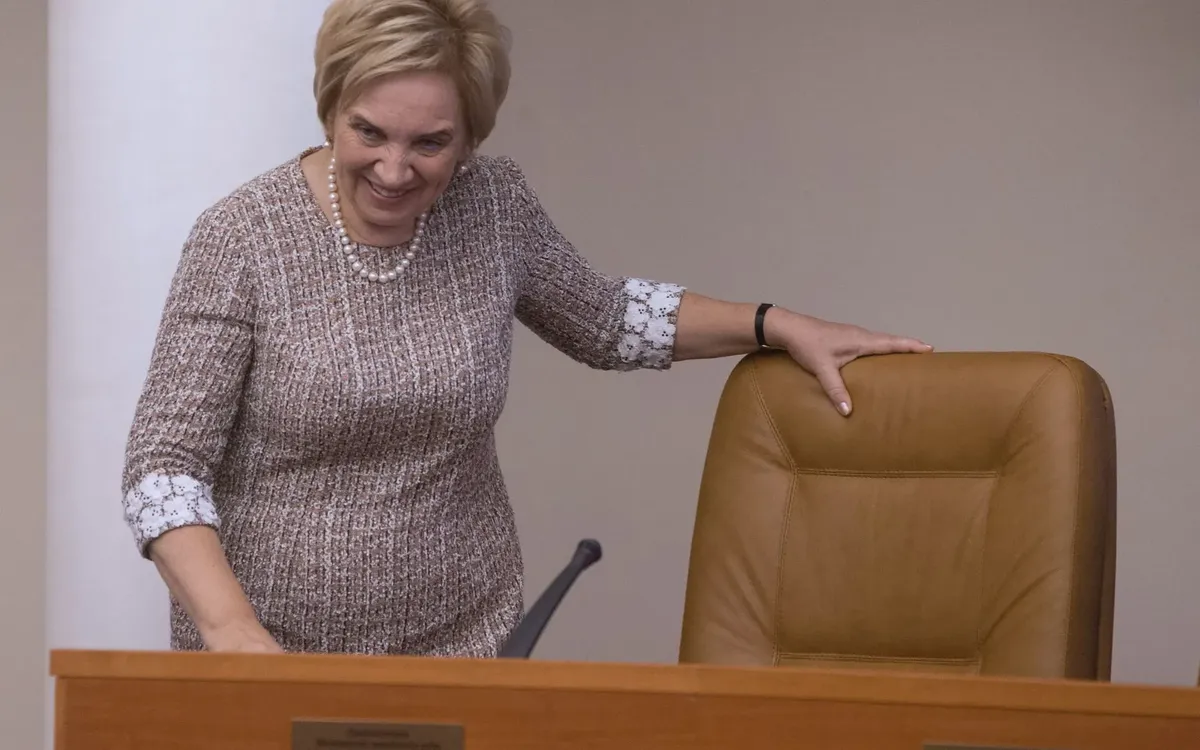
Today, June 1, the Higher Qualification Collegium of Judges of the Russian Federation (VKKS) posted on its website a re -announcement of the competition on the position of chairman of the Moscow City Court. Not a single application was submitted to the previous competition (the term expired on May 15). The situation is not that unprecedented: there are such courts, which no one really wants to lead (for example, Krasnodar Kraeva after the resignation of his chairman in 2018), and then someone from the clips of the chairmen of the courts and their deputies, which is more or less known to everyone in the judicial system, is received by such a proposal, which is no longer possible to abandon without consequences.
But we are talking about the key position of the chairman of the Moscow City Court: ceteris paribus, there would be a lot of hunters on it - including Olga Egorov itself, and she, as they say, do not mind. It seems that she has already worked out two periods possible without rotation (and actually three), but cunning loopholes in the laws allow her (also seemingly, because it is important here to interpret) to apply for her place again - see more details “Olga Egorova’s abundance” on the site for April 15.
The indecision of Egorova, apparently, was explained by the fact that at the end of the past - in the spring of this year, she received several intelligible signals in the form of the cancellation of decisions of Moscow district and city courts and even private definitions to their address - among the “understanding” this was regarded as unambiguous “black balls”. An experienced hardware official (and not just the judge), Egorova, apparently, settled some questions outside the judicial system. In the meantime, she did not solve them, one way or another (we can’t know this yet)
For any other, it was also a kind of suicide to submit to the “across the Old Man” contest.
In the telegram channels, information about some supposedly applicants merged, but rather, with the aim, on the contrary, to “shoot” them on distant approaches to the treasured post. That is, we conclude: in relation to this post-despite the fact that the management of the RF Armed Forces did not recommend submitting an application-no other proposals were made to anyone else-or ... or their acceptance threatened even the worst consequences, albeit from some other side.
The new announcement of the competition was not given in the general clip of vacancies announced by the VKKS, which was then met (May 26–29), and separately, on June 1, for two candidates - along with the chairman of the Moscow, the deputy chairman of the Supreme Court - the chairman of the collegium for civil matters was declared a vacant position. Vasily Nechaev, who occupied her, resigned by age (70 years), although the next mitigation of the bar against senior judges allowed him to maintain a position up to 76 years. This is an important “context”, here everything can be associated with some hardware agreements and “exchange”.
And in this context, another line remains an important secret - with another deputy V.M. Lebedeva - Chairman of the Board of the Arbitration Procedure for Economic Disputes (these are arbitration courts that often consider disputes to astronomical amounts). Now this post is occupied by Oleg Sviridenko - the figure is not only odious in the eyes of the lawyers (in particular, the “disserter” reasonably but unsuccessfully tried to deprive him of his doctoral degree for plagiarism), but not pretty to the chairman of the RF Armed Forces Vyacheslav Lebedev.
The competition for a vacant position in connection with the expiration of the term of office by law is announced for six months, and the next term of powers of Sviridenko expires in August. Accordingly, in February he filed an application with the VKKS, despite the negative characteristics.
The meeting was stormy, questions were asked, including about the confusing personal life and the property of Sviridenko,
He was reproached with red tape (possibly conscious, judging by the tone of questions) when considering complaints in the framework of specific cases. The transcript of the open February meeting of the VKKS fell into the press (published, in particular, Alexander Minkin in MK) and caused a scandal.
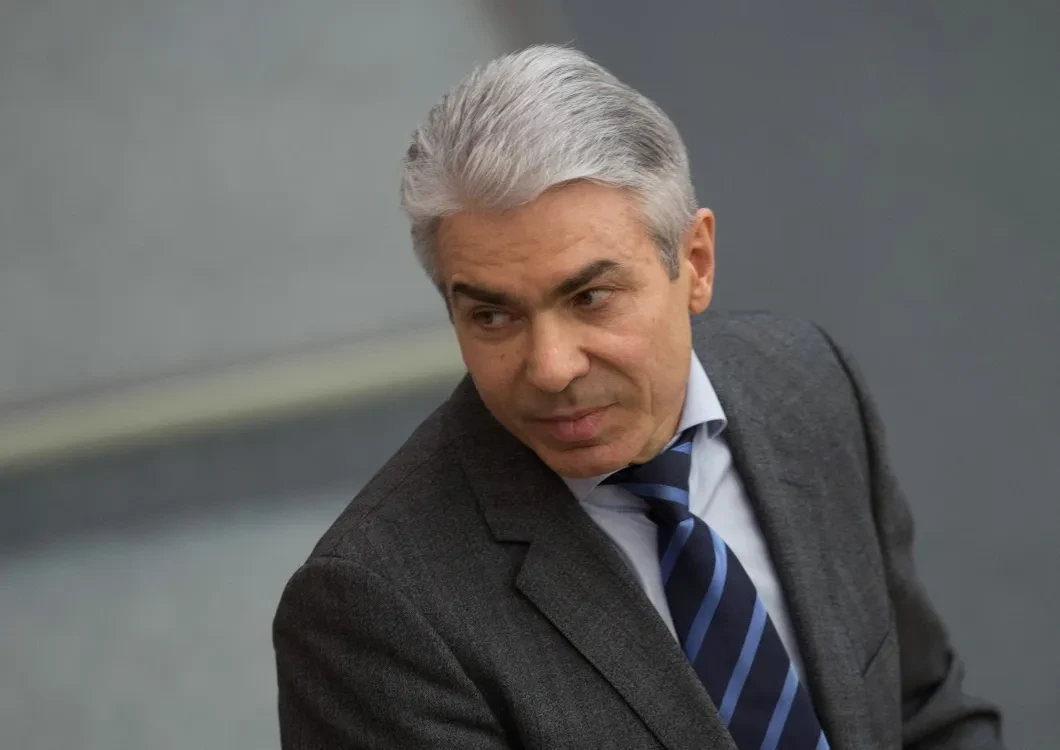
Despite the fact that the candidacy of Sviridenko was not supported by the representative of Lebedev - his first deputy Peter Serkov, the Council of Judges and the chairman of the VKKS Nikolai Timoshin, this candidacy was approved by a majority vote with a minimum advantage. In the VKKS, along with 18 representatives of the courts (various, including arbitration), 10 “public representatives” (most often legal universities) and presidential representative Maxim Travnikov-the head of the Presidential Department of the Russian Federation on public service and personnel-just asked to support Sviridenko.
However, contrary to the usual, his candidacy was not immediately represented by the so -called personnel commission of the AP (commission on the preliminary selection of candidates for the appointment of federal judges). Many in interested circles expected that the candidacy of Sviridenko would be examined “during the quarantine period under the noise”, but so far there was no such meeting of the personnel commission. And when and if it is, we will find out little: unlike the meetings of the VKKS, the personnel commission is collected in closed mode, and vote here, along with V.M. Lebedev (Chairman of the Commission) and other judges, the same M.A. Travnikov, representatives of the FSB, Prosecutor General’s Office, heads of relevant AP departments and for some reason Anatoly Kucheren, and the new adviser to the president, the chairman of the HRC, unlike the previous one, was not part of this commission. Neither the alignment of the votes in it, nor the arguments by which this or that candidate is rejected or supported - and only in this case seems to the president - are not published.
Stories with both Olga Egorova and Oleg Sviridenko have not yet ended, but they at least show that
Neither the Chairman of the Supreme Court, nor the judicial community have a decisive vote when appointing key figures in the judicial system.
Personnel decisions are not made here and not transparent, and, as they say (in the sense of a possible exchange of candidates), “bargaining is appropriate”.
Egorova’s chances are now dependent on which direction the growth of the “security forces” will turn into, whose obedient tools in cases with political background she always appeared until last Thursday, when the Moscow City Court made a (legal) decision, abolishing the 15-day punishment for the first participant in the pickets in support of the “Ombudsman of the police” Viktor Nemitov. However, a similar appeal on the complaint of Ilya Azar, according to which inevitably (within the framework of the principle of uniform law enforcement) today, June 1, the same decision should have been made, without a clear explanation of the reasons were postponed to June 5. To lose such a proven figure, especially on the eve of the “all -Russian vote on amendments to the Constitution”, during which falsification is possible, often entailing, as practice shows, mass protests, and especially in the capitals, in the logic of the Kremlin, of course, risky.