
Translated material
"Anyone can be made a diagnosis." Interview with Alexander Podrabinek about punitive psychiatry in the USSR and in Russia

Today, the court decided to forcefully hospitalize the Yakut shaman Alexander Gabyshev in a mental hospital. Such decisions are known to many Soviet dissidents who were diagnosed with “sluggish schizophrenia” in the USSR so that the authorities without a trial could place their political opponents in psychiatric institutions. Tanya Uska talked with Alexander Podrabinek, the Soviet dissident who struggled with punitive psychiatry, how this system was arranged in Soviet power, and whether in Russia they can again begin to use psychiatry for political purposes.
- When did the punitive psychiatry in the USSR began and why did it begin?
- Cases of the use of psychiatry for political purposes have been known for a long time, at least from the beginning of the 19th century, and such cases have been the entire existence of the USSR. But systematically punitive psychiatry began to be applied around the second half of the 1960s, when the State Security Committee and the Soviet authorities did not want to conduct court cases in the usual manner for various reasons. Instead, they preferred to declare their political opponents with mentally ill.
This had different reasons. One of them was that if the Soviet apparatus was opposed by people with a position who gained great confidence in power, then recognition by political opponents would discredit communist power itself.
The recognition of people with mentally ill, as it were, simply explained that they were not opponents, not ideological opponents, they are “just sick”.
Such a paradigm seemed to them the most profitable, most successful.
And they used this completely painlessly until about the mid-1970s. But gradually this practice became well -known and began to criticize and condemn both in the Soviet Union and the West. In the end, at the Congress of the World Psychiatric Association in 1977, it was convicted of a professional psychiatric community. A resolution was issued on the inadmissibility of the use of psychiatry for non -medical purposes. In fact, it was such a slightly veiled resolution, because this was meant the Soviet Union and the use of psychiatry in it for political purposes. Then the campaign of condemning such practice grew more and more, was widespread in the West, and all this ended in the fact that in 1983 the question of excluding the Soviet Association from the World Psychiatric Association was raised for systematic abuse. On the eve of the vote, the Soviet delegation voluntarily left the association.
- Did the punitive psychiatry in the USSR and after this, including international condemnation?
- You know, generally repressions, the less resistance is met, the wider they are practiced. And vice versa, the more resistance to repressions, the more they are bought up and the authorities begin to look for some other ways. It was also with punitive psychiatry. Until she met resistance, she was practiced very widely. When they began to rebuff, there are fewer such cases. In some known cases, the authorities no longer used these methods. In addition, in 1977, a special commission was created under the Moscow Helsinki group to investigate such cases, which I included as the founder. We have collected a large number of materials. And under our pressure and under the pressure of the international psychiatric community, this practice began to go into the shadow, it was no longer so catchy, it was not so widely used. But still used until perestroika, until 1989.

-Is there any data on how many people are in psychiatric institutions because of this? For political reasons.
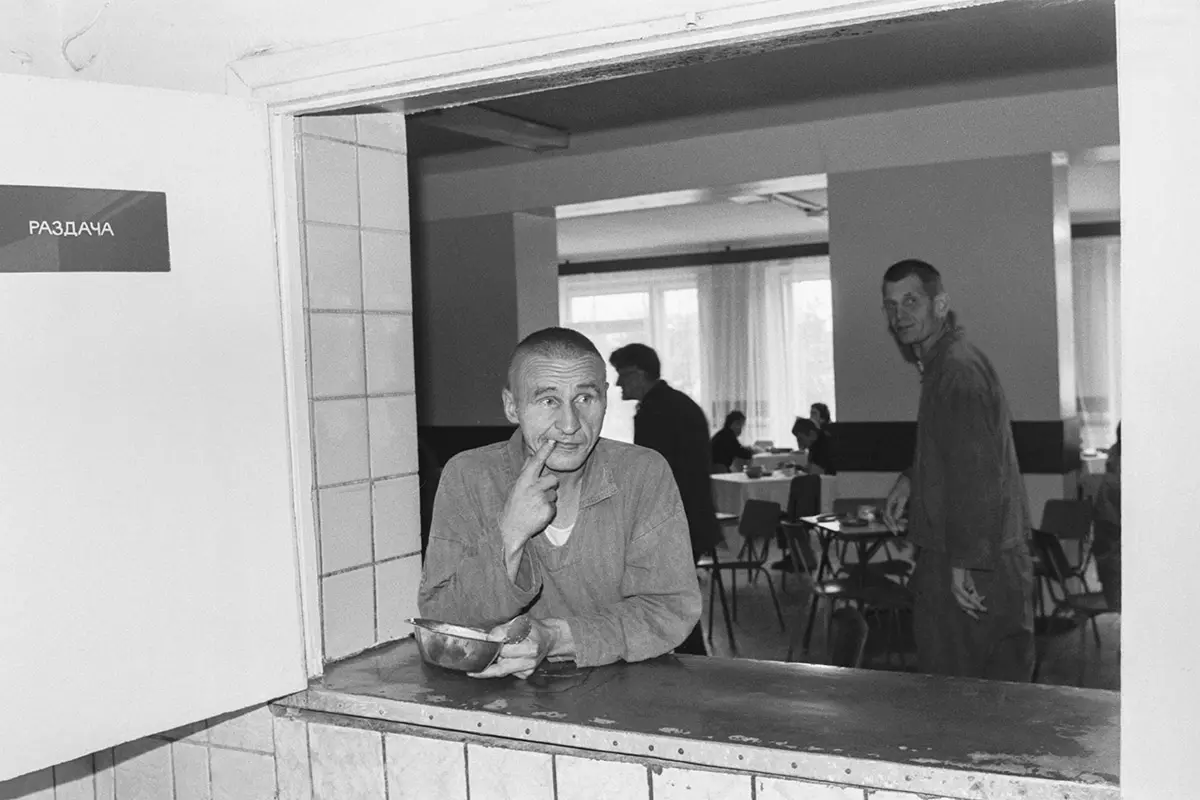
- There are no exact data, because these archives of state security organs are still closed. But according to approximate estimates from the 1960s to the mid-1980s, it was about 16 thousand people. For various reasons-some of the frankly political, others in conflicts of an ideological nature or some other-all these healthy people without real medical indications fell into psychiatric hospitals.
- Tell us about the diagnosis of sluggish schizophrenia. What is this diagnosis and how was it used in the USSR?
- Schizophrenia has many different forms, including poorly progressive, which are called sluggish in everyday life. In the USSR, the Russian name “sluggish schizophrenia” was very widespread after work in this area of Soviet academician Andrei Snezhnevsky. With this diagnosis, psychiatrists in Soviet times - at least those psychiatrists who were in the service of a repressive apparatus and state security - were successfully used to place political dissidents in psychiatric hospitals. I must say that this was not the only diagnosis, used others, but it was one of the most used in punitive psychiatry.
- And after 1990, the same diagnosis of sluggish schizophrenia continued to make?
- You know, it's not a diagnosis. After all, any diagnosis can be made in principle. Schizophrenia can exist in a latent form, hidden, sluggish. For example, I will tell you that the coronavirus infection is also the current one can also take place in a hidden form, latent, without signs of the disease. People endure her without even knowing that they transferred her. It is also possible with other diseases.
The problem is not a diagnosis, the problem in people who consciously use such diagnoses for political repression.
What is convenient to diagnose “sluggish schizophrenia” is that the latent forms of the disease are difficult to diagnose.
But in ordinary diseases, these forms can be identified, for example, make a cardiogram or laboratory tests, and in psychiatric ones it is impossible, very difficult. A person does not show signs of the disease. This does not mean that he does not have a disease, it means that he has no signs. This, in principle, is possible, and after some time the disease develops further, progresses, develops into such forms that would be difficult to notice. On the other hand, there is a large field for speculation. We can say: here, this person has no manifestations of the disease, but we know that he is sick. And an unscrupulous doctor who is in the service, say, in security agencies, can say: "I find such and such signs here by this behavior."
And here it is very difficult to prove that this is not so. This should be carried out by examinations and counter -experts, this is a very highly professional dispute, unlike other sections of medicine. Actually, in the 1970s, when we began to resist this, we began precisely by attracting independent psychiatrists, and they conducted examinations to people who were planted according to political articles, and proved that they are healthy, socially not dangerous and did not need hospitalization. In 1988, we created an independent psychiatric association, a year later it was admitted to the World Psychiatric Association and at the same time the official Soviet returned to it. As a result, today Russia is represented there by two national associations - the official, which is overseas the Ministry of Health, and an independent psychiatric association, which is headed by Yuri Savenko. This association aims to, including the obstruction of the use of psychiatry for political purposes.
I don’t know what about Gabyshev, I cannot go into details, but, as far as I know, they know about this case.
- I wanted to ask you a question about punitive psychiatry already in the post -Soviet time. How does the post -Soviet psychiatry differ from the Soviet, how much can it be used for political purposes?
- Russian psychiatry was used for political purposes for isolated cases. And everyone attracted the attention of the public.
As a punitive psychiatry system has not yet been revived. But I see very well that all the possibilities for returning to it are preserved.
Gradually, Soviet methods of leadership are being revived. And in law enforcement, police, we are increasingly sliding to the samples of the Soviet Union. Therefore, the threat of the use of psychiatry for political purposes has not disappeared, it exists, and I am afraid that the possibility of its use is quite large.
For example, we know, for example, the case of a defendant in the marsh car of Kosenko (Mikhail, a disabled person of the second group in a mental illness. He was recognized as insane in 2012 and placed in a psychiatric institution - “MBH Media”.) He is really a patient, but not so much that he would represent a social danger in order to hospitalize him. Here is a case when any person who, say, was sick, can be placed in a psychiatric hospital for political reasons. Such borderline cases are trying to use. But this must be opposed. As far as I know, an independent psychiatric association is opposed to this.
- You said that in Soviet times, punitive psychiatry was associated with the complexity of cases that, relatively speaking, it was difficult to carry out in a normal order through the court. And now, in your opinion, the reasons for the use of psychiatry for political purposes are some other or remained the same?
- You know, for the authorities, for the FSB, for example, the reasons remain the same. But of course, they have difficulties due to the fact that today's Russia is more open to the world than the Soviet Union, and psychiatrists are not very inclined to expose their reputation as such a risk. You see, in Soviet times it was a closed system, no one went abroad, few talked with foreign colleagues, only very proven people, including psychiatrists, were abroad. And so it was easier to put pressure on them. And today there is a rather intense international exchange, scientists know each other, go to conferences, symposia, congresses. And they do not want to listen to the accusations from colleagues that psychiatry is again used for political purposes.
I know many cases when the authorities, mainly the FSB, or the bodies of the Investigative Committee, tried to enlist psychiatrists with the consent of hospitalization, to recognize a person insane. Well, for example, this was done with Ilmi Umrov in Crimea several years ago. He is the Crimean Tatar, one of the leaders of the national movement, Majlis, who was tried for calls for separatism. He was placed in the hospital for an examination for a month, hoping that psychiatrists recognize him as a mental sick and insane and he can be imposed in a psychiatric hospital. And he was recognized as healthy. I know that the doctors were pressure, but the psychiatrists still hold on to their professional, so to speak, honor, if they are patho. They do not really want to succumb to such a police press. Many people in their profession want to remain professionally honest. Although it is not known how much it can last, it depends on what pressure the power will exert on them, how they themselves will be professionally consolidated. But so far, in many cases, they manage to reject the attempts of the investigation organs to impose a psychiatric diagnosis of a defendant or the accused.