
Translated material
Eight lives that are not needed by vandals
In society
 Eight lives that are not needed by vandals
June 3, 2020 Sergey Parkhomenko
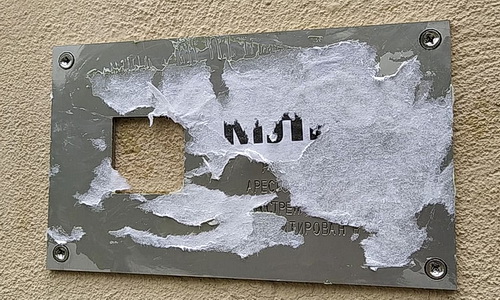
Probably, very many have already seen the message that in Yekaterinburg someone immediately unscrewed eight memorable signs of the “last address”.
It seems to me that before discussing the causes of this vandalism, we must be aware that everyone and these signs were dedicated to the memory of a innocently destroyed person, and bore his name on himself. In all eight cases, this tablet the size of a postcard was the only one - once again, the only one - a place on the ground where the name of this person and years of his life was written in order to preserve his memory. There are no other graves, tombstones, monuments, Kenotafs to these people. This was the only place where flowers can be brought in memory of these people. Nowhere else.
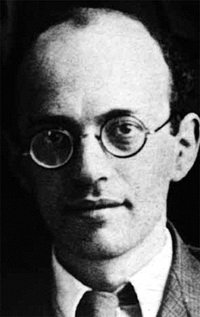 On Shaninkman Street, 19 , since August 2016, there was - and there is no more there - a sign in memory of the great Russian physics Semen Petrovich Shubin .
By the age of 26, when he was arrested on senseless slanderous charges, Shubin was the head of the department of theoretical physics of the Ural Physico-Technical Institute of the Ural branch of the Academy of Sciences and the head of the Department of Physics of the Ural Physics and Mechanical Institute. In 1934, for outstanding merits to science, he was awarded, without the defense of candidate and doctoral dissertations, the scientific degree of a doctor of physical and mathematical sciences and professor. The future Nobel laureate in physics, the teacher Shubina I.E. Tamm recommended him: “Semen Petrovich Shubin is undoubtedly one of the most outstanding Soviet theoretical physicists. Possessing high giftedness, clarity of thought and creative independence, it is distinguished by its desire and ability to find and identify simple and fundamental relationships that are often deep behind its surface when considering any physical problem. Being a relatively very young person, he managed to publish a number of very valuable scientific works on the most diverse departments of theoretical physics (metals theory, quantum electrodynamics, theory of vibrations, statistical mechanics). In particular, its work according to the theory of metals goes far beyond the limits of consideration of individual special problems and have a fundamental value for the entire department of theoretical physics ... "
On November 20, 1938, in just six months after the sentence was sentenced to him, he died in the camp, as follows from the death certificate, "from frostbite and decline in cardiac activity." In the archival certificate, the circumstances of the death are described as follows: “Returning from work, from the weakness of the heart along the road fell and during the delivery of the horse from a business trip the latter was numb. On the road of delivery from a business trip of 223 km to the hospital, the ate died. " Shubin was then exactly 30 years old.
On Chelyuskintsev Street, 1 since the same August 2016 there were - and there are no more there - two signs: in memory of the railway engineer Boris Aleksina and the employee of the railway farm, Yana Tomashevich Drozdzevich.
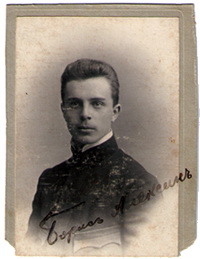 Boris Konstantinovich Aleksin graduated from the Warsaw Polytechnic Institute of Emperor Nicholas II and the University of Gent. Returning to Russia with a diploma of a civil engineer and builder engineer, he had served on Russian railways from 1915 until his death. In 1934 he was appointed head of the Perm Railway Railway service and moved with his family to Sverdlovsk. In November 1936, he was arrested at the Chusovskaya Perm Railway station in a service car during the detour of the line - on meaningless and falsified charges of belonging to the Trotskyist organization. Four months later, shot.
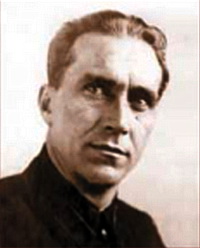 Jan Tomashevich Drozdzevich also served his whole life on the railways, as a fuel engineer, he worked at the construction of the station at the Sverdlovsk-Passenger station, and since 1933 he was the head of the transport expedition office (fuel and fore) at the Sverdlovsk station. In June 1938, he was arrested on a meaningless invented charges of "belonging to the counter -revolutionary organization" Polish Organization of Army "(POS), espionage and sabotage." Four months later, shot.
On the street on March 8, 1 was since July 2017 and December 2019 - and there are no more there - two more signs: in memory of the employees of Vladimir Mikhailovich Tarik and Alexander Nikolayevich Zhilinsky.
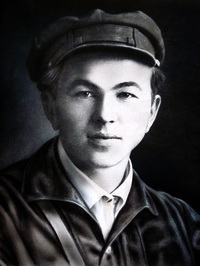 Vladimir Mikhailovich Tarik began his life as a simple worker-travel, and after the revolution and civil war he became a teacher, one of the first organizers of the children's communist movement in the country. He created in Sverdlovsk the "House of Children's Commune", opened the first institution of the children's communist movement in the country, organized the house of artistic education of children and designed the future Palace of Pioneers. In September 1937, he was arrested on a meaningless malicious charge of "active participation in the counter -revolutionary organization of the right in the Komsomol, which was engaged in wrecking." Four and a half months later, he was shot, until his 30th anniversary did not live.
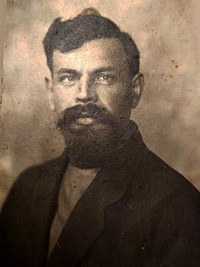 Alexander Nikolayevich Zhilinsky was a printing worker, a typographic advocate, and after a civil war he became an employee, led various kinds of business enterprises and associations in the Urals, including the communal department of the Yekaterinburg Provincial Executive Committee, the production department of the Ural Regional Oblovarkhoz, Uralpolgraph, Torphotrest and others. In January 1937, he was arrested on meaningless and crazy accusations of "active participation in the counter-revolutionary Trotskyist-Zinovievsky terrorist organization, which carried out the villainous murder of Comrade S.M. Kirov and preparing in subsequent years terrorist acts against the leaders of the CPSU (b) and the Soviet government. " Three and a half months later, shot.
On the street March 8, 7 since July 2017 and July 2018 there were - and there are no more there - three tablets: in memory of the employees of Grigory Vladimirovich Tarakanov, Moses Lazarevich Zlatopol and Alexei Ivanovich Andriyashin.
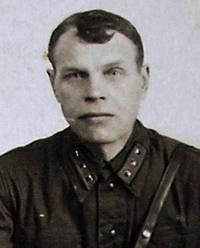 Aleksei Ivanovich Andriyashin was the commander of the Red Army, since 1933 he worked as a liability executor in weapons in the Sverdlovsk branch of Osoaviahim. In October 1937, he was arrested by a meaningless, built on a false denunciation of charges of "counter -revolutionary activity, undermining state property and confusing the accounting of weapons." Sentenced to 25 years of camps and a year later died in the camp - according to the death certificate, from "artificial phlegmon, sepsis."
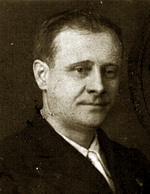 Grigory Vladimirovich Tarakanov was an engineer-technologist of chemical production, worked in Sverdlovsk by the head of construction, and then the chief engineer of the factory of cyanide formations. In September 1937, he was arrested on meaningless and fully fictitious charges of participating in the never existing “counter-revolutionary Trotskyist and spy organization”, where, according to the fantasies of investigators, “conducted spy and sabotage sabotage activities at the defense facility of the TsS plant, and also“ established organizational communications with the resident of Japanese intelligence and transferred the last Spy information of the defense plant "CS". Four and a half months later, shot.
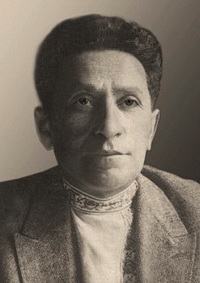 Moses Lazarevich Zlatopolsky was also by profession the chemical engineer and the organizer of the chemical industry. In January 1931, he was appointed director of the Ural Research of the Chemical Institute (Milkhim). In December 1937, he was arrested on a pointless and combined from the first to the last word to the charge that he was “a member of the counter-revolutionary Trotskyist and spy organization and, in its interests, conducted wrecking activities in the field of research work in the chemical industry,” and was also a “spy of German intelligence”. Eight months later, shot.
All these invented accusations against these eight innocently executed people were refuted from beginning to end, the “crimes” of them were recognized never existing, and they themselves are rehabilitated by decisions of the highest courts of the USSR.
Participants in the “last address” initiative groups from Moscow and Yekaterinburg received applications for the installation of commemorative tablets with the names of these innocently ruined people from their relatives or colleagues, conducted research work in archives in all cases, confirmed all the details of their investigative cases that ended in rehabilitation, and received consent to the installation of memorial signs. The signs sagged in their places for several years (except for one established this winter). Now they are removed from the walls and stolen.
Maybe someone will have a question: why did these people cause vandals such rabies? Why is the memory of these eight victims of criminal arbitrariness to them unbearable, why do they want to offend their memory?
In fact, the vandals, of course, are unknown to neither these eight names nor these eight destinies. These eight human lives are completely indifferent to them.
But they know very well that each of the “Last Address” signs is a certificate of a crime committed by executioners working by order of the state and under the guise of the state. Each of these signs is an argument and evidence to recognize the totalitarian authority of the criminal, and its ideology is a human rights.
And most importantly: they know very well that the current Russian government has proclaimed itself the successor of that criminal, and the current propaganda doctrine of the Russian state completely continues the ideology of hatred and contempt for human life.
Therefore, people who today destroy the memorable signs of the “last address” - hide the guilt of not only past, who have already avoided punishment and forgotten, criminals, but also their current accomplices: living, living, ruling and afraid of responsibility.
The folk movement “The Last Address” has already established more than 1000 commemorative signs in 50 cities and villages of Russia. These signs remain hanging on the walls, not because they are difficult to unscrew, but because people believe that they are needed. And the people living in these houses, on these streets, protect them with their moral authority. This is the only protection of small steel records on four ordinary screws. And that is why cases of vandalism were still extremely few, literally a few. Each such episode becomes the subject of a detailed study.
But when the impudence of the looters on a constant suction of the special services (and the NOD and so on - these are just such trained service looters) become stronger than the authority of the inhabitants of the houses, such excesses happen.
The “last address” will undoubtedly restore commemorative signs destroyed by vandals, and continue to work on perpetuating the memory of people who were destroyed innocently. We are very grateful to our colleagues in Yekaterinburg for their perseverance, reliability and courage and we will help them with everything we can. Thank you, Elena Shukaeva , Vadim Pankov , Yura Izotov , Alexander Fast , Alexei Mosin , @Lyudmila Nikulshina, Anatoly Svechnikov , Anna Pastukhova and all, who works with the "last address" in Yekaterinburg.
We hope for the aid of journalists, civil activists, law enforcement officers and city administrations, residents of houses and all who sympathize with the restoration of historical justice. By together, we will be able to find vandals, punish them and prevent vandalism in the future. Times are becoming more and more difficult, the situation is tightened, and it will only be more difficult to work.
Well: we know that today's Russian state is held, like yesterday’s Soviet, that human life is worth nothing. So those who work in order for the memory to live will never be easy.
(In the comments below - links to detailed information about the injured tablets and people whose names were written on them.)
Publication Znak.com about events in Yekaterinburg
Site materials "Last address" :
About the plate in memory of Semyon Petrovich Shubin
About signs in memory of Boris Konstantinovich Aleksin and Yana Tomashevich Drozdzevich
About the signs in memory of Alexander Nikolayevich Zhilinsky and Vladimir Mikhailovich Tarik
About the signs in the memory of Grigory Vladimirovich Tarakanov and Moses Lazarevich Zlatopolsky and Alexei Ivanovich Andriyashin