
Translated material
Dehydration
Corruption Cycle Cycle
Dehydration.
The story of how Crimea was left without water
Ekaterina Reznikova, June 3, 2020

Problems with the water supply of Crimea were known to Soviet citizens who went to the peninsula to rest every year. After the annexation of Crimea, Russia promised to solve the eternal problem, but in the summer of 2020, six years after the referendum on the entry into the Russian Federation, the peninsula risks remaining without water at all.
In August 2018, a mysterious rust appeared in the city of Armyansk in the north of Crimea: metal keys, furniture parts, kitchen utensils and cars went red spots. On the roofs of houses and leaves of the trees, a sticky plaque donkey.
Nature reacted immediately: birds disappeared from the city streets, the correspondent of Novaya Gazeta and vague animals wrote. In street cats, burns of larynx and nasal mucosa were observed. Residents complained about sore throat, difficulty breathing and other symptoms of poisoning, wrote in October 2018 “New Gazeta”.
In the first days after the tragedy, the authorities were silent, suggesting, in the spirit of the time that the enemies of Russia were attacked by Armyansk with the help of chemical weapons-this was said by Prime Minister of Crimea Sergey Aksenov on the air of the Sputnik in Crimea radio. Later it turned out: there was an release of sulfuric anhydride and hydrogen chloride from the acid drive of the Crimean Titan factory. In the city, the emergency regime, part of the population, children and their parents, was evacuated (*. The children were able to return to the city and go to school only at the end of September 2018).
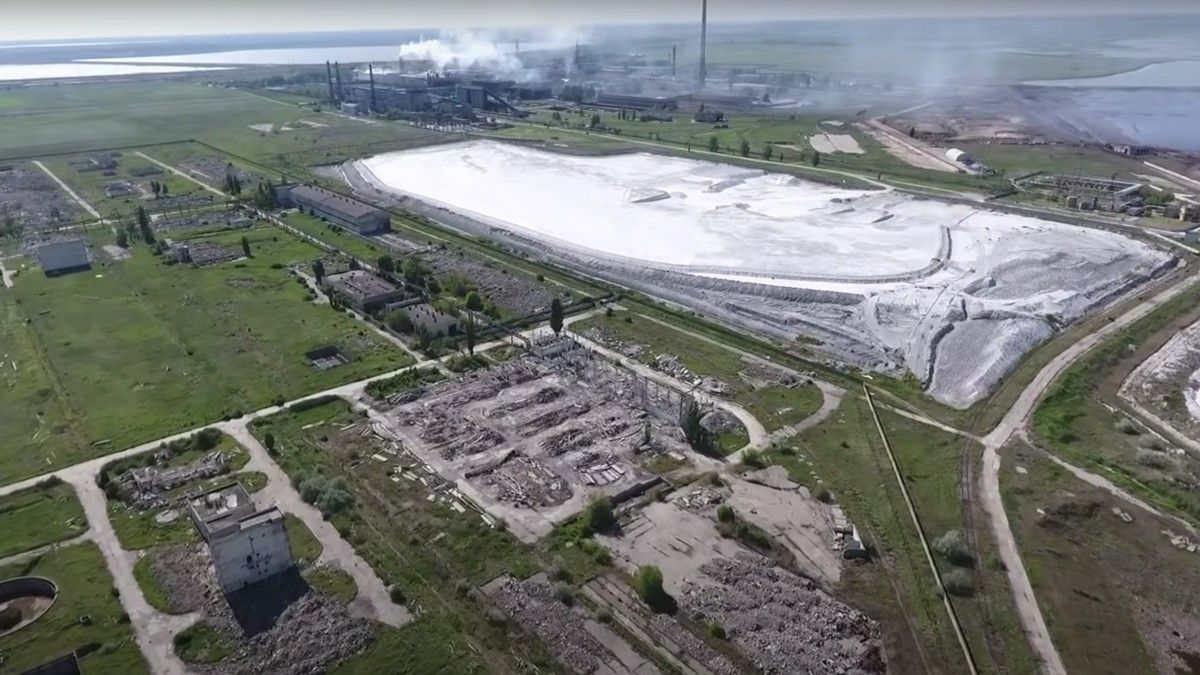
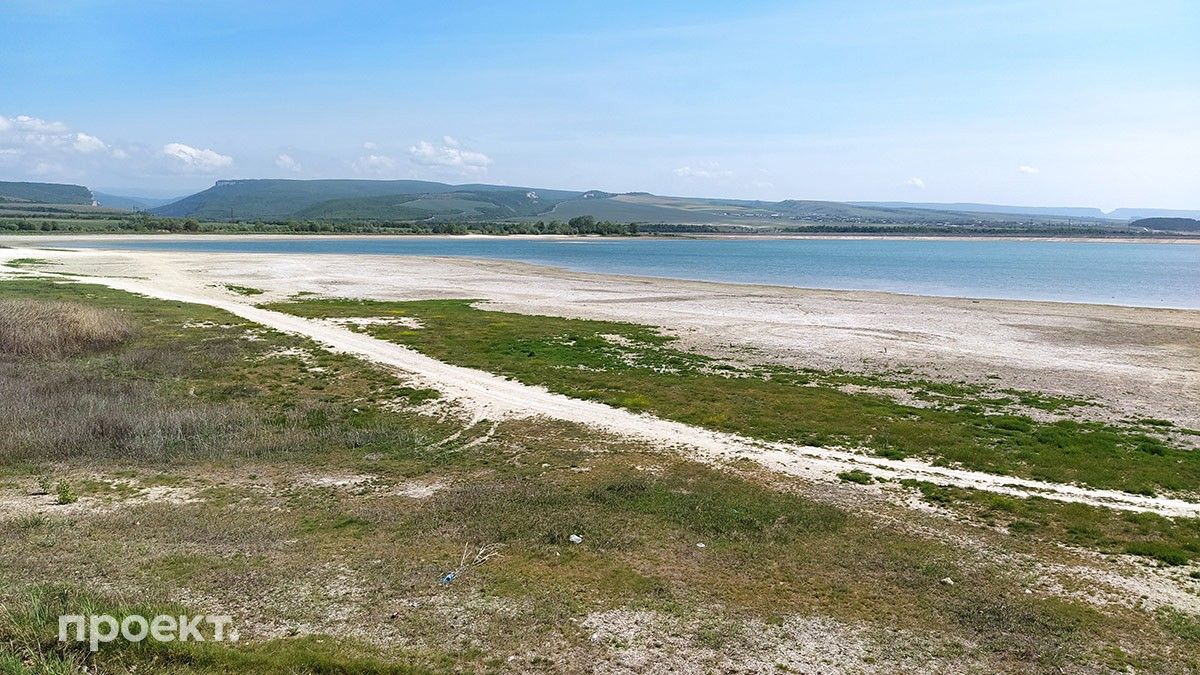
The Crimean Titan plant drains chemical production waste, including sulfuric acid, an artificial reservoir located nearby, which was filled with the waters of the North Crimean Canal, located nearby. But in the spring of 2014, after the accession of Crimea to Russia, the channel was blocked from the Ukrainian side, and there was not enough water in Armyansk. In the summer of 2018, the pond was almost dry, there was nothing to replenish it, and evaporation with a high concentration of sulfuric acid poisoned everything around.
The environmental disaster in Armyansk is only one of the many disasters that Crimea is faced with a lack of water. It is difficult to imagine, but in Russia in the 21st century there is a whole region where not only industry and agriculture are not enough water, but also to residents to drink.
100 days before the end of the water
Crimea was always arid. The enthusiastic reviews of the poets of the past about the splendor of the Crimean nature are devoted only to the narrow strip of the southern coast. The plain part of the peninsula is the harsh steppe homelessness (*. The total number of permanent and temporary watercourses in the Crimea is 1657, and only 15% of them flow in the steppe Crimea, most of them dry out in the summer).
Water supply of Crimean cities
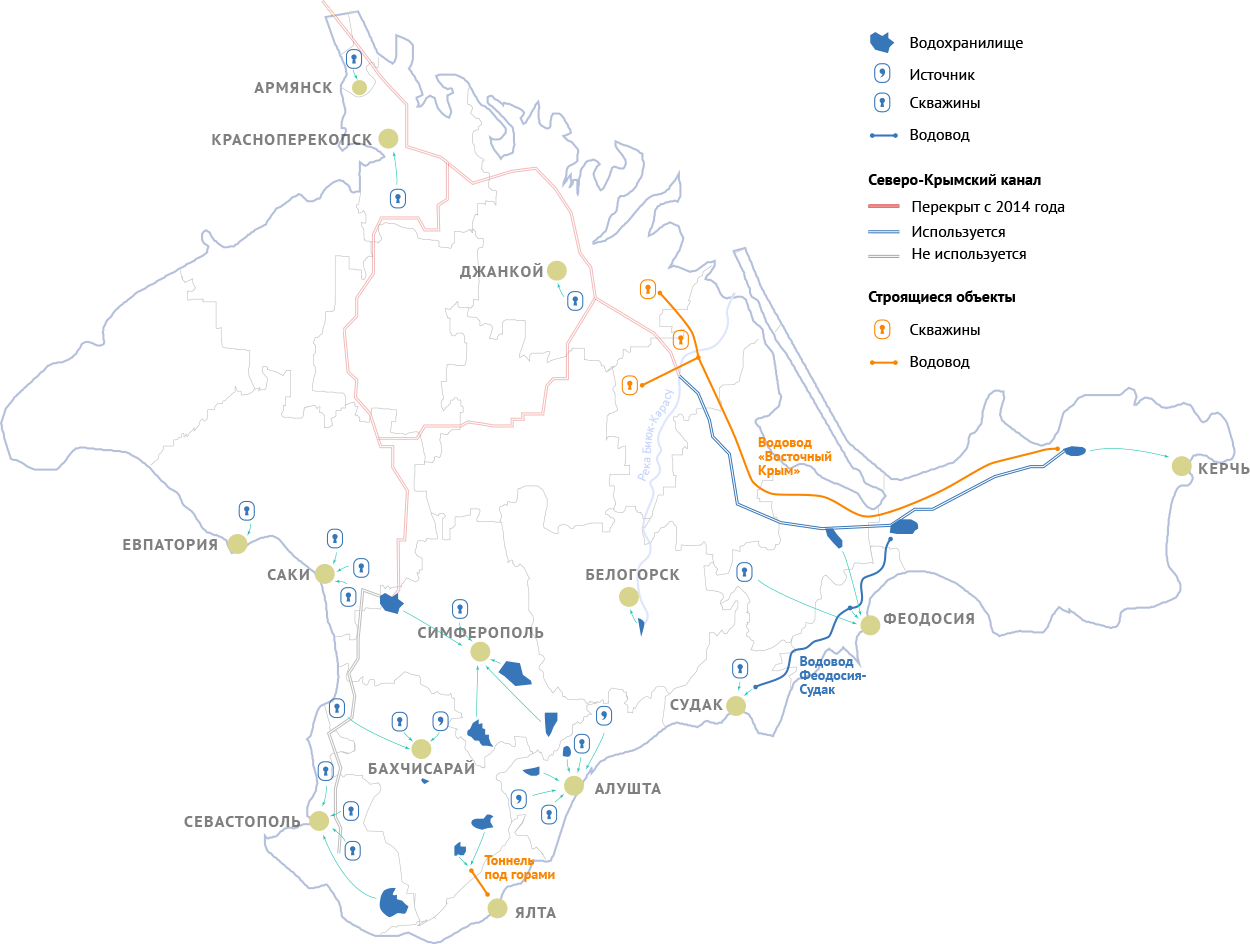
In Crimea, 1657 rivers and temporary watercourses flow. 85% flows in the mountains. In the summer, many streams dry out, reviving only in floods. The average annual flow of Crimean rivers is about 900 million cubic meters - this is 0.36% of the annual drainage of the Volga, up to 400 million cubic meters are lowered in the dry year.
Every second or third year in the steppe Crimea-moderate or strong drought, non-defiant periods last up to 96 days in a row.
Now in the Crimea per person per year, there are 0.45 thousand cubic meters of water. This is almost six times less than on average in Ukraine, and almost 60 times less than in Russia - 3.0 and 30.8 thousand m³, respectively, are given by scientists of the Research Institute of Agriculture of Crimea.
Seriously, the water supply of Crimea took up only in Soviet times. By the beginning of the 30s, the first Ayan reservoir was built on the peninsula to supply Simferopol. In the 70s, the North Crimean Canal (SKK) was built, according to which Dnieper water from the Kakhovsky reservoir was launched on the peninsula.
The channel filled nine of 23 Crimean reservoirs. Part of the water went for irrigation of agricultural land in the north and east of Crimea, part - fed the cities: Simferopol, Feodosia, Sudak, Kerch, in the dry years - Sevastopol.
Water in the Crimea: where is it from and where it is spent
million m³
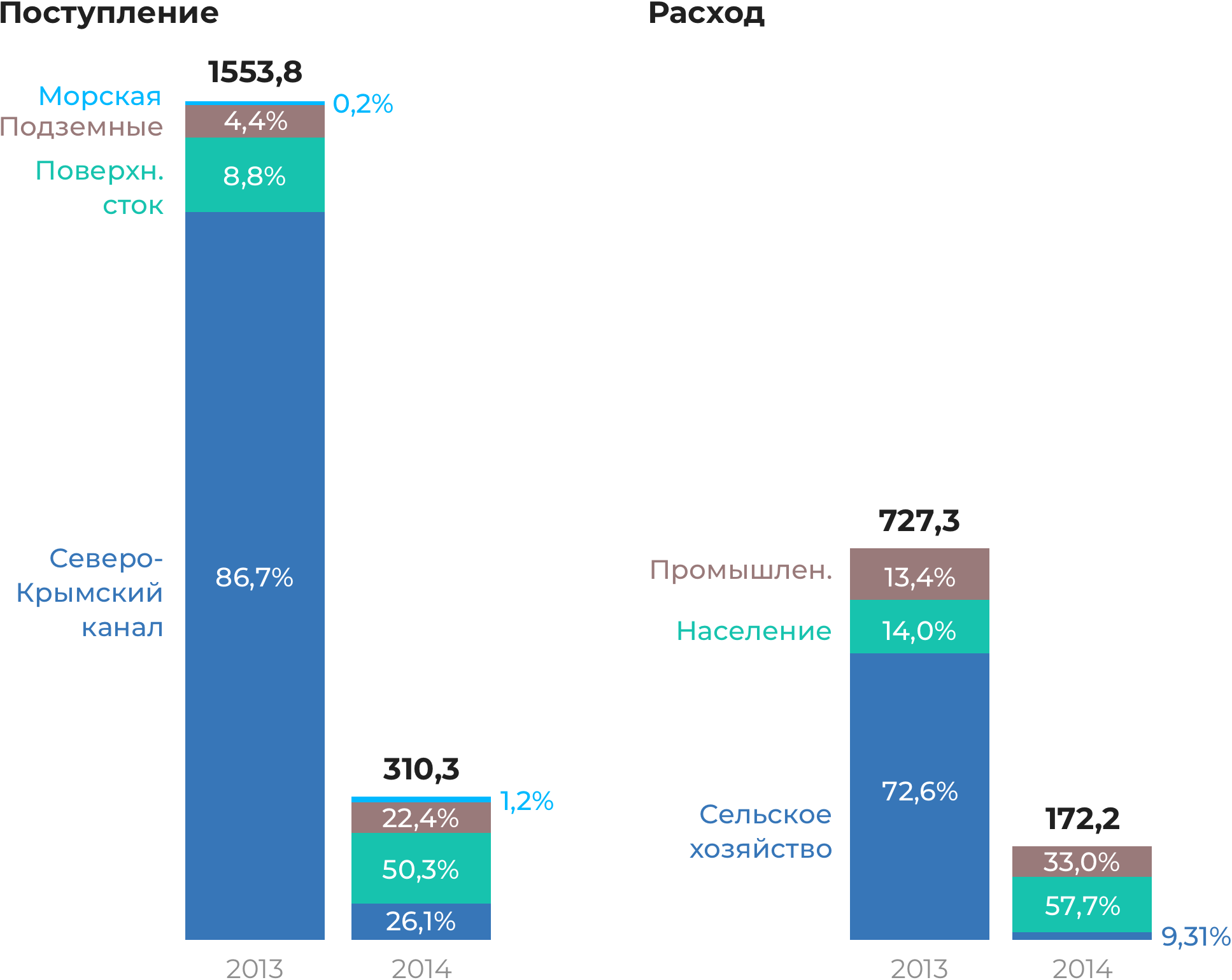
Source: Institute of Economics and Organization of Industrial Production of the Russian Academy of Sciences
By the time Crimea joined Russia, about 85% of the water entered the region through the North Crimean Canal. When Ukraine blocked the SCC, the main threat hung over the cities of the eastern Crimea: Feodosia, Kerchy, Sudak, as well as villages in the steppe. In a short time, water from reservoirs on the northern slopes of the mountain Crimea was redirected to the blocked SCC.
For six years, Crimea was interrupted by internal sources, but 2020 can become especially complicated. The past winter turned out to be unusually warm and dry throughout the European territory of Russia. The amount of precipitation on the peninsula since August 2019 has been significantly lower than average.
Average monthly weather indicators in Crimea in 2019/20 in comparison with the norm
The amount of precipitation, millimeters
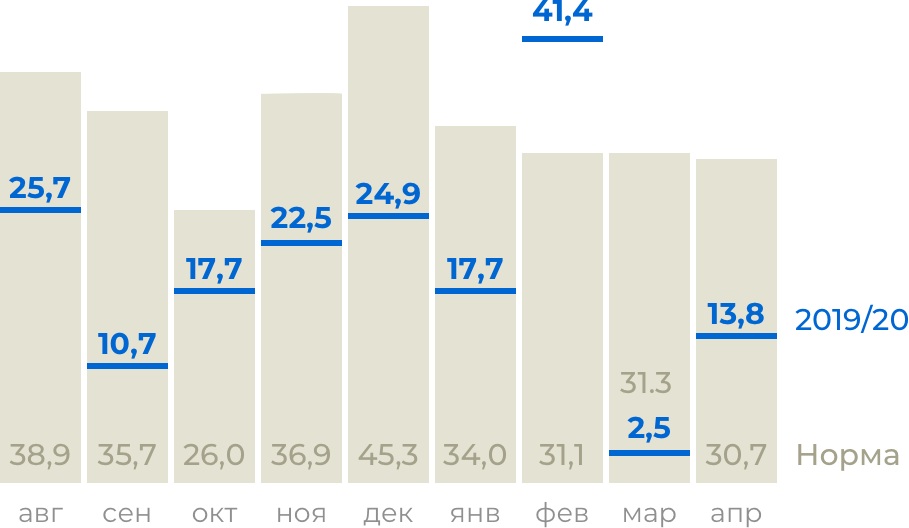
Temperature, degrees Celsius
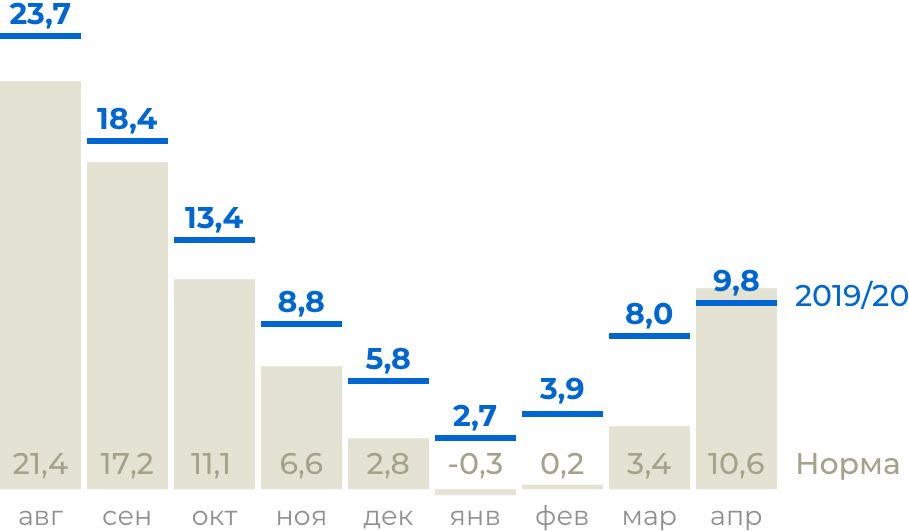
Source: Crimean control for hydrometeorology and environmental monitoring
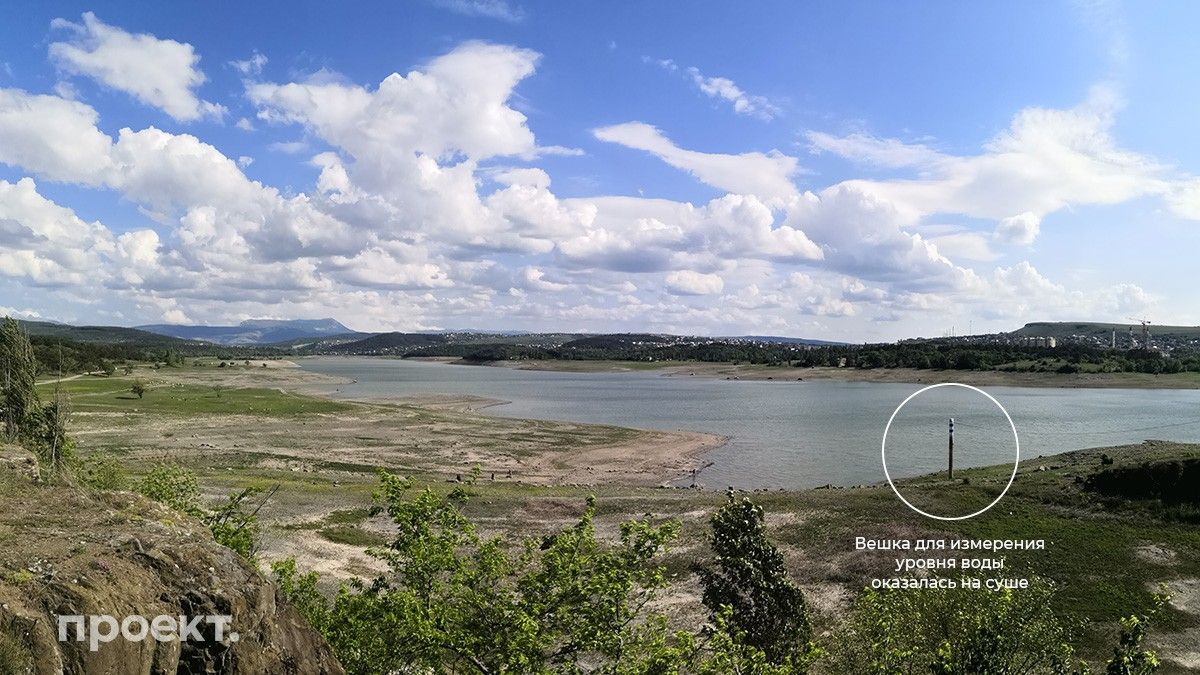
The reservoirs of the peninsula were practically empty - by the beginning of May 2020 there were half as much water than a year ago: 95 million cubic meters versus 205, the Hydrometeorological Center of Crimea reports, and the mountain rivers, which were powered by melting of snow, which was not enough this year, and the Karst underground sources were dry, the senior teacher of the KFU Geoechecology Department told the project. Grigory Prokopov and Associate Professor of the Department of Geography of the Ocean of the Black Sea branch of Moscow State University, hydrogeologist Vitaly Lysenko. In early April, the Crimean authorities said that the waters on the peninsula were left for 3.5 months, and if strong rains are not covered by the Crimea by the summer, it would be necessary to limit its supply to the population.
Turn the channel back
The situation with water in the Crimea could be less catastrophic, if it were not for the destroyed infrastructure and fraud on public procurement.
All six years of Russian Crimea, officials say that the region will cope without Ukrainian water. “We do not need water from Ukraine. She is terribly contaminated. I was recently told experts that the water that entered Crimea contributed to the growth of cancer, ”the speaker of the State Council of Crimea Vladimir Konstantinov spoke about the North Crimean Canal. And the Crimean authorities had something to count on - the Russian government generously promised money for infrastructure projects in the new region.
How they offered to drink Crimea
Crossing the waters of the Dnieper
Block the Dnieper River and through the OKU, Volga and Don to redirect its water into the Crimea, pumping through the pipeline through the Kerch Strait-ex-mayor of Moscow Yuri Luzhkov.
The desalination of sea water
Install on the coast the desaluators of sea water on atomic and wind generators are scientists of the St. Petersburg Mining University and associate professor of the Institute of Nuclear Energy and Industry SENGU Viktor Cheboksarov
Crossing the Don along the bottom of the sea
Pour the Don River into Crimea through the Sea of Azov and let it down through the Sever-Crimean Canal system-President of the Crimean Academy of Sciences Viktor Tarasenko
Artificial rains
Build a subsidiary training ground in Crimea, the so -called urban service, to call the rain - the deputy head of the State City of the Crimea Nikolai Snegur
Vodovod from the Kuban
To transfer the water of the Kuban River to the Crimea by paving the pipeline along the bottom of the sea-a construction engineer-hydraulic engineer from the Moscow State Institute of Environmental University Alexander Yakovenko
Water production from underground rivers
To extract fresh water from underground rivers flowing near Crimea at a depth of 800-1000 meters is the director of the Research Institute of Agriculture of Crimea Vladimir Pashtetskiy
Already in 2014, officials came up with how to drink Sevastopol: for 1.75 billion rubles 35 km from the city, on the Kokkozka River, a small reservoir should have been built, from which the water in a tunnel with a length of 8.7 km would be supplied to the city.
The idea is not new: they offered to build a reservoir on coccin in Soviet times and in the 90s-in the early 90s, another catastrophic drought occurred in the Crimea. On the southern coast of Crimea, due to lack of water, the holiday season has failed, recalls the hydrogeologist from the Black Sea branch of Moscow State University Vitaly Lysenko. The residents of Alushta were brought water at the rate of 20 liters per person, and the 350,000th Sevastopol received water by the hour until a water supply was spent in the city, supplying Dnieper water from the North Crimean Canal. But under the USSR, they refused the plan due to complexity, high cost and high environmental risks. , about this to the correspondent of Project was told by the assistant professor of the Black Sea branch of Moscow State University, hydrogeologist Vitaly Lysenko.
And now, at the stage of design work, it turned out: the passage of the tunnel in the mountains will cost at least several times more than allocated to the entire facility - the Moscow company Mosstroykvadrat, which was engaged in pre -project work, came to the conclusion. In addition, explosive work in the river bed can lead to an environmental disaster - specialists of the State Unitary Enterprise of the Krymgeology RK and scientists of the Crimean Federal University named after Vernadsky. The mirror of the reservoir after filling can partially flood one of the most popular attractions among tourists-a large Canion of Crimea and a highway leading to the top of Ai-Petri Mountain. Residents of the Belbek Valley, who live downstream, also opposed the construction.
However, all this did not stop the authorities of Sevastopol three times to declare a competition for the implementation of pre -design work. For the first time, officials paid the contractor 18 million rubles, but soon the prosecutor’s office found out : the developed documentation is not finished research, but only sketches, the cost of which is a maximum of 3 million rubles. From the second contractor - the one who found out that the construction of the tunnel would cost several times more than the initially declared - the Sevastopol government recovered a penalty for an unfinished project. The third - for 59 million rubles - hired even after the statement of the Prime Minister of Crimea Aksenov that there would be no reservoir on the cocco.
The results of the work of three designers in the city did not publicly announce. The amount of budget allocations for the reservoir - in the documents it is called the Sokolinsky reservoir from 1.75 billion to the 116 million rubles already mastered in the design. Now this item of the federal target program (FCP) of the development of Crimea is considered 100%performed, but there is neither a reservoir nor other additional sources of water for Sevastopol.
The reservoir on the coccosk was only part of the FCP. Moscow was ready to spend 65.7 billion rubles on the peninsula-according to the FCP of the socio-economic development of Crimea and Sevastopol for 2015-2020. For this money, for six years, 69 water supply and sewage facilities were supposed to be built and reconstructed: six reservoirs and hydraulic power plants, several wells, hundreds of kilometers of water conduits, two sea water vehicles, treatment facilities and many rural and urban water pipelines and collectors.
Then, with plans, strange things began to happen. By the spring of 2020, the amount of allocations increased to 87.5 billion rubles, the FCP itself in 2018 was extended until 2022, and the number of program points, on the contrary, decreased to 21 - part of the objects were removed from the list, part was added; Small ones, such as water pipelines and sewer collectors, were combined into one point. All this makes it difficult to understand what is still planned from the originally planned.
Fulfillment of the FCP of the development of Crimea and Sevastopol
Water supply and engineering infrastructure program
The budget grew from 65.7 to 87.5 billion rubles
The number of points decreased from 69 to 21
Water supply objects
Only 2 out of 37 objects are completed
1/3 at the design stage
- Four reservoirs and two modular depressers of sea water in Sevastopol will not be built;
- 11 million rubles were stolen in the water conduit in Sevastopol;
- the water treatment station in Feodosia was built, but did not put into operation;
- The design of the Kutuzovsky reservoir was allocated for the design of the reconstruction of the Kutuzovsky reservoir, but the project was never developed, the contractor took an advance, but did not work, the money returned to the federal budget.
The most expensive water supply facilities
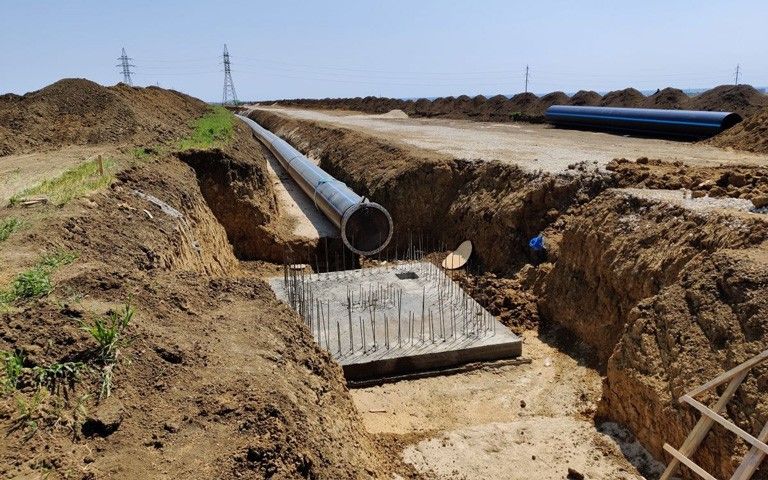
Three underground water intake and 200-kilometer water supply to the East Crimea
Supplies water from wells in the north of Crimea to Kerch and Feodosia and from Feodosia - along the water conduit to pike perch; It will be reconstructed separately for 4.3 billion rubles
Budget: 26 billion rubles
Contractor: JSC “United Energy Building Corporation”, which built Vostochny’s cosmodrome and power plants, including nuclear, is indicated on the OEK website.
Construction period: 2014-2021
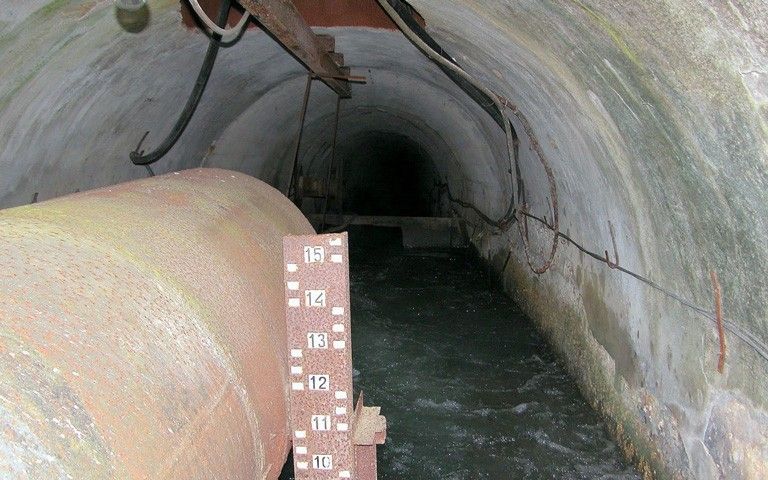
Tunnel water water under the Crimean mountains
Supplies water to Yalta from reservoirs on the northern slopes of the mountains
Cost: 8.8 billion rubles
Contractor: LLC “Repair and Construction of SS networks” Sergey Shulzhik-a large contractor for the repair of networks from St. Petersburg.
The facility is designed, the construction period is until 2022
To understand how the authorities solve the problem of water supply, we took lists of objects from two editions of the “Water Supply and Engineering Infrastructure” section of the Federal Target Program for the Development of Crimea - the first (on September 11, 2014) and the current (dated April 20, 2020).
Objects from both lists were searched on a public procurement portal, media publications, court decisions, etc. In addition, we studied all the tenders of the main customers - state -owned enterprises and institutions conducting tenders for water supply facilities.
The data provided by the Government of Crimea at the request of the “project” differ from those that manage to detect public procurement on the website. For example, in Sevastopol, according to public procurement, only one water supply object was completely completed - a well in the village of Native. But in the response of the government to the request of the “Project” it is: at the expense of the FCP, six water drives and one hydroelectric center were reconstructed in the city. For four of the listed facilities, we did not find contracts for construction and installation work, for the rest of the rest-contracts are torn with penalties and fines.
In 2019, when it was already clear that none of the four Crimean reservoirs planned in the FCP would be built, officials put forward another idea: to transfer water from the largest Crimean rivers-Belbek, Kachi, Alma and Salgir-into the almost empty intermountain reservoir built in the early 90s. The money was taken from the federal budget. The development of a technical and economic justification of the project will spend 103 million rubles. Is it possible to transfer the rivers and how much it will cost, it will only be known by January 2021. The contract with the Moscow company Argent Alliance was concluded in December 2019, the term of execution is December 2020, the advance payment is 31 million rubles. According to preliminary estimates, the transfer of rivers can cost a budget of 15-20 billion rubles-this amount, with reference to experts, was called by the head of the Rosvodresursov Dmitry Kirillov, which is 6-8% of the total budget of Crimea and Sevastopol for 2020.
Water water through fingers
Crimean consumers could reach more drinking water, if not for colossal leaks. In the North-Crimean Canal built 45 years ago, which never saw the repair of mountain rivers and artesian sources, the ⅔ its volume is being supplied to Kerch and Feodosia: part goes into the ground, some are stealing by local residents for watering. Channel wear - more than 80%, such a figure is given in the article on the problems of the water supply of Crimea, a researcher at the Institute of Economics and the Organization of Industrial Production of the SB RAS Valentina Vasilenko.
In cities, the situation with leaks is no better: water supply networks are holes, locking reinforcement and equipment are strongly worn out. The wear of the pipes in the Crimea is above 65%, and the equipment is above 75%, it is given by Mikhail Bolgov, a seizure of surface water modeling of the Institute of Water Problems of the Russian Academy of Sciences.
As a result, more than 50% of drinking water is lost in the networks - such an assessment was given by the chairman of the Crimean Council of Crimea Yuri Gotsanyuk.
Central water supply in the cities of Crimea
Coverage of the population
Network wear
Source: Data General Plans of the cities of Crimea, a program for the development of housing and communal services of the city of Sevastopol for 2017-2022
As the Project calculated, based on the data of the public procurement portal, over the past five years, the Crimean water utilities have concluded contracts for the construction and reconstruction of networks in the amount of about 4.3 billion rubles, which in the scale of local problems is critical, which was adopted in Crimea in 2017, the scheme for the development of water supply and sanitation until 2030 requires more than 150 billion funding. But even this money is not completely mastered:
How are the maintenance of networks of networks, 2015- April 2020
Of the 379 state contracts in Crimea, 35%were performed. However, this is only 9% of the total amount of contracts.

A similar situation in Sevastopol. Of the 288 contracts, 45% were executed, which is only 12% of the total amount, including FCP money. 24% of contracts in Sevastopol are terminated.

Since 2014, 64 km of emergency water supply networks and 11.5 km of sewers in the amount of 591 million rubles have been replaced in Sevastopol, equipment was updated, and modern ultrasonic metering devices were installed. Waterpolker is reduced by more than 5%, is listed in the response of the Sevastopol government to the request of the “project”.
For Crimea, we analyzed contracts for the construction and repair of engineering networks of the State Unitary Enterprise "Water Crimea" and the State Unitary Enterprise "Vodokanal SUBK". Для Севастополя — контракты ГУПС «Водоканал» и управления по эксплуатации объектов городского хозяйства.Темпы обновления городских сетей водоснабжения и канализации мы также проверяли по госзакупкам, проанализировав тендеры водоканалов и горхоза Севастополя с 2015 по апрель 2020 года.
Вода, дорого
Итогом всех проблем стало то, что местные власти решили повысить цену на воду, дабы вынудить людей экономить. В феврале 2020 года глава Крыма Аксенов предложил перевести часть городов Крыма на дифференцированный тариф — в список попали Евпатория, Саки, Алушта, Феодосия, Керчь. Те, кто расходует мало воды — до трех кубометров в месяц, — будут платить меньше, чем сейчас — 25 рублей вместо 31,55 за кубометр. У тех же, кто выливает больше семи кубометров на человека в месяц, счета вырастут почти в шесть раз: вода для таких людей станет в несколько раз дороже, чем, например, в Москве . Они будут платить 173,53 рубля за кубометр, в четыре раза больше, чем в Москве. Предложение вызвало протесты населения, и с нововведением решили повременить: повышение анонсировали, но пока не ввели.
Власти заставляют платить за воду даже тех, кто, не дождавшись помощи государства, решил проблему сам. Ялтинский поселок Краснокаменка живет без канализации, а водопровод селяне провели себе сами: еще в 1950-х годах бросили трубы от горных источников к своим домам и совершенно бесплатно пили родниковую воду, оплачивая в местный ЖЭК только текущий ремонт труб , рассказал «Проекту» житель Краснокаменки Геннадий Дмитренко.
Но в прошлом году ялтинский водоканал заявил, что все трубы в поселке принадлежат ему, а жители обязаны поставить счетчики и оплачивать воду по тарифу. Люди возмутились: качество воды не изменилось, да и сама услуга предоставляется с перебоями — летом воды нет из-за засухи, зимой идущий по поверхности водовод насквозь промерзает. Тогда водоканал принялся обрезать трубы, вынуждая людей заключить с ним договор , рассказал житель поселка Евгений Лютов. Аналогичная история произошла в поселке Тополевка в Белогорском районе Крыма. Там людям, построившим водопровод за свой счет, ГУП «Вода Крыма» рассылает платежки с долгами в десятки тысяч рублей.
«Дерьмо Киселева»
В июле 2019 года на одном из пляжей курортного Коктебеля забил гейзер из сточных вод. «Тут дерьмо Киселева течёт вам на голову не с экрана телевизора, а реально!» — писали возмущенные жители в соцсетях, советуя не ехать в этот поселок.
У телепропагандиста Дмитрия Киселева в Коктебеле дача и небольшой винзавод. Ежегодно он проводит здесь джаз-фестиваль, который посещают тысячи гостей, включая Владимира Путина и эстрадных звезд.
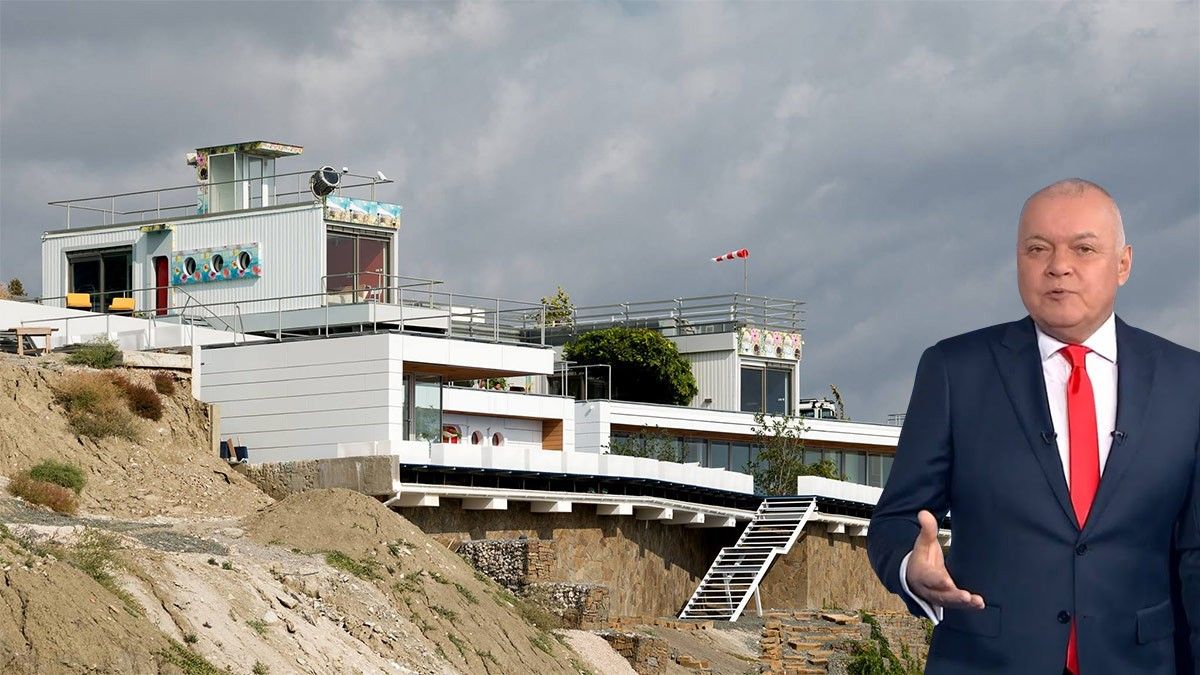
Так вышло, что в Коктебеле есть Киселев, виноградники и фестивали, но нет центральной канализации. Стоки многочисленных коттеджей и мини-отелей текут прямиком в море. Каждое лето отдыхающие жалуются на симптомы кишечного отравления. Участники Волошинских чтений — это еще один коктебельский фестиваль — поэты и писатели, даже придумали отдельное название для болезни, возникающей после купания в Черном море — «коктебелочка» , рассказал «Проекту» крымский поэт Тихон Синицын.
При России Коктебелю пообещали новые очистные сооружения, но проектировщиков нашли не сразу. В конце 2018 года за разработку проекта взялась учрежденная правительством Крыма компания «Институт „Шельф“». Проект делали год, стоил он 42 млн рублей. В апреле его утвердили, строить новую канализацию в Коктебеле начнут летом.
Центральная канализация в городах Крыма
Охват населения
Износ сетей
Источник: данные Генпланов городов, программа развития ЖКХ города Севастополя на 2017-2022 год
Впрочем, история с фестивалями и фекалиями имела достойное продолжение. В 2019 году организаторы частично перенесли Волошинский фестиваль в Севастополь. И «не прогадали»: крупнейший город Крыма третий год живет без работающих очистных сооружений.
Их должны были реконструировать — на это из федерального бюджета было выделено 6,85 млрд рублей. Проект обновленных очистных за 95 млн рублей разрабатывала дочка «Ростеха» — АО «РТ-ЭКОС» , сейчас АО «Экос», воплощать его в жизнь взялся поставщик «Роснефти» — НПП «Биотехпрогресс».
Подрядчик снес старые очистные, а к строительству новых так и не приступил , на месте старых очистных осталось лишь здание механической очистки, где из стоков удаляют крупный мусор. Дело в том, что выданный «Биотехпрогрессу» аванс — более 2 млрд рублей — был перечислен без казначейского сопровождения в мелкий питерский «ОФК-банк». Через несколько месяцев у банка отозвали лицензию и объявили банкротом, а через два года обанкротили и «Биотехпрогресс» . Гендиректора «Биотехпрогресса» Дениса Петрова арестовали летом 2019 года, вместе с ним по делу о хищении на строительстве севастопольских очистных проходит мелкий местный чиновник. Власти Севастополя несколько раз объявляли повторный тендер, однако нового подрядчика не нашли.
Анализы морской воды в Севастополе в месте сброса сточных вод
Процент проб несоответствующих нормам в 2016 и 2019 годах
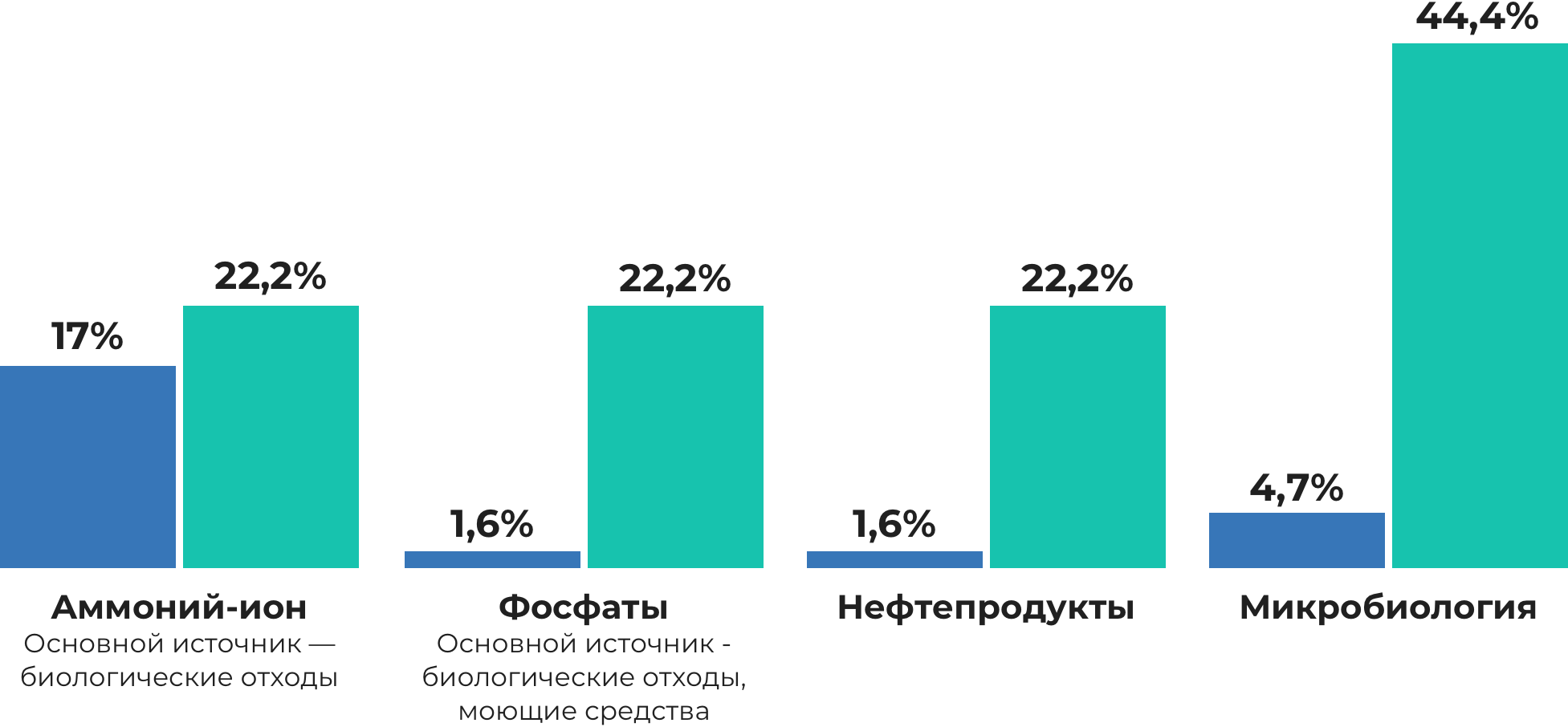
Источник: отчеты ГУП Севастополя «Водоканал»
В каком состоянии будут местные пляжи во время туристического сезона, предположить трудно. Уже прошлым летом в бухтах города были высеяны условно патогенные штаммы холеры и энтерококк, что привело к закрытию пляжей в разгар высокого сезона.
Исполнение ФЦП развития Крыма и Севастополя
Строительство объектов канализации
Только 1 из 31 объектов закончены
2/3 на стадии проектирования
Самые дорогие объекты канализации
— Канализационный коллектор в Симфероп������ле — 11,5 млрд руб. — проектирует и строит компания «Тоннельгеострой» миллиардера из Санкт-Петербурга Сергея Шульжика , он же реконструирует ялтинский тоннельный водовод за 8,8 млрд рублей
— Канализационные очистные сооружения «Южные» в Севастополе — 7 млрд руб. — идет поиск нового подрядчика
— Очистные сооружения города Судак — 2 млрд руб. — проектируются
* * *
В начале мая этого года на полуострове пошли дожди, но на уровень воды в водохранилищах они не повлияли — заявила 6 мая начальник отдела гидрологии и гидрологических прогнозов регионального гидрометцентра Наталья Охременко. Власти Севастополя уже объявили, что воду в некоторых районах будут давать горожанам по часам.