
Translated material
"A Chekist hook is a phantom"
FSB General Yevgeny Savstystyanov - on a fracture in the work of special services and consolidating the mistakes of the past in the Constitution
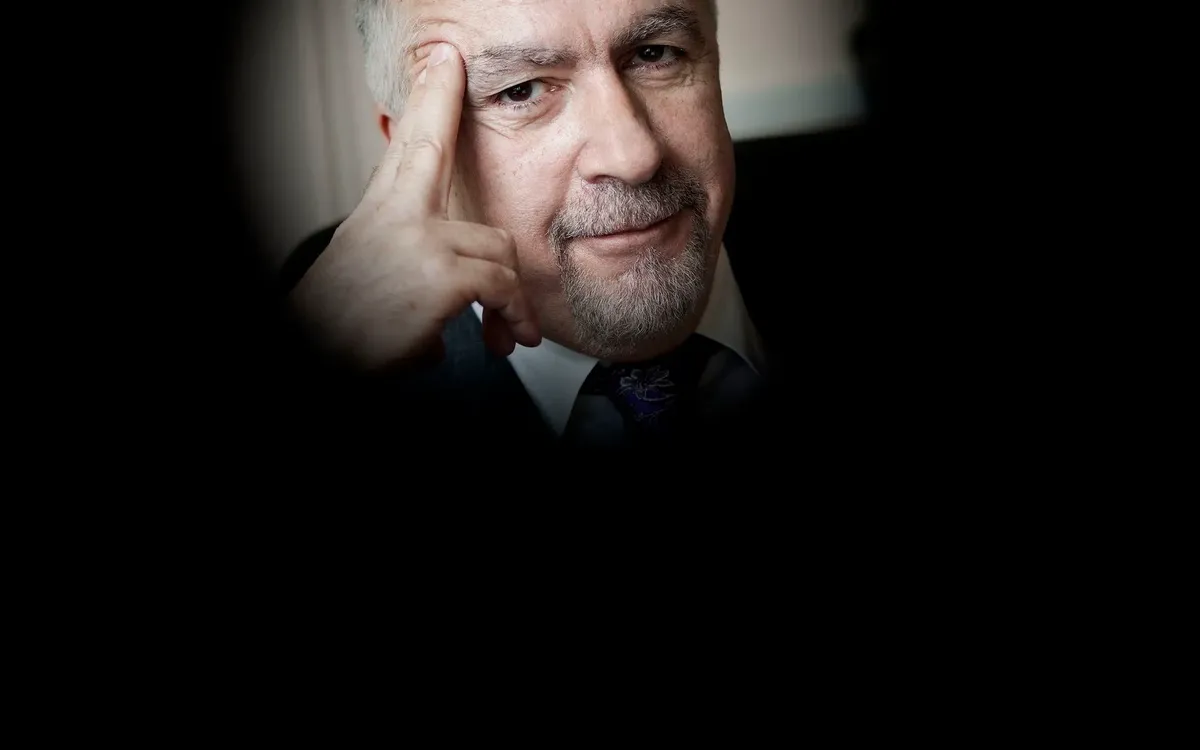
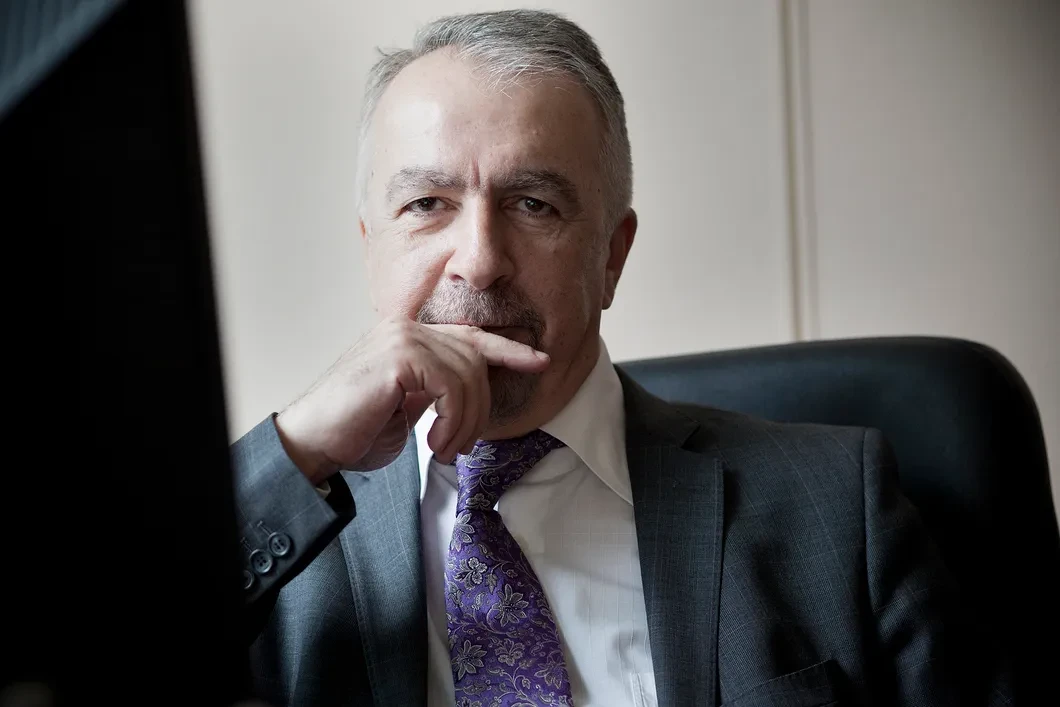
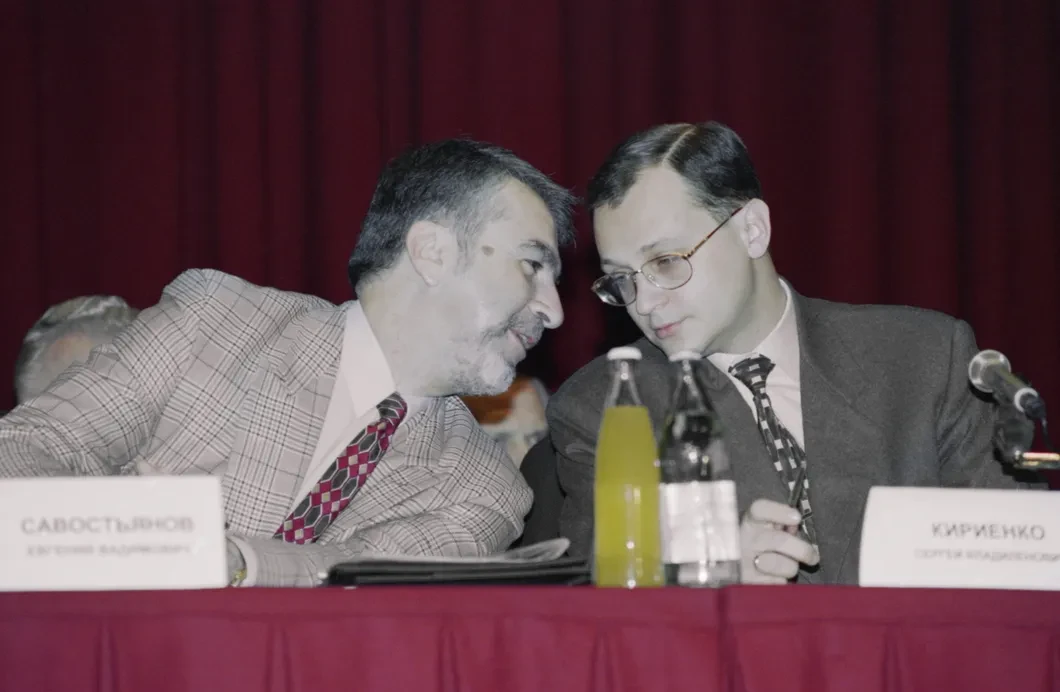
He has a striking biography (now they are not worn). The mining engineer, worked as a prospector at a gold mine at Chukotka and a slap on a coal mine near Karaganda, on the mine of Norilsk, Severouralsk, Dzhezkazgan, Zangesura. The head of the election campaign Academician Sakharov, one of the leaders of "Democratic Russia". In 1991, he found himself in the chair of the head of the Moscow department of the KGB. Three and a half years remained in this chair - evaluate! And they “removed him” from there - overnight - when Korzhakov organized a mediocre operation against Gusinsky, without warning anyone, as a result, a shootout in the center of Moscow occurred between the special services.
The investigation, as you know, established the guilt of the President’s security service, but it was too late. Until now, he has preserved relations with the then subordinates - normal, respectful, friendly. Although neither he nor they have to be friends with each other and there is nothing to do with.
Maybe the Moscow “manager” was some kind of special, atypical? Or are people gathered in it special? Or even easier and more offensive even. Historian Rudolf Pikhaya once told me in an interview: “Chekist” is a function from the state. What state, such a function. It itself is not an assessment nature. A characteristic feature of the time is an ambivalence of personality in power. He is as an actor who can be directed by a ray of light and he will be white, red, purple. Depending on what glass in the flashlight. They will put it in difficulty and, if you want, a moral trap of history.
It remains to agree to whom we will entrust the "Light"? And while the people do not demand to return this right to him, the actor will be a lighter. And the director, and the director, and the judge, and the executioner. "
I called Savostyanov and, by the way, said that literally the day before I was reviewing a video of the old interview of his friend Shchekochin to some foreigners. Yura was in his style, he sat on his own table in the Literary Newspaper, waved his hands. He mentioned the head of the Moscow Department of the Ministry of Security Savostyanov. Two minutes later, the call, Yura picks up the phone, agrees with the interlocutor about the meeting, hangs. And - laughs. Do you know who I was talking to now? With Savostyanov! See how they work!
Foreigners were shocked.
- I myself were sure that they were “listening” - everyone! It turned out - not so, ”said Savostyanov.
- Evgeny Vadimovich, the first question, of course, how did you be the head of the Moscow KGB department?
-In the summer of the 91st, after the election of the mayor of Moscow, a new structure of power in the capital was approved. The mayor ( Gabriel Popov, one of the leaders of the interregional group of deputies. - Ed. ), The Moscow government led by Luzhkov and the mayor’s department - such as the presidential administration on urban scale. I headed him. The position is prestigious, the status is high.
And after the coup, I am already leaving for Switzerland and after three days I understand that I have absolutely nothing to do there, I return, and at the airport Vasya Shakhnovsky tells me: “You sit down.” I sit down and he tells me:
"GH proposed to appoint you the head of the Moscow KGB."
Many years have passed when I recognized the background of this story. Really searched for the head of the Democrats Department. And the first was offered, there was such an Ernest Bakirov. He is an oil industry, and as an oil worker was associated with intelligence nuclear explosions, he was “you” with the KGB. But he did not want to go to this shot position, and on the other hand, he really liked my position. And he: I am a person at the age ... It will be difficult for me ... But there is such a talented person ... But you, Gavrila Kharitonovich, have to tear him away from the heart ... In general, while I dangled in Switzerland for three days, he turned this operation, Popov wrote the support of Bakatin, visited Gorbachev and Yeltsin.
- And when was it?
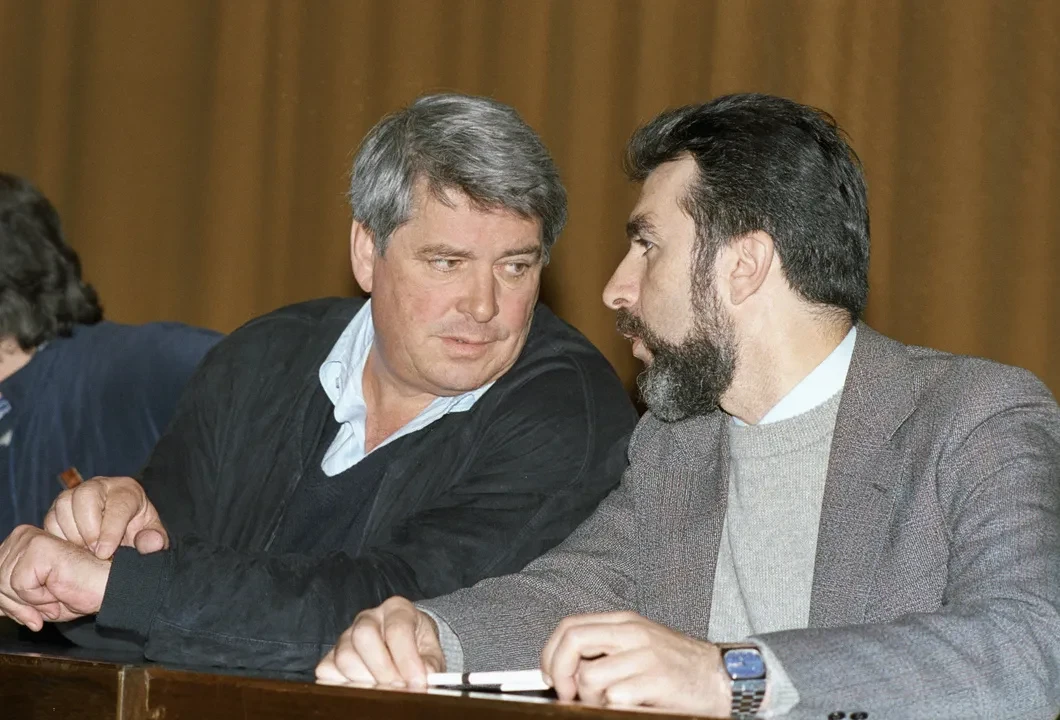
- The decree was signed on September 6, 1991. He was signed by Gorbachev and Yeltsin on one day, and a day earlier - Bakatin and Popov as representing. And a day later, I had already come to a formal idea of Bakatin, although I was familiar with it before. And now I’m already leaving him, and at the back an unexpected voice: "What are you doing here?" I turn around - Golempovsky, the main "Izvestia". I answer: “You, Igor, see before you the new head of the Moscow KGB, and I don’t even know where this institution is located.” And again from behind the shoulder: "Well, I’ll explain to you now." Bukovsky, Igor brought him in an interview with Bakatin. And, of course, Bukovsky explained everything to me in detail, because it was with the Moscow KGB that he had a long and painful relationship.
- In general, you can say how the Moscow department “gave” the Democrats?
- Then what happened? Immediately after the putsch, on the 22nd, Gorbachev began to change the leaders of the law enforcement agencies, whom he considered traitors. Kryuchkova was replaced by Shebarshin, Jazov with Moiseev, a pet on Trushin. And the next day, Yeltsin forced to change - Shebarshin for Bakatin, Moiseev on Shaposhnikov, Trushin on Barannikov. I think the main role here was played by what Gorbachev made these appointments, without even discussing Yeltsin, and that outraged that. On the same way, by the way, Gorbachev signed another very important document - on the closure of the CPSU Central Committee.
And I, as the head of the mayor’s department, “closed the CPSU”.
So in this setting, the place of the head of the Moscow administration seemed quite insignificant.
In a word, as a result of Bakirov’s cute intrigue, I took this office.
- And how did you meet you at a new place?
- With fear, of course. They felt absolutely defenseless, they understood that in such a situation I could do anything with them. This fear lasted a long time. I remember Bakatin (then the chairman of the KGB of the USSR.-Ed. ) Once come to us, and then a rumor arose that the Board of Management would be dispersed. And again everyone was scared. Everyone worried about themselves, their future, for the future of their families.
- I once talked with the Polish professor Kozlovsky, a dissident, a long -term editor of the Catholic magazine. After the victory of the “solidarity”, Valens appointed him the Minister of Internal Affairs and Security. So Kozlovsky was the first thing that he did was to dismiss everyone to one who, under the same regime, was engaged in a political investigation. They are indescused, Kozlovsky told me. And there was no tragedy because of this in Poland.
- His experience was not applicable in our country.
- Why?
- Well ... then let's start from the day of today. Here are the amendments to the Constitution. And thanks to these amendments, the representative of the Communist Party of the Soviet Union will rule in the country until 2036, that is, 45 years after its closure. Who then came to power in Poland? And who came to power with us? In Poland - understandable. And we have the whole new leadership was formed from the former (and here the “former” does not happen!) Members of the CPSU.
And what - to carry out lustration of the KGB without carrying out lustration in the party? Remove the performers, but leave customers?
- And you yourself were not in the party?
- No. This cup of this passed me, or rather, I focused it safely. Once they suggested, but managed to evade.
So. The experience of Poland, other countries fundamentally different from ours? There, communism was overthrown after forty-seconds five years after his accession, that is, people were still alive, remembering their lives without communists. And we have all the leaders of the democratic opposition, all the leaders of the interregional group were communists (except Sakharov), and at least a couple - KGB agents. In the Supreme Council of Russia - 80% Communists. In order to carry out the lustration that you are talking about, it was necessary to carry out the lustration of the Communists, the first victim of which Yeltsin himself would be. Really?
Our revolution was actually an internal coup. In the personnel plan, power passed from the nomenclature of the ideological and organizational department of the Central Committee to the nomenclature of the industry departments. And by the beginning of the two thousandth - to the nomenclature of the department of administrative bodies of the same organization.
- This is a convincing explanation. Such a question. In my opinion, only two people were then “introduced” into the organs “from the Democrats”, are you and Stepashin? Not so?
- Perhaps.
- Why?
- There was a huge problem. I invited people to help, work. But as soon as they found out that it would be necessary to give a subscription, that there would be restrictions on foreign trips-everyone immediately began to wave their hands: no, no!
- And when the next time you went abroad after Switzerland?
- It was ... was ... 1998.
- And did you really work well with your employees?
- Well, there were problems. Firstly, I was, of course, an absolutely illiterate person, I had to study a lot, made mistakes. It was very difficult with me, I crossed out many documents, returned back. But practical work, it brings it together very much. I worked with a person for six months, and relations become normal. And three and a half years, but so heavy. I entered this work after one pre-war situation, went through the 93rd through another pre-war situation, and finished in the third pre-war situation-Chechnya. And, of course, I couldn’t work out with some, I had to part with someone, but those who could stay left. The most striking example here is the same 1993. People adhered to different views, let's say so. And I gathered them, said: who feels that he will not be able to work in a conflict, let him submit an application for vacation, rest, and I promise that when he is returning, I will not apply any sanctions to him. I gave 40 minutes to think. Not a single application for vacation brought!
- And how did they work - after you?
- They wanted to disperse them. Trofimov came, and he had a carte blanche for this, he began to spread rot, survive, survived some. But this period did not last very long, because in the 96th I already became the deputy head of the presidential administration and oversaw them. Therefore, it was possible to first stabilize the situation in the management, and then send Trofimov himself to the rest of it.
- It's clear. A purely historical question: about the role and place of organs in our history. Cherkesov ( General of the FSB. - Ed. ) Once wrote in the newspaper about the "Chekist hook", on which the country in the twentieth century was only restrained.
- Well, you know, then everyone laughed at him - both his former colleagues, and those who never worked with him. For me, this stupidity was, I would say, visual, naturalistic even. Because my path to politics began with a journalist’s speech at our institute. It seems to be 1987. She came to us about one employee, the sweetest was a man, the head of the history of the mountain affairs Vladimir Ananievich Boyarsky. And, it turns out, Vladimir Ananievich once led the investigative part of the North Ossetian administration of the NKVD and tortured many people to death.
One girl, the secretary of the regional committee of the Komsomol, hung it for a rib on the hook and held it on it until the girl died. It all shocked me then. Therefore, the "country on the hook" for me somehow immediately contacted the name Boyarsky.
No, from any “hook” and even more so “hook” no one saved the country, this is a phantom. Although, as my former colleagues like to say, the “Chekist fraternity” played a certain role, they occupied key places in the country.
- By the way, in your book “Special Services at the Born” you use the word “Chekists” several times as a certain term. What are you investing in it?
- Is it? In my opinion, only when I quote my colleagues. The "lyrical hero" did not use such definitions, in any case, I paid attention to this. Check just in case. If so, sorry, this is my flaw. On the contrary, I tried to uproot this terminology, but people lived by this. I forbade posting Dzerzhinsky portraits in the offices, and then you go - hanging, damned! You scrap reprimands. But still people were persistent.
- It's clear. You called your book "Special Services at the Born." Do you really think that this fracture really happened?
- I meant another fracture - historical, the fate of the country as a whole. As for the fracture of the special services themselves, of course. In my opinion, our most stringent critics-Seryozha Grigoryan, the same Yura Shchekochikhin-there were no special complaints against us during the period of my work. That we pursue dissenters and so on.
- And when did this “fracture” began to grow together?
- As the authoritarian power in Russia became more and more authoritarian. When the authorities were more or less democratic, it set the organs more or less democratic tasks. Subsequently, these tasks became different, no longer society tried to control the state, and the state - society. And when the state is not controlled by anyone, it begins to quickly deform for the worse. So it does about 2000.
- Returning to your colleague, who hung people to the “Chekist hook”. So, a few years ago a law was adopted that guarantees a person “the right to oblivion”, including on the Internet.
- I would say so. The law guarantees the “right to oblivion” on the Internet, but it does not guarantee and cannot guarantee that everything will really forget. The villains should have a clear understanding that they will not go anywhere from what they did. And society should show that the gang that seized power in the country in January 1918 and held it for seventy years, which applied the most fierce ways in order to stay in power, in this sense should not have any illusions. They can try to hide, destroy traces, soak these traces, including from the Internet, close the archives. But the manuscripts do not burn, sooner or later all this will come out. And the time will come when all this will be in demand.
It is not only about punishments, many, by the way, were punished in the most cruel way. Not so long ago, one friend, a former “colleague”, says: what atrocities were! In yours, Eugene, the Moscow Administration of six chiefs were shot! Six bosses changed!
Well, of course, because they took turns and shot each other, only one survived from six villains. And then they repressed him.
- You wrote in your book about agents, informers, employees, whose names should still be kept secret - all. Is this true?
- The answer is simple. The law prescribes - all.
“And who hung on the hook?”
- Once again I repeat: everyone. Let's change the laws first. The purification of organs, special services cannot be ahead of the cleansing of the state, especially its upper layers. If society shows the will and forces the state to open the archives, if the state is under the insistence of society, I repeat, says: we are no longer the heirs of the USSR, we have nothing to do with it and its crimes, then it is another matter. So far ... what do you want? The USSR was proud of all the years of its history, including those from which humanity is shuddered in horror.
What is considered to be crimes around the world, we are still called “individual errors” at best. And now we are proud. And we even introduce the corresponding article to the new constitution. And if, as we agreed, it will continue until 2036, here you have a temporary lag.
- Understand. Now about Butov and Kommunarks, is it you who opened them?
- Well, yes…
- How was it not easy?
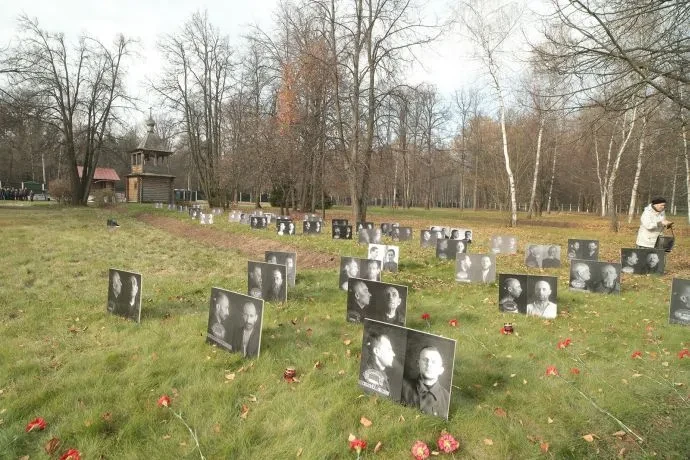
- Well, how did it all start? I came to management, I don't know anything. I called the deputy on the personnel, show, I say, an organized schedule. I look, there is “Botovo commandant’s office”, “Communard commandant’s office”, and this is what it is, I ask. And the person begins to fiddle suddenly. Come on, I say, wipe the chair. He explained. Why secret?
Well, there are also corpses, we try not to disclose this matter. I to him: so, from this minute - we reveal.
“And you are nothing from above?”
- A certain confrontation was, of course. When it came to this, the people were worried: what the consequences this will entail, it is now not easy for us, as it affects our reputation, there will be additional discrediting. And they began to crush through their people. You know, in such circumstances the same agent apparatus is quickly declassified - you immediately notice which of the deputies, from old acquaintances, from the leaders of the democratic movement begins to suddenly call and say: you need to think and so on. You immediately understand that these people were asked. But this was my decision, I called Roginsky to me, someone else from the Memorial, put it in my car, arrived, and there the sad representative of the commandant’s office with the keys was already waiting. And there we agreed: we will let people, first twice a week, then - without restrictions.
- And the last question. You, I know, is an accomplice in Novaya Gazeta, support it from your own funds. Are you not going to stop?
- Not yet.