
Translated material
PROMROS: Shield and Sword
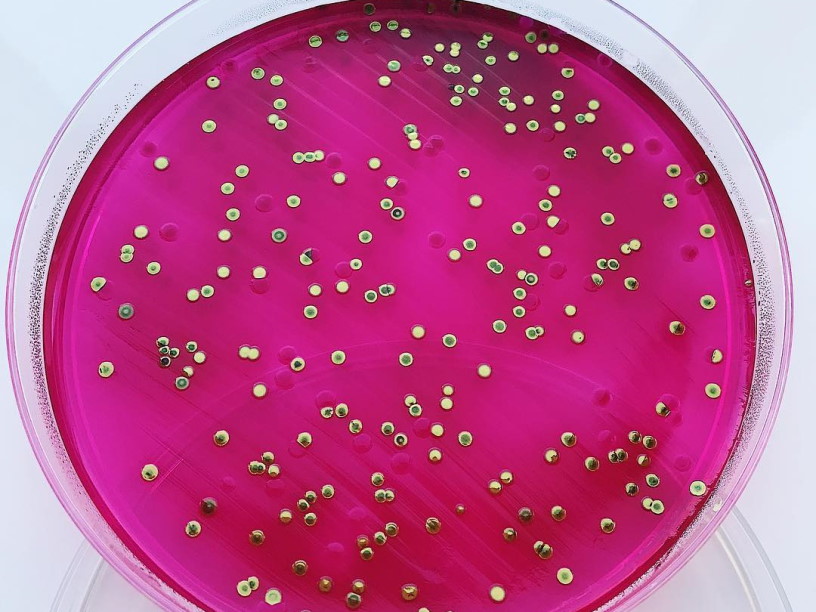
The shield is something round, the sword is something sharp, and together they make up the equipment of the knight. For bacteriological knights, a Petri cup is a shield, and a microbiological loop is a sword. Today I will tell you about these two such simple, at first glance, but such indispensable tools.
⠀
It seems to me that all or almost all people, no matter how far from microbiology, know what Petri's cup is. Wikipedia tells us that Petri's cup is a transparent laboratory vessel in the form of a low flat cylinder, covered with a transparent lid of a similar shape, but a slightly larger diameter. Such a simple, but brilliant in its simplicity, invention, accelerating the development of the science of bacteria. I hope that I will not surprise you very much now: Petri is the name of a person, and not the name of the model of the cup. Julius Petri studied at the Royal Military Medical Academy, served as a military doctor. Then he worked as an assistant to the same Robert Koch. Koch opened the bacillus of anthrax, cholera vibrion and tuberculosis stick. For studies of tuberculosis, he was awarded the Nobel Prize in Physiology and Medicine in 1905. And Petri came up with a cup.
⠀
At the dawn of microbiology, scientists have grown bacteria on improvised materials. For example, Koch used potato slices. On a dense flat surface, it was possible to distinguish pure crops (this is when individual colonies of the same type of microorganism), and in the potato itself there are enough nutrients for microbes. But this works well only with unpretentious kids, the potato will not work for everyone. Then Koch began to use gelatin records, which was also good, but not perfect. Finally, another German microbiologist Hesse intervened and proposed to make nutrient media with the addition of agar-agar. I spied on my wife while she was shaking the jelly in the kitchen. And there was only one problem left - where to pour this good? And then our hero saved everyone, for which we are still grateful to him.
⠀
Microbiological loops are sticks with a ring at the end. They are disposable plastic and reusable metal, which can be sterilized with a banal, but effective method of calcining in the burner flame. Then the loop is cooled, for which, when a microbial culture crossed from a test tube, a hot loop is immersed in a condensation fluid, and when crossing Petri's cups, they touch the surface of a nutrient medium free from microbial growth. After the end of the sowing, the loop is burned again to destroy the microbial culture or material infected with microorganisms. Microbiological loops are used to sow the cups of Petri, oblique agar, colonies accounts, removal of colonies from agar and taking biological material for bacteriological studies. That is, almost for everything that is performed in the laboratory.
⠀
In my current cup, Petri is poured by the endo environment, the familiar E. coli grew up to everyone, and the sowing was made by a microbiological loop. Having looked closely, you can even make out the traces on the surface of the agar, where the loop “scratched” it slightly.