
Translated material
Sent to the Hyde Park
The Constitutional Court limited the freedom of assembly by a very strange decision
The decision of the Constitutional Court of the Russian Federation of June 4 caused a strict and explained reaction of protest among opposition politicians and human rights activists.
In fact, the Constitutional Council, if he did not cancel, sharply limited the right to freedom of assembly, having driven the participants in peaceful actions to the reservation defined by officials, ordering to hold rallies, meetings, processions, demonstrations and pickets only in specially designated guide parks. If they want to spend them in another place, applicants are required to prove to officials that for “objective reasons” they cannot gather in the Hyde Park. And not the fact that they will prove.
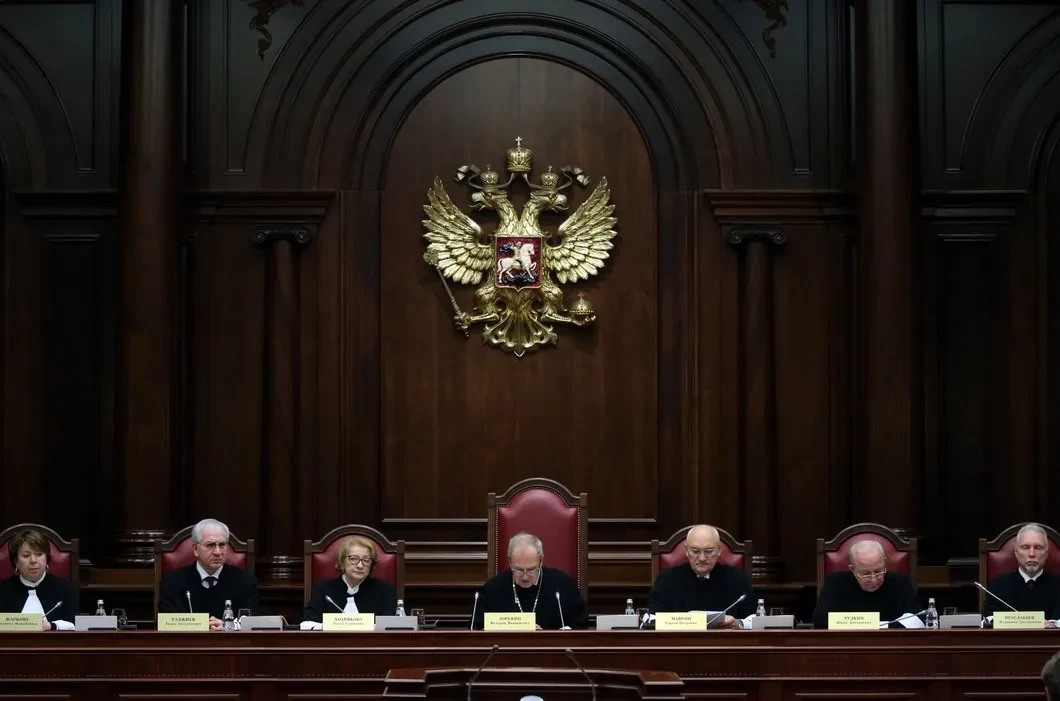
It is noteworthy, however, what turned out to be almost no one noticed. The mentioned position of the Constitutional Court is built (and at the very end) in the resolution, adopted according to a completely different aspect of the freedom of assembly. Moreover, it seems to be built artificially: as if the judges were very asked to “implement” two paragraphs to the decision, practically unrelated to the Constitutional Court of Constitutional Court from the Samara region. But it is in these paragraphs that what caused the protest.
Residents of the Samara region turned to the Constitutional Court, disputing the regional law prohibiting the holding of public actions less than 150 meters from military facilities, schools, kindergartens, colleges, hospitals, religious facilities and several others. Since this, they say, creates inconvenience for other citizens.
The court, considering this issue, remembered his previous decisions.
He recalled that the holding of public events, as a rule, is associated with well -known inconveniences for citizens that are not uncomfortable in them, but “such a kind of freedom of peaceful assemblies in themselves cannot serve as a good reason for refusing public actions.”
Therefore, the authorities “are obliged to strive to take all measures depending on them for an event in the place chosen by the organizers, and not try to find the reasons for any pretext that justify the impossibility of realizing the right to carry out public events in the format indicated in the notification”.
The KS recalled the norm of the law by which the authorities or MSU have the right to refuse to hold a public action “only if there are grounds provided for in paragraph 3 of Article 12 of the Federal Law ( on rallies and meetings . - B.V. ). And there are only two reasons: the applicant, by law, has no right to be the organizer of a public event, or a place directly prohibited by law is stated for holding.
The KS also emphasized that although the regional authorities can enter their own, an additional list of places where it is forbidden to hold public actions, they need to justify the “fundamental inadmissibility of a public event in this particular place”, and not prohibit the “abstract” principle (for example, 150 meters from any school or church).
Finally, the court referred to his last year’s decision to assess the legislation of the Komi, where public shares were banned closer than 50 meters from the entrance to any buildings occupied by the authorities and the MSU - which became “the introduction of an insurmountable barrier to exercise the right to freedom of peaceful assemblies near any regional and municipal authorities, as well as any republican state institutions”.
As a result, the "Samara" prohibitions were recognized as "unreasonable and disproportionate restriction of freedom of peaceful assemblies."
It would seem that everything is fine and correct: they took the zealous Samara legislators and officials!
And here in the resolution of the CS there are the same two paragraphs. As already mentioned, not from the appeal of the inhabitants of Samara (they wrote about completely different), nor of the above decisions of the Constitutional Court.
The court recalls that, in accordance with Article 8 of the Federal Law on rallies and meetings, after determining the executive authority of the region, the list of Hyde-parks “Public events are usually held in such places” (which is already known, but this does not prohibit them in other places).
And without any explanation, it suddenly formulates a frankly prohibitive novel: “holding public actions in other places, even if they are not assigned to where the federal law or the law of the constituent entity of the Russian Federation is prohibited from conducting public events, should be due to objective reasons indicating the impossibility of organizing a specific public event in specially designated places.”
And he specifies: “... the employment of these places, the lack of their maximum completion of the declared number of participants in the public event, the verified relationship of the planned public event with a specific place, etc.”
We will transfer from legal into Russian: not officials, refusing a public action in a place not prohibited by law, should bring “objective reasons” that the action cannot be held there (for example, for considerations of the security of participants or other persons), and citizens must prove why they are not satisfied with the guide park.
Moreover, such a consideration as the uncomfortable arrangement of this Hyde Park (which is characteristic of most regions, since officials, as a rule, try to choose places on the outskirts, where the action does not obviously attract attention) of the Constitutional Court does not include “objective reasons”.
But graciously allows the applicants who have received a refusal to agree on the action outside the Hyde Park to go to the court, which owes "as short as possible before the date of the planned public event to objectively and comprehensively assess the validity of such a refusal."
This, according to the professor and specialist in constitutional law, Ilya Shablinsky, the “radical narrowing” of the right to peaceful meetings.
According to him, “this decree allows you to put a fat cross on constitutional law to gather peacefully. The courts will now easily refer to this decision, recognizing any refusals of administrative bodies to conduct rallies and demonstrations legal. ”
Even more stringent grades are given by the Bureau of the Yabloko party, claiming the “political distrust of the Constitutional Court”, the decision of which not only radically diverges from its previously declared position, creates the widest scope for prohibitions and abuses, but also destroys the freedom of peaceful assemblies in Russia. ”
“Yabloko” believes that the adoption of the document is caused by “the desire of judges to preserve their chair in a new, reduced by Putin's amendments to the Constitution, composition of the court.” And that, approving the amendments to reject the presidential terms,
The KS finally eliminated the substitution of power in Russia, and by the current decision it deprives millions of citizens of legal law to freely express his opinion.
For all the sharpness of the comments, in fact, this is exactly the case.
Earlier, the Constitutional Court has repeatedly stated that the authorities, offering the applicants of public actions to hold them in other places, should proceed from the fact that the venue for the action should allow to achieve the goals stated by the organizers and "correspond to the socio-political significance of the event."
Carrying out the promotion on the settlements or behind the ring road (where officials like to send the protesters), obviously, does not allow achieving these goals and does not correspond to the “socio-political value”.
As for the Hyde Park, then, as already mentioned, they are most often determined in uncomfortable places.
A simple example: in St. Petersburg, there are eight guide parks, and not one of them is in the central part of the city. Relatively close to the center, only the area near the Finland station, and the other points are on the outskirts of the city, mostly far from the metro stations.
To collect enough people there is very difficult, which means that it is extremely difficult to achieve the declared goals of attracting public attention and influence the authorities in order to solve important problems. And in Moscow, the only Hyde Park is in Sokolniki. On a 13 millionth city.
Meanwhile, in the Decree of the Constitutional Court of 2013, it was directly said: “In violation of the constitutional principles of the legal state and the rule of law, the definition of only single specially designated places in the entire territory of the constituent entity of the Russian Federation, which can lead to significant inequality of the legal conditions for the exercise of the right to freedom of peaceful assemblies depending on the place of residence.”
The Constitutional Court in his resolution demanded that the federal legislator make the necessary changes to the legal regulation of the definition of specially designated places. And he stated that before this, the regions are introduced by the executive authorities, when determining the places specially allocated for public events, to proceed from the need for such places in at least every city district and the municipal district. ”
Seven years have passed. The "federal legislator" has not made any changes. Regional officials, at point blank range, without seeing the KS resolution, continue to allocate a place on the outskirts as a guide park, and then send all the protesters there, refusing to hold public actions in other places. But for some reason this circumstance all these years remains an “unnoticed” constitutional court.
Last. In the summer of 2019, against the backdrop of Moscow protests, senators Andrei Klimov and Lyudmila Bokov already threatened with a legislative initiative: “It is forbidden to gather everywhere, except for the places where it is allowed.”
Now, instead of them, this, in fact, does the Constitutional Court.
There is no place to appeal the solutions to the COP. You can only change in the elections the power that will then form another constitutional court.
Similar to the one that he was once.
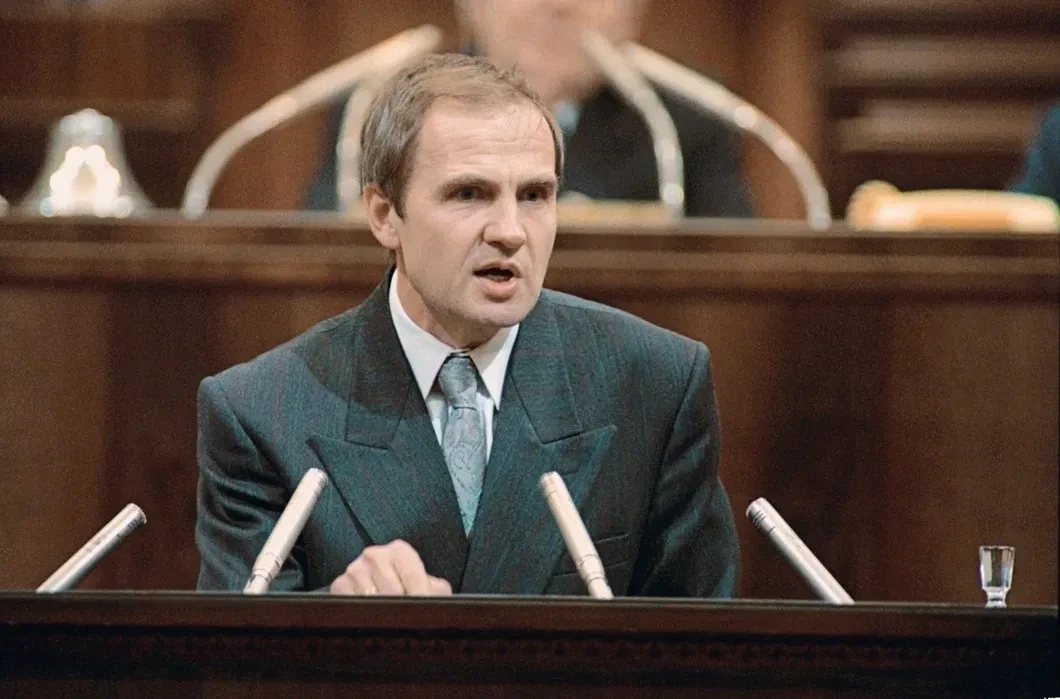
For example, in 1992, when, from the rostrum of the Congress of People's Deputies, its chairman Valery Zorkin declared lovers to talk about the nasty “Brezhnev” constitution, which must be urgently replaced by a new one:
“There is no Stalin or Brezhnev constitution - there is only the current constitution. Do not know how to observe this - the new one will not help you ... ".
Thought, we note, has not lost relevance.