
Translated material
"Dangerous, ticks!"

"Guys, since when did we have an injection of immunoglobulin in Petrozavodsk?" -recently asked a friend in one of the Boltkov chats.
June is the most active season in Karelia for those awakened after a long winter and cold spring of ticks. The tick was bitten by his friend's mother in the country: she threw the bloodsucker with a bloodsuit, and now it is not clear what sore he could tell her. For reinsurance, mom decided to make an injection of immunoglobulin. It was not easy to find it: somewhere the drug ended, somewhere the price of it was shocked. Apparently, due to coronavirus, the danger in the form of tick-borne encephalitis in the country has faded into the background, and the remnants of immunoglobulin were sold at 7000–9000–11000. At the same time, in some regions of Russia, injections do not do at all, the serum has already ended. But is it always necessary?
Two years ago, the tick bit my dad. On Saturday evening, he went for a walk in the forest, and in the morning on Sunday he woke up with a bite in his side. The algorithm of actions we chose the one that we once advised in the emergency room: carefully get an insect without tearing his heads, put in a jar, bring it to the laboratory, put an immunoglobulin injection to the bitter and wait. On a Sunday summer day, it was not easy to do all this, but they put a dad’s injection, but he had to take a tick in the laboratory to find out if he was contagious for several days: the line of those who wanted to hand over his bloodsucker was long, long and informative places. For example, a biology teacher of one of the Petrozavodsk schools told dad that ticks are the biological weapons of Americans. And in the queue, according to him, a tick from Finland came: the Russian guy brought a parasite in a jar to put it to a local laboratory. It turned out that in Finland no one gives ticks to tests and does not make any preventive injections! "It cannot be!" -I told dad then, assuring him that he understood something wrong.
The fact that dad understood everything correctly, I found out a little later, when I myself moved to Finland. Then my attitude to the "pass the tick in 72 hours" changed. Someone might think that in Finland there are simply no ticks or that they are not infectious, so no one bothers to injections and tests. But this is not so. According to the National Institute of Health and Blessing of Finland (Thl), in 2019, 2228 people fell ill in the country of Borreliosis (or Lyme's disease) (in 2018-2106), 69 tick-borne encephalitis in 2019 (in 2018-79). That is, these are those people who were bitten by the tick and infection occurred, those who came to the hospital with the symptoms of the disease, who were diagnosed and began to treat. Those whom the tick simply bites, but did not infect, did not get into statistics.
The problem with the growth of diseases with which harmful insects infect people, realize and seek solutions. But not in bursts to the laboratory, in order to take a tick for a test, or injections of drugs with unproven effectiveness, but, for example, research. Young scientists from the TEZTED startup are developing a test that will determine the entire set of bacteria transmitted by ticks (they, as experts found out, are about 20!). True, when such tests will become available for a wide consumer, it is unknown.
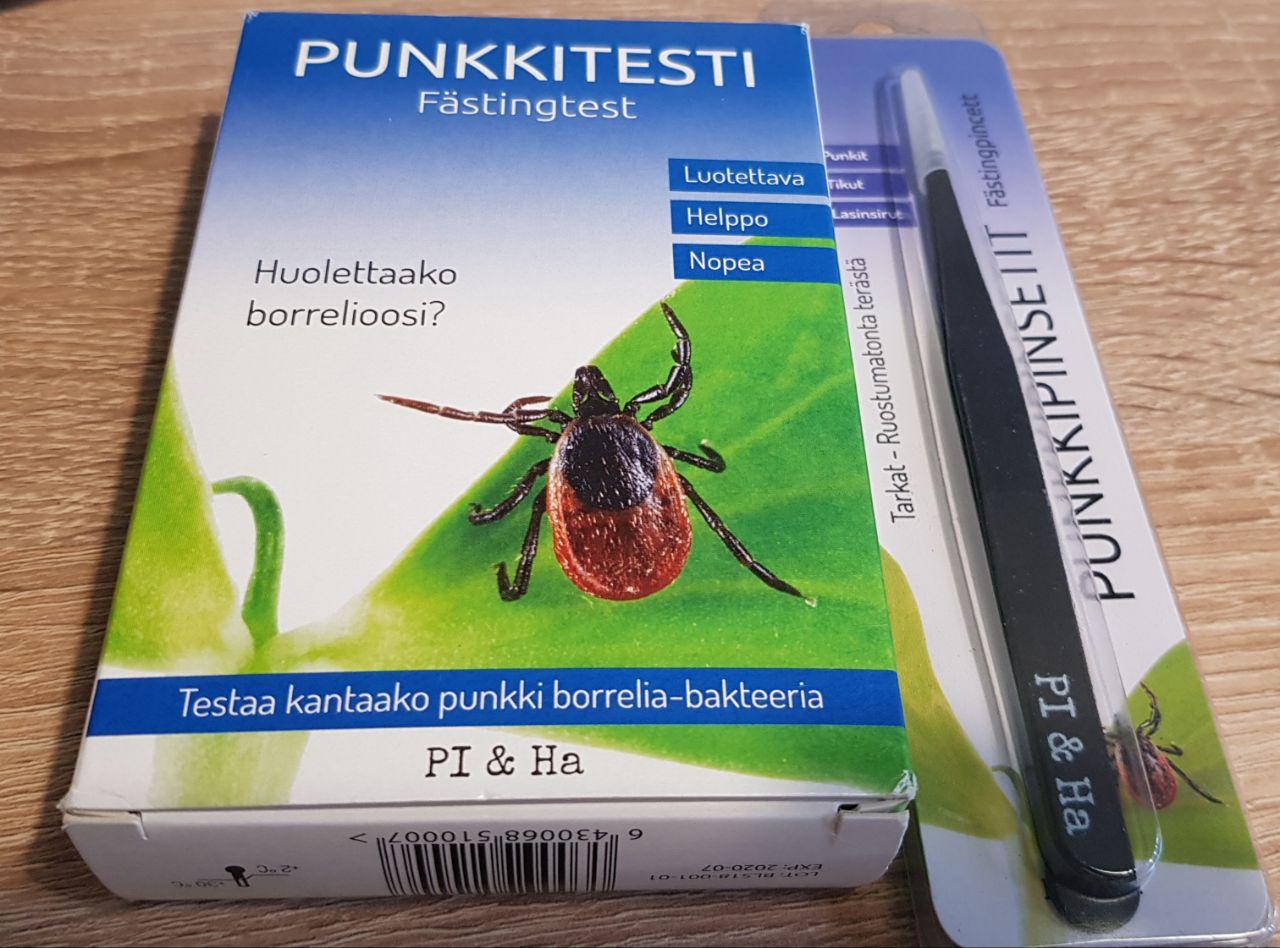
In the meantime, in Finland you can freely make a test only for the presence of borrelia in insect: tests are sold in supermarkets and pharmacies. The price is from 10 to 30 euros apiece. Video instruction is attached to it, the whole procedure takes 10 minutes.
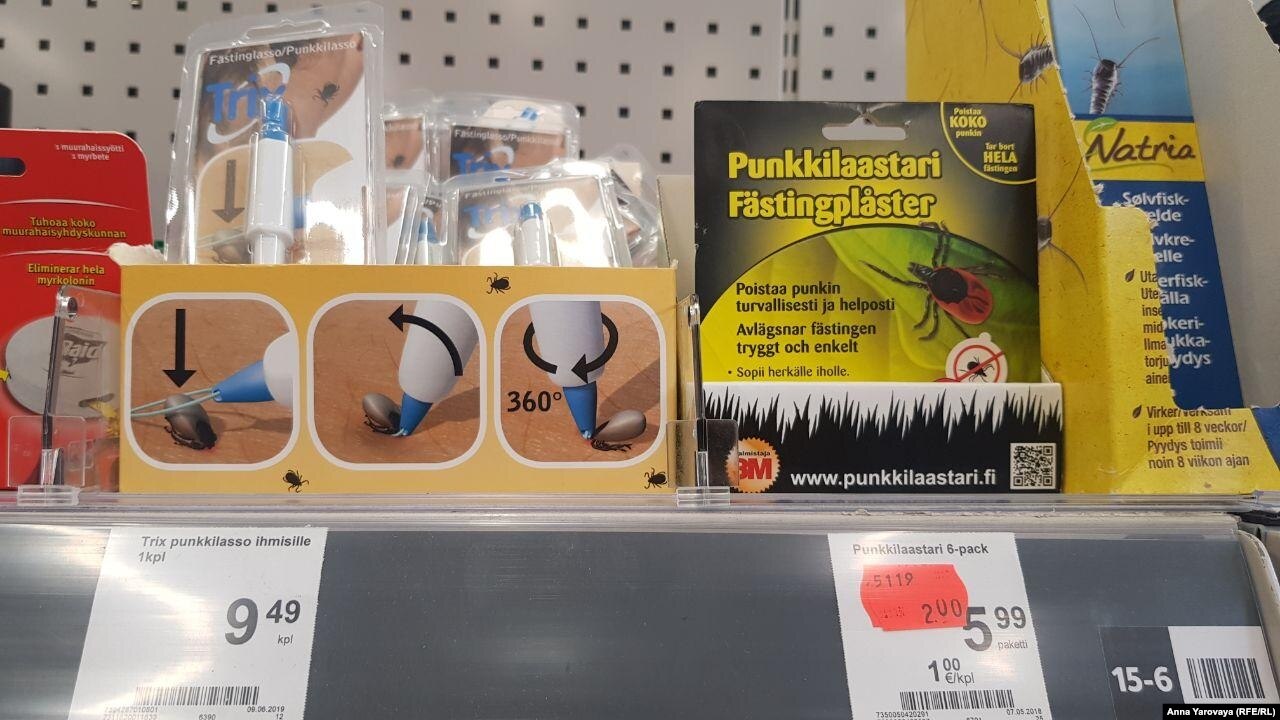
Also, in stores and pharmacies, different devices are sold in order to get the tick: different types of tweezers, plasters, and even some kind of freezing pump that sucks the tick from the skin.
What will help the test and knowledge of whether the tick is infectious? Perhaps he will reassure you if the insect turns out to be "clean." And if not, then the doctor will be easier to diagnose and prescribe treatment if you feel bad over the next 1-4 weeks.
By the way, dad had a borreliosa tick two years ago, but he did not infect dad - Petrozavodsk doctors did not find a virus in him, but for prevention was prescribed a course of antibiotics. And on this subject, the Finns also have their own opinion. Professor of virology from Helsinki University Ollie Wapalati in an interview with Julia said three years ago:
"If citizens took antibiotics every time they find a tick on their body, then we would write out 50 times more antibiotics than necessary. That is, we would write out 50 unnecessary ones for one necessary course of treatment."
It turns out that in Finland, in addition to borreliosis, they are actively fighting with another urgent problem: "antibiotic resistance", that is, the resistance of microorganisms to antibiotics. And in the fight against tick -borne viruses, they are advised to either put a vaccine (however, there is only an encephalitis vaccine), or rely on your immunity and timely treatment in case of infection.
Anna Yarovaya - journalist
Opinions expressed under the heading "Law" may not reflect the point of view of the Radio Liberty editorial