
Translated material
Sea hedgehogs will help to cure prostate cancer
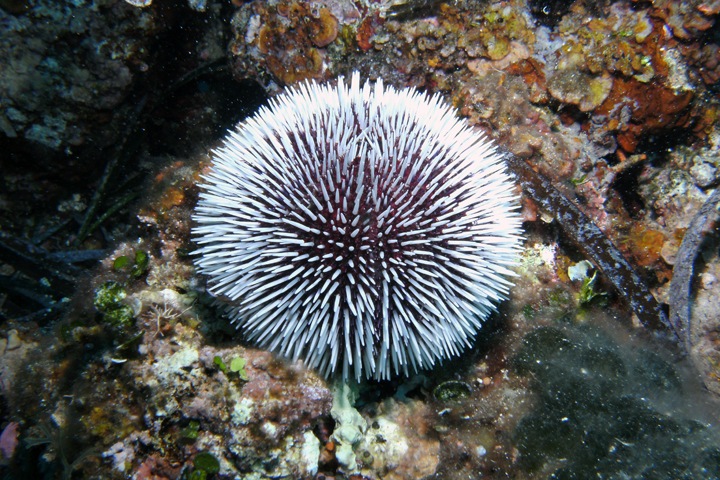
The prototype of the drug compound against the prostate cancer resistant to chemotherapy was developed by scientists of the Far Eastern Federal University (FEFU). They combined analogues of biologically active molecules from the pigment of sea urchins with glucose molecules in order to more effectively deliver the active substance to the tumor cells.
Researchers used the effect of Warburgh, which manifests itself in the fact that tumor cells consume glucose compounds more intensively than most normal cells - in fact, they feed on sugar.
With the help of sulfur atoms, scientists “sewed” the glucose tail to active molecules based on the pigments of the sea hedgehog. When cellular crops of cancer were treated with the resulting compound, tumor cells died. The new drug can be successfully used to combat prostate cancer, the authors of the study from the School of Natural Sciences of the FEFU, the Pacific Institute of Bioorganic Chemistry of the Far Eastern Branch of the Russian Academy of Sciences, the University Clinic of Hamburg-Cendorf and the University of the University (Germany). It was the scientific cooperation of scientists from different countries that made it possible to make an opening.
“Firstly, at our disposal there were analogues of biologically active compounds from sea urchins, the antitumor potential of which was improved by colleagues from the Institute of Bioorganic Chemistry,” explains Sergey Dryushlevova, a researcher at the laboratory of biologically active substances of the School of Natural Sciences of Natural Sciences. -Secondly, we used the experience of German colleagues specializing in prostate cancer to establish and explain the mechanism that makes tumor cells more susceptible to glucose molecules. It turned out that prostate cancer cells have a large number of receptors through which glucose and molecules associated with it enters the cell. ”
According to the scientist, although the new drug compound showed the effectiveness of the prostate cancer on cell cultures, there is a good chance that in the future, subject to successful clinical trials, it is suitable for the treatment of other types of cancer.
In the fall of 2020, researchers are going to study the possible side effects of the drug on mice and other laboratory animals. In case of success, a new drug in the market may appear in 10 years.
Previously, the FEFU scientists have proposed a compound froma sea sponge andtropical plants to treat cancer.