
Translated material
Alexander Gorchakov
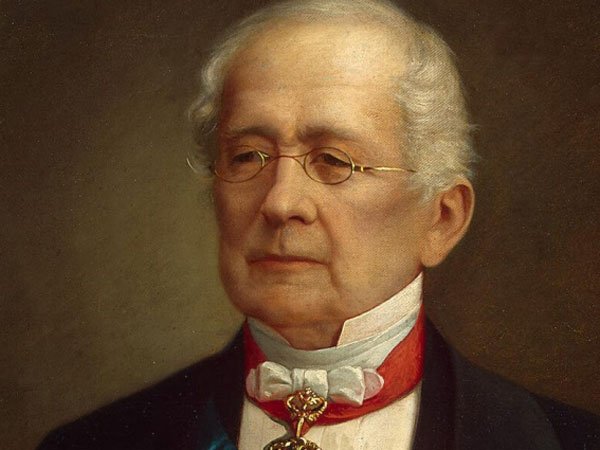
On June 15, 1798, Prince Alexander Gorchakov, an outstanding diplomat, the last chancellor of the Russian Empire, was born.
Personal business
Alexander Mikhailovich Gorchakov (1798 - 1883) was born in Gapsala (now Haapsalu), a city in the territory of modern Estonia. The princely clan of the Gorchakovs goes back to Rurik. His father, Prince Mikhail Alekseevich, was Major General. Due to the father’s military service, the family often moved, they lived in Khapsal, Revel, St. Petersburg. In St. Petersburg, Gorchakov graduated from the gymnasium and in 1811 entered the Tsarskoye Selo Lyceum. In 1817 he graduated from him with a gold medal and, in the rank of titular adviser, began a diplomatic career.
Gorchakov in 1820 - 1822 participated in the Congresses of the Holy Union in Troppau, Labah and Verona. On December 12, 1819, he received the title of chamber junker and was appointed secretary of the embassy in London. In 1822, he became the first secretary of the embassy, and in 1824 he was granted the rank of an obv an adviser. Gorchakov remained in London until 1827, then he was transferred to the post of first secretary in Rome. The following year, he became an adviser to the embassy in Berlin, and then received an appointment to Italy, Florence and Lucca. In 1833, by personal order of Nicholas I Gorchakov, he was sent to Vienna as an adviser.
The prince coped with official duties brilliantly, was granted by state advisers. In 1838, Gorchakov married Maria Alexandrovna Urusova, the widow of Ivan Musin-Pushkin. By this moment, the Relations of Gorchakov and the Minister of Foreign Affairs Nesselrode deteriorated, and he resigned.
They write that the hostility of the authorities to Gorchakov was caused by his quarrel with the head of the third branch of the Imperial Chancellery Benckendorf. When the chief of the gendarmes was in Vienna, he, talking with Gorchakov, and not even offering him to sit down, demanded: "Take a lot to order the hotel owner to date." Gorchakov called the meter -ender and explained to Benckendorf that he could order lunch himself. Benckendorf could not help but calculate this behavior. Soon, in the third branch on Gorchakov, a case was instituted, where it meant: "Prince Gorchakov is not without abilities, but does not like Russia." Returning from Vienna, Alexander Gorchakov settled with the family in St. Petersburg. His career was considered complete, and in 1839 the former lyceumist Modest Korf, who himself already held the post of minister at that time, in his notes, ranked the prince of “losers”. Then no one could assume a new take -off of Prince Gorchakov.
Only in 1841, Alexander Mikhailovich received a new appointment and went to the Extraordinary envoy and plenipotentiary minister to Stuttgart, the capital of Württemberg. In 1850, Gorchakov became an extraordinary envoy and plenipotentiary of the German Union, whose capital was Frankfurt. At the same time, he retained the post in Württemberg. Gorchakov sought to preserve the German Union as an organization that restrained the efforts of the two rival powers - Austria and Prussia - to act as the unifying Germany. In June 1853, Gorchakov’s wife, with whom he lived fifteen years, died in Baden-Baden. Two sons and children from his wife’s first marriage remained in his care. In June 1854, he became an ambassador to Vienna.
At the Paris Congress in March 1856, Russia signed an agreement that recorded its defeat in the Crimean War. The most difficult condition of the Paris world was an article on the neutralization of the Black Sea, according to which Russia was ordered to destroy the remains of the fleet on the Black Sea and eliminate the fortresses on the coast. In this setting on April 15, 1856, Alexander II appointed Gorchakova to the Minister of Foreign Affairs. The new direction of foreign policy was justified by the Minister in the report of Alexander II and was set out in the circular of August 21, 1856. It emphasized the desire of the Russian government to devote “predominant care” to internal affairs, spreading its activities outside the empire, “only when it certainly requires the positive benefits of Russia.” The famous phrase of Gorchakov sounded there: “They say that Russia is angry. No, Russia is not angry, but focuses. ” Later Gorchakov was assigned the rank of Vice-Chancellor (1862), and then the State Chancellor (1867). The success of Gorchakova was the London Convention of 1871, which changed the status of the Black Sea. In the 1870s, Gorchakov had to withstand the enhancing influence of Prussia, in particular in 1875, largely thanks to his efforts, the next war of Prussia and France was prevented.
In 1880, Gorchakov’s health worsened and he went abroad for treatment. He resigned in 1882, at 84. Alexander Gorchakov died in Baden-Baden on February 27, 1883.
What is famous
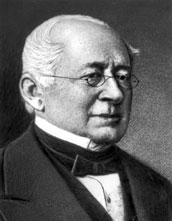 Alexander Gorchakov
The main task of Alexander Gorchakov as Minister of Foreign Affairs was the liquidation of the diplomatic consequences of the Crimean war. The allies were needed to solve it. Initially, Gorchakov had hopes for France. Napoleon III needed Russia's support in his confrontation with Austria. On February 19 (March 3), 1859 in Paris, a secret Russian-French contract was signed on neutrality and cooperation. However, France did not support Russia on the review of the articles of the Paris world.
The number one at that time was Prussia at that time. Chancellor Bismarck sought to create a strong united German state. France interfered with this, but Bismarck could not fight her, while the Russian Empire was friendly to France. Gorchakov came to the conclusion that "serious and close consent with Prussia is the best combination, if not the only one." In August 1866, General Manteifel, a confidant of Wilhelm I, came from Berlin to Petersburg. During the conversation with him, an oral agreement was reached that Prussia would support Russia's requirements to cancel the most difficult articles of the Paris treatise. In return, Gorchakov promised the neutrality of Russia. In July 1870, the Franco-Prussian War began, in which Russia took a neutral position. The French army was defeated, which changed the political situation in Europe.
Gorchakov told the king that it was time to initiate the issue of the “fair demand” of Russia. On October 19 (31), 1870, Gorchakov, through Russian ambassadors abroad, handed over to the governments of all states that signed the Paris treatise of 1856, the “circular dispatch”, which said that the Paris treatise was repeatedly violated by the powers that signed it. Russia cannot consider itself a more connected by that part of the obligations of the treatise that limited its rights in the Black Sea. To develop new relations between European powers and Russia in London, a meeting was convened, in which representatives of the countries that signed the 1856 treaty participated. On March 1 (13), 1871, the London Convention was signed, the main result of which for Russia was the abolition of an article on the neutralization of the Black Sea. Gorchakov considered this victory the main achievement of all his diplomatic activities.
What you need to know about
In the summer of 1825, being a briefly in Russia, Gorchakov was visiting the estate of his uncle in the village of Lemonovo and finds out that he was not far in Mikhailovsky, his disgraced classmate Pushkin is located. A meeting with the poet could lead to serious troubles for a young diplomat, but Lyceum friendship for Gorchakov was not an empty sound. Gorchakov sent a news to Mikhailovskoye, and Pushkin met with him. In memory of this meeting, lines remained.
You, Gorchakov, are lucky from the first days,
Praise to you - Fortune shine cold
Did not change your soul free:
You are all the same for honor and friends,
We are a different path of fate by fate strict;
Going into life, we quickly dispersed;
But by chance the country road
We met and fraternally hugged.
Direct speech
My dear friend, we enter the New World;
But there the destiny is not assigned to us, not equal,
And we will leave our trace in life.
Your hand of the fortune is wayward
The path is indicated and happy and glorious ...
A. S. Pushkin "Prince A. M. Gorchakov"
“He was not quite healthy; I found him in a reclining position on a couch or a long chair; His legs and the lower body were shrouded in a blanket. He accepted me very kindly, expressed regrets that he could not be in the celebration in honor of his comrade, and, having read the most part of his message “Let him, not knowing with Apollo ...”, spread about his relationship to Pushkin. By the way, he said that he was the same for our poet as the Moliere’s cook for a glorious comedian who did not release anything, not consulting her; that he, the prince, once prevented Pushkin from printing a bad poem, tearing her three songs; What made him throw out the word "saliva" from one scene of Boris Godunov, which he wanted to use from the imitation of Shakespeare; that during the exile of Pushkin to the Mikhailovskoye prince, the Pskov governor was entrusted with him ... Saying goodbye to me, he instructed me to convey to the lyceum students who would be present at the opening of the monument to his famous comrade, how he sympathizes with the case so safely and how sorry he was deprived of the opportunity to take part in the celebration, ” - the memories of Ya. 1880
“For almost 40 years, Alexander Mikhailovich pulled the bureaucratic strap, served in England, Italy, Germany, Austria, accumulated enormous experience, but his star hour came on the verge of the 60th anniversary. Probably, there is a law of nature: in a formidable time for the Fatherland, when dangers approach from all sides, the weaknesses are frayed and timid, while strong personalities protrude in complete splendor. This happened with Gorchakov during the Crimean War, then he was an ambassador to Vienna. This post was the key to contacts between the warring parties. Gorchakov was in the very center of anti -Russian intrigues, he had to act in three directions - to repulse the Anglo -French desire to impose unacceptable conditions of the world, to keep Austria from entering the war, to encourage Prussia to preserve at least a favorable for the enemy, but still neutrality. The prince kept with his partners proudly and adamant, and Nikolai I advised to go to a difficult compromise, then it would become worse, ” historian V.N. Vinogradov about Prince Gorchakovo
10 facts about Alexander Gorchakov
- The comrades in the Tsarskoye Selo Lyceum Alexander Gorchakov received the nickname Frant.
- A short note addressed to Gorchakov Pushkin in 1811 (“Prince A. M. Gorchakov. You write tokmo for your pleasure, and I love you sincerely, I write to tell you this. A. Pushkin”), these are the very first lines of Pushkin that came to us.
- At the Lyceum, Pushkin read the poem "Monk" to Gorchakov. Gorchakov said that the obscene poem was not worthy of Pushkin’s talent, so Pushkin gave Gorchakov the manuscript to destroy it. But Gorchakov retained the poem, and after many years it was discovered in his archive.
- From the very beginning of the service, Gorchakov could only rely on his salary, since he refused his father’s inheritance in favor of the sisters.
- Gorchakov was the first to use the expression in his dispatches: "Sovereign and Russia." “Before me,” said Gorchakov, “for Europe there was no other concept in relation to our Fatherland, as soon as the" emperor "." At one time, Minister Nesselrode coldly met this formulation: “We know only one king,” he said, “we don’t care about Russia”
- After the defeat of the Decembrists, Gorchakov, in old lyceum friendship, tried to help Ivan Pushchin flee abroad, delivering him a foreign passport.
- In the family of Gorchakov and Maria Urusova, four sons and daughter Urusova were brought up from his first marriage, as well as two of their common sons.
- The signing of the London Convention of 1871 Fedor Tyutchev welcomed the poem by Gorchakov.
- Gorchakov collected a collection of more than 30 thousand wax seals. It had copies of the XVI and XVII centuries.
- Alexander Gorchakov was the last surviving of the lyceumists of the Pushkin output.
Materials about Alexander Gorchakov
Alexander Gorchakov on the Chronos website
V.N. Vinogradov "Alexander Gorchakov-Minister and Vice-Chancellor"
Article about Alexander Gorchakov in Russian Wikipedia