
Translated material
Old age at risk
How Russian boarding houses for the elderly experienced pandemia
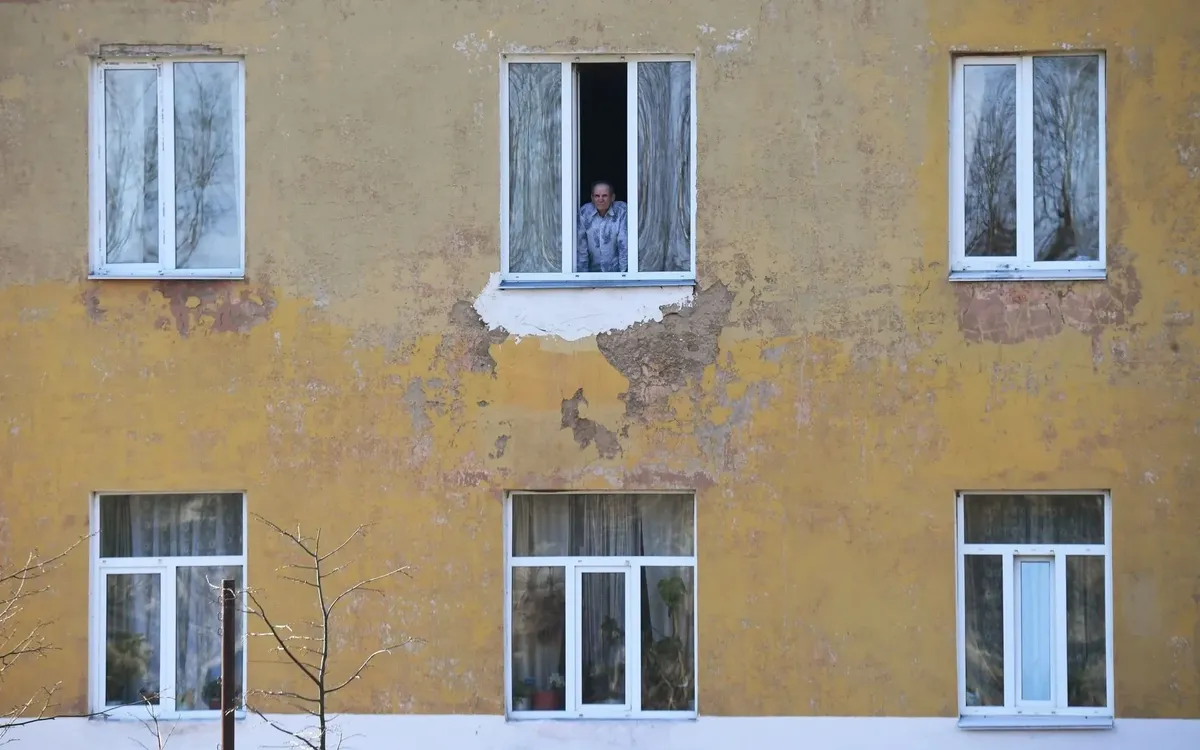
With the onset of the coronavirus epidemic, the life of boarding houses for the elderly throughout the world has changed. What happens when a virus penetrates into such an institution, it is known from the sad experience of Italy and France, where many wards of boarding houses died. According to International Long-Term Care Policy Network, almost half of the victims of the pandemic in Europe lived in social institutions.
In Russia, flashes of infection in groups of isolated people are also recorded. This is an infection of the shift workers on Yamal, the construction of Novatek in the Murmansk region. There are foci of the disease in psychiatric hospitals of the Arkhangelsk, Murmansk, Leningrad regions. The trouble did not bypass the boarding houses for the elderly: the first was the institution in Vyazma (Smolensk region), and in all such institutions 4361 people fell ill with coronavirus. For houses of the elderly, the outbreak of coronavirus is especially dangerous, since often these are people who suffer from chronic diseases, and their virus often means death.
There are also illegal nursing homes, where they are trying to hide the facts of infection of guests with a virus. Against the owners and administration of such institutions initiate criminal cases.
To protect elderly people, some directors and employees of state houses of boarding schools and PNI asked relatives to take older people home for a while. However, in one of the boarding houses, even after the call of relatives out of 450 wards, only one was taken. Private boarding houses are trying to create a safe atmosphere for the wards, but not everything is in their power.
The Russian system of institutional care for elderly people is the heiress of the Soviet. The difference is by and large only in the presence of alternatives. In the USSR, it was possible, albeit with difficulty, to hire a nurse to an elderly person. In Russia, it became much easier with nurses, private boarding houses for the elderly also appeared. Before the epidemic, this industry was actively developing, new formats of such institutions appeared. But the crisis associated with the coronavirus epidemic can destroy establishments that have great social significance.
In an almshouse without a state
The almshouse (from “God's work”) - as shelters for those in need were called in pre -revolutionary Russia. Widows with children, elderly people, people with disabilities, orphans - all who needed help, who could not serve themselves and pay for housing could find shelter in an almshouse. The organization and financing of these institutions fell mainly on parishes. There were also shelters for those in need, created by private individuals. After the revolution, church parishes and rich philanthropists disappeared, but the problem remained. The state had to solve it. Modern boarding schools and boarding houses have specialization, they can be state and private.
The decision to provide an elderly person in the state boarding school is made by social services. They are based on a number of criteria: a person should be lonely, without relatives and either be a veteran of the Great Patriotic War, or need care (how real this need is, social services again decide). The next stage of receiving the right to state care is to collect medical certificates that prove that a person cannot serve himself, and he needs care. In the collection of certificates, the medical bureaucracy only interferes. But it is not easy to get a place with all the necessary documents: in state boarding houses, they are often not enough.
Now in Russia in state houses of elderly and neuropsychiatric boarding schools, about 250 thousand people live. There are no exact information about private boarding houses. According to Elizabeth Oleskina, director of the Old Age Fund, the total number of elderly people who need to care and accompaniment may exceed two million people.
The quality of life of people in most state boarding houses for the elderly leaves much to be desired. Each ward is not able to pay sufficient attention, the main task of such institutions is to ensure minimal physical care. Life in these conditions is not described by the category of “worthy old age”. Neither their relatives nor they themselves want such a fate for the elderly. That's why
Elderly people go to state boarding schools (or they “hand over” them there) from hopelessness when there are no other existence opportunities.
A separate category of elderly, in need of care, is rustic. Many of them live in the outback. Relatives living in the city cannot often visit them. There are often no water supply and sewage in rural houses. You will not always turn to the neighbors for help: they are the same elderly people. Do not hire a nurse: there are no people who want to work in such conditions.
As a result, a person who could serve himself in the city for a long time or with the help of a social worker faces a difficult choice: to move to relatives to the city, radically changing lifestyle and embarrassing a family, or collecting certificates for a nursing home, which needs regular trips to a city or district center. An independent lonely life in the outback for many elderly is difficult: there is no accessible help here - neither medical nor social. But in some cases there is an alternative: private houses-punisances.
Private boarding houses for the elderly appeared in modern Russia relatively recently, in 2007. The first of them provided the services of a VIP-URITA and were very expensive. Such institutions exist now. But in addition to them, much more affordable boarding houses opened, the services of which cost from 20 thousand rubles. per month (which is already comparable to hiring a nurse with accommodation). If the boarding school has a medical license, and the staff includes doctors and nurses, the cost is increasing. The cost also affects the presence of a psychologist, the living conditions of the boarding house, his leisure capabilities, as well as the condition of the oldest person, the necessary medicines and objects of care.
In cities, especially large, older people, it is easier to get such a care: as a rule, there is a choice of several boarding schools, there is an opportunity to hire a nurse. In rural areas of the institution, where people can get high -quality care for not too much money, is still a rarity.
Karelian experiment
One of the few private rural boarding houses for the elderly is located in the south of Karelia. It is designed for older people living in neighboring villages and farms. His spouses, local residents who decided to combine two good ideas were created: to provide local elderly and disabled people with a worthy life, and to give a job to the residents of the village (the boarding school is almost the only employer in the village) and a common thing for people.
The boarding house is located in the building of the former kindergarten. The garden closed - there are no children. Only the school remained in the village, and even the locals say, it will soon close: there are very few students. Until recently, only the first floor worked in the boarding house, but by February the repair was completed on the second, and now the boarding school was ready to accept new guests. There are enough places in the former kindergarten, the building has its own boiler room - there is where to expand.
The wards here offer a variety of classes. You can listen to fairy tales, engage in calligraphy, improving the skills of writing (classes where fine motor skills are required, for the elderly, they are useful, as for schoolchildren: they help maintain cognitive functions). Physical education classes are popular. Teachers from the school located nearby are leading calligraphy and physical education.
Pandemias are afraid here, but they are sure that they can protect themselves: the boarding house plays on the hand of its location deep in rural areas. “We are at a distance from large settlements, all employees are local,” says the director of the boarding house.
- In our situation, limiting contacts is very simple: we do not accept visitors, and employees do not leave the village.
We continue to work actively, and since we have not been in contact with anyone before, the epidemic has not yet affected us.
However, the virus brought another threat to the institution: if it is found at least one ward or employee, you will have to close the entire institution. And they can suspend work and preventively. “All institutions are closed, such proposals have already been heard,” says the director of the Karelian boarding house.
But neither the guests nor their relatives want this. People are sure: in a remote village, elderly is safer than in a city apartment, where to contact other people one way or another. In addition, not all wards will be happy to see at home. People with different stories fall into the boarding house. There are elderly people who have violent violence from relatives, others simply do not expect at home or no one to wait. If the boarding school is closed, older people will simply have nowhere to go.
Neither at the federal nor at the regional level there are no single recommendations on how to act private boarding houses in the epidemic situation. And even more so, there are no documents taking into account the specifics of specific institutions: where they are located, can they count on the help of specialized NGOs and funds, whether there is where to send wards. Thinking about protecting people from the virus, we must not forget about other factors threatening the elderly. It is important to work out the issues of transporting people, especially those suffering from dementia, so that later do not have to resort to the help of search detachments. Wards should be protected from domestic violence, they need to ensure proper care. This is especially true for bedridden: sometimes relatives cannot provide them with proper care.
Private nursing houses and boarding houses for the elderly require the attention of the state. Their difficulties in connection with the epidemic are the same as the state ones. They also need disinfection and protection. We need independent monitoring of anti -epidemic measures: the administrations of the elderly houses are well versed in the care of the elderly, but not in epidemiology. We must not forget about private boarding houses, but it is impossible to close them “for prevention”-even in regions where the situation with the Covid-19 is dysfunctional. After all, this can put the life of the wards of such boarding schools at risk no less real than the virus paralyzing humanity.
Konstantin Galkin , sociologist, scholarships Oxford Russia Fellowship