
Translated material
Holy Martyr Mikhail Votyakov
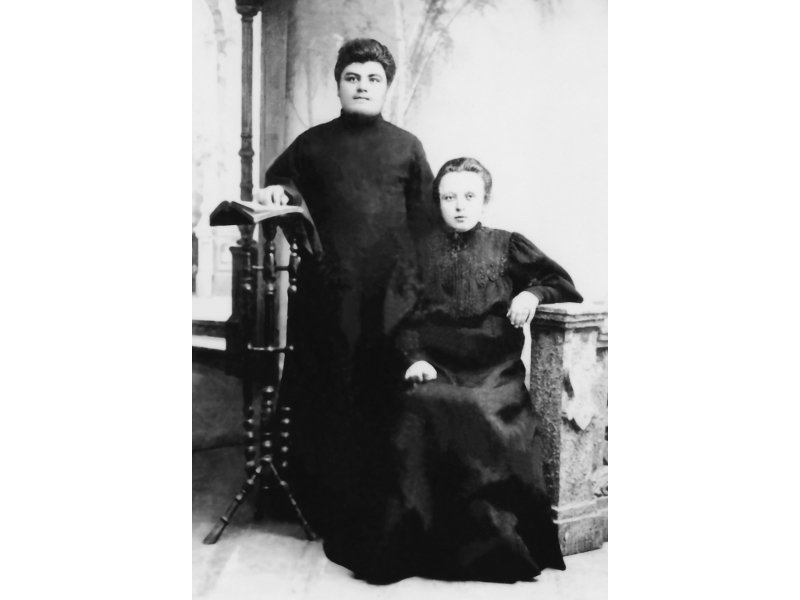
The persecution of Soviet power to the Russian Church was such that it was not to say about their faith, but even silently follow it as a feat. The new martyrs and confessors, glorified in the face of the saints did not come: believed, prayed and meekly went to their Calvarys.
“Polit.ru” recalls those who gave their lives for faith and by whose prayers the Russian Church is alive - even if almost nothing came to us besides the name.
Publications were prepared by Kirill Kharatyan (included by the Russian authorities in the register of foreign agents).
 Mikhail Votyakov with his wife
Mikhail Votyakov is the son of a peasant from the village of Votyakovo Chistopol district of the Kazan province. In 1899, 18 years old, he graduated from the Savrushsky parish school and received a certificate of knowledge and right of teaching choral singing. In 1899-1901 and in 1903 he listened to the teacher's pedagogical courses in Kazan, in 1901 he withstood the exam for the title of teacher of the parish school at the Commission at the Chistopol Theological School, in 1903-the exam at the psalmist and in the same year entered the Psalmist in the village of Zhukotino Chistopol district.
On December 10, 1906, he was ordained a deacon to the Infantry-Jerusalem Church of the Virgin-Sergius Cheremis Monastery in Tsarevokokshaysk. All this time, he was a teacher in various parish schools and at the school of the Ministry of Education.
In 1911, he withstood the test to receive a priest’s dignity and in 1914 he was ordained a priest to the Pokrovsky church in the village of Kumya Kozmodemyansky district.
In 1917, the headman of the temple with some of his like -minded people accused him of extorting money for trembling and the careless performance of the duties of the priest. The manager of the Kazan diocese, the bishop of Chistopolsky Anatoly (Grisyuk) appointed an investigation; It did not confirm the accusations built on the shepherd, but the peasants signed under the decision to remove the priest from the parish. On November 1, 1917, some parishioners turned to Bishop Anatoly with a request to appeal this decision.
They wrote: “On the inquiry, Dean Father asked only persons from the prosecutors. In order to reconcile the parishioners with the priest, the Dean Father gathered a gathering on October 23, but not all were notified about this gathering, but only their faces were unhappy ... When the peasants began to hesitate and express themselves for reconciliation, the dean's father began to write a sentence about the dismissal of the priest, and when the parishioners hesitated to sign this sentence, he began to persuade them, that they would soon be healed, and then they would be heated soon and then they will be healed for another Signed. This sentence was signed in the presence of a smaller part of the parishioners; In the parish, there are one hundred and ninety households, and only ten households signed the verdict. By exposing this, we ask for your bosses to consider this sentence invalid and the very inquiry is incomplete and one -sided. ”
The bishop agreed with them, and Father Michael was left to serve in this temple, but the relations between parishioners remained tense, and in 1919 he was transferred to the temple of the Holy Equal -to -the -Apostles Constantine and Elena to the village of Kulakovo Kozmodemyansky district. The parish was poor, and during the civil war and hunger he was even more impoverished, and the position of the priest, who had already had a large family by that time, became completely desperate.
In 1921, the parishioners of the temple in the village of Krasnoye Yar Chistopol district began to ask Father Michael to him, but while the petition reached the bishop of the Mamadshi Joasaph (Udalova), who then managed the Kazan diocese, another priest was already determined there. In 1923, the temple in the village of Kulakovo was closed by the authorities, and Father Mikhail was appointed to the Pokrovsky church in the village of Sarsas. During the ministry at this parish, he was elevated to the rank of Archpriest.
In 1929, Archpriest Mikhail was arrested on charges of campaign against bread procurement, but a few months later he was released for the unproven prosecution.
In 1930, he was sent to serve in the Trinity Temple in the village of Chistopol Vyselki instead of a priest who died there. On April 20, 1931, the chairman and secretary of the village council in the Chistopol Sweetings drew up an act in which they wrote: “Priest Mikhail Votyakov ... Each service appears with a“ sermon ”, where collective farms mentions. According to the conversations of the women who praise performances, he begins his sermon from the life of some saint and ends with the fact that, they say, what we have lived at present. Almost always, during a performance with a “sermon”, Votyakov brings to crying in the church. The village council believes that Votakov in the church is conducting anti -Soviet work, campaign against the collective farm movement. The real village council believes that Votyakova needs to be isolated. Votyakov’s isolation is necessary in connection with the spring sowing campaign and collectivization. ”
On April 22, 1931, Father Michael and with him eleven peasants were arrested and imprisoned in the city of Chistopol. The next day, the investigator began interrogations of witnesses.
One of the members of the village council showed that he did not notice for the priest of anti -Soviet agitation: “I once met him on the occasion of the sale of straw, and when we were driving a road, he tells me that why you had little straws,” I, of course, told him that there was no more. He says to this: yes, it is now good now, it was better than better, everything was full, and now, under the Soviet regime, nothing has become of nothing; Moreover, I asked me: are you a collective farmer? I tell him not. He told me that it’s better and don’t go. ”
The chairman of the village council showed that the priest Mikhail Votyakov had an anti -Soviet campaign, the priest Mikhail Votyakov, concerned the creation of collective farms, and asked the parishioners to help him pay taxes, otherwise the temple would be closed and there would be no one to serve.
The employee of the Moscow Factory, who was interrogated as a witness, sent to the village among other citizens to drive peasants to collective farms, showed that at meetings dedicated to collectivization, women behaved uncontained and spoke against the collective farm. It was all connected with religion. Before the seizure of Mikhail Votyakov, there was absolutely no tide to the collective farm. When Mikhail Votyakov was taken, the mass went to the collective farm, and they began to apply for 30-40 per day, the mood in the masses is good.
On April 28, all the arrested peasants were charged with, in particular, it was said that they “asked for helping the priest to pay taxes stubbornly demanded that we do not need any collective farms, and give us the church, as we want to pray.”
The next day, the investigator interrogated Archpriest Michael. Of all the charges against him, the priest recognized only that he really turned to the Church Council to help him pay part of the tax, but the church council refused this to him.
“I did not apply to the population with such a request,” said Father Mikhail, “from the side of the believers I received something from the food, but I did not receive funds from believers. In relation to conversations about collective farms, I always warned in advance so that such conversations would not start. Conversations were conducted by a purely religious nature. ”
On April 30, the investigation was completed and compiled an indictment; All the arrested were accused of the fact that they, “being hostile to the Soviet regime and representing a counter -revolutionary group, conducted systematic agitation and spread provocative rumors aimed at weakening the Soviet regime and disrupting the events held by it, using for this purpose the religious prejudices of the masses.”
On June 12, 1931, the Troika of the OGPU sentenced the priest and some peasants to execution.
Archpriest Mikhail Votyakov and the peasants were shot on June 18, 1931 in Kazan and buried in a common unknown grave.