
Translated material
The Monkiller Rafail Sheychenko
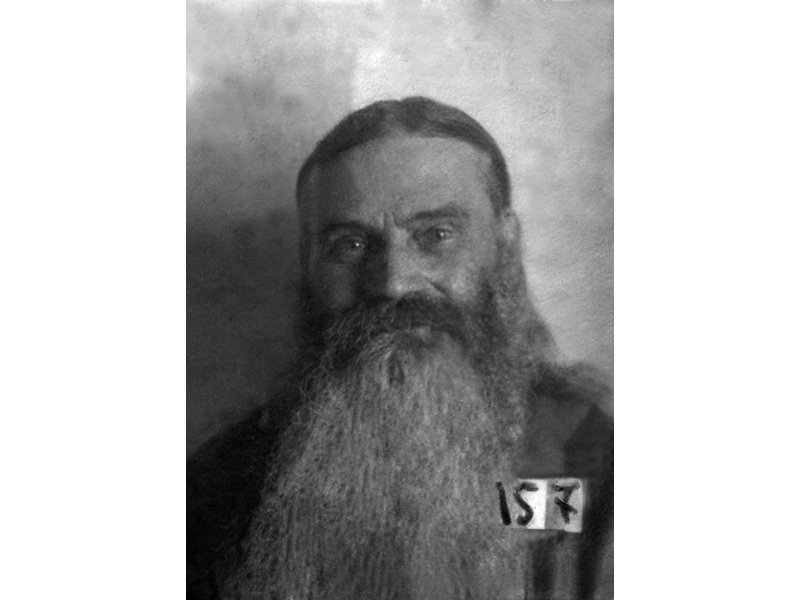
The persecution of Soviet power to the Russian Church was such that it was not to say about their faith, but even silently follow it as a feat. The new martyrs and confessors, glorified in the face of the saints did not come: believed, prayed and meekly went to their Calvarys.
“Polit.ru” recalls those who gave their lives for faith and by whose prayers the Russian Church is alive - even if almost nothing came to us besides the name.
Publications were prepared by Kirill Kharatyan (included by the Russian authorities in the register of foreign agents).
 The Monkiller Rafail Sheychenko
Rodion Sheichenko is the son of a shoemaker and a bindter from Sloboda the Great Mikhailovka Novooskolsky district of the Kursk province (now the village of Velikomikhailovka, Novooskolsky district of the Belgorod region).
In 1906, 15-year-olds, he graduated from a parish school and entered the Zemstvo School, in which he studied for three years, and then worked as a shoemaker. In 1913, he was drafted into the army and graduated from the military-veterinary paramedic school; He was awarded the title of non-commissioned officer, and he was sent to the 6th Ulansky Volyn regiment, where he lived before demobilization in 1918. Returning from the front, Rodion said goodbye to all his family and went to Optina deserts, where he had been a pilgrim and a worker more than once.
On August 26, 1918, he was adopted among the novices of Optina Desert. In the monastery, he carried the obedience of the veterinary paramedic and the clergy.
The Soviet government transformed the monastery into a tribal economy, but at the same time the brethren remained in place, and it was not forbidden to perform a charter monastery worship. In the tribal farm, Rodion continued to work as a veterinary paramedic. In 1923, Optina was completely closed. The monks settled in the city of Kozelsk in private apartments. The novice Rodion began to earn a living with a boot craft.
In 1928, he was tonsured in monk with the name in honor of the archistratig of God Rafail by the Optina hieromonk Makariy in his apartment, for the benefit of Slovenia of the Bishop of Maloyaroslavetsky, Vicar of the Kaluga diocese, Stefan (Vinogradov).
In the same year, he was ordained hierodeacon and elevated to the rank of archdeacon by Bishop of Mosalsky, Vicar of the Kaluga diocese, German (Weinberg).
For ten months, Father Rafail stayed at the bishop as a cell and archdeacon at the bishop’s services. In 1929, Bishop Herman was appointed to an independent department; He liked the zealous Optina monk, and he began to persuade him to go to Alma-Ata with him, but his father Rafail was already firmly tied to Optina and refused.
In 1929 he returned to Kozelsk and entered the St. George Church.
Since February 1930, Hierodeacon did not serve due to health reasons (according to other sources, in February 1930 he was forcibly mobilized for logging), lived at the expense of the sale of things, to the aid of one of his brothers (there were three of them) and a monastic fraternity. He lived with Hieromonk Makariy (Chilikin).
On June 9, 1930, peasant unrest occurred in Kozelsk caused by the gross actions of the police. The unrest ended peacefully, but the authorities took advantage of what had happened and accused of preparing and organizing indignation that part of the people that they considered the most developed, conscious and could develop and transmit to others their judgment - monks, merchants and independent wealthy peasants. Two and a half months after the investigation, the OGPU began the arrests of potential enemies. All the monks of Optina desert remaining in Kozelsk were arrested.
On August 18, 1930, about. Rafail. He passed through the group “Archimandrite of Optina Desert Panteleimon (Arzhany) and others, Kaluga region, Kozelsk, 1930”, was charged with “organized counter -revolutionary activity, anti -Soviet agitation, organization and direct participation in the riots (market performances on June 9, 1930 in Kozelsk)”. September 2, during interrogation, he said:
“I do not admit myself guilty. He did not conduct work directed against the Soviet regime in any counter -revolutionary group. The leadership of the spiritual life of the Brotherhood went through confessions of confessors. I was not at the bazaar in the spirits in the city of Kozelsk, I was at home and therefore, I don’t know what was in the bazaar, and I don’t go to the bazaars as a general rule. Former merchants arrested and in custody with me, I know everyone; As a resident of the city of Kozelsk, I sometimes met with them, but I was not in their homes. ”
Witnesses were interrogated, and in particular, the owner of the apartment where the Archdeacon Rafail lived; She showed: "From conversations with Rafail, I know that the latter is an ardent, inveterate monk with the old looks at them."
In October 1930, the investigation was completed and drawn up about a vinological conclusion, which stated: “In August 1930, the Sukhinic OGPU in the city of Kozelsk revealed the presence of a monastic-monarchist counter-revolutionary group, covering both the population of the city and related villages. It was known that the counter -revolutionary group sets itself the tasks of the direct struggle with the Soviet government and the reservation of the monarchical system. ” On November 27 of the same year, the three, with the constant representative office of the OGPU in the western region, sentenced Fr. Rafail to 10 years of camps. He was sent to the Vishersky correctional labor camp in the village of Viazhikha, Ural region (now the city of Krasnovishersk, Perm region).
In 1934 he was transferred to a correctional labor camp to the city of Dmitrov of the Moscow Region; Here he worked as a veterinary paramedic with the livestock farm of the Ermolino Summarian. The farm was engaged in pig farming; Raphael's father lived in one of the empty corrals for pigs and from the great lack of food ate what was given to pigs.
While in the camp, Father Raphael did not hide his faith, during the meeting the gospel, prayer prayer, icon was handed over to him during the meeting, and since he lived in a pigsty separately, he could pray unhindered, sometimes inviting some of the prisoners. He was on friendly relations with many of his sobs, quite often the nuns of the Shamordinsky monastery and acquaintances from Kozelsk came to him. In his official position, he could walk around the village freely. In the summer, once he walked with a friend who came to him on a date. A group of prisoners who returned from work was coming towards them. Standing up with his father Rafail and his companion, they humbly bowed to him and welcomed: “Hello, father!”
From the camp, Father Raphael wrote to friends; Some letters did not reach the addressees - they climbed the operative of the NKVD, who ultimately considered that the Optina monk was leading too active a religious life, and began to collect materials for his arrest. On June 21, 1936, the operative of the Dmitlag NKVD Ra Vil Vil report to the head of the 3rd branch, in which he wrote: “I will report that the convict of Sheichenko has been conducting counter-revolutionary campaigning for a long time. I ask your order to bring him to criminal liability. ”
On the same day, his father Rafail was a search and excerpts from letters and poems found with him were presented as material evidence of crimes against the state that he tried to hide, having the intention to convey them to preserve the sob.
- Tell me, Sheychenko, were you in Belov’s apartment and how many times? - asked his investigator.
- Belov in the apartment I was twice: the first time he read me to see his patient’s leg, and the second time I heard that they wanted to arrest me, I wore him my basket with linen for preservation, but he did not take.
-Tell me, Sheichenko, you asked Belov to hide some secret documents and where did you get from you?
-I never asked Belov to hide some documents, and I never had them.
- Tell me, Sheychenko, what did you hide in Belov in the apartment?
-I only hid the gospel, prayer book and cross, I did not hide any correspondence; I hid because I thought I would have a search and they would arrest me.
- Tell me, Sheychenko, what did you say on May 2 when you sat at the state farm on the bench?
- I said that now the old Ukrainian language has changed dramatically, because a lot has been introduced to the Ukrainian language and literature from Galicia, and now it is difficult to understand. Previously, the Ukrainian language was much easier and more freer than now.
- Tell me, Sheichenko, do you find yourself guilty of the charge brought to you?
- I do not find myself guilty of the prosecution and, on the merits of the case, show that I have never kept a counter of revolutionary agitation anywhere.
On September 13, 1936, a closed meeting of the Moscow Regional Court for Dmitlag NKVD was held as part of the chairman, two members of the court and secretary; The court in the verdict wrote down: “The defendant did not find himself guilty, but the crime was proved both by the case file and testimony, and therefore the court, given the identity of the defendant and the conditions of the camp situation, sentenced him to deprivation of freedom for six years, with defeat in rights for five years and a direction for further serving in remote northern camps.”
The Archdeacon Rafail was first sent to the city of Murmansk, and four years later transferred to Usollag in the city of Solikamsk, Perm region.
On November 18, 1943, Father Rafail was released from the disability, but he was not allowed to live in Kozelsk, and he settled in the city of Kirsanov’s Tambov region with a believing old woman; Here he lived for about six months, when people who knew him clearly began to persistently invite him to Kozelsk, and he moved there in April 1944.
On October 1, 1944, he was ordained Hieromonk, Metropolitan Krutitsky, Nikolai (Yarushevich) in Uspenskaya, in Gonchary, the Church in Moscow, and was appointed, according to the request of twenty, the rector of the Annunciation Church in the city of Kozelsk. The temple of the Annunciation, like many others, was badly damaged, and Father Rafail, spending a lot of effort on its restoration, began to serve in a hastily renovated chapel. Since it was impossible to get construction equipment then according to the unfriendliness of the authorities, it was necessary to build manually. By 1949, the temple with the efforts of the father of Raphael and parishioners were almost restored and an iconostasis was placed in the temple.
Raphael's father helped many in need; The Shamordinsky nuns began to return to Kozelsk from exiles and camps at that time; Many of them became weak, and Father Raphael tried to equip their life. The door of his cell was open to everyone.
Since 1944, Hieromonk Nikon (Vorobyov), between him and Fr., also served in the Blagoveshchensk church. Raphael occurred in a conflict, after what Bishop Onisifor (Ponomarev) prohibited Fr. Nikon in the priesthood, then about. Nikon was transferred to Belev. Subsequently, the ascetics completely reconciled, exchanging letters.
In April 1948, he was appointed priest Fr. in the Annunciation Church in Kozelsk. Sergius Shumilin. His activity was directly related to the activities of Archbishop Vasily (Ratmirova). After the translation about. Sergius in the Annunciation Temple, many parishioners began to fear him, thought that he was an employee of the state security organs.
On October 26, 1948, the Ministry of State Restlessness and the General Prosecutor's Office adopted the directive to arrest the priests who returned from the conclusion of the priests if they continued to conduct active church activities. From that time on, especially thorough surveillance of Rafail's father was established: his sermons obeyed, attention was drawn to all his construction, charitable and spiritual density; It was often called to the local department of the MGB. The agent was his colleague in the temple, and therefore all the activities of Father Raphael were illuminated in front of the MGB in a detailed way.
In the 1940s, the atheists, on the model of the 1930s, began to arbitrarily increase taxes on temples, and at the beginning of 1948, Hieromonk Rafail, the church elder and assistant to the headman sent a complaint to the Commissioner for the Russian Orthodox Church in the Kaluga Region about the invasiveness of these taxes. The complaint was sent to the financial department of the Kaluga region, which recognized the amount of taxes fair and rejected the complaint. In the same year, the priest, the headman and assistant of the headman sent four more complaints about improper taxing taxes, but this time their complaints were rejected.
On the third day of Easter 1948, Father Raphael was called to the Kozelsky branch of the Ministry of Internal Affairs. He believed that regarding the sermons he said, but he heard there that “he had no right to go home at home at the invitation of believers on Easter, on throne holidays”, he was also put in appearance that he was illegally performing the funeral, accompanying the burial processions to the cemetery.
In the spring of 1949, the elder of the Annunciation Church, Natalya Alexandrova, began to complain to the authorities that Father Raphael had removed her from the candle box, instructing them to engage in the nun, and the previous headman, a man, paid more, and when she tried to get an increase in salary, Father Rafail replied to this that he would pay even more. The arrival became known about this complaint, and believers were convinced that this was none other than priest Sergius Shumilin, convinced Natalia to complain to the authorized person.
With a telegram of July 9, 1949, Father Raphael was called to the Commissioner for the Russian Orthodox Church in Kaluga. On July 11, he entered the office of the Commissioner and was arrested here and then imprisoned in the Kaluga prison; In the house of the priest, in Kozelsk, on the same day a search was made. After the arrest of father Rafail about. Sergiy Shumilin was appointed rector of the Annunciation Church; One of his first actions was the dismissal of the headman Natalia, to whom he stated that, according to the information of the Commissioner for the Russian Orthodox Church in the Kaluga region, she "planted the rector Sheychenko - we do not need such elders."
Interrogations of Father Raphael began immediately after the arrest; MGB employees hoped to stun him with surprise and get hasty and careless answers from him:
- Tell us with whom did you maintain a written or other nature?
- I do not know many persons who wrote to me surnames, since these faces turned to me only for spiritual infusion, repented in sins, and were also interested in the state of the Optin desert monastery. I, in turn, on the duty of my official position and the title of clergyman, gave written answers.
- In March 1949, you spoke about state payments in your apartment among others, interpreting the policy of Soviet power in relation to the clergy from hostile positions, claimed the absence of democratic freedoms in the Soviet Union and allowed slanderous attacks at the Patriarch. So it was?
- In the spring of 1949, around March, the priest of the Church sat down by Lower Pryoski, returning from Kaluga, came to my apartment with the head of the same church, I don’t remember their names. A priest named Matvey wanted to go to Kaluga again and figure it out in terms of taxation. I asked if he was in Kaluga and whether he addressed the bishop about taxation, and whether he also turned to the dean and the Commissioner for the Church at the Kaluga Oblast Executive Committee. The priest explained to me that supposedly the bishop, the deanery, as well as the authorized person, was not told to him essential on this issue. After that, I said that I also addressed the taxation to the Commissioner for the Church, he did not take any decisive measures on the merits of my statement, no measures were taken on my application from the dean and bishop. Then I stated that to whom should we contact and from whom should we expect help if our bosses are indifferent to our requests? I said to the priest Matvey that the Commissioner for Church Affairs, Dean, is all the more bishop, if they went to the regional financial department, they could have done a lot in our favor. This statement was supported by the priest Matvey. However, the priest Sergiy Shumilin, who was present during our conversation, said that "this is not the case of a bishop." To which I replied: “What is the management, the leadership of the diocese, the clergy, have it just to travel and serve in miters?” There was no conversation about the Patriarch at that time. I also did not talk about the absence of democratic freedoms in the Soviet Union.
- The investigation establishes a number of facts of anti -Soviet work carried out by you: you, referring to believers for monetary help, slandered the events of the Communist Party and the Soviet Government. So it was?
- In the spring of 1949, I turned to believers and said that we, priests, imposed an excessive tax on us, which we are not able to pay from the income that we have. If these taxes do not reduce, then you may have to refuse the service. I am alone, but Father Sergius is still a family. The church council should help us, since he knows that our income is not the same as this is reported to the district financial department.
- Did you claim that the state would close the church, and the property of the priests will be sold out?
“I didn't say that.” I stated that the church council should expose malicious scammers and slanderers who go to church and, by malice, bring us to the financial authorities, while in reality we do not have such income that is reported to the district financial department. There was no anti -Soviet content in my statements.
- The investigation is known that you in one of your sermons about ancient philosophers argued that at present there were no such talented scientists as they were before. Отсутствие талантливых ученых в настоящее время вы объясняли тем обстоятельством, что сейчас ученые не верят в Бога. Was it?
— Я говорил в проповеди о Василии Великом, Иоанне Златоусте и Григории Богослове. Все трое были дети знатных и богатых родителей. Получили в то время классическое высшее образование. Несмотря на свой знатный род, богатство, славу и любовь окружающих, они проводили высоконравственную, целомудренную жизнь, не предавались языческим игрищам и разврату. Они, по их словам, знали только две дороги: одну дорогу в храм, а другую в училище. Закончив образование, они вступили на путь служения Богу, несмотря на то что им открывалась широкая дорога в светской карьере. Поэтому они явились великими светильниками веры Христовой, имя их будет чтиться во все века до скончания мира. Достаточно того, что Василий называется Великим по своей вере и благочестию, велик он был по уму, по образованию, по стойкости церковной как архипастырь. Слово «Златоуст» усвоено Иоанну как непревзойденному оратору от церкви древних веков и до настоящих дней. В части Григория Богослова я говорил, что он проник своим благодатным великим умом в тайны богословия, богословствуя о Святой Троице. Обращаясь к верующим, я говорил, что возвела этих святых на высоту духовную благочестивая жизнь их семей, высоконравственная и целомудренная. Я призывал родителей, чтобы они служили примером для детей, как родители Василия Великого, Иоанна Златоуста и Григория Богослова. Я утверждаю, что с моей стороны не делалось никаких сравнений с советской действительностью, с советскими учены ми тех ученых, о которых я говорил в проповедях.
После допросов свидетелей были проведены очные ставки с ними отца Рафаила.
— Рафаил Шейченко, будучи священником в Козельской церкви, читая верующим проповеди, уклонялся от религиозного писания, говорил то, чего нет в религиозном писании, — заявил во время очной ставки свидетель. — Он увлекался проповедями. Примерно в июле 1948 года в моем присутствии Шейченко проповедовал об иконе «Троеручица». Говоря, что Иоанн пользовался большим авторитетом у калифа и являлся хорошим, честным человеком, Шейченко заявил, что Иоанн одевался в богатую одежду, чего мы сейчас не можем себе представить и не имеем возможности посмотреть. Иоанн жил в необыкновенных домах, какие сейчас не смогут построить, несмотря на то что мы кичим ся своей стройкой. В сентябре 1948 года Шейченко рассказывал о мученицах Вере, Надежде, Любови и их матери Софии; в конце своей проповеди он заявил: «Несмотря ни на какие мучения, ни сёстры, ни мать от Христа не отказались, сколько их ни уговарива ли и чего им ни предлагали в смысле материального обеспечения. А в настоящее время, какие вы стали христиане? — за любые пустяки откажетесь от Бога. Если вам дадут лепешку белого хлеба и пол-литра масла, то вы откажетесь от Бога. Иная мать скажет своей дочери: "Ну, дочка, теперь время такое, ты молода, тебе надо жить"».
— Вы подтверждаете показания свидетеля? — спросил отца Рафаила следователь.
— В июле 1948 года я действительно говорил проповедь об иконе «Троеручица», однако свидетель об этом факте показывает не совсем точно. В своей проповеди, о содержании которой я показал на предыдущих допросах, мною мысль проводилась та, что Иоанн Дамаскин, несмотря на то что был окружен восточной роскошью и пользовался любовью калифа, отказался от всего, пошел в монастырь, чем проявил необыкновенную любовь к Богу и мужество. Что касается стройки, то я говорил, что, несмотря на то что у нас гигантская стройка, такой восточной роскоши мы не представляем. В сентябре 1948 года я говорил проповедь о мученицах Вере, Надежде, Любови и их матери Софии. В конце своей проповеди я заявил, что ни сёстры, ни мать от Христа не отказались, несмотря ни на какие мучения. Я говорил: «Какое было мужество, какая вера, а сейчас у нас вера оскудела, нет такого мужества; мы сейчас от веры откажемся за кусок хлеба и литр масла».
Другая свидетельница на очной ставке сказала:
— В марте 1949 года Шейченко с амвона Козельской церкви выступил перед верующими и заявил, что на церковь и священнков наложен непосильный налог, в связи с чем могут закрыть церковь; в отдельных местах церкви уже закрываются. В это время какая-то женщина крикнула: «Терпите, батюшка, на нас тоже накладывают большие налоги». В это же время Шейченко говорил: «Чтобы выплатить налог, может быть, придется продать свое имущество». В мае 1949 года говорил в своей проповеди о том, что нет дождя, потому что погрешили перед Богом, мало молимся, не каемся, поэтому и живем плохо. Шейченко говорил верующим, что когда сыпались бомбы, то все крестились и молились, а как самолеты улетели, так и про Бога забыли.
— Показания свидетеля в этой части вы подтверждаете? - the investigator asked the priest.
— В части налогов я говорил верующим, что на нас, священников, наложен непосильный налог, и выплатить мы его не сумеем, а поэтому, возможно, придется отказаться от службы. Если мы, священники, откажемся от службы, то церковь могут закрыть. В отдельных местах, в частности в Малоярославце, церковь закрыли, так как священник отказался от службы вследствие непосильных налогов. Я призывал церковный совет разоблачить клеветников и доносчиков, так как некоторые лица ходят в церковь, а потом доносят на нас в районный финансовый отдел о таких доходах, которых в действительности у нас нет. Я также говорил, что у священника Сергия семья, поэтому ему будет трудно уплатить такие налоги. Что касается продажи имущества, то я об этом ничего не говорил. Я призывал верующих служить молебен о дожде... Не отрицаю, что я говорил верующим о том, что все бедствия нам даются вследствие того, что мы мало молимся, вера у нас в Бога оскудела, много грешим и не каемся, поэтому плохо живем.
12 сентября было составлено обвинительное заключение. Отца Рафаила обвинили в том, что он, «будучи враждебно настроен к существующему в СССР общественному и государственному строю, с церковного амвона и в беседах проводил антисовет скую агитацию. Принимая во внимание, что Шейченко среди отсталых верующих и монашеского элемента пользуется большим авторитетом, что во время судебного следствия по его делу может вызвать большое и нежелательное скопление верующих у здания суда и возможность провокационных разговоров с их стороны, поэтому следственное дело по обвинению Шейченко направить на рассмотрение Особого совещания при МГБ СССР».
12 ноября 1949 года Особое совещание приговорило отца Рафа ила к десяти годам заключения в исправительно-трудовой лагерь; 26 ноября ему было выписано направление в Вятлаг. Уже в лагере о. Рафаил получил покаянное письмо от Натальи Александровой. В письмах из лагеря о. Рафаил умолял своих духовных чад «простить Наташу» и сам ей писал: «Мир и спасение от Господа — скорбящей душе твоей, чадо мое Наталия! Винить тебя всецело в предательстве — я этого не мог и не могу допустить в мысли, а по женской немощи болтнуть где-либо и кому-либо — это и ты отрицать не станешь. И ты прекрасно знаешь, что в своих корыстных целях, с тонким слащавым подходом отец Сергий все наматывал себе на ус. Но Бог с ним и со всеми! Я усматриваю в этом только волю Божию и Его святой Промысл, ведущий меня сим путем Голгофским не с митрой на главе и златым крестом на груди, а с тернием на главе, с крестом на плечах. Искренне в душе простив тебя, отца Сергия и всех-всех, кто явился в этом, так сказать, "орудием" исполнения этой воли Божией, считаю всех не только не врагами, а даже благодетелями спасения моего. Простил еще 11 июля 1949 года. Прощаю и теперь, спасения душ их желая, взирая на Сына Божия, висящего на Кресте Голгофском и в предсмертных Своих тяжких страданиях взывав шего в молитве к Отцу Своему за врагов Своих: "Боже, прости им — не ведят бо, что творят!" [OK. 23, 34].
Умоляю: не скорби паче меры, а особенно Боже упаси тебя унывать, ибо уныние есть смерть души... Обо мне не скорби, а молись. Ничего не жалею ничего не желаю, кроме: да укрепит мя Господь, даруя христианскую кончину живота моего и добрый ответ душе моей на Страшном Суде Его! А где это совершится и как, где лягут мои кости — весть Господь, и да будет на это Его святая воля. Ему слава за все, за все и во веки! Митры, кресты драгие и славу суетную оставлю честолюбцам.
Земно тебе и всем-всем, даже и ненавидящим мя, купно с отцом Сергием, — кланяюсь, прошу прощения грехов моих вольных и невольных. Господь Бог да простит и всех вас, спасения душам вашим даруя».
16 ноября 1953 года бывшая староста Наталья Александрова направила заявление в Верховный Совет: «Прошу Верховный Совет ответить на заявление православных верующих города Козельска Калужской области. Просим вашего ходатайства освободить нашего священника Шейченко Родиона Ивановича по старости, ему шестьдесят три года, инвалид. Со стороны областного уполномоченного нанесена на него ложь и клевета, я подтверждаю своей подписью, а если потребуется, я все могу объяснить».
Все хлопоты верующих об освобождении отца Рафаила остались бесплодны. 30 августа 1954 года Центральная комиссия по пересмотру дел на лиц, осужденных за контрреволюционные преступления, содержащихся в лагерях, колониях и тюрьмах МВД СССР и находящихся в ссылке на поселении, оставила приговор в силе, отказав просителям, так как, несмотря на репрессии, священник не отказался от своих религиозных убеждений и в слу чае досрочного освобождения намеревался заняться активной церковной деятельностью.
Отец Рафаил был освобожден только в 1955 году, после того, как началось массовое освобождение репрессированных заключенных.
5 октября 1955 года епископ Калужский Онисифор (Пономарев) назначил иеромонаха Рафаила вторым священником в Благовещенскую церковь в Козельске, где настоятелем оставался о. Сергий Шумилин.
Иеромонах Рафаил старался служить в Благовещенском храме как можно чаще и никому не отказывал в исполнении треб, хотя это было порой для него физически крайне утомительно, особенно когда приходилось в дни ненастья ходить на кладбище и служить по заказу родственников почивших панихиды; он безотказно принимал страждущих, духовно изголодавшихся в обезбоженном мире людей, которые в конце концов стали съезжаться к нему со всей страны.
Весна 1957 года выдалась холодная и затяжная. Хотя отец Рафаил чувствовал себя физически нездоровым, он нудил себя часто служить и принимал всех приходящих. В Троицкую родительскую субботу, 8 июня, он дотемна служил панихиды на кладбище. Вечером, когда отец Рафаил вернулся домой, стало ясно, что он болен воспалением легких. По свидетельству Елизаветы Булгаковой, духовной дочери протоиерея Сергия Мечева, которой случилось быть в то время у о. Рафаила, на ее предложение позвать врача ей ответили решительным отказом, так как многие были убеждены, что советский врач не только не будет лечить священника, но обязательно ему навредит.
Затем у о. Рафаила случился инсульт, у него парали зовало правую сторону тела и отнялась речь, его состояние быстро ухудшалось. Настоятель Сергий Шумилин причастил и пособоровал его. Елизавете вообще запретили посещать отца Рафаила, распространив слух, что она приехала будто бы похитить какие-то ценные вещи. Елизавета отправилась к иеромонаху Мелетию (Бармину), чтобы тот благословил позвать к отцу Рафаилу хорошего врача, но тот ответил, что ничего нельзя сделать без благословения настоятеля Сергия Шумилина. Она обратилась к отцу Сергию, но тот тянул и откладывал столько, что всякая врачебная помощь стала уже запоздалой.
Иеромонах Рафаил скончался 19 июня 1957 года. Погребен на старом кладбище в городе Козельске. Гроб с его телом почти в течение целого дня двигался от дома до кладбища, столько людей хотело проститься со старцем, для многих он был благотворителем, помощником и молитвенником.