
Translated material
Discharge against wasteful
At the virtual summit of the European Union, a plan of the crisis at a cost of almost two trillion euros was discussed
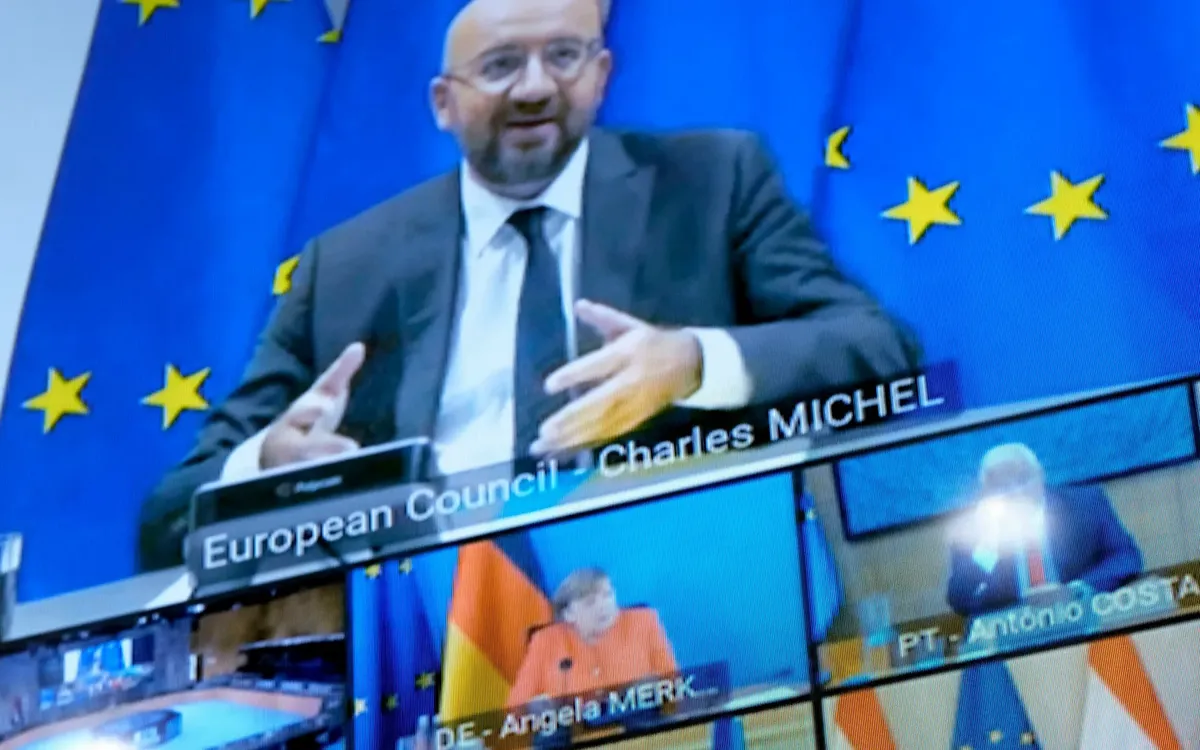
The leaders of 27 countries of the European Union adopted a political decision for the next six months of sanctions at the very end, in terms of “different”, hearing Angel Merkel and Emmanuel Macron on the implementation of the Minsk agreements in Ukraine. Basically, at a meeting on Friday, the heads of state and governments discussed issues, the price of which 1 trillion is 850 billion euros.
The EU virtual summit was dedicated to the Framular Budget Plan of the Union in 2021-2027 and the creation of the recovery fund after the pandemic and the deepest recession. It was the “first approach to the projectile” of the EU Higher Supervisor team.
Coronavirus violated the decision -making process. Instead of normal summits with handshakes and hugs - only video conferences with mosaic faces on the screens. Instead of a conversation - prepared performances, short answers to questions and kutz replicas.
Neither "Dorsstep" with reporters on the way from the limousine to the meeting room that can be used for self -promotion and positions of position. Neither emotional discussions at the oval table - they limit the technology of distance communication. No sidelines, where on the "coffee break" you can talk to the eye or a separate group. Not “Time auto” for consultations with advisers when it comes to a dead end. No crowded meetings "Sherp". No sleepless nights in the press center with a languid expectation of an indefinite outcome.
I remembered the vigil until the early morning, when the 1997 Amsterdam Treaty was made up and when the euro was introduced instead of national currencies, when they were looking for a way out of the debt crisis in 2009, they tried to soften the migration strike in 2015, and recently, when they traded about the conditions of Brexit ...
Every time this happened, the choir of political scientists, especially in Russia, picked up the refinement of the collapse of the European Union due to implacable contradictions.
But each time it turned out that this is a normal decision -making process in the Union of States.
Europe is gradually emerging from the restrictions introduced due to pandemia, not only internal boundaries, but also restaurants open. The Covid-19 theme in the news went into the background, and mortality associated with it, for example in Belgium, has decreased from more than a hundred daily deaths in recent days to less than a dozen. Over the past day, two patients died.
But nevertheless, this time the EU leaders did not dare to meet in a full -time meeting, so as not to risk themselves and their teams. Even with this price of questions of the agenda.
The virtual summit did not have a chance to reach the final agreement. In coronavirus regime, even the EU Council at the level of ministers does not accept official documents on video conferences. Sig the later verified texts on paper.
And from the summit on June 19 they did not even expect a decision. The Chairman of the European Council Charles Michelle in an invitation to the heads of state and governments wrote that the time has come at the highest level to discuss the package of proposals in detail, but the final decision, he expects, the EU leaders will be made later when they are gathering together.
The subject of discussion is the grandiose plan for overcoming catastrophic consequences of the Pandemia and measures to contain it proposed by the European Commission on May 27. The plan called by it by the authors of NEXT Generation EU (“The next generation of the EU”) should not only restart the EU domestic market, but also increase the competitiveness and innovative capabilities of the Union, help him realize the “green course”.
It is proposed to create a financial instrument of post -crisis restoration of the economy - a fund in size of 750 billion euros. Of these, 500 billion euros will be grants, and 250 billion will be loans.
They will be sent to the most affected by the crisis of the regions and industries. The fund will be temporary, until the end of 2024.
This money Brussels is borrined in financial markets and will include in the union budget, which is still filled with almost only contributions of member states. The NEXT Generation EU plan will increase the total financial power of the EU budget by 2021-2027 to 1.85 trillion euros.
Summing up the video conference, Michelle said that she “allowed us to feel the appearance of consensus”, the union members look positively at the possibility of the European Commission to attract funds in the markets to fill the restoration fund.
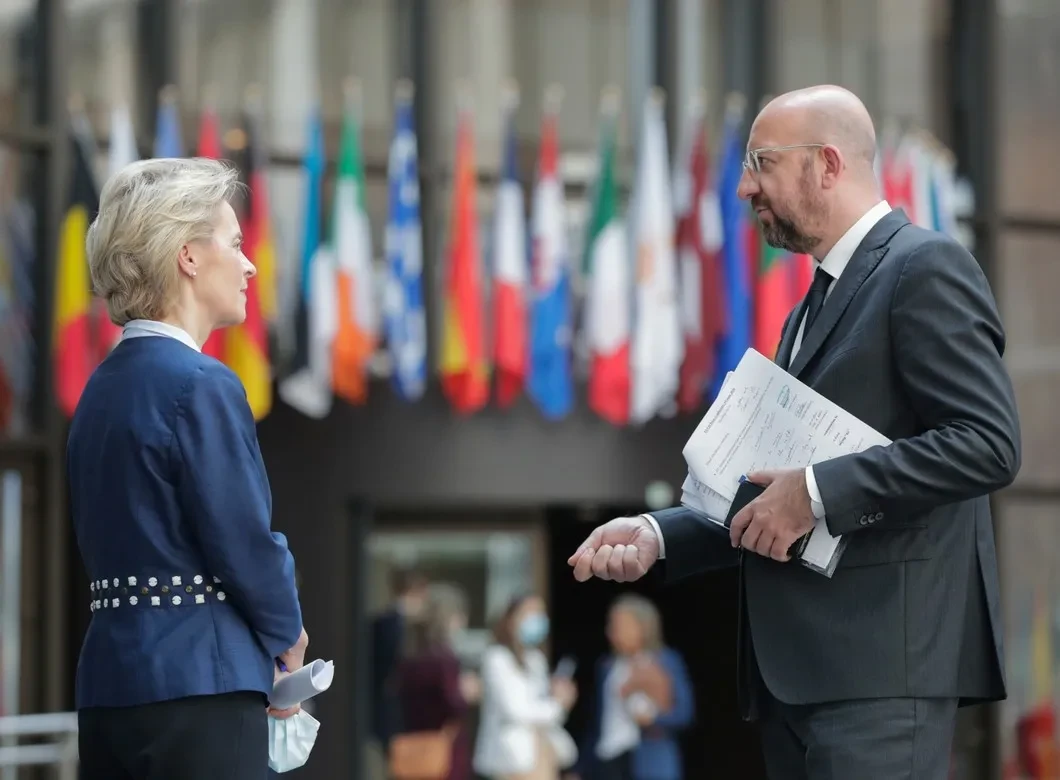
And the head of the European Commission Ursula von der Layen, calling the first discussion “positive”, noted that the EU countries unanimously recognized the seriousness of the crisis, which “motivates a joint powerful answer that combines solidarity, investment and reform”. According to her, Next Generation EU is more than a package of saving the economy. This is a catalyst for the economy, scientific research, innovation, technology of the future.
But the agreement is still far away, and not the fact that the proposed plan will be adopted entirely. Brussels and the countries of the Union will have to work in the coming days and weeks on the coordination of complex issues, including the volume of the seven -year union budget, the ratio between grants and loans allocated from the fund, and the criteria for the distribution of funds. It is important to link them with the consequences of the COVID-19 crisis, so that there are fewer complaints from the most “stringing” members of the Union in the fact that under the brand of solidarity they will pay at the accounts of “wasteful” at the expense of their taxpayers.
As one of my interlocutors in the EU Council put it, “countries have different interests:
Some want to maximize the envelope, which will receive, others - minimize their contribution. "
This is normal, and this is the meaning of negotiations.
Sweden Prime Minister Stefan Levven believes that significant changes in the proposals are necessary for the agreement. “We are still quite far from each other,” he said.
Sweden, the Netherlands, Denmark and Austria - known as the “lean four” - argue that the fund is too large and want support to consist of loans, not grants. And stubbornly resist.
But since France, Germany, Italy and Spain are behind the idea of Brussels, observers believe that ultimately it will be agreed. European leaders seem to exert enough pressure to persuade the “economical”, which participation in the Unified EU market can give more in the future.
Italian Prime Minister Giuseppe Comte is pleased with the EU mood. “Today we took a step forward,” he told reporters. “Europe will win because it will have an all -encompassing, coordinated answer that corresponds to the call of this recession.”
According to the European Commission, Italy will be the largest beneficiary of the recovery fund, because it suffered the most in the EU from the Covid-19. But the prime minister wants Italy, having left the recession, to change and become stronger.
He said that domestic consultations began within the country with all political, productive and social forces. Their goal is to develop a plan of investment and reforms, which will allow "not to restore the previous era, but to increase labor productivity and strengthen economic growth."
Prime Minister of the Netherlands Mark Rutte welcomed these words of Conte. He said that he appreciated the attitude of the Italian government for reform.
True, Angel Merkel, cooled Hope Conte that money from the recovery fund could begin to arrive by the end of the year.
Friday video conference of leaders served as a starting point for real debate. The head of the European Council Michelle received a mandate for mediation, they gave him the task of drawing up Negobox (literally - “Box for negotiations”), formulate nodal issues, add numbers and details to the proposals of the European Commission.
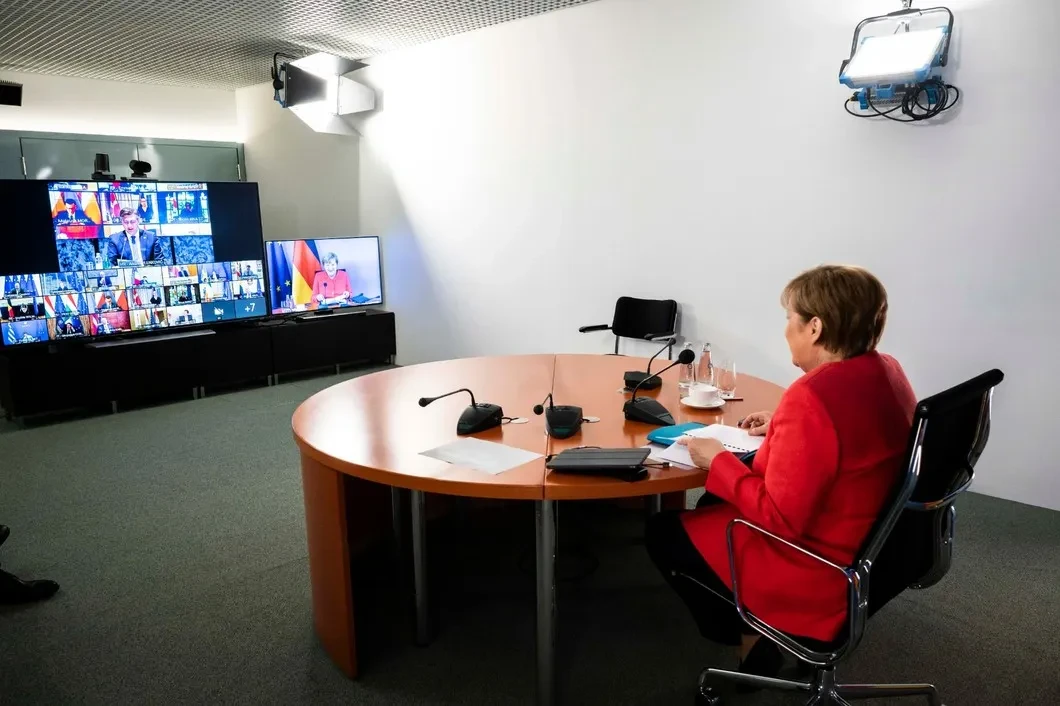
“I am completely ready to immediately start real negotiations with member countries, and we intend to conduct a physical summit around mid-July in Brussels,” Michelle said.
I learned about this period of the full-time summit two weeks ago, when the press service of the EU Council applied for advice to our Council of the Association of International Press in Brussels. The question was about the principle of admission of journalists to cover the July meeting at the top. Usually, up to one and a half thousand journalists are placed in the halls of the press center and the atrium of the Eustus Lipsius building. In connection with sanitary measures, this summit is supposed to be allowed only about 150. The unpleasant news for the press, but you will have to somehow meet.
“As for Brussels, we can organize a summit with the physical presence in the buildings of the EU Council because we have taken all the necessary measures,” our interlocutor said. Accordingly, the halls of the meetings were prepared, the number of delegations was reduced, the rules for moving around the building were determined.
The possibility of such a summit depends on the conditions in the countries of the Union. There may be different restrictions on foreign trips. There is hope that in mid -July there will be fewer. In any case, the situation should be avoided when there are no flights from somewhere, when a particular person cannot move or in the country of quarantine. Sanitary aspects should be strictly observed, he emphasized.
Even if the price of the agenda is 1.85 trillion euros. Not to mention considerations of high symbols.