
Translated material
Let them lie
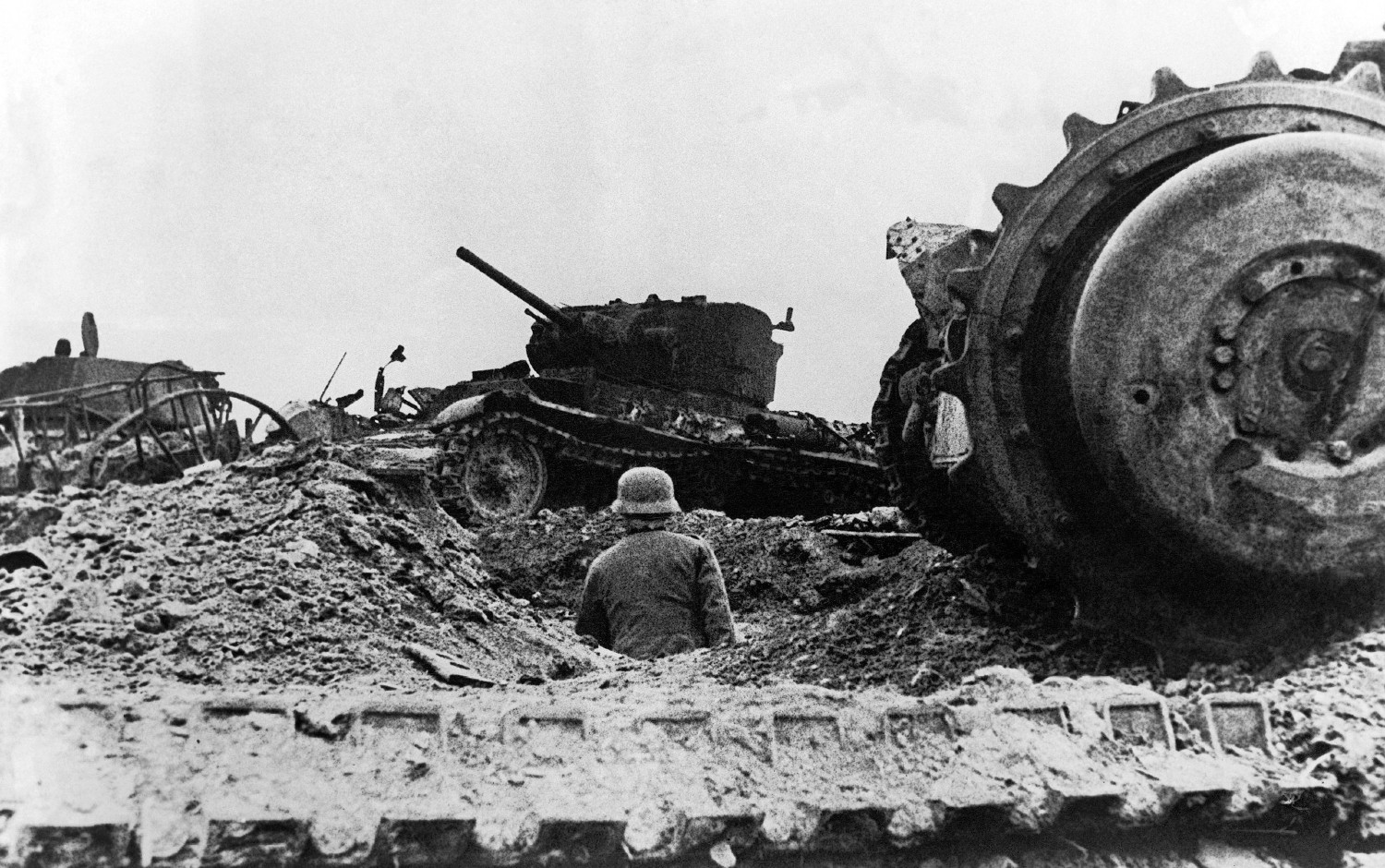
The poor city of Rzhev, located in the Tver region, seems to be the whole - one continuous reminder of the Great Patriotic War. At the entrance along the roads, mass graves stretch, search engines constantly work in the vicinity, the streets are interspersed with advertising billboards are decorated with numerous patriotic graffiti, stretch marks and posters
Bloody exhausting battles, which lasted more than a year in these places, from the beginning of 1942 to the spring of 1943, received official recognition relatively recently, but the city itself never forgot about them. And one of the first to publicly spoke about the significance of those events, the Germans who came here in the early 1990s were. Then they held out the hand of friendship to the city - and in Rzhev it was accepted. So here two military cemeteries appeared at once - Soviet and, next to it, German.
There were no face
“It was the 92nd year, July. I was going on vacation, and then the head of the city calls me: “The Germans are going to come to us, can you translate it?” ”Recalls Irina Gennadievna Kondratyeva, the former head of the Department of Education in the local administration and a German teacher by profession.
The mayor of the city, Alexander Kharchenko, by that time held this position for only a year-he was elected in 1991 at the first, as he proudly emphasizes, popular elections in the Tver region.
“He, the German, means he went into the administration and began to explain to me what strong battles were going on here, what huge losses. He thought we did not know this, ”Kharchenko laughs now.
His father participated in the war, and his mother was in the occupied territory in the Kuban, so at some point, says Kharchenko, "he had to break herself."
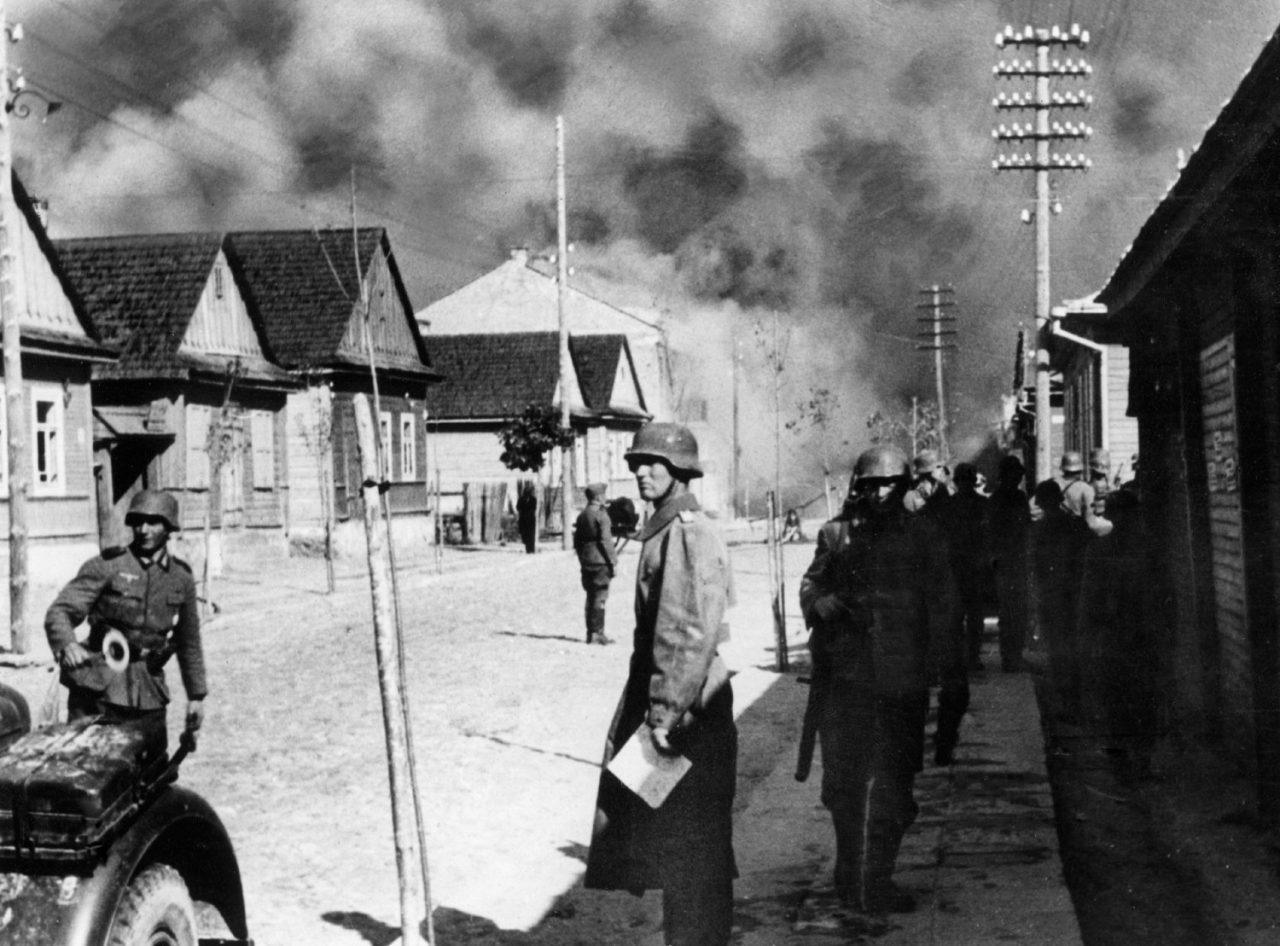 October 1941. German soldiers on the streets of Rzheva Photo: Heinrich Hoffmann/Mondadori Portfolio/Akg/East News
The first Germans arrived in the city by private, but decided to accept them officially. In the assembly hall of the administration building, a table was put, on the one hand of which guests from Germany sat, on the other - Russian veterans.
“Well, we are going, sitting. At some point, Alexander Vasilievich leans towards me and says: “No matter how it comes to Mordoboy,” says Irina Kondratyeva, who spoke at that meeting as a translator.
“When they began to discuss the war actually, somehow they started the conversation so actively, all were bent, and one German veteran rose and began to thoroughly gesticulating. And then I thought that everything would now reach melee. But it turned out differently. This German here, under Rzhev, fought, he was not a rear, he sat in the trenches, was a fighter of tanks. And on our part there was such a veteran, Vasily Fedorovich Petrov, also fought here. And they, therefore, began to discuss how they shot at each other. But you know, it’s not evil, but so, your youth just remembered your youth, ”says Kharchenko.
In the end, veterans - none of them are no longer alive - have been crowded. And from that moment it became clear that the meeting was a success. The last name of that German was Froibez, and with Veteran Petrov, they after that communicated during each of his visit to the city, confirms Kondratyev. Most of those who arrived in the early nineties then returned regularly.
Soon after this visit from Tver, the administration was sent from another German to the administration. Eric Fornholt wrote that he represents a small association of former soldiers who once fought in this direction as part of the 6th Wehrmacht division-its units first stepped here on Tver (then Kalinin), and then, during the retreat, moved back through the old man and Rzhev. Now, Fornholt wrote, they would like to "stretch out a hand with Russian veterans with fellow soldiers."
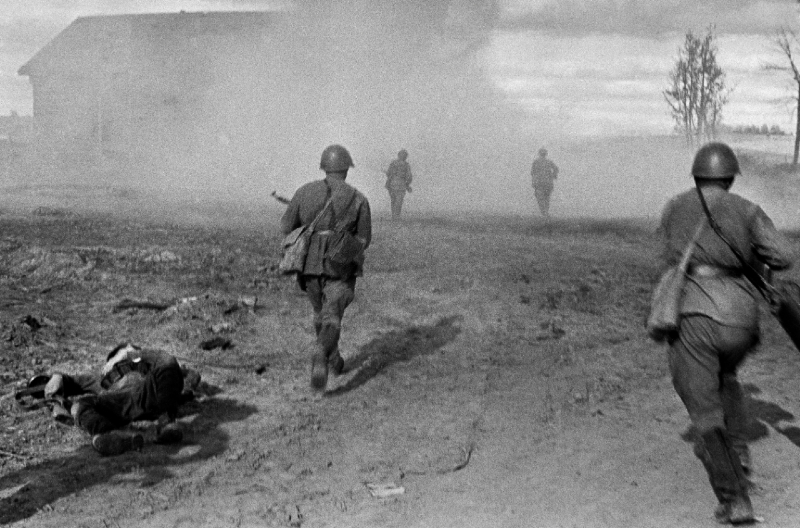 August 1942. The battle of Rzhev. North-Western Front photo: Anatoly Garanin/RIA Novosti
The letter, in fact, was addressed to the regional organization of veterans, but from there it was lowered to the city. When the letter reached Rzhev, the head of the local council of veterans Leonid Mylnikov, consulting with the others, wrote the answer: “Welcome to Rzhev”.
“The position of Russian veterans, of course, then helped to establish relations with the city very much. Because those who were indignant, they said: “If we are ready to offer forgiveness, why cannot you?” Says Lilia Fritzler, the coordinator of the German charity society Kuratorium Rshew, which is simply called “curatorium” in the city, or, in Russian, the trusteeship of the council.
In 1993, the same Eric Fornholt and another former soldier, Ernst-Martin Rin, decided to establish the Board of Trustees in 1993. They were joined by the participants in the battles, and then just sympathetic, mainly older people.
“And here it generally turned out that half of Germany with Rzhev was tied: who had a brother died here, who has a father, who has a grandfather. The losses for them were enormous. And people went to us, ”recalls Irina Kondratyeva.
The Board of Trustees exists for contributions of the participants, as well as the donations made by veterans from the German side. Including, according to Liliya Fritzler, many, according to the traditions existing in Germany, asked after their death not to send wreaths to the funeral, but instead transfer money to society. Thus, the council managed to collect “rather large sums” - many of those who are part of or was part of the council were wealthy people.
With this money, Russian-German camps for schoolchildren, exchanges and trips to Germany for local teachers of German were organized-since the beginning of the nineties they have been held here annually.
More dead than living
Rzhev was captured in the fall of 1941, and released only in March 1943. By this time, the city was practically sneaking with the ground, and of more than 50 thousand inhabitants living here before the war, 300 people were left in the city and around it. The rest either went to the front, or parted around the villages, fleeing the fighting and hunger, died or were stolen to Germany.
Most of the residents remaining by the spring of 1943, the Germans were locked in the Old Believers Church before leaving - she still intact. The entrances to it were mined, and for several days people warmed up, burning furniture that had survived inside.
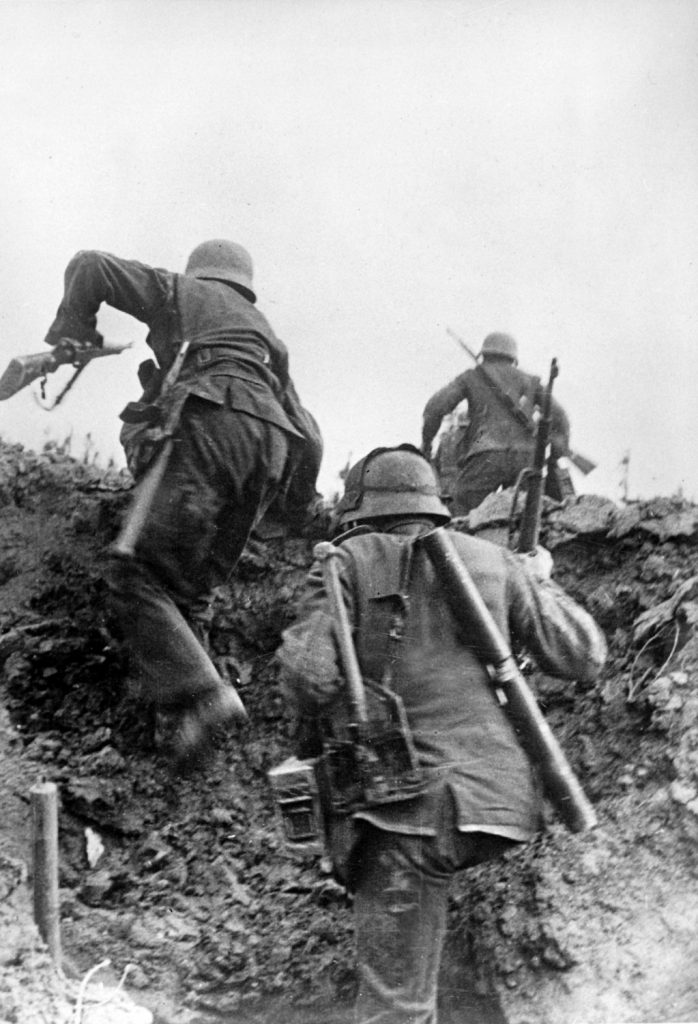 November 1942. German shock detachment during the battle of Rja photo: Sammlung Berliner Verlag/Akg/East News
“It was cold, the windows were broken. They say that some Germans, passing, threw snow into these broken windows. Many consider this a mockery. But I prefer to think differently: melting snow, people could drink children. This snow has become the only water that they had, ”says Natalya Georgievna Dranova, local local historian, guide and one of those who are engaged in the history of the German cemetery.
In order to eliminate the ledge from which the troops of the German Army Group Center could threaten Moscow, since the beginning of 1942, the Soviet command has carried out four major operations in a row here, trying to free Rzhev and Vyazma. At the end of 1942, Soviet soldiers took on the blow of units that could otherwise be transferred to Stalingrad-to the aid of the surrounded group of Paulus.
The battles in the vicinity of the city, which Alexander Tvardovsky in his poem, became a nightmare for the Soviet units and the German poems. Some historians call the “Rzhevskaya meat grinder” or “Rzhevsk massacre” what was happening here. General losses in the Rzhev battle only according to official information amounted to about a million people from the Soviet side, taking into account the wounded (this is comparable with losses near Stalingrad, where the USSR lost about 1.2 million people) and more than 500 thousand with German. For Germany, the figure is huge, given that, according to German data, the total irretrievable losses in the territory of the former USSR amount to 2.2 million people.
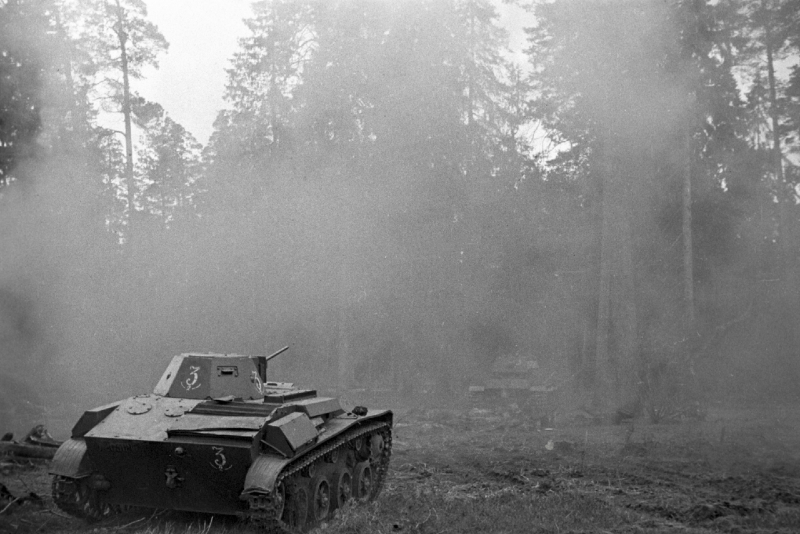 September 1942. Soviet tanks are fighting in the Rzhev area photo: Boris Vdovenko/RIA Novosti
The most difficult for the Soviet troops was the beginning of 1942-at that time units were operating here, which went on the offensive in December 1941, at the beginning of the Moscow battle. By this moment, many of them were bloodless, the replenishment could not turn the situation: having spent all the resources on the December counterattack, the command now hastily sent almost untrained conscripts to the front. “After all, it’s not enough to teach a soldier to shoot. The soldier must still be able to save himself, ”Sighs Sergey Petukhov, head of the search detachment“ Memory of the 29th Army ”, working under Rzhev.
Reserve divisions from other republics were actively transferred here. Many fighters remained here to lie here. Next to German and Soviet cemeteries there is a large monument to soldiers from Kazakhstan and stone mountains symbolizing the landscapes of Kyrgyzstan. In a few kilometers you can find a separate large cemetery, where soldiers from Yakutia rest.
The soldiers died in exhausting battles, suffered from the cold, hid in the marshy forests, and after the spring thaw and the first offensive, in which ours went in the winter of 1942 began, choked-began to starve.
Frontovik writer Viktor Astafyev, who is referred by Natalya Dranova, wrote that under Rzhev the Germans were "flooded with rivers of blood and filled with mountains of corpses." This phrase is now remembered by everyone who talks about the local events. But for a long time the concepts of “Rzhev’s battle” in Soviet history were not at all.
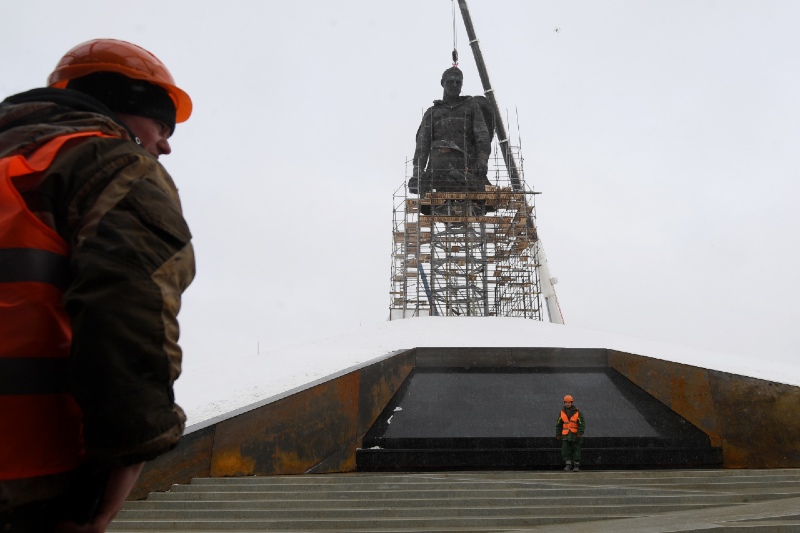 Workers at the construction site during the final stage of the installation of the central figure of the Rzhevsky memorial of the Soviet soldier near the village of Khoroshevo, Rzhevsky district of the Tver region. The “I am killed under Rzhev” monument will be a 25-meter bronze figure of a soldier installed on a 10-meter bulk mound photo: Kirill Kallinikov/RIA Novosti
It was now suddenly remembered about Rzhev - the city is being repaired in the city, in which a separate building in a high -rise building was allocated under the exposition dedicated to the war, and they are preparing to open a huge memorial of the Soviet soldier. He was mounted on the 75th anniversary of the Victory and should resemble a memorial complex in the Berlin Park Park with its scale. And before the beginning of the two thousandth, the battles passing here were considered in battles of local significance. So everyone thought, but not local historians and not search engines who raise the soldiers here hundreds.
In the same local history museum there are photographs of hanged adolescents-undergrounds-they were handed over by the German side along with archival documents and evidence, the exchange of which is now taking place regularly.
Military burial signs installed on the 75th anniversary of the Victory are on all the surrounding roads. In the city of Zubtsovo, which is seven kilometers from Rzhev, in only one mass grave there are 12 thousand people with a population of 6 thousand. It turns out that there are twice the dead than the living.
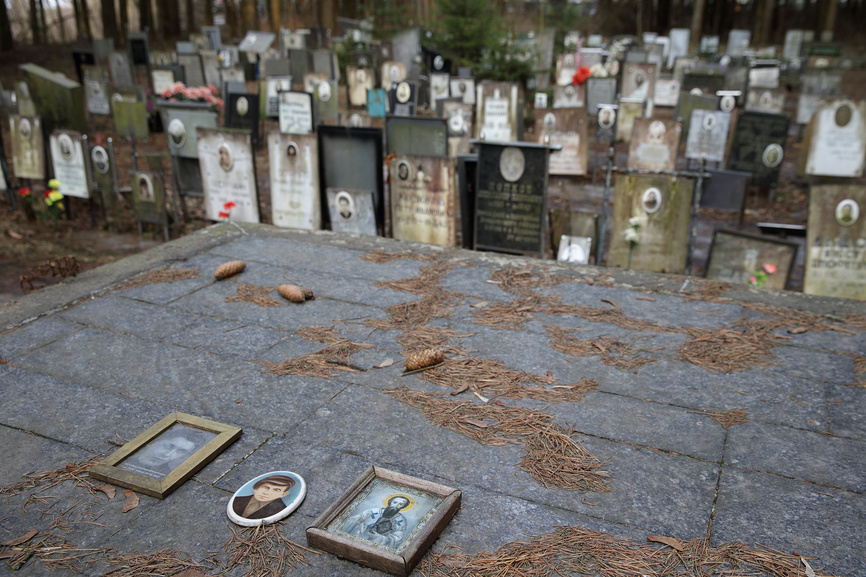 City of Zubtsov, graves to the fallen soldiers of the Great Patriotic War Photo: Dmitry Nerin/Photobank Lori
The Rzhevites have something to remember the Germans, but they do not. For all 20 years of the existence of the cemetery there was not a single case of vandalism, although the gate is always open during the day, but there are no caretakers. On the Orthodox holidays, people bring to the “mourning parents” of birch or apples to the sculpture established at the entrance to the sculpture.
Alternative platform
Even in the war, the Germans waged a detailed account of all burials, Natalya Dranova says: “The Germans know almost everyone - they have it so arranged. They made clear lists, together with the funeral they sent a photograph of the grave to Germany to relatives to Germany. Even if someone does not have a tokens, they can say to relatives where their relative is, thanks to the name lists. ”
The large German cemetery after the war remained in Rzhev. The Germans remembered this. But the place on which it was located was given to the Soviet era under garages. And in the mid -nineties, Germany officially asked for a plot for new burials.
 Lilia Fritzler Photo: © kuratorium rshew
“Kharchenko said that the city is ready to provide an alternative platform. And there, of course, political friction began, because the Governor of Tverskaya was against. The case has been in court several times. But in the end, the position of the head of the city of Rzhev won. His idea was to create both the Russian and the German cemetery at the same time. On one side of the trench, the soldiers are German, on the other - Russians, ”says Lilia Fritzler.
German military burials around the world are engaged in the German Union for Care for military graves. The organization appeared after the First World War, in 1919, and exists for the most part for charitable contributions. The official cooperation agreement was signed with Russia just in 1992. In total, the country officially includes 22 German burials - including in the Kaliningrad region, near St. Petersburg and Smolensk. The cemetery in Rzhev was far from the first. Today it is the third largest and only one of the two, where Soviet and German burials were nearby. The second is in Volgograd.
Although the question was delicate, in the region at first, too, seemed to have nothing against. “Vladimir Ignatievich [Platov], who was then the governor, first took a neutral position. He told me, they say, you know, Vasilich, decide for yourself. Well, I decided, ”recalls Alexander Kharchenko.
And then the idea to create a cemetery suddenly attracted attention above. In Rzhev, it is believed that the reason was the complaint of the State Duma deputy Tatyana Astrakhankina - herself originally from this city, she then entered the Communist Party faction.
After that, in Tver, they changed their point of view - the decision of the chapter to single out under the cemetery 3 hectares of marshy land on the Rzhev border was called illegal, he himself was accused of not listening to the decisions of the region. Documents for the site at this point were already executed, they refused to recall them in the city administration - And the case went to court.
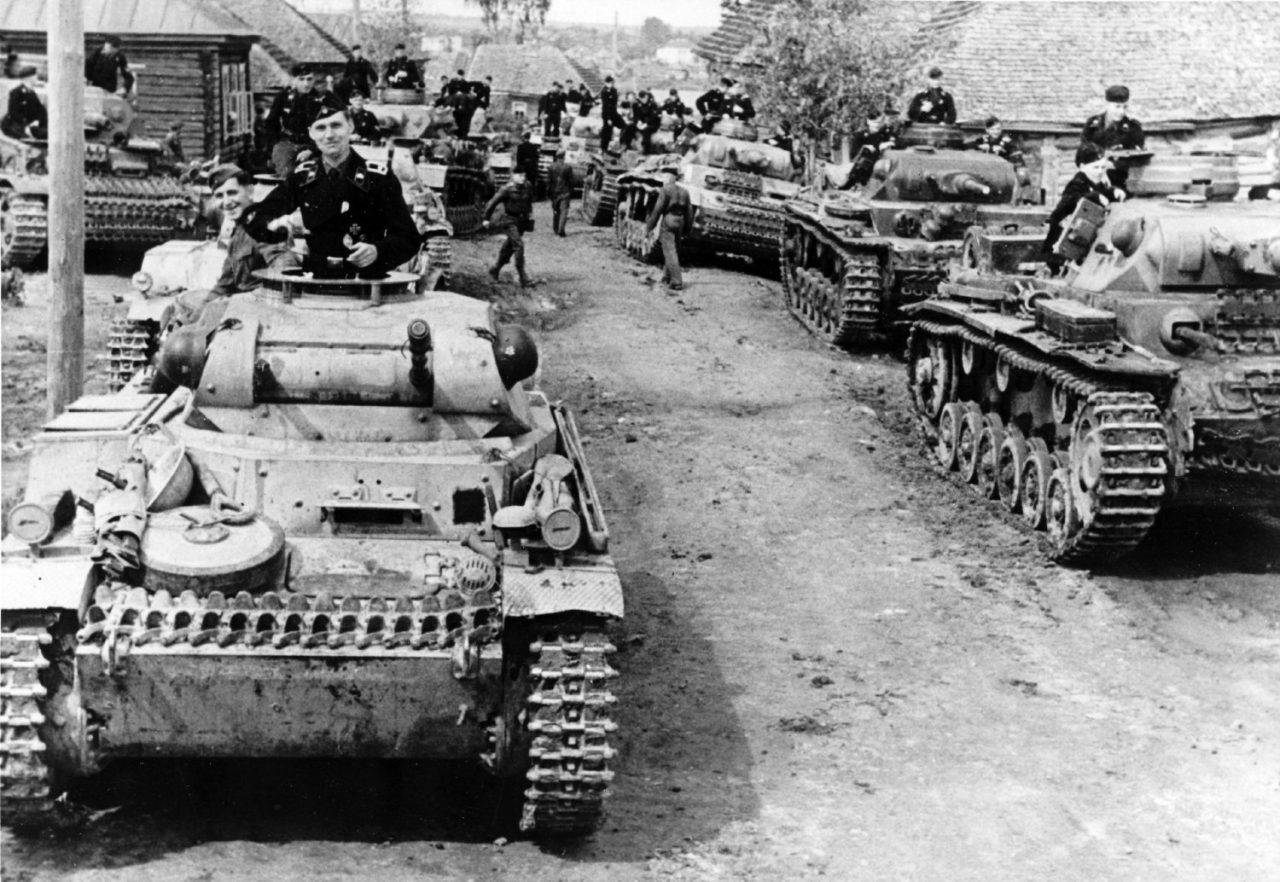 September 1942. German tank part of Rja photo: Sammlung Berliner Verlag/Akg/East News
On the Internet you can find enough publications that indicate that both at the federal and regional levels at the beginning of the two thousandths about this idea were expressed quite harshly. It was not only about the illegal allocation of the land, but also about an attempt, as the opponents of ideas wrote, to erect a monument to the Nazis in the city. Some newspaper clippings are still carefully stored here.
Kharchenko speaks calmly about his decision with the region: “We did not even think that it was something serious, and did not get ready much. And by the way, they won quite easily. We simply did not have a feeling that we were specifically pushing some kind of decision. People from Moscow came to me, from the president’s envoy [in the Central Federal District], they said that we should abandon the idea that it was wrong. I say: “How is it wrong if Russia and Germany have an official agreement?”
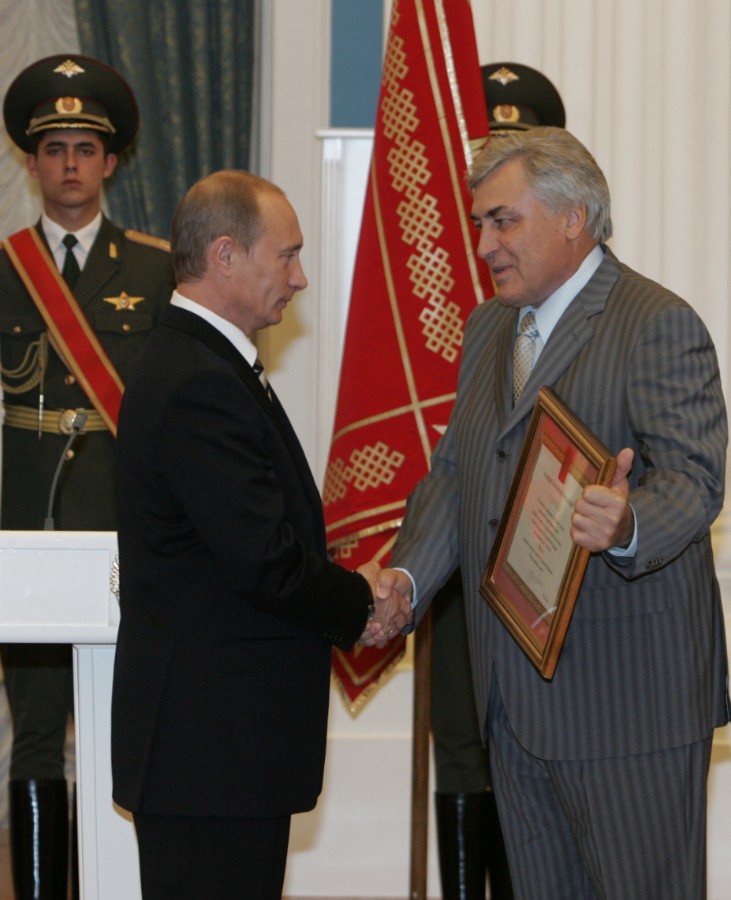 Moscow, November 7, 2007. Russian President Vladimir Putin presents to the mayor Alexander Kharchenko a letter of appropriation of the honorary title “City of Military Glory” photo: Mikhail Klimentyev TASS
After several trials, the plot was left for the Germans, but the Solomon decision was made. “The search work was then very poorly financed, this is not a secret. The search engines dug and said that they rebelled the remains, but they did not always have the opportunity for this - sometimes they had to keep the remains for a long time. And we invited the Germans to partially finance the creation of the Soviet cemetery first, ”recalls the former head of the administration.
Both cemeteries eventually opened simultaneously - in September 2002, seven years after the start of negotiations with the German side. At the same time, a storage was created in which the found remains of Soviet soldiers are collected. Outwardly, it resembles a large garage, sheathed with siding, but inside each soldier there is a separate box in which the remains are located until the burial moment. The doors of each box are metal, numbered. Inside is empty, clean and even cool on a hot day - ventilation works.
Today, all new burials from the Soviet side are carried out only here, centrally. “We have 43 fraternal burials in the area. But many graves are located in the villages, the villages are empty, at the municipal budgets that are responsible for this by the law, there are often lack of funds to maintain graves, ”says Natalya Dranova.
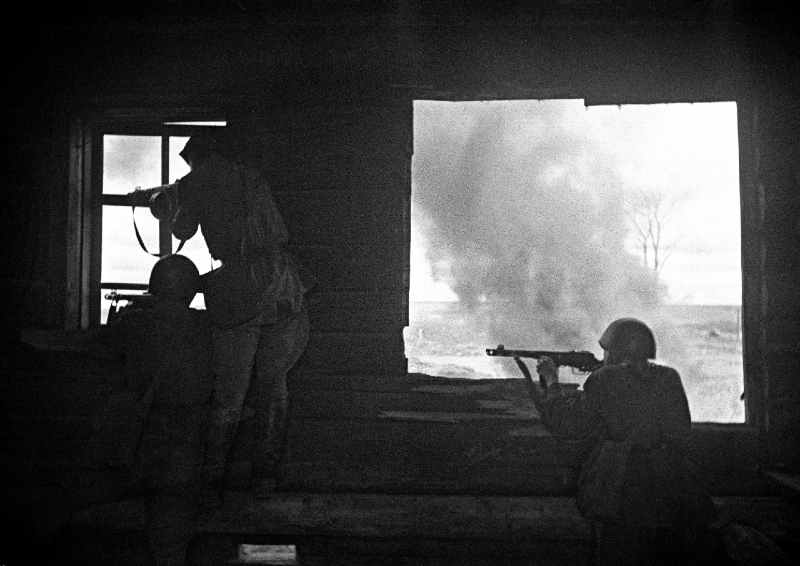 October 1942. Fighters of Lieutenant Orlov are fire in the Rzhev area on the North-Western Front Photo: Anatoly Garanin/RIA Novosti
The Germans have their own storage. The remains of Soviet and German soldiers and German are lying separately before the burial, but everything else in the territory of the complex is divided in half. Even the rooms in the center of patriotic education created with the complex. Heads Sergei Petukhov. One room in a small, a little at a distance of the house is given to the exposition from the Soviet side - and the finds related to both the Soviet Army and the Wehrmacht’s forces are represented. Another - under the exposition of German. There are posters on the walls there, telling about the joint care of the burials in Russia and Germany. The lease is paid by the People’s Union of Germany for the care of graves.
Dip not dig
“When the question arose of creating a German cemetery, the city was collected in the city. Search engines were also invited to him. And we made a proposal that the Soviet cemetery was first created. Because at that time the search engines were digging, and then it was necessary to wait for the decision of the military commissariat, in which grave to be buried. А могил у нас больше 40, все было очень сложно», — рассказывает Сергей Петухов.
Сбор средств на создание кладбища объявил Попечительский совет Ржева — именно собранные тогда частные пожертвования легли в основу советской части кладбища. Еще часть средств дал город, но немцы тогда «вложились так, существенно», усмехается Сергей Петухов на неосторожные слова о том, что они «немного помогли».
Как и Александр Харченко, рассказывая о создании кладбищ, он сразу, с первых реплик выдвигает два главных, видимо, аргумента города: немецкое кладбище здесь было не первым для России, а среди жителей тогда серьезных возражений не было. Выдвигает, как будто по-прежнему ждет упрека или обвинения.
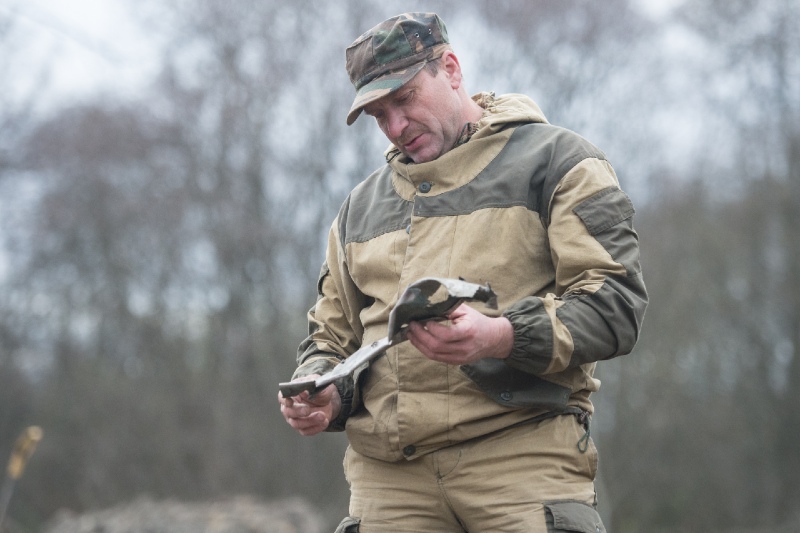 Руководитель военно-исторического поискового центра «Память 29-й армии» Сергей Петухов во время экспедиции по подъему советского бомбардировщика Пе-2, сбитого в 1942 году в Ржевском районе Тверской области Фото: Евгений Одиноков/РИА Новости
Соглашаясь на интервью, он несколько раз подчеркивает, что к созданию непосредственно немецкого кладбища «не имеет, к счастью, никакого отношения». Но в личном разговоре оказывается куда дипломатичнее. «Они ведь тоже люди, куда-то ведь их нужно положить», — пожимает плечами коренастый мужчина средних лет, который всю сознательную жизнь занимается поиском погибших солдат. «Тоже люди» — это, кажется, его главный аргумент.
Мы разговариваем в небольшой служебной комнате при центре, окна которой выходят прямо на хранилище с останками. Он называет ее «штаб» и поправляется — импровизированный. В штабе стоят четыре офисных стола с компьютерами, стеллаж с книгами по истории и полка с канцелярскими пластиковыми папками.
Официально Сергей Петухов занимается поиском советских солдат с 1989 года — тогда в России как раз появилось поисковое движение. На вопрос, как он пришел к этому, пожимает плечами и говорит: «Как все». Во Ржеве не было мальчишки, который не ходил бы в лес или поля, чтобы копать. Мальчишкам было интересно найти какой-нибудь предмет времен войны — искали в том числе боеприпасы, на которых неосторожные потом, бывало, подрывались. Вместе с артефактами находились и останки. Детей они интересовали мало, но потом дети повзрослели, и в какой-то момент стало понятно: с останками ведь тоже нужно что-то делать.
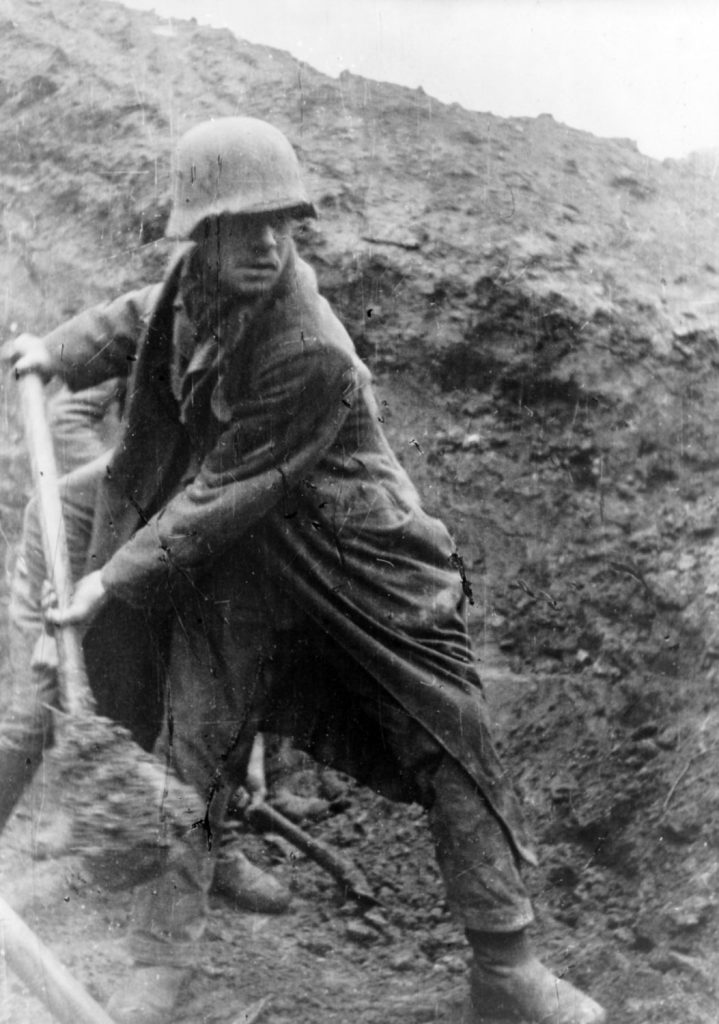 Ноябрь 1942 года. Немецкий солдат на строительстве оборонительных сооружений Фото: Sammlung Berliner Verlag/AKG/East News
Сейчас в окрестностях работают сразу несколько отрядов — каждый год на протяжении более чем 20 последних лет 22 июня, теперь День памяти и скорби, здесь захоранивают от нескольких сотен до тысячи найденных солдат Советской армии. Над каждой могилой можно найти табличку с указанием, в какой год были захоронены солдаты, сколько их лежит, рядом с какими деревнями подняли и сколько из них были с именами. Таких из сотен — от силы несколько десятков.
Два из этих офисных столов арендует, опять же, Народный союз Германии по уходу за могилами для своих сотрудников — людей, которые занимаются исключительно поисками останков солдат и офицеров вермахта. Это такие же поисковики, из местных. Раньше этим занимался немец, но потом он ушел на пенсию, и стало понятно, что проще — да и дешевле — работать с россиянами. Они «на зарплате» — и в этом их главное отличие от тех, кто ведет поиск с российской стороны, говорит Сергей Петухов.
«То, что у них был порядок прямо идеальный, — это миф. Но да, у них все было лучше налажено, потому что был специальный офицер, который вел учет. А у нас только похоронные команды — это значит, просто говорили, мол, ты, ты и ты идешь сегодня собирать убитых. А потом начальник штаба в лучшем случае детально это все запишет, в идеальном, может быть, еще и схемку нарисует. У немцев этим занимался отдельный человек и были организованные кладбища. Ну и не будем забывать, что немцы здесь стояли в обороне — им в этом смысле было проще. Наши наступали, поэтому погибших после атаки нередко просто стаскивали в воронки, например, или в окопы», — объясняет он.
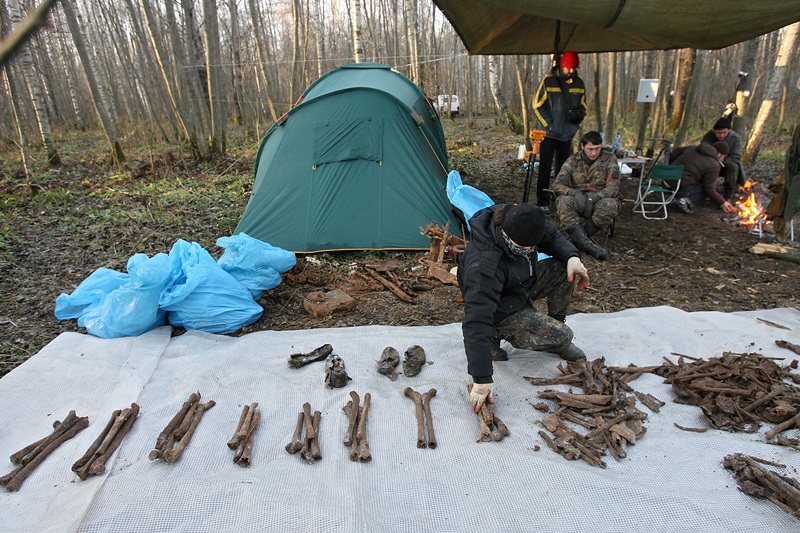 Участники поискового отряда во время раскопок на месте боев подо Ржевом во время Великой Отечественной войны. Останки солдат Красной армии Фото: Алексей Куденко/Коммерсантъ
Вот эти безымянные воронки и окопы теперь и ищут добровольцы с российской стороны. Сергей говорит, что сам в архивах не сидит, поэтому на вопрос о потерях — эти цифры у разных исследователей всегда расходятся в отношении большинства сражений — отвечать отказывается. Но говорит, что здесь солдат по-прежнему «копать не перекопать».
В окрестностях работает сразу несколько отрядов, действует большая экспедиция «Ржев. Калининский фронт», поэтому на вахту памяти (она обычно открывается весной) приезжают люди из разных регионов и из других стран. Сергей как директор Центра патриотического воспитания подчиняется администрации города. Город выделяет средства на его работу, непосредственно деятельность поисковиков теперь спонсируют из области. Такое финансирование позволяет наладить общую организацию процесса. Но большинство поисковиков по-прежнему копают в собственное время и на собственные средства.
В этом году большой вахты из-за карантина не было. Но торжественная церемония захоронения все равно пройдет — земле предадут около 500 солдат-красноармейцев. Точной цифры Петухов не называет: «Сейчас отряды продолжают привозить останки, их будут находить до самой церемонии, поэтому наверняка мы узнаем только накануне».
Победная песня
22 июня, в день захоронения, на советском кладбище проводят торжественную траурную церемонию. На немецкой части захоронения проходят тихо, в «текущем» режиме.
Хоронят тоже по-другому: если советские останки в землю опускают в обычных больших гробах, но по несколько человек на каждый, то немцев — в небольших, по объему больше напоминающих контейнер, зато отдельных. То, что со стороны выглядит как ухоженное поле со скошенной травой, на самом деле строго делится на секции, к которым «привязаны» имена солдат. Близким, которые собираются приехать навестить могилу, просто показывают схему, на которой точно обозначен участок, где лежит член их семьи. Иногда на поле даже заранее расставляют именные бейджики.
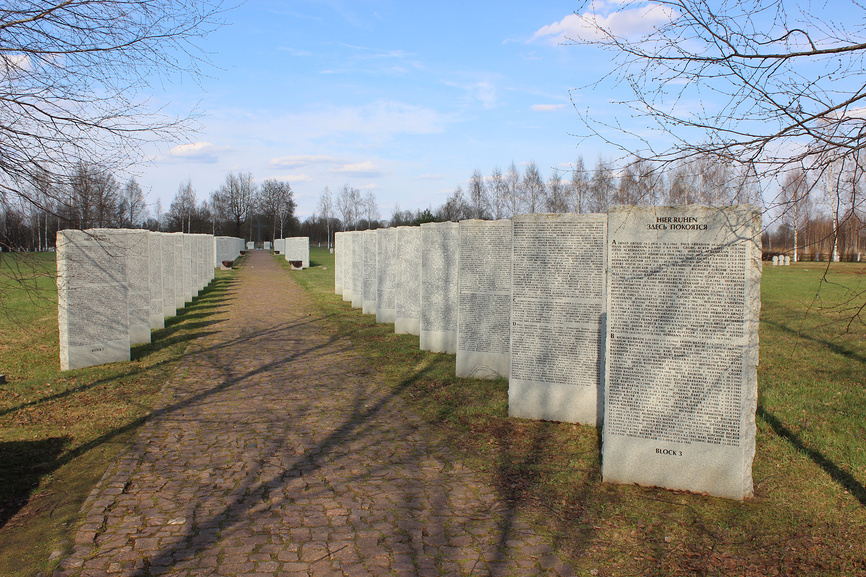 Rzhev. Центральная аллея немецкого военного кладбища Фото: Елена Орлова/Фотобанк Лори
Родственники здесь бывают ежегодно — 2020-й из-за пандемии впервые станет исключением. Раз в год Народный союз Германии организует общий автобус, с которым в Россию приезжает около 50 человек, — он посещает сразу несколько кладбищ. Ржевских в нем оказывается человек восемь или десять.
До последнего времени регулярно приезжали ветераны, стоявшие у истоков сотрудничества с городом. Некоторые проводили во Ржеве и окрестностях по неделе, а то и больше. Большинство из них сегодня уже умерли: Эрик Форнхольт скончался в 2013-м, ему было 98 лет. Эрнст-Мартин Райн — в 2016-м, не дожив один год до ста. Теперь в Россию приезжает его внук. Кто-то может заехать и по случаю, внепланово.
«Вот в начале зимы Лиля позвонила, что надо встретить немца: он был в Якутии и по дороге домой решил сюда приехать. У него тут лежит дядя. Ну я его встретила, мы пообедали, сходили на мемориал. На этот День Победы мы с ним переписывались, и он сказал, что ему знакомые рассказали, что у нас 9 мая поют “победную песню”. А я ему объяснила, что это не “победная песня”, а “День Победы” и она совсем про другое, вообще-то. Я ему отправила ссылку на нее и на “Священную войну”. И написала еще, про что там. А что, дружба дружбой, но пусть понимают», — рассуждает Ирина Кондратьева.
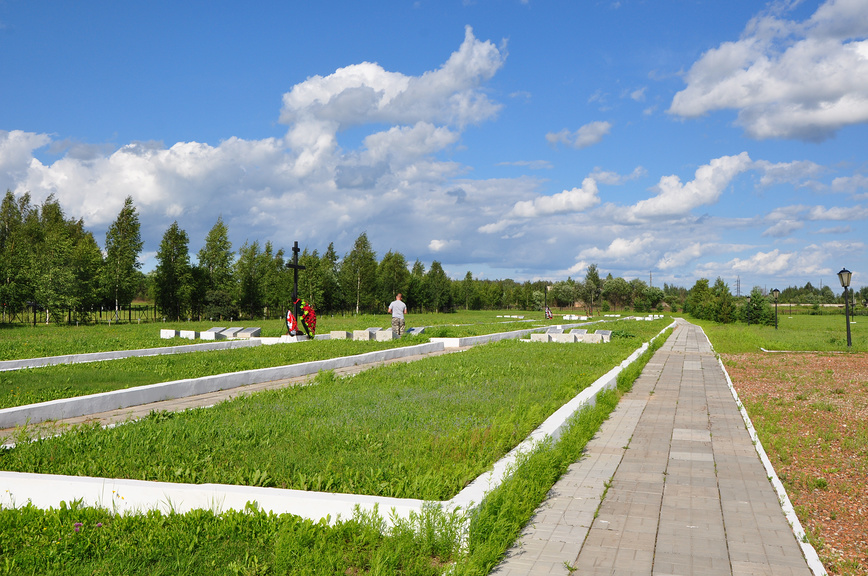 Центральная аллея на мемориальном кладбище советских воинов Фото: Ирина Быстрова/Фотобанк Лори
Всего на немецкой части сейчас лежит 43 тысячи человек (кладбище сборное, и останки привозят сюда в том числе из других районов и даже соседних областей), а на советской — 18 тысяч. На немецкой известны почти все, на советской имена есть примерно у 6 тысяч. Дело, опять же, в том, как вели учет в войну, а еще в надежности немецких именных жетонов и в ненадежности наших медальонов: небольших и довольно хрупких капсул, внутрь которых вкладывалась бумажка с именем бойца, адресом и данными о родственниках. Многие их не заполняли вовсе, часть медальонов потерялась, те, что уцелели, нередко просто невозможно или очень сложно прочитать.
Все равны
Советское и немецкое кладбища разделяет узкая проселочная дорога. Александр Харченко говорит, что она задумывалась как окоп. Но на окоп она похожа мало. Петляя между лужами, по ней к шоссе ходят владельцы участков, расположенных за городом. Я спрашиваю у нескольких из них про кладбище, всматриваюсь, пытаясь в том числе поймать следы скрытого недовольства. Они отвечают мне недоумением.
"These? — переспрашивает пожилая женщина в шерстяном берете, сжимающая в каждой руке по коробочке рассады. — А кому они мешают? Лежат себе, ну и пусть лежат. Я сама местная, у меня отец всю войну прошел, орденом был награжден, а орден так и не дошел до нас. Вот это вот обидно. А эти — ну кому они мешают?»
Советское кладбище выполнено в белом цвете, на фоне которого выделяется красная кирпичная стена с зубцами — она символизирует Кремль и Москву, которую защищали здесь солдаты. На территории — белая часовня с золотым куполом и длинные, поднятые над землей прямоугольники могил. Тут и там лежат цветы, где-то — пробитая каска.
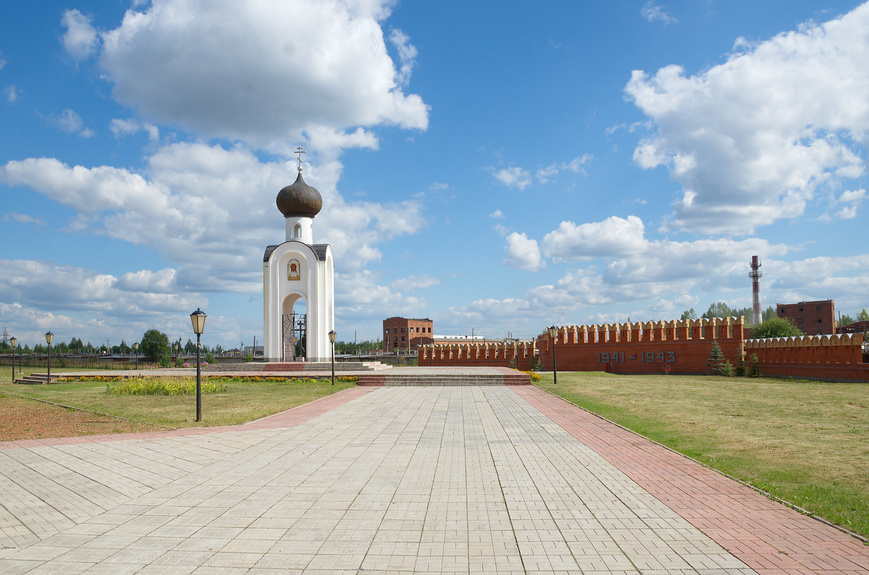 Часовня Александра Невского на мемориальном кладбище Фото: Елена Коромыслова/Фотобанк Лори
Немецкая часть представляет собой большой участок с ровно скошенной травой. По центру проходит вымощенная серым камнем дорожка, вокруг которой выстроились такие же серые вертикальные плиты, испещренные именами. Кое-где на траве стоят приземистые серые кресты. В центре — один большой крест из черного металла, у подножия которого лежит букет искусственных красных роз. Позади — две надписи. Одна на немецком, другая — на русском: «Пусть погребенные здесь найдут успокоение и последнее пристанище, а также служат объединяющим звеном для всех живых».
У входа в мемориальный комплекс — скульптура с коленопреклоненными людьми, копия работы «Скорбящие родители» немецкого скульптора Кете Кольвиц. В Первой мировой войне художница потеряла сына, а во Второй мировой — 22-летнего внука. Он погиб подо Ржевом и лежит на этом кладбище.
«Родители» специально развернуты так, чтобы смотреть одновременно и на немецкую, и на советскую части.
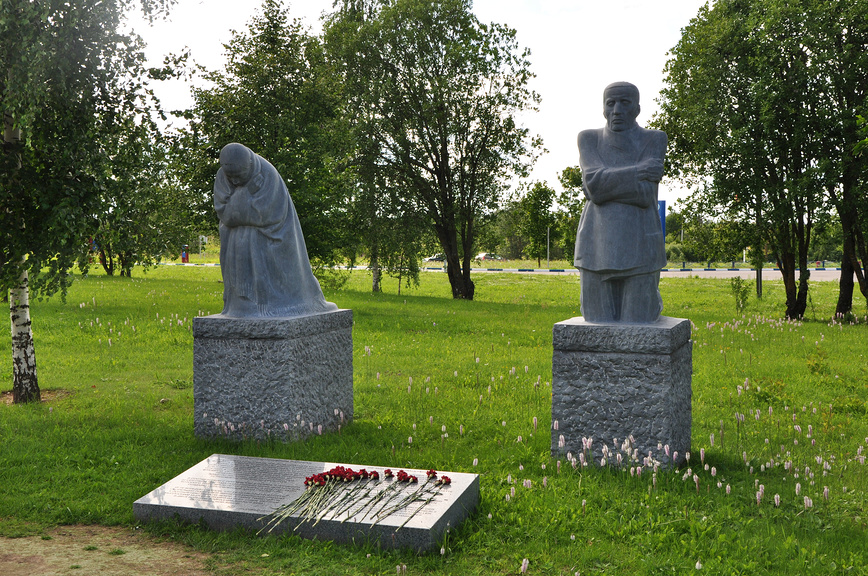 Скульптура «Скорбящие родители» Кете Кольвиц у входа на мемориальное немецкое кладбище Фото: Елена Быстрова/Фотобанк Лори
Все решения по оформлению принимаются только Народным союзом Германии по уходу за захоронениями. На плитах здесь не пишут званий — считается, что перед смертью все равны. Только имена, фамилии, даты рождения и смерти.
Устанавливать дополнительные таблички или знаки без согласования родственникам запрещено, чтобы не затруднять уход и не нарушать общий вид. Только у одной из плит одинокая черно-белая фотография немецкого солдата с невестой в белом платье — видимо, с венчания. Она облеплена обрезками недавно скошенной травы.
Наталья присаживается рядом и аккуратно смахивает траву рукой: «Не помню, кто ее установил, но она, конечно, бурю эмоций вызывает, особенно у школьников, когда они приходят на экскурсию».
Есть те, кто на территорию кладбища во время экскурсии принципиально не заходит. «У всех свои убеждения», — осторожно говорит Наталья.
На память от русского пленного
Немцы платят аренду за свой участок, оплачивают работы по уходу и работу поисковиков, но за право вести раскопки на местах захоронений они никогда и никому не платят.
«У нас же как: если что, все хотят немножко получить — и все, вопрос решен. У немцев позиция другая. Они работают только по официальным разрешениям. Если где-то есть застройка или идет дорога — все, они это захоронение не трогают. Но если, например, у вас там огород и они получили возможность там копать, вам не заплатят, просто потом восстановят все, до кустика, если надо», — объясняет Наталья Дранова.
Официально кладбище числится солдатским, — предполагается, что останки офицеров вывозят на родину, в Германию — но это, по ее словам, не совсем так.
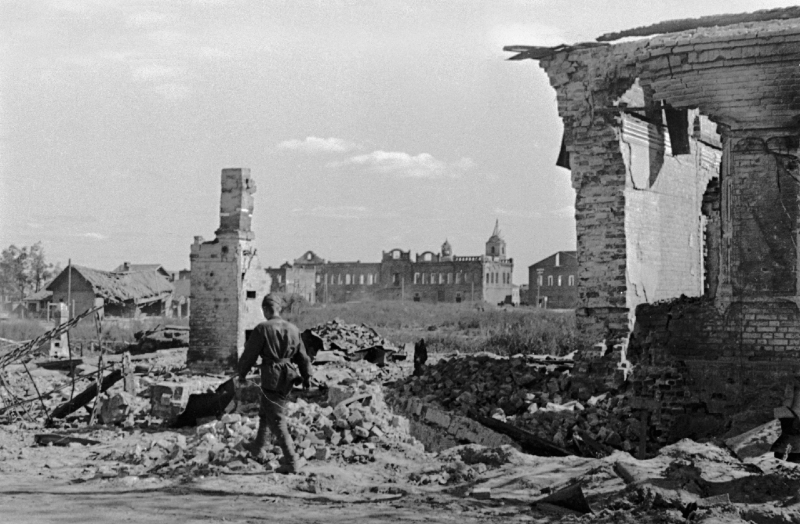 March 1943. Советский воин идет среди руин освобожденного от немецких захватчиков Ржева Фото: Борис Игнатович/РИА Новости
В руках Наталья сжимает пластиковую папочку экскурсовода. Внутри — человеческие судьбы, обрывки которых в разное время попадали сюда из Германии. Впечатления племянника, нашедшего могилу дяди. Благополучные довоенные фотографии из архивов — дети, невесты, семьи. Отдельно в папке лежит точный карандашный портрет человека в немецкой форме с четкой подписью на русском языке: «На память от русского пленного, IX.1941».
Набросок был сделан в лагере деревни Итомля, что от города в паре десятков километров. Немец, изображенный на портрете, потом погиб здесь же, подо Ржевом — вместе с копией портрета родственники прислали архивную фотографию березового креста с его фамилией и просьбу найти кого-нибудь в деревне, кто мог бы помнить лагерь, рассказать о русском художнике или о самом нарисованном им солдате вермахта. Искали долго, говорит Наталья, расспрашивали местных, не нашли.
Среди серых плит выделяется наивный ярко-лиловый пластиковый венок. К нему прицеплен файлик, внутри — обычный лист бумаги А4 с безнадежно выцветшей на солнце фотографией. Венок оставили, потому что солдата захоронили здесь относительно недавно, в 2018 году. Когда он погиб, ему было 18 лет, и все это время члены семьи продолжали поиски и надеялись на то, что останки будут преданы земле.
А совсем рядом с крестом лежит сорокалетний граф Вольфганг фон Экштатд, полковник вермахта, погибший в 1942-м. Его захоронили в 2016-м, и в обход установленной традиции родственники провели все же небольшую церемонию. Теперь в кладбищенской траве, у самого креста, можно найти отдельную каменную табличку с его именем — тоже помещенную сюда стараниями родственников, в виде исключения.
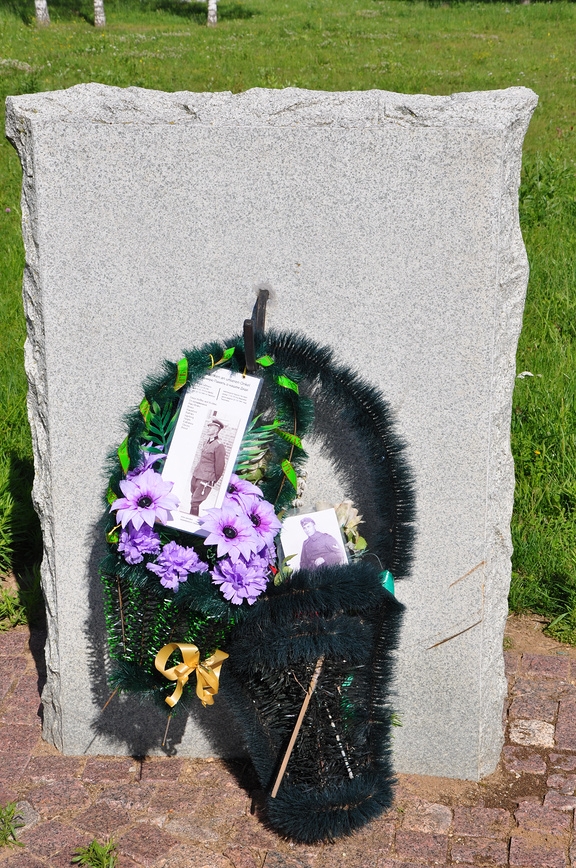 Корзина с цветами и фотографией немецкого офицера. Немецкое кладбище Фото: Ирина Быстрова/Фотобанк Лори
Люди разные — все, кто занимается немецким кладбищем, прекрасно это понимают. Понимают и то, что там лежат не только жертвы войны, но и те, кто осознанно стрелял, возможно, отказывал пленному в еде или казнил местных подпольщиков. Никто не пытается доказывать обратное, хотя говорить предпочитают больше о хорошем.
«Ну что же теперь? Мне кажется, суть в том, что победитель должен быть великодушным», — говорит Ирина Кондратьева и вопросительно смотрит на меня.
Великая Отечественная война ВОВ историческая память история