
Translated material
The death of the office
Friends, colleagues, friends
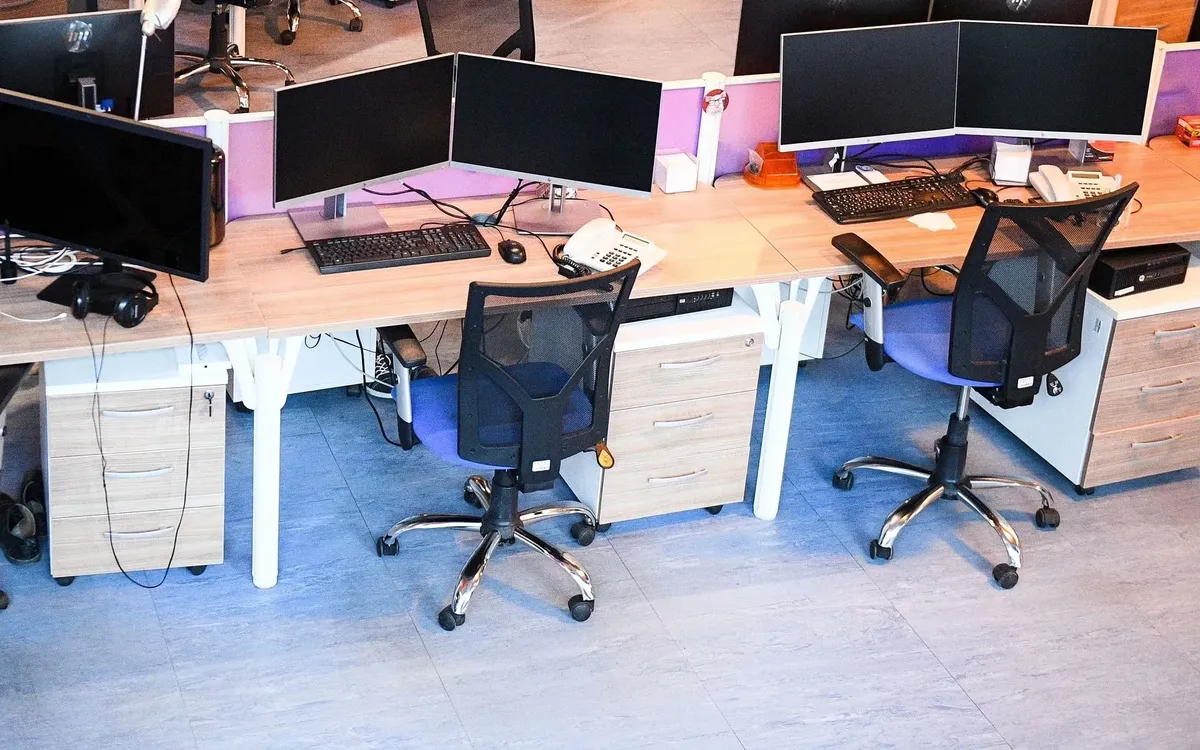
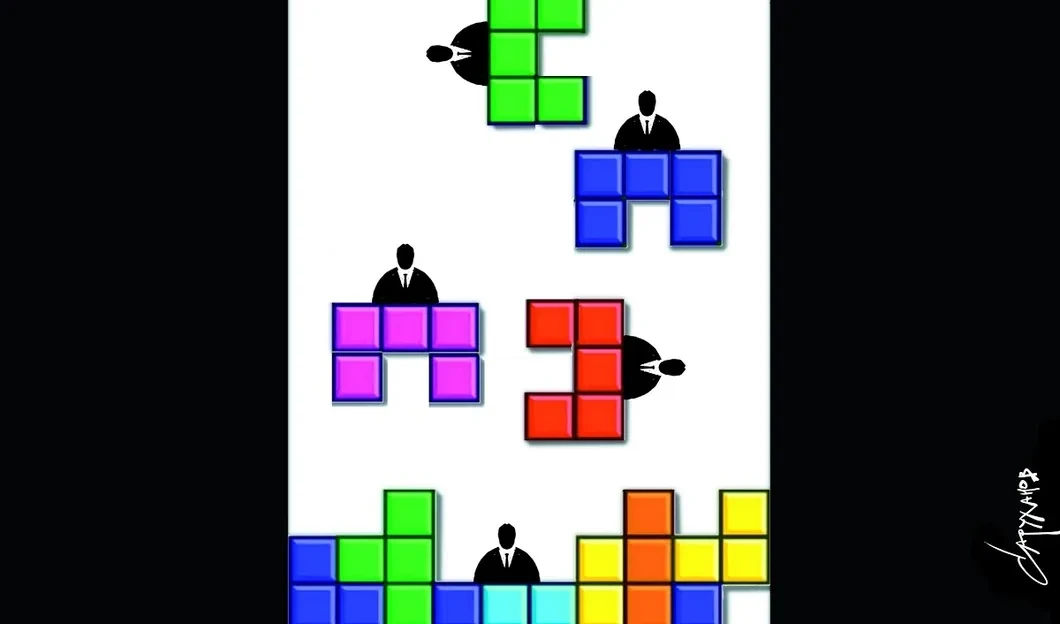
Now this thesis has become a truism: the office, having failed to survive quarantine, is dying, and many see it off with the words “there is a road there”.
The office, he is the office, did not deserve our love even when he replaced his ink soul with electronic. Progress did not change its internal structure, because the life of the office still proceeds at the level of microorganisms, so that it cannot be traced behind the naked eye. Therefore, the offices are quickly and inevitable, like microbes, fill out any volume allotted by it and squeezed out like a liver sausage, beyond its limits.
The bureaucracy strangles itself, splashing out of the offices into the corridors of the authorities:
Parliamentary sidelines, torture cellars, and even attics, where between the washing linen is the office from the Kafka novel.
Testament is a metaphysical property of the office, independent of its physical size. So, the immense rooms of the Stalin's “skyscrapers” with such distant ceilings that they could not hang themselves, they were constantly condensed, creating a gloomy bureaucratic pierce.
In my time, each edition was stuffed with office premises, which branched and budged until they ended with a closet with the mop, where it was possible to drink, hiding from the authorities.
In the new Russia, I found that glamorous magazines, as before the Bolsheviks, captured the old factories and factories and remade them in the manner of Soho: a post -industrial dream about the rebirth of rough matter into thin spirit and advertising. In the spacious workshops, the organs of one another are more bizarre.
One, I remember, was called the "yellow submarine", but, not related to either the "Beatles" or to the submarines, talked about life as it is.
In America, the office went on a special path when it turned into a “cubic”.
Enhanced by rooms, the floors of skyscrapers are filled with office honeycombs, undercabinets without doors with partitions that do not reach the ceiling. Such an office of a non-anchor gives the appearance of official privacy and allows the lower to forget about the elders-but not vice versa.
The interior serves the hierarchy: the boss is the subject, and the subordinate is the object of observation. The latter look at the latter, while the former look themselves. Usually - out the window. After all, only through it you can break out of the stationery tightness. Therefore, the window is the coveted trophy of eternal office war. Officials fight for the light, like trees in the forest - both grow in straight rays of the sun.
By the way, in the banking office of Mr. K., from the same “process”, a window, and even enormous with a view of the city square, was what distinguished the hero of the novel from the judges who performed their dark justice in gloomy closers. The distinction between two office rocks emphasized by Kafka evolved in America. The local state offices inherited the vices of the Old World.
In each office - whether it is an office where the benefits are issued by unemployed, or the federal ministry decorated with an ancient portico - the same office homelessness reigns. This is a true sign of exaggerated zeal, which officials notice traces of idleness. It hurts a lot of papers here, coffee makers and outsiders.
Nevertheless, in the New World, the office is more vulnerable than in the old one. Without sensing an ancient bureaucratic tradition, in America he is inclined to simulate friendliness, reaching familiarity.
The American office is squeezing between Scylla Officiaz and Haribda Panibracy.
It was precisely the difficulties of this course and brought the office into a dangerous sexually legal zone, where official novels were the subject of popular discussion, with all the accompanying subtleties, which are no less than in ordinary novels. The drama of the office is that he is not able to draw a clear border between business and personal relationships. Harmony here is not more common than in the family and marriage.
Gordian knot of viscous complications chopped a computer. Electronic communication allows you to get into a direct, but not direct contact. Depriving the bureaucracy of bodily, sharing a person and his functions, the computer made sure that the office did not encroach on a person, satisfied with its labor.
The funeral of the office, however, pour into the Scythian burial, when together with the deceased we burrow into the mound and his loved ones. After all, the death of the office will end with the family that we hold on the side and call work.
***
The smaller part of the Americans does not like their work, the lesser - he hates it, and those lucky ones who like it rarely go to the office, preferring to work at home, in the forest, like me, or in the garage, as Gates, Brin and other computer geniuses did.
Meanwhile, the office fulfills the most important role in our social life: it creates it.
The service supplies us of chiefs and subordinates, friends and lovers, enemies and envious people, drinking companions and cramlines, that is, colleagues that they are all. They are united by a common cause, even if it is “designing the Electric British“ Snowball ”” (Val. Popov).
If you think at least for a second, we cannot but surprise us that familiar, but the crazy fact that the profession is chosen by the environment. It turns out that it is not you, but she disposes of all intimate.
Office duties develop into personal ones and connect the random people in general in the very “big family” that the Soviet government called the factory, the collective farm, the brigade, the chamber, the camera, the sharashka, at best-the subbotnik.
As a child, I read about him in books, most often - Strugatsky, and terribly envied. When it grew up, I was lucky enough to make sure that there was no better way to make friends than to work together - both in the New American, and on Radio Liberty, and in Novaya Gazeta, and in every magazine, where I did not have been printing long, not excluding playboy, yachting and golf today.
But this is a fraud that changes the alignment. In these successful circumstances, we choose an office, and not him. Much more often, the career leads us to the finished one, and we are forced to reconcile with the society that we must join.
Recall the corporate parties, these office apotheosis of violent affection.
Quarantine dared the web of passing official ties, replacing it with just work. The office became virtual and purely business.
There are no more gossip in the office agor at the drinking fountain, there is no totalizer for the results of the tomorrow's match (as there is no match itself), there is no exchange of tomatoes ash, there is no boast, there is no timid flirting (the other canceled the Metoo movement). In short, there is nothing for which it was worth getting up early, cleaning shoes, sitting in traffic jams and looking nervously at the clock, painfully getting to the office. And if so, then no one will do this - neither today nor, most likely, tomorrow.
But how to plug a huge hole formed in the fabric of our social being? Yes, the same as before. Before a short -lived, but aggressive industrial civilization imposed on us its way of life, having built it around the “factory”, we knew other centers of communication: temples, church, salons, clubs. This is given to all private interest, and not the arbitrariness of professional distribution. Not labor, but leisure, not a duty, but a hobby, not colleagues, but like -minded people who share with you a banal or exotic passion for yoga, cacti, amphoras, veilevosts.
Actually, this is how (and not on the barricades) and civil society is born.
Poland was the first to free himself from communism also because every fourth Pole was in some circle, which became a school of free thought and independent behavior.
Now, of course, everything has become easier. We have long been divided into clubs, and our environment is not forming an office, but by social networks with their powerful selection mechanism (from the “can be made up from the banned ones”).
Getting rid of fundamentally strangers and surrounding ourselves with allies in interests, we did not even notice how we left the office to live with those who could not do without it.
After spending a hundred days in quarantine, I suffered much less from loneliness than I assumed: everyone I love live on the screen, and I almost hoarse, communicating and arguing with them.
New York