
Translated material
Elbas does not go out
The main friend of Russia Nursultan Nazarbayev is 80 years old. His career is an example of zeroing, which ends with a large political crisis
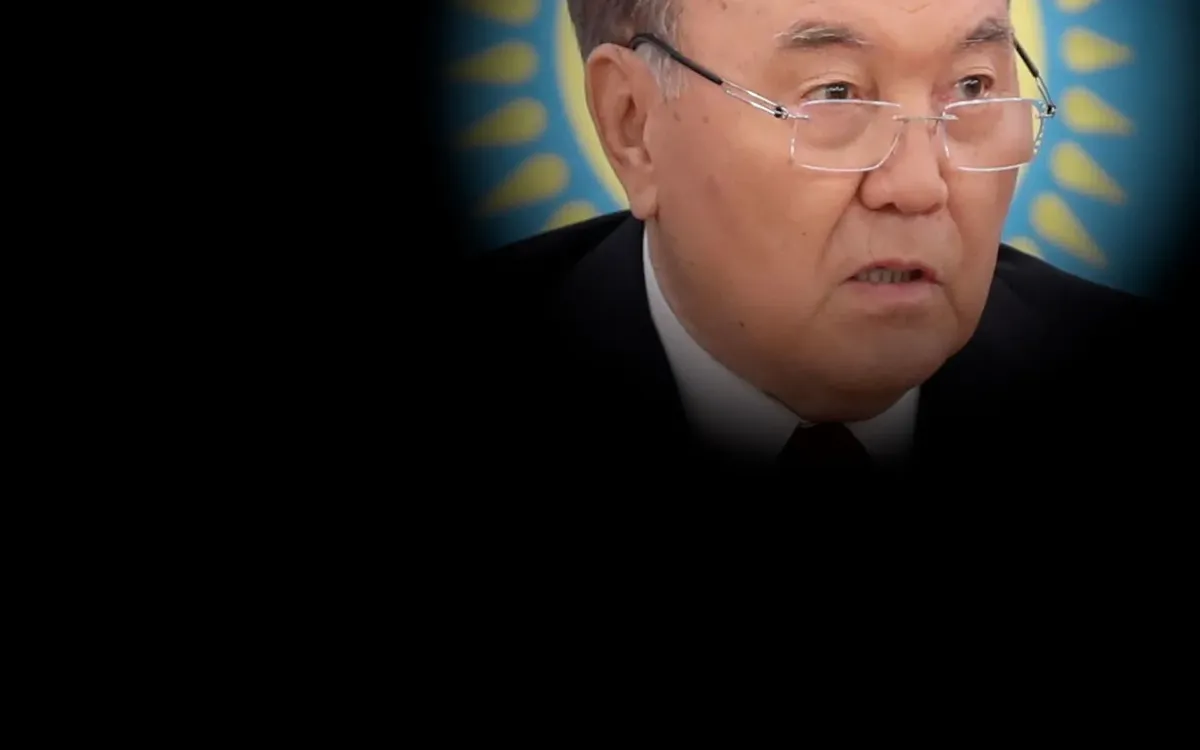
Kazakhstani authorities do not like when, in relation to the country (and they fully personify themselves with the republic), at least someone is trying to joke. On July 2, on the site of the comic and fake news of Panorama, a note was made that from the blood of the first president Nursultan Nazarbayev, who successfully suffered coronavirus, they will prepare a vaccine for the treatment of Covid-19. The society laughed, and the authorities in less than a day blocked the "panorama" in Kazakhstan.
Despite the relatively refined humor, this joke is even whiter than the Borat film, because of which there was a scandal in 2006: here they encroached not just to the country, but on its founding father.
The joke of the “panorama” responded with such itching in the imperious hand with a sites of sites also because it appeared on the eve of the anniversary of Elbasy. On July 6, Nazarbayev turns 80 years old, and by this moment public opinion is tired as much as possible to the fact that the leader of the nation has not gone anywhere, they say, he has become even more vigorous, and the whole world wishes him health, and Vladimir Putin generally congratulated on his birthday three days before the anniversary. True, the coronavirus epidemic greatly lubricated the whole festive mood: the country has a crazy increase in incidence (more than one and a half thousand a day plus a comparable number of pneumonia),
And the statistics of mortality from the daily made a weekly - apparently, in order not to once again nervous people.
Despite this, before the new quarantine announced on July 5, they were widely prepared for a solemn event in cities, rejecting large -scale street concerts. After another gloomy non -public joke that it is like an ancient Egypt, when Pharaoh takes all servants with him into the pyramid, concerts were transferred to the online mode.
Of the gifts, they limited themselves to a very strange monument to the monument (there Nazarbayev looks like Vladimir Menshov).
It’s still difficult to call Elbasy in honor of Elbasy-there are almost no places. The top of the creativity was achieved during another holiday of Nazarbayev - the day of the first president - in December 2015:
Then the workers of the aluminum factory laid out the 15-meter word "Elbasy" from heavy flaps.
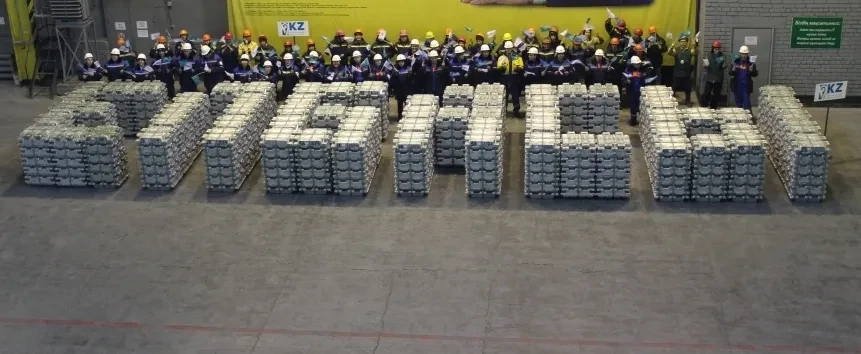
Now it all looks comical, and even 5-7 years ago, Nazarbayev’s positions within the country were such that it was not recommended to publicly assess the level of “gifts” (for example, the MUZ-TV Award, awarded by Nazarbayev). Elbasy was able to achieve this effect, successfully blossomed two images into his political picture - a progressive leader who knows how to assemble a team, and an autocrat who strangled all the freedoms.
Democrat Nazarbayev tried to herself in the early 90s, when in the 93rd year he adopted (albeit reluctantly) the first constitution of Kazakhstan-in it the republic was not yet “presidential”. A year later, he, however, dismissed the Supreme Council and adopted a new constitution, which sharply increased its powers. Nevertheless, in domestic politics, for the time being, Nazarbayev remained loyal to other opinions.
When the then Prime Minister of Kazakhstan Akezhan Kazhegeldin appeared in the 97th year in the PIK program on Russian television, everyone gasped, how progressive a large official under the president who became in Soviet times may look.
Then began a smooth slide into authoritarianism. At first, Nazarbayev deprived of absolutely all the channels of their television frequencies and redistributed on a tender among his supporters. A few years later, he began to gradually close or discourage all opposition newspapers (this process stretched for the first decade of the 21st century). In parallel, the “progressive prime minister” Kazhegeldin received a prison term, but managed to leave in time. The main controlling posts in the tax authorities were occupied by the son -in -law of Nazarbayev Rakhat Aliyev, and businessmen recall that time with a shudder:
Aliyev behaved like an oprichnik, taking advantage of the proximity to the family, and openly “squeezed” any business falling by the arm.
Against this background, Nazarbayev’s authority was not yet stable, and in 1999 he could lose early elections, if, of course, not large -scale falsifications that Nazarbayev’s rivals openly spoke, primarily the Communist Party (Nazarbayev’s revenge a few years later with the help of herds in the PDA defeat her, splitting two movements).
Understanding that his authority was lost - and in 1999 there was also a devaluation of tenge - Nazarbayev hastened in 2000 to “reset”. He did this without asking the opinion of the people - that it is not the style of Asian regimes. Just the ultra-chairman of the Committee on Legislation and the Forensic Reform of the Mazhilis of the Parliament of Kazakhstan (who now remembers her last name?!) Turned to the Constitutional Council, and he decided that since Nazarbayev stood at the head of the country back in Soviet times, then his then time-he did not seem to be considered.
So now he has only the first term, not the second.
Later, in order not to breed a headache, Nazarbayev simply entered the Constitution that the first president could be elected as much as he wanted. At this point, Nazarbayev had already received his title of Elbasy - by introducing it to the same Constitution (and after that the Russians will still complain about amendments?) Through manual deputies, along with the norm on criminal prosecution for any encroachment on life, property or reputation of themselves and their family.
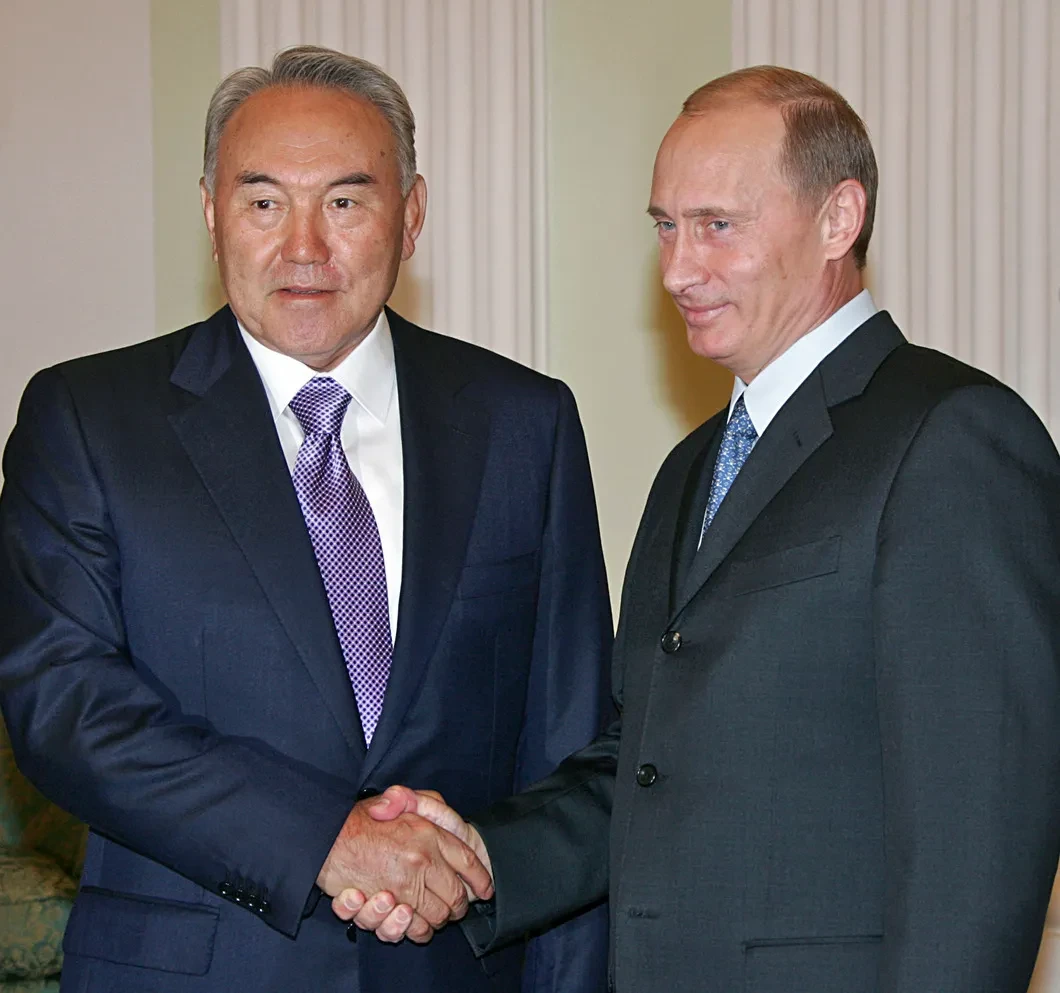
It was in 2007, and by this moment Nazarbayev’s power in the country was already absolute. Around the same time, the first signs of the personality cult began to appear: either the school would be called in honor of the president, then the university. Then - the airport, then - the capital, and in honor of the mother of Nazarbayev they named the village in the Zhambyl region. And few dared to object, because Elbasy “cleared” the political opponents of Elbasy, sending them to exile or putting in prisons.
Really the regime shook three times. First, in 2006, when the main political opponent of Altynbek Sarsenbaev was killed in Kazakhstan - the traces of the murder brought to the National Security Committee, but then several people received a long time, and the punishment was public: Akorda ( Kazakhstani Kremlin. - Ed. ) Thus distance from any hint of murder. In 2007, a scandal broke out with son-in-law Rakhat Aliyev, who was accused of brutal murder of two top managers of Nurbank.
Almost immediately, the son -in -law “quit two weeks ago” (that is, he ceased to be a son -in -law), and he was accused of a heap of attempt on a coup.
Thus, the regime translated himself to the victim.
The third blow occurred in 2011, when the oil workers of Zhanaozen, who stood in protests for many months, were shot by police (17 people officially died, unofficially - at least a hundred ). The order was given by the head of the Ministry of Internal Affairs of Kalmukhanbet Kasimov, but Nazarbayev called the society to guilty: after all, his son -in -law - another - owns the company that did not pay the money for a long time.
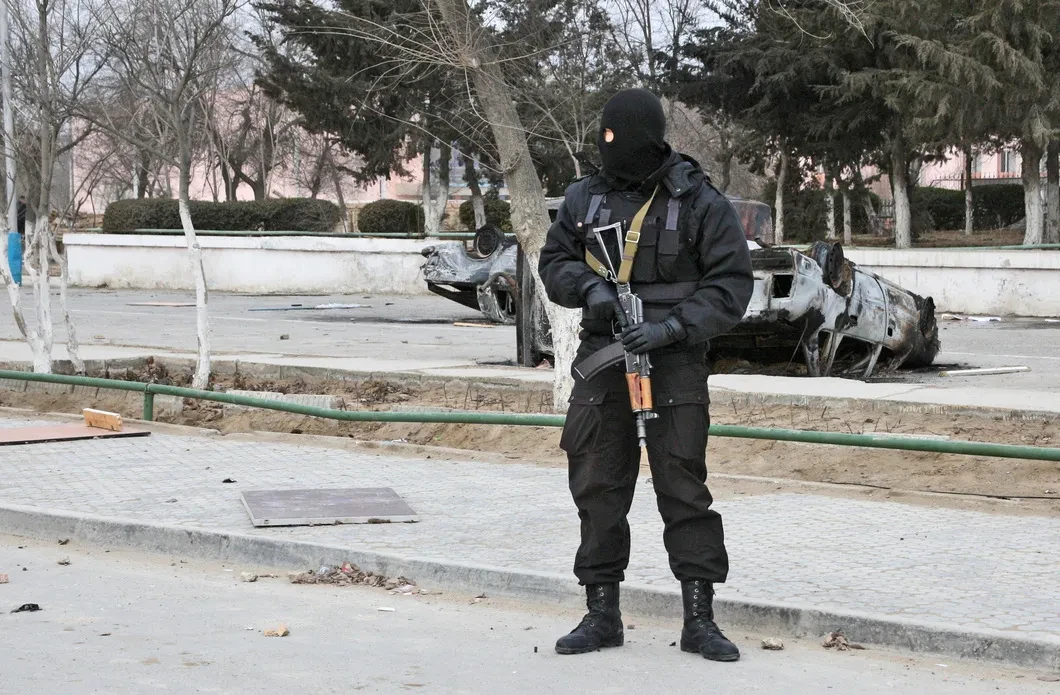
Zhanaozen Nazarbayev was no longer forgiven, and, feeling this, Akorda began to twist the nuts as much as possible. Opposition parties were finally destroyed (only pale shadows remained instead), the number of political cases increased, plus religious courts were added - in time it coincided with terrorist attacks on the cities of Kazakhstan in 2011 and 2016.
Gradually, the situation managed to lead to the position of “stability”, “multinationality” and “multi -vector”, which Nazarbayev is so proud of. But this was in many ways an illusory picture: the number of interethnic conflicts increased in the country (officially it was always just a showdown “on criminal-household grounds”), synophobia increased sharply, and stability barely withstood the next devaluation (since 2014 the dollar has risen in price from 150 to 420 tenge).
This, however, did not prevent Nazarbayev in 2015 habitually gain 97.75% of the vote in the next extraordinary election of the president. And everything would be good from the point of view of Nazarbayev, but the lack of prospects in the country, consumption, huge corruption and forces led to two multidirectional vectors. The flow of emigration increased sharply (it was impossible to stop this process), and those who remained began to outrage loudly.
In 2016, “land rallies” swept through the country against hypothetical surrender of agricultural land for 49 years. And just two years after that, the strongest rebellion began in the country against the presidential party and Nazarbayev himself, when five little girls burned down against the backdrop of the population of the population in Astana:
Their parents were forced to leave home at night to work, leaving children with the stove on.
A huge wave of discontent swept through the country, and in March 2019 Nazarbayev chose to leave his post live. Obviously, he decided that he would continue to hold power in his hands, but the new president Kasim-Zhomart Tokaev, who came during the growing crisis, only sprinkled in the curtains-renamed the capital, wrote several laudatory articles (one of them is called the “triumph of will” ) and proclaimed a course for “continuity”.
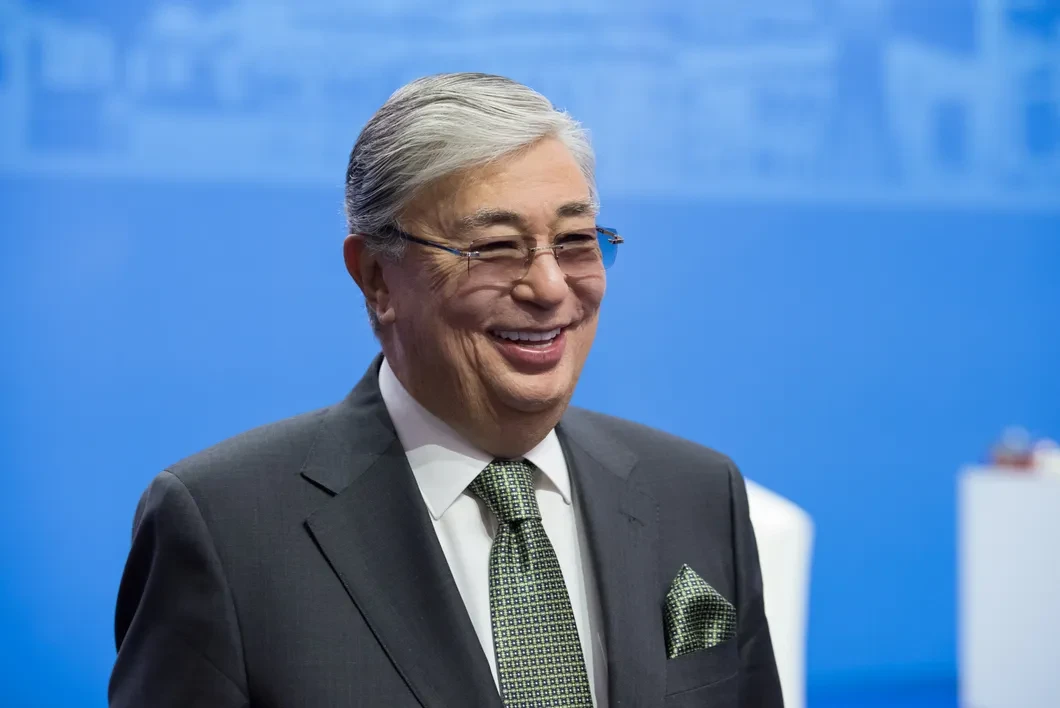
In fact, with the beginning of the coronavirus, Tokaev instantly concentrated all the power in his hands: he introduced the emergency regime, forced the parliament to obediently adopt the law on the concentration of all powers in crisis in his hands in crisis (that is, constantly) and expelled the eldest daughter of the president Darig Nazarbayev from the post of head of the Senate.
Against the background of the fact that Nazarbayev was self -isolated as much as possible (but still fell ill),
The number one man in the country is now completely different.
This, however, does not mean at all that Nazarbayev finally got off the political scene. Even vice versa: his almost 30-year-old rule of government was completely supported and developed by the new president. This led to an even greater crisis (as well as to the strongest growth of the epidemic: in the country interruptions in medicines, and people simply do not take to hospitals because they are crowded), but the authorities pretend that everyone except it is to blame.
This is very in the spirit of the previous regime, so Nazarbayev himself, maybe in the shade - but his business lives.
We can say that the old blood was simply poured into a new regimen. So the blocked site “Panorama”-perhaps not wanting it himself-hit some very sensitive nerve with his joke.
Arkady Dubnov
Central Asian expert
"He is not a cannibal, in the present time it is a rarity"
- How now Nazarbayev remains the central figure in Kazakhstan? In the end, by July 6, 2020, did he manage to become the founding father of the country, did Kuan Yu in Kazakhstan, as he wanted?
- The founder certainly became. As for whether he will remain in history as a “father”, I’m afraid only to his daughters, and first of all - the eldest, Dariga. This, in general, is the problem of “fathers and children” of power families, children usually rarely manage to stay at the level of fathers on the power Olympus. If they reach it, then, as a rule, they become their pale copies or miserable epigones. Although more often, trying to climb Olympus, cause the overthrow of their fathers.
There were many leaders in our post -Soviet lands - Akayev and Bakiyev in Kyrgyzstan, on the way to this Rahmon in Tajikistan, Berdimuhamedov in Turkmenistan. Ilham Aliyev in Azerbaijan did not become as a powerful figure as his father Heydar Aliyev.
If someone Nazarbayev now seems to be a central figure in Kazakhstan, then, I believe, due to the inertia of human thinking
- A fairly clicked degree. I recall Afghanistan at the turn of the 1990–2000, where I found it more than once: the Afghans did not know that the Soviet Union was no more, it was impossible for them to imagine. I think that in Kazakhstan itself the “centrality” of the figure of Nazarbayev no longer seems obvious, no matter how difficult it was to imagine. Especially after discarding the successor to Nazarbayev, his daughter Dariga.
- What is the main achievement and what main mistake Nazarbayev made for the entire time of his reign?
-Among the main achievements of Elbasy, I would note the ability to highlight the main thing among the country's problems and focus on their solution, especially in the first years of independence, in the 1990s. It was then that he dared to bet on professionals and just smart people, attracting them to his team, regardless of their personal devotion to him. So the government, led by Akezhan Kazhegeldin, who managed to carry out a number of the most important structural reforms, which today, even in Russia, have not been fully implemented.
The main mistake is loss with the age of reflection. For a smart person in power, this is a tragicomic thing.
Nazarbayev’s readiness quickly, even during his lifetime, to “be bounced” in conjunction with the manifestation of completely human passions, poorly perceived in a traditional society, caused many incidents and failures that led to the discredit of the image of Elbasy itself and his country.
-Is there anything in the political career of Nazarbayev that Vladimir Putin took into service as a role model?
-I do not think that Putin is able to take something from the political experience of Nazarbayev. The fact is that Nazarbayev, unlike Putin, is a much more real politician, which can be seen from his career: he is a real “political animal” with an extremely pronounced instinct of power. Putin never wanted and did not know how to work in a competitive field, which Nazarbayev had to do, albeit in a traditionally “Asian” style in a characteristic of Kazakhstan.
Nazarbayev knew how to take risks. Putin avoids risk.
It’s funny, but he showed this last, explaining why he needs a zeroing of the presidential terms: we must convince the people and the elite that he can run for president in 2024 in order to avoid the risk of “scouring” in search of the successor; Putin is uncomfortable to imagine himself a “lame duck”, which is natural in a competitive political environment.
- How much will the Nazarbayevsky system live after its final care? Who will break it - their supporters or opponents? How will this happen?
-The Nazarbayev system is difficult to break, how difficult it is to modify the traditional society with its clans, burdened with a high differential in social and economic and geographical gradation. Being an outside observer, I can notice that it is not so important who will change this system, supporters or opponents - tomorrow they can change places, the former will become second and vice versa. The main thing is that the system will set in motion. See what is happening in neighboring Uzbekistan. So who knows if the day will come when the demand will be made again to rename the capital of Kazakhstan.
- Nazarbayev - a positive or negative character for modern world history?
- Nursultan Nazarbayev is a positive character in modern history. He was a creator. He was not a cannibal - at the present time it is a rarity. In addition, he retained a fair sense of humor. I am ready to forgive a lot for this. I ask you to forgive me for it.