
Translated material
“Under the leadership of Comrade Khrushchev ... "
Secret “Help on the Stalinist repressions in Ukraine” with the commentary of the historian. Published for the first time
The Law on the decommunization of Ukraine, adopted in 2015, completely opened the archives of the repressive Soviet organs: the Cheka -OGPU -NKVD -KGB. In recent years, Ukrainian archives have been one of the main sources of unique documents for researchers involved in the study of the period of large terror in the USSR.
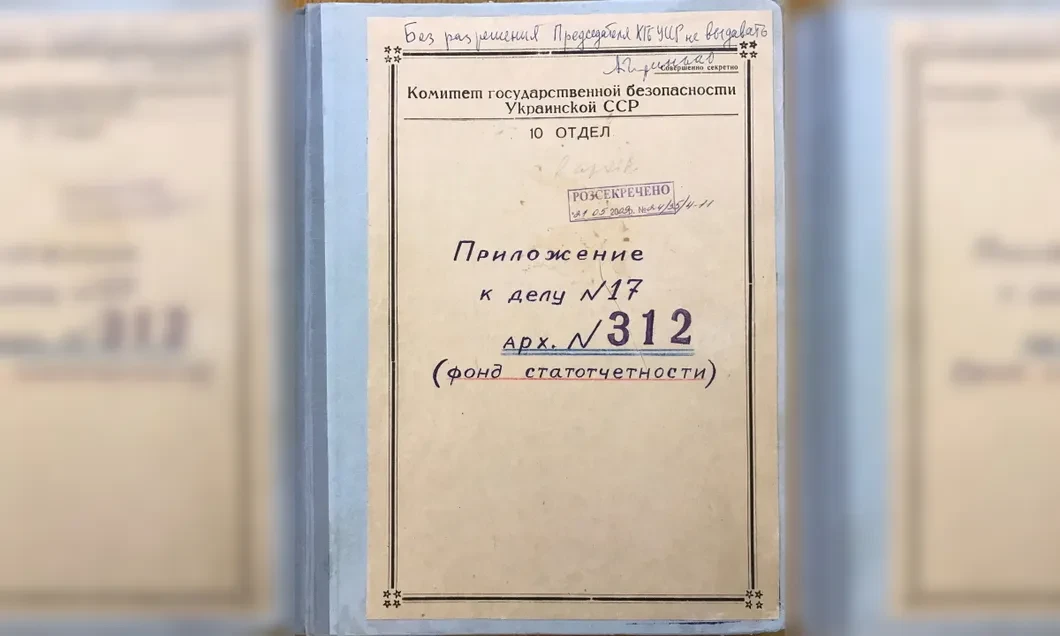
In the Statistical Reporting Fund of the industry State Archive of the Security Service of Ukraine, a document was identified entitled “Documentary Help on Mass Repressions in Ukraine in 1937–38”.
The 99-page business contains rich factual material: digital data, tables, quotes from orders, reviews, analyst. The case consists of two parts: a certificate on 13 sheets and the main analytical report on 80 sheets. Both documents were signed by the chairman of the KGB of the Ukrainian SSR Vitaly Nikitchenko: Help - September 2, 1964, and the report - October 10, 1964.
As you know, one of the secret initiators of Khrushchev’s shift was the chairman of the KGB of the USSR, Vladimir Semi -Locked. As part of preparation for the operation
The leadership of the KGB of Ukraine in the strictest secret studied the archival data of the period of great terror in the hope of finding a compromising material on Khrushchev,
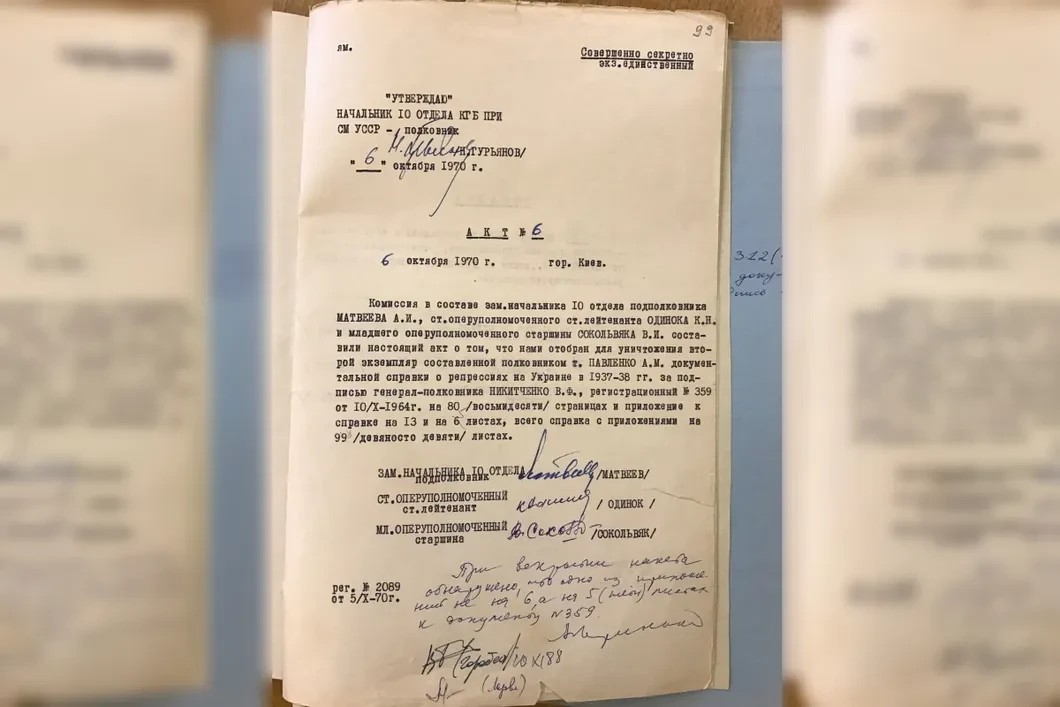
Which was most of the repression period in Kyiv, as the first secretary of the Central Committee of the Communist Party of Ukraine. The extreme secrecy of the report is indicated by notes and acts in the case: the report is printed in only two copies, and the draft was destroyed according to the act on October 10, 1964, 4 days before Khrushchev’s resignation. There is no frankly sensational materials about the activities of Khrushchev and his role in organizing repression in the document, but nevertheless, and after the shift of the disgraced leader, the report was kept secret. One of the two copies was destroyed by a special commission in 1970, and on the folder of the last remaining copy is the handwritten visa of the head of the KGB of the KGB of the Ukrainian SSR Anatoly Grinko:
"... without the permission of the chairman of the KGB of the Ukrainian SSR, do not give out ..."
Despite the fact that the document is the signature of the head of the KGB of the Ukrainian SSR Nikitchenko, he was not a real author. Work on the report was entrusted to the authorized person Nikitchenko, his referent, Colonel Alexander Mikhailovich Pavlenko.
QUOTE
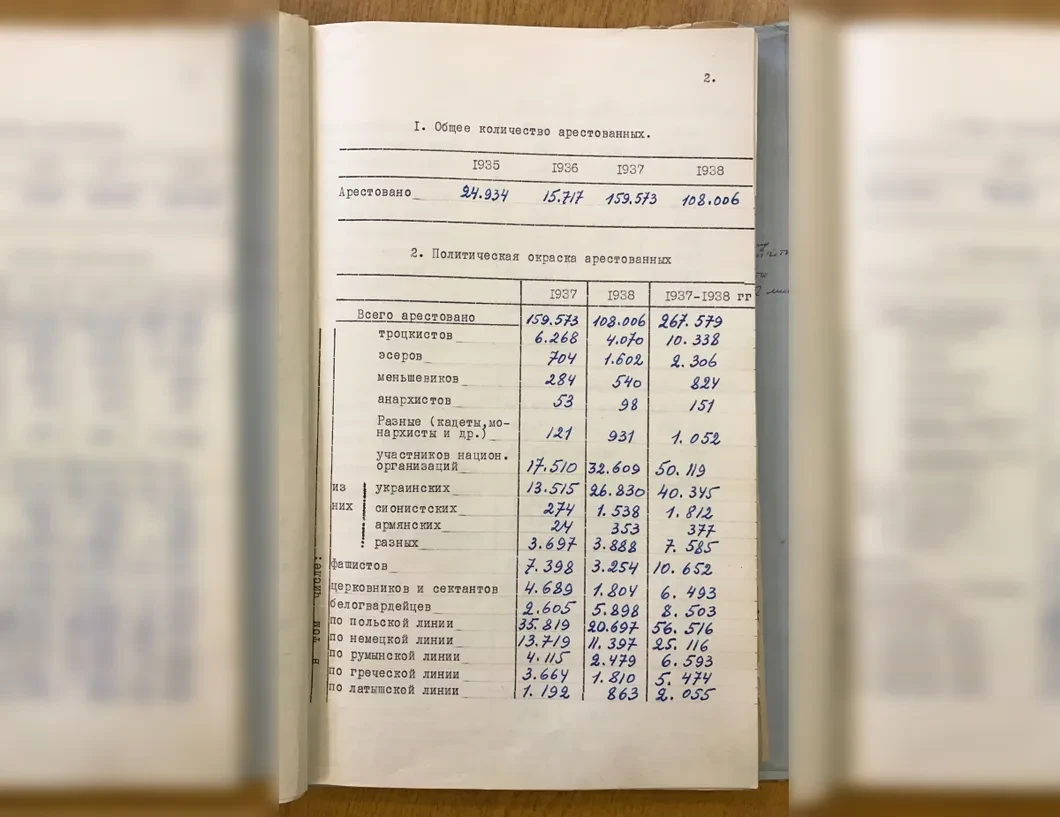
“... in 1937-1938 The bodies of the People’s Commissariat of Internal Affairs of the Ukrainian SSR in Ukraine held mass arrests of Soviet citizens, among which there were numerous leading personnel of party, Soviet, economic bodies, the command and political composition of the workers and peasant Red Army, border and internal security and employees of the NKVD.According to the archival materials of the State Security Committee under the Council of Ministers of the Ukrainian SSR, the NKVD bodies in Ukraine in 1937-1938 were arrested by 267,579 people ... "
It must be clarified that the data in Pavlenko’s note concerned only the state security arrested by the bodies, the data on the worker and peasants of the police were not included in the statistics. The author of the report writes that the numbers for 1937 and for the first half of 1938 can be considered accurate. In the second half of 1938, the report of reporting changed in the NKVD, and, as can be seen from the text, Pavlenko or did not find it or did not use it for this period.
The document provides statistics on the main mass operations of the NKVD, carried out in 1937–38:
Operation on fists, criminals and other anti -Soviet element (order of the NKVD of the USSR No. 00447);
Polish operation (order of the NKVD of the USSR No. 00485);
German operation (order of the NKVD of the USSR No. 00439);
Latvian operation (order of the NKVD of the USSR No. 00495);
Harbin operation (order of the NKVD of the USSR No. 00593);
Operation on the wives of traitors of the Motherland (Order of the NKVD of the USSR No. 00486).
On July 4, 1937, the People's Commissar of Internal Affairs of the USSR Yezhov sent telegram No. 11926 to the heads of state security bodies.
From the telegram of Yezhov
“... to all the chiefs of the NKVD and the heads of the UNKVD of Kraev and the regions. With this receipt, take into account all criminals settled in your area who returned to serving punishment and fled from the camps and links. All taken into account for fists and criminals to underscore in two categories:the most hostile elements subject to arrest and execution in the order of administrative cases through the three;
less active, but still hostile elements to be sent to areas at the direction of the NKVD of the USSR ... "
On the eve of the operation, according to Pavlenko, the NKVD of the Ukrainian SSR established for Ukraine the limit in the “first category” (execution) - 8000 people and in the “second category” - 20,800 people . Until the end of 1937, in connection with the overfulfillment of the limit, the NKVD of the Ukrainian SSR three times (September 5, September 29 and December 11, 1937), he petitioned Moscow to establish additional limits in the framework of this operation. As a result of satisfying the petitions of the limits for operation No. 00447 for Ukraine, to 63,950 people were increased, of which 26,150 were expected to be shot and 37,800 in the “second category”. Thus, by the end of 1937, limits increased three times. The Kyiv region received limits for 9900 people, Kharkov at 8300, and Odessa for 8200 people.
Colonel Pavlenko shows the scale of the “kulak” operation on the example of the UNKVD of the Kyiv region. In total, from August 1 to September 10, 1937, 6018 people were arrested there, and the speed of the “work” of the Troika had nothing to do with normal proceedings. For example:
From September 1 to September 5, the Troika of the UNKVD in the Kyiv region held three meetings at which 1125 people were convicted. On average, 375 people per meeting.
The final figures of convicts by order No. 00447 in Ukraine for the entire time of the order amounted to 111,560 people .
National operations differed in mass. The report shows a link to the letter of the People's Commissar of Internal Affairs of the Ukrainian SSR of Leplevsky, according to which by November 1, 1937, 19,030 people were arrested as part of the Polish operation, of which 4885 were sentenced to execution. In total, by national operations (Polish, German, Harbin, etc.) by July 1, 1938, 61,683 people were convicted, of which 39,644 on the Polish line and 11,748 in German.
A fairly large place in the report of Pavlenko is given to repressions carried out against the leading employees of the party-Soviet apparatus. As a rule, they were charged with participation in the counter-revolutionary underground, Trotskyist conspiracies and sabotage and implicit activities. You can get an idea of the scale of repressions on the example of the Dnipropetrovsk region, where from June 1 to December 1, 1937, 445 people were arrested in the affairs of the “right -Trotskyist organization”, of which: 93 employees of the party apparatus, 53 employees of the Soviet apparatus and 12 Komsomol leaders. Among the arrested were: 2 secretaries of the regional committee of the Communist Party (b) U, 37 secretaries of the district committees, 14 factories of the regional committees, 10 secretaries with a hump, etc.
A heavy blow fell on the personnel composition of the Red Army.
Quote from "Help ..."
About personnel cleaning in the army
“... the results of the defeat of the military-fascist conspiracy are the elimination of the conspirators among the command staff in 11 buildings, 25 divisions, 21 brigades and in 4 fortified areas of the CVO and HIS. 2209 people were arrested.
In a number of military formations, the commanders were already arrested, as parties to the conspiracy: 3 Komkores were arrested in the 7th corps, 2 commanders were arrested in 15 and 80 rifle divisions and 23 cavalry divisions.
As of March 3, 1938 was arrested in the Kyiv and Kharkov military districts as participants in a military conspiracy:
Deputy Communications - 2, pom. Command - 4, early political agencies - 2, deputy political agencies - 3, starting of the districts - 3, commanders of the corps - 10, divisions - 15, commandants of the fortified areas - 4, heads of academies - 1.
Among the command and political staff of the CSO and HIS, 530 foreign intelligence agents were arrested, including: Polish intelligence-307, German-58, Latvian-92, Romanian-36, Japanese-19 ... "
Naturally, Pavlenko’s report could not ignore the figure of Khrushchev. He is mentioned in the quoted note of the People's Commissar of Internal Affairs of the Ukrainian SSR of Uspensky, who replaced the arrested People's Commissar of Leplevsky.
From the note by Assumption
“... a radical fracture in the operational activities of the NKVD bodies in Ukraine occurred on the basis of the direct instructions of the People’s Commissioner of the Internal Affairs of the USSR - General Commissioner of State Security Comrade. Yezhova, by the defeat of the anti -Soviet underground, given to him during his arrival at Ukraine in 1938 and under the leadership of the Secretary of the Central Committee of the Communist Party (b) at Comrade. Khrushchev.On the basis of these instructions, first of all, the NKVD apparatus was cleaned from participants in the anti -Soviet conspiratorial organization and spies of foreign intelligence agencies planted by Balitsky and Leplevsky. For 1938, 261 traitors of the Participants of the right -Trotskyist organization were arrested in the apparatus of the NKVD of the Ukrainian SSR ... A significant number of employees who held responsible leadership posts in operational work were part of the arrested ... ”
It is characteristic that the former people's commissariats of the Ukrainian SSR Balitsky and Leplevsky and the Narkom Uspensky mentioned in the note were ultimately shot.
Among people who justify repressions, there is an opinion that these were mainly in -party showdowns that did not concern a common person. The presented document refutes this point of view. Of the 267,579 people arrested in 1937 and the first half of 1938, 100,553 people were the so -called “former people” - landowners, merchants, etc. Another 96,857 - former fists. The ministers of the cult are 6369 people. 18 134 arrested belonged to the declassified element.
Of the total number of arrested members of the CPSU (B), there were 10,545 people , i.e. less than 4%.
The national composition of the main groups of the arrested: the national composition of the main groups of the arrested:
131 635 were Ukrainians;
44 467 Poles;
25 017 Germans;
19 199 Russians.
The numbers show that the most affected by repressions in the Ukrainian SSR were ethnic Poles and Germans. According to the 1937 population census, 417,613 Poles lived within the Ukrainian SSR. Thus, more than 10% of the total Polish population of Ukraine and about 6% of the Germans were arrested. The share of the arrested Ukrainians and Russians was approximately 0.5%.
And finally, the question: how many people were sentenced to execution in Ukraine in the late 30s?
In the certificate of Colonel Pavlenko, the following numbers are indicated:
In 1937, 66,591 people were sentenced to the highest degree of punishment in the Ukrainian SSR.
In the first half of 1938, 54,390 people were sentenced to be shot. In the second half of 1938, an incomplete figure of 1256 people was indicated.
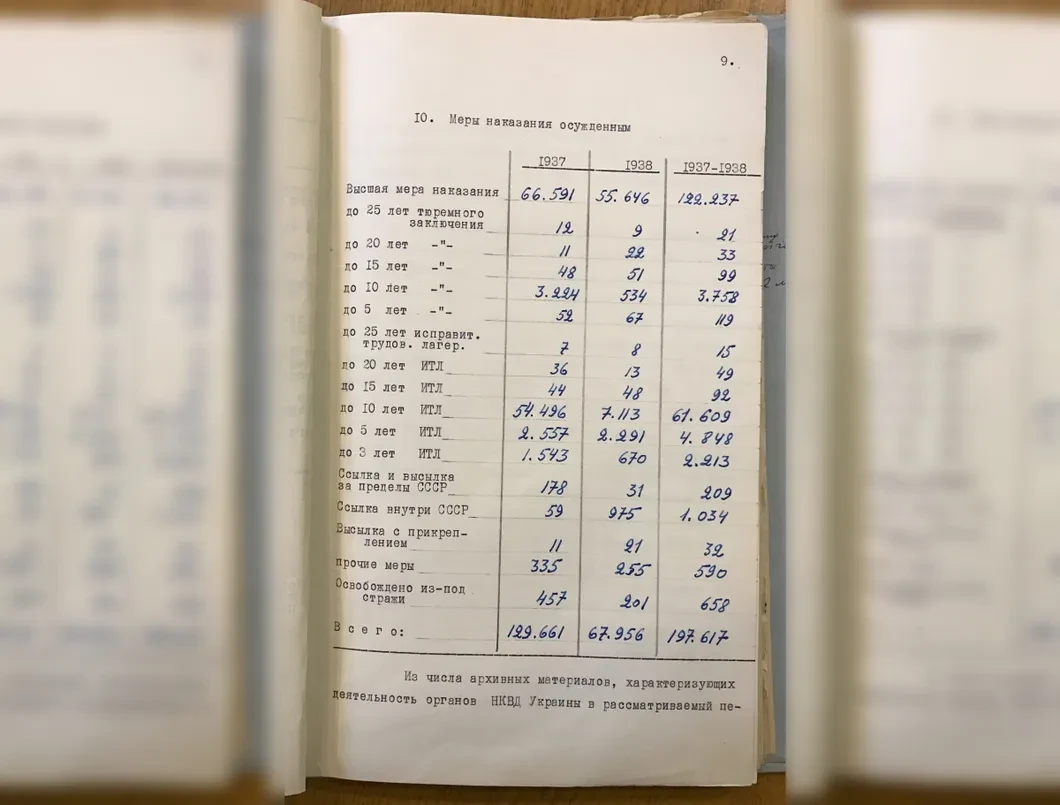
What Pavlenko wrote
“... the number of convicts in the second half of 1938, shown in the statistical reports of the NKVD of all regions of Ukraine, is not true. There is reason to assume that this number of arrested was convicted only by the courts, and the convicts of the three in the reports of the UNKVD regions were not shown ... "
On September 17, 1938, order No. 00606 on the creation of operational triples was signed by Yezhov to quickly consider the NKVDs accumulated in national operations. The number sentenced to execution by these triples is indicated in the report.
From the report
“... Based on archival materials, during September 19 to October 14, 1938, the Troika of the NKVD of the Ukrainian SSR were convicted 26,476, of which 22,508 people in the first category ...”
These figures are not final, since special triples worked until mid -November 1938. Nevertheless, we have the total number of citizens sentenced to execution, which consists of the amount of four numbers specified in the certificate. According to these data, 144,745 people were sentenced to execution. However, at the end of the report there is a link to another certificate of the number of convicts in the Ukrainian SSR from 1935 to 1940.
From the report
“... in the state security authorities of Ukraine was stored 249,268 archival investigative cases, on which 332,429 people were convicted in 1935-1940, including 161,748 people ...”
Thus, the number of citizens sentenced to execution in the second half of the 30s, confirmed by the archival data of the KGB of the Ukrainian SSR, is almost 162 thousand people, which at that time was equal to the population of the city of Nikolaev.
In the preparation of the article, archival material was used: OGA SBU, f.42, d.17, arch. n. 312