
Translated material
Balkans beat for happiness
How Russia loses Serbia - the last fragment of the Brotherhood of the Slavs
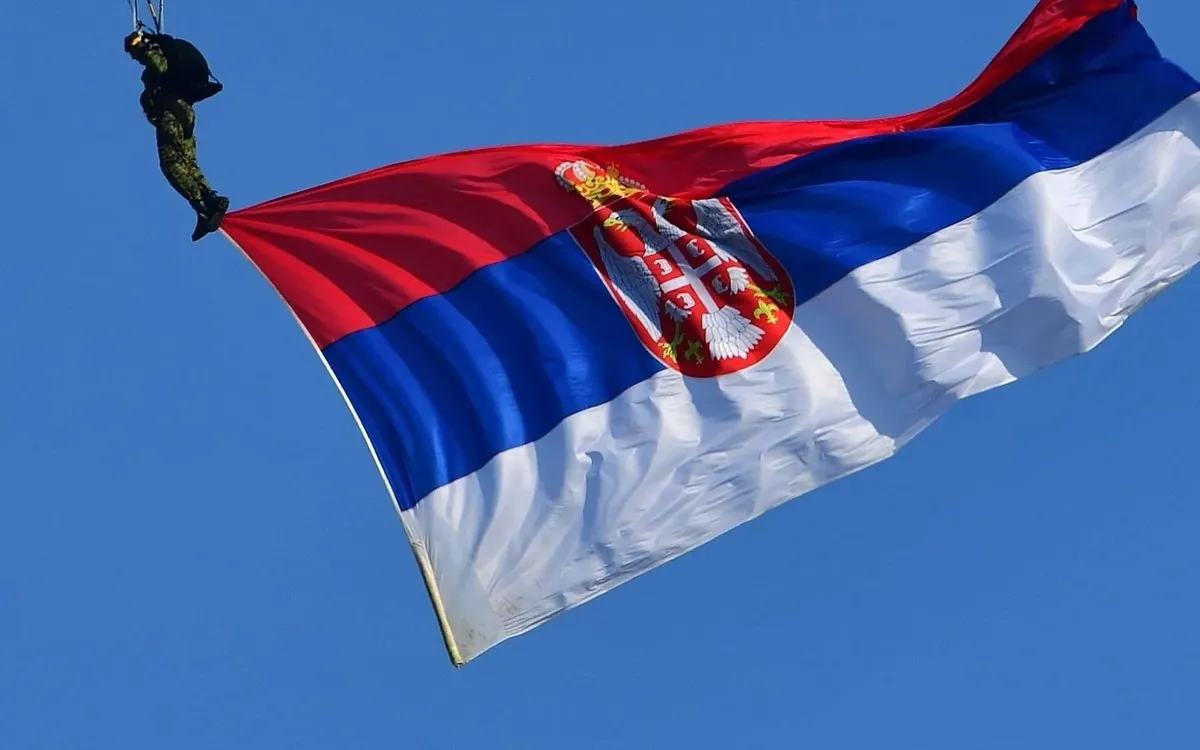
Montenegro and Northern Macedonia from friends-friends turned into enemies-non-egs. Bulgaria is annoying so that there is no strength. The rest only by the name of the Slavs, like Croats, Bosnians and Slovenes. The Serbs remain - in Serbia itself and a little in the Republic of Serbian, which, by inconsistent coincidence of geopolitical circumstances, found herself on the map of Bosnia and Herzegovina. Now, when Russia expects to say its word in the process of unleashing the Kosovo node, an analysis of its participation in the life of the Balkan countries is gaining new relevance.
Belgrade defense
Moskovsky Voentorg sells Serbia very modern things-anti-aircraft missiles of the shell-C1, Mi-35M assault helicopters, Mi-17V-5 multi-purpose military transport helicopters. Something simpler is transmitted free of charge, sometimes after restoration-six MiG-29 fighters, thirty T-72 tanks and the same number of BRDM-2 armored vehicles. In July 2019, the Ministry of Defense of Serbia announced that since that time Russia has become the main supplier of weapons for Serbia, while in 2014-2018. The first two places were occupied by the United States and China.
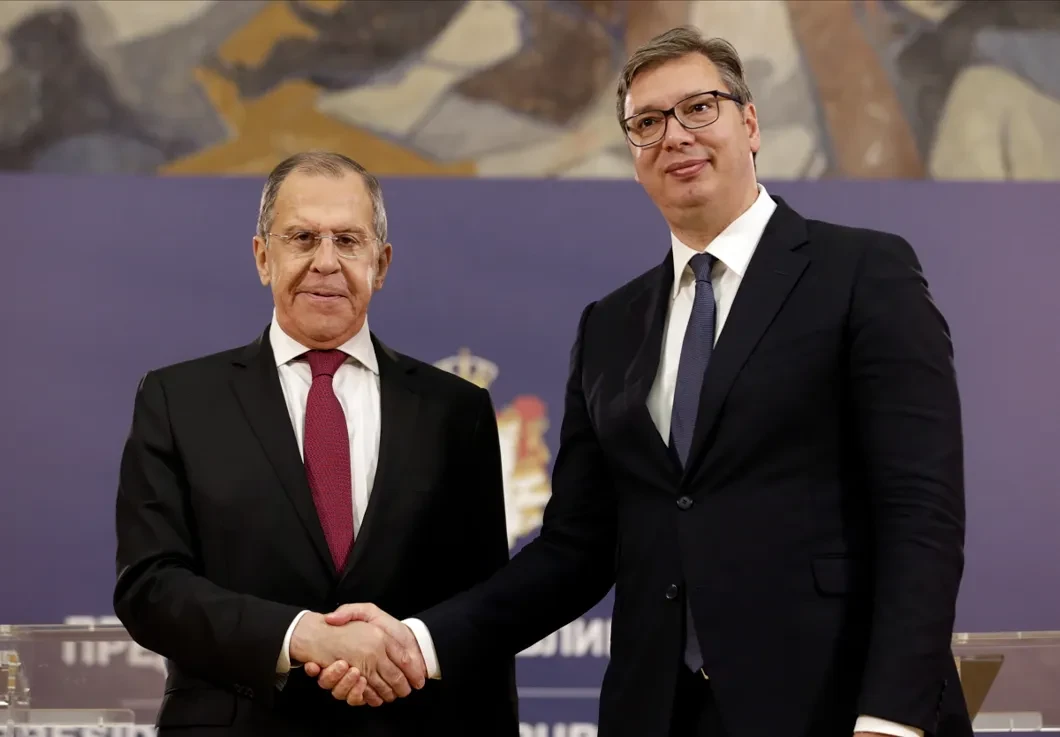
This, in fact, is the main thing that Moscow contributed to: according to the American research center Global Fire Power, which is the rating of military power of the world of the world by dozens of criteria, Serbia took 65th place in the general list and the first in the Balkans. If you add up all Belgrade expenses for defense for 2017–2020, which is given by the Balkan Security network, a billion euros are gaining. At the same time, everyone knows that no one is going to attack Serbia.
In the meantime, the guns are silent, the diplomats have to say. And there is one point on which they, apparently, will have to say especially a lot. We are talking about Kosovo settlement, which, barely retreated, coronavirus entered the unusually active phase:
Washington and Brussels were seriously clapping for the right to become the godfathers of the future agreement between Protina and Belgrade, which in the future can open the Kosovo doors to the UN.
According to President Serbia Vuchich, the charges of President Kosovo Tachi in war crimes should not stop the negotiation process, and on July 12 he meets with Prime Minister Kosovo Avdullah in Brussels-the first meeting of this level for a very long time. She will be preceded by video surgery, in which, in addition to their two, French President Emmanuel Macron and German Chancellor Angela Merkel will take part.
And if you imagine that the imaginary table of the Kosovo settlement will gather all participants in the political game - among them there cannot be a special representative of the US President for Kosovo settlement of Richard Grenell, who stubbornly inviting the contracting parties to the White House, then the virtual figure of Minister Lavrov will loom behind the chair. It was he who recommended that at a recent meeting in Belgrade, not to force “the so -called final normalization” and not to adjust it under “artificial terms”.
After these consultations, according to one of the journalists, Vucich looked like a rink had moved.
The bets are really great: for resolving, Russia consent to a revision of the Security Council resolution 1244, which does not allow Serbia to recognize Kosovo - for nothing that half of the UN members have already done this. To lose such a powerful lever for Moscow means losing all weights in the Balkans, and not only there. And for Vuchich, the failure of negotiations is equal to the collapse of his historical mission as he sees it - to bring his country to the European Union.
Now this successful and experienced 50-year-old figure, who visited the Minister of Information, Defense and Prime Minister of Serbia, had a golden chance: in the June election, his progressive party won 189 (and with coalition partners-more than 230) out of 250 seats in the puppy.
Now the parliament can ratify any international agreement, including resolving in Kosovo.
But then Vucich grabs the sleeve from Moscow. On specialized Russian resources, lengthy materials are regularly published, sometimes signed by Serbian names (their authors excellently speak the Russian language), sometimes obvious pseudonyms, including Russians. Their goal is to show that Vucich is preparing to commit a grandiose betrayal, to hand over Kosovo to Americans and Albanians, etc. After the publication on the website of one of the Russian agencies, under the heading of Moscow Serges Tears, does not believe, which contained the thesis about “The continued decline in Putin’s trust to Vuchich”, the latter, according to the Al Jazeera Balkans portal, called the Russian president to “neutralize” the harm caused by this publication.
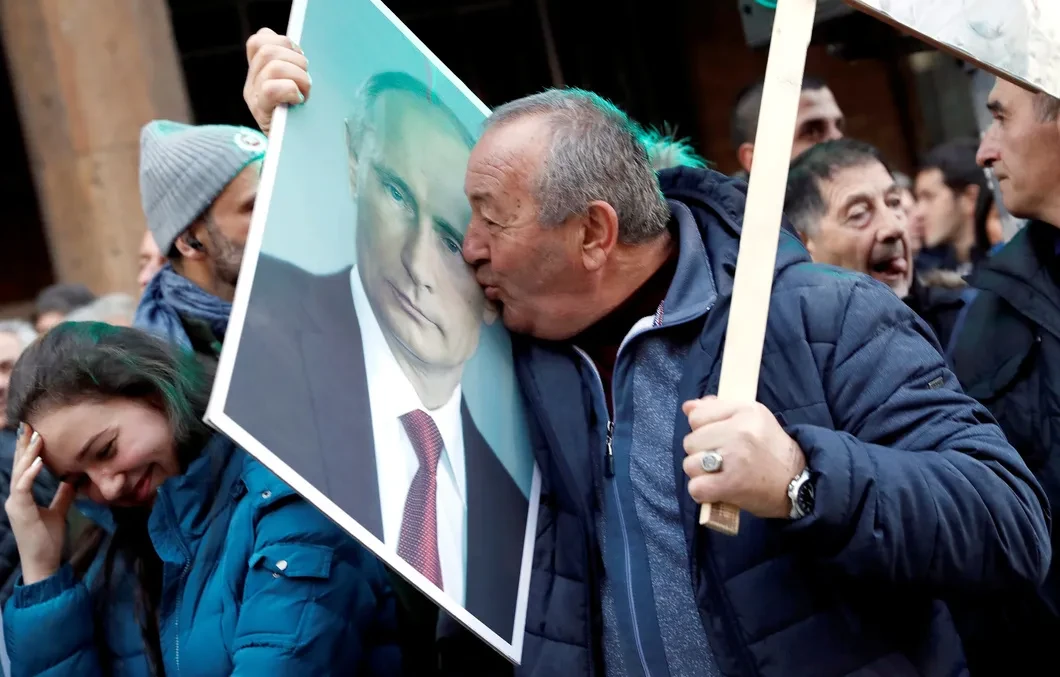
Another article of June 30 on the same portal (author Ivan Ivanovich) is even more clearly entitled: “The President of Serbia betrays Serbs. Russia protects them. ” In this publication, Vucich already “represents the betrayal of his own people as the highest act of patriotism.” Ivan Ivanovich gives a variety of evidence of this. For example, quoting the performance on the channel N1 Elena Milich, director of the non -governmental organization “Center for Euro -Atlantic Research”, “known as the lobbyist of NATO and the compiler of the lists of pro -Russian political parties and organizations, which sends reports to congressmen in the United States” and which “fully supported Alexander Vuchich in the context of negotiations with Albanian terrorists, naming them. "Negotiations for the future of Serbia."
Ivan Ivanovich concludes, starting from the Presidents of Serbia and Kosovo, who had been planned on June 27, but the failed negotiations, as follows: “The meeting in Washington was supposed to be the introduction of Kosovo's betrayal into the final act. The betrayal is again postponed, and we should especially encourage the role of Russia, since at these moments it protects us ( insisting on resolutions 1244. - G. G. ) from its own president and government, which work to the harm to their people. Kosovo vow is a vow of not only Serbian, but also the Russian people. ”
It remains to recall that formally from the mantra “we will support any decision on Kosovo, which is organized by the Serbs,” Moscow has not yet refused. But the keys to freedom are especially nice to receive when they are handed over voluntarily.
"Imtamnebyinet" in Montenegro
A good example of the development of Russia's relations with the Balkan countries is the case of Montenegro. In May, last year, the court of this country recognized the organizers of the failed coup attempt in October 2016 of two Russians: Eduard Shishmakov (aka Shirokov) and Vladimir Popov (aka Moiseev). They were sentenced in absentia to 15 and 12 years of imprisonment, respectively. In an effort to prevent the entry of Montenegro (population-620 thousand people) to NATO, an international group of conspirators (there were still, in addition to Montenegrins, Serbs) developed a plan for the capture of parliament on the day of the election on October 16, 2016 and the murder of the then Prime Minister Mil Dzhukanovich. Having come to power, the opposition democratic front was to say a decisive “no” to Atlantism.
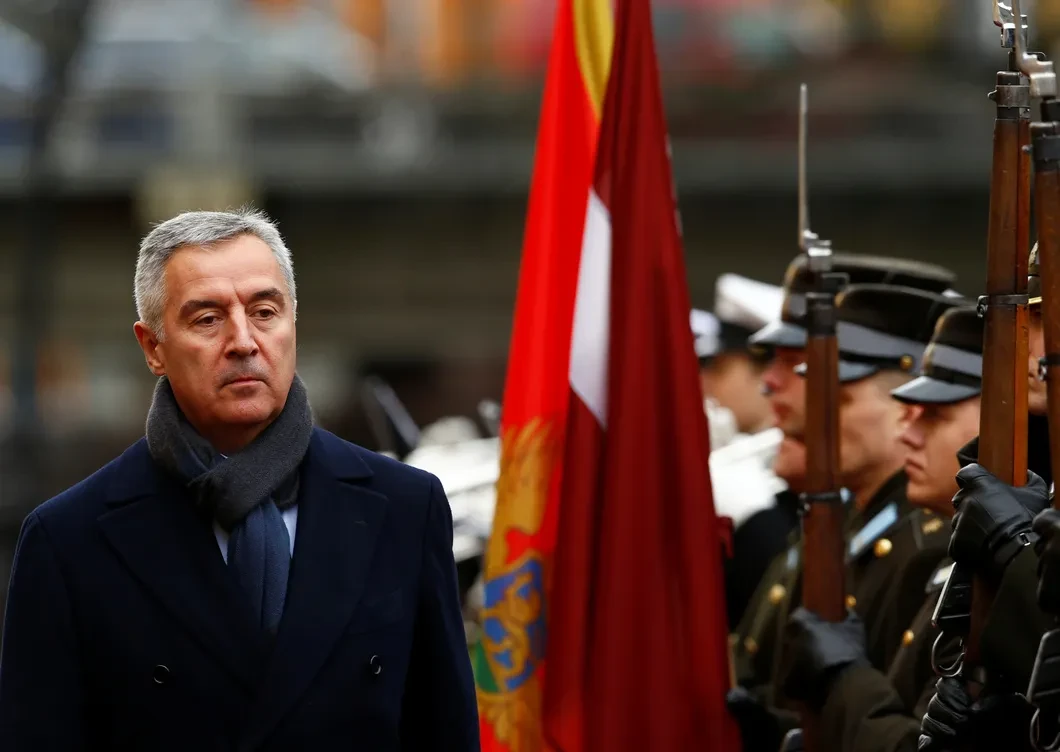
Moscow, of course, completely denied the participation in the conspiracy of its citizens. However, this story came to Russia in the spring of this year. Then, in Montenegro, the mass processions of believers, inspired by the Church, began: the law on freedom of religion adopted by the republican buying out allowed the government to dispose of the very, very significant property of the Serbian Orthodox Church (the SPC), represented in the country of the Montenegrin-Primorsky Metropolitan.
Having become the President of the Republic in May 2018, he vowed to ensure the rights of an unrecognized Montenegrin Autocephalous Church to terminate the “Dictate of the SPC” - “a religious organization that is a relic of the past and cannot understand that its time has long passed, and all the countries of Western Balkans have the right to a European future.”
This time, Dzhukanovich in an interview with Reuters accused Russia (as well as Serbia) of "using the Serbian Orthodox Church to undermine the pro -Western government of Montenegro, which leads the country to membership in the European Union."
“If you ask whether this is a continuation of attempts to destroy Montenegro, prevent her intention to continue his journey to European and Euro -Atlantic integration, then you can have no doubt,” Dzhukanovich emphasized.
The head of the Chernogorsk state, whose flag has been taking its place among NATO insignia for three years, replied (which is curious - “The Empire has been response” after a two -month pause) Sergey Lavrov. He said (it is not clear why) that "betrayal did not come to someone specifically, but the betrayal of the people who have always been near you." Explaining at the video conference to MGIMO students, as it could have happened, Lavrov expressed the opinion that Dzhukanovich “had problems with justice in the West, in a number of European countries he was charged with accusations of smuggling, in my opinion, in some other sins. I do not exclude that this is the reason for a sharp change in his policy. ”
Without waiting for the reaction to this statement, the head of Russian diplomacy at the next meeting with Patriarch Serbian Irine in Belgrade again stated that the Orthodox churches would always be supported by Russia, including in the Balkans.
Three hundred years minus
It seems that the “architects” of Russian foreign policy ignore the activity of their real, very effective competitors in the Balkans, primarily China. The Western Balkans were lucky to enter the so -called “central corridor” of the famous Chinese megaproject “One Belt - One Way”. This corridor - it is primarily about transport infrastructure - must connect ports in the east of China and Shanghai with Central Asia, Iran, Turkey, and then, crossing the Balkan countries, move to Central Europe. Within the framework of this project, about $ 4 billion has already been invested in Serbia, and over 10 billion received in total the Balkans.
China also takes the fact that it does not burden investments with political requirements, does not insist on compliance by partners of human rights or other democratic principles.
Moreover, if we read the document “Concept of Foreign Policy of the Russian Federation” posted on the Foreign Ministry, we will not find the words “Balkans” among ten thousand other words.
Meanwhile, in the report of the Valdai International Discussion Club, “Where are the Balkans go? A new paradigm of cooperation for Russia ”, published back in September 2018, noted: to imagine a scenario related to Russia's departure from the Balkans after a particular presence in the region for more than three hundred years is almost impossible. But today it is Russia who threatens to crowd out from the region, since other international players have more opportunities-economic, military-political, cultural, build the Balkan direction of foreign policy more consistently and systemically.
Russia was written by the authors of the report, first of all, it is necessary to move away from the exclusive rate to the “privileged bilateral partnership”. As it enters the Euro -Atlantic sphere of undefined countries, this type of cooperation will not be able to satisfy Russia's requests. An alternative should be a multilateral and multi -vector partnership with all countries of the region. It is necessary to search for new economic tools, deep localization of production.
And also, add, we need a fresh look at the peninsula from Moscow hills. The myth of the Slavic unity dilapidated as much as possible, but modern instruments of political equality and economic benefit in the hands of pragmatists here, as elsewhere, continue to work successfully.