
Translated material
"Leave us alone!"
The Russians have no money. The authorities deny this and plan new requisitions

Researchers from the Rosgosstrakh Life and NTC Perspective, who interviewed one and a half thousand Russians about how much they earn and how quarantine was reflected in their income, must have not expected the resonance caused by the publication of the results of their survey. Every fifth respondent reported a “significant fall in income”, and every tenth lost his earnings at all.
But most importantly, it turned out that per capita income of 45% of citizens does not exceed 15,000 rubles. The share of those who live more than 25,000 rubles was also reduced - in February there were 36%, in June - only 27%.
The number of total poor citizens grew - 8.1 % of respondents reported that their average monthly income does not exceed 5,000 rubles (in the course of a similar February study, 6.9 % of Russians spoke about such income). Most of the survey participants live in small cities, but the current crisis did not spare the agglomeration.
For example, in St. Petersburg, 20% of respondents said that they received from 5,000 to 15,000 rubles, and 40% estimated their income in the range from 5,000 to 25,000 rubles.
Come on, the authorities were indignant, what are 15 thousand per person there, what you say! In its official release, the Ministry of Economic Development stated that only in April the average nominal accrued wage amounted to 49.3 thousand rubles. With reference to Rosstat, the Ministry added that in the first quarter of 2020, nominal income of the population generally increased (by 3.3%). With the beginning of quarantine, real salaries have really decreased (there is nothing to do), but only by 2%.
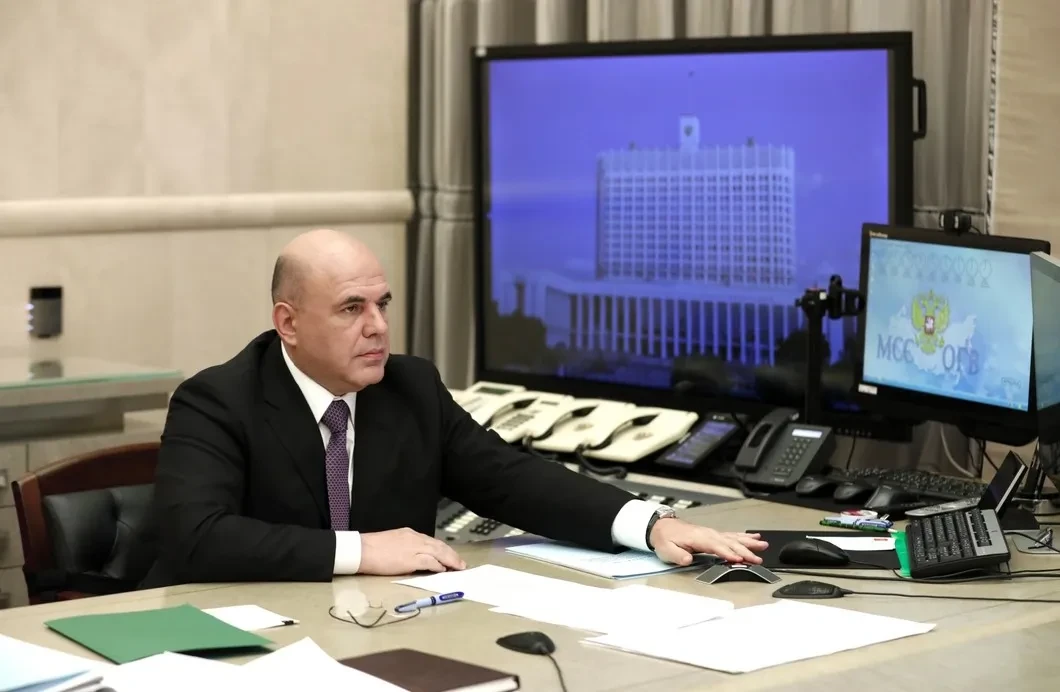
The indignation of the ministry was divided by higher chiefs. The most important spokesman said that the research methodology is unknown, the sample is small, to draw conclusions on this basis incorrect, and reminded that the elimination of poverty is “this is what the action of almost all development programs is aimed at”. Then another heavy artillery spoke-the Prime Minister agreed that "the successes achieved over the years to combat poverty were at risk due to the pandemic," but added that "the calls of coronavirus require a jointly convincing answer."
One and a half hundred dollars of child benefits or unemployment benefits in combination with two hundred dollars of per capita income is not a very convincing answer “to coronavirus calls”. Two hundred dollars a month for life is something between the achievements of a successful African country and the unsuccessful Latin American, but do not look like the result of twenty years of continuous victories.
Moreover, the quarantine will break through large gaps in the welfare of Russians, the bosses warned the most loyal and official experts. The latest study of the RANEPA “Economic situation of the population during postpandemia” indicates that “more than 60% of citizens expect“ worsening of their family welfare ”during 2020 (36% choose“ somewhat worsen ”and 27% -“ will significantly worsen ”). The reduction in income in 58% of Russians was revealed by the May survey of the CSR. The HSE Development Center predicted that according to the results of the II quarter, real incomes will fall by 18%, and the Center for the Expertise of VEB.rf - which is 17.5%.
Actually, the respondents of the survey of Rosgosstrakh of Life did not say anything that contradicts this data - 19.7% of respondents noted a “significant” reduction in their average monthly income, another 16.5% declared the reduction in income of their family members.
However, the boss who denies the fall of people's income has his own logic and his arguments. And, I must admit, quite significant. From the point of view of the authorities.
To begin with, this is the data of the Central Bank and the Federal Tax Service, according to which consumer demand has already returned to the pre -crisis level.
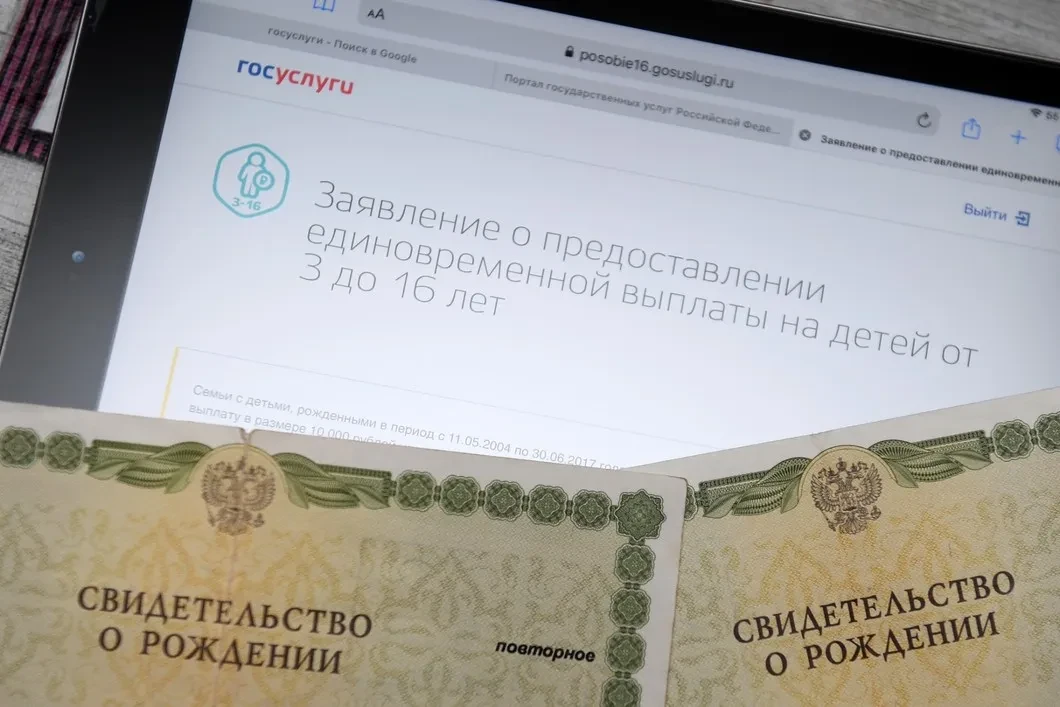
According to the Ministry of Economic, citing these data, already in the second half of June, the Russians spent 114.4 billion rubles against 108 billion rubles in March. If you have no income, then what money do you go to stores? - The chief in economics could ask. And in general-where people survive a hundred to two hundred dollars a month, in principle, there can be no such shops, supermarkets, restaurants and boutiques!
What are the bars and summer verandas? Working dining rooms and field kitchens!
In addition, if people have no money, then where did the increase in funds in ruble accounts of individuals in quarantine months come from? - the boss argues. For March - May, according to the Central Bank, 383 billion rubles were added to these accounts, and the total amount of bank savings of citizens reached 24,886 trillion rubles.
Another argument applies to macroeconomic parameters. Russia, perhaps, is a rich country, judging by the income of its owners, but the Poduzheva GDP of Russia is small - approximately 11,200 dollars, just below the mid -Issue. More than Malaysia and Turkey, but less than Romania and Croatia. So, in countries with a similar per perch GDP, the average earnings (and income) should be approximately at the same level. They may differ, but not at times!
So they are not different. In Croatia, the average salary is about $ 1,000, in Romania - a little less than $ 1,200. In Malaysia, people on average earn a little more than $ 700, and in Turkey - a little more than $ 900. Well, Russia with its Semi-Tollar average salary at the beginning of the year is somewhere in the middle. Between Malaysia and Croatia. Accordingly, both income and consumption should spin near this level, no more, but no less.
No, no, people have money, the boss argues. It's just that people are packed.
They do not want to help the industrial oligarchy with their cheap labor and compensate the budget to the loss of oil revenues by reducing their standard of living. Well, nothing, nothing, we will get to their money, the authorities think.
For example, on July 7, the State Duma approved the bill in the third and final reading a bill on strengthening control of cash operations. Now about any such operation in the amount of more than 600 thousand rubles should be reported to Rosfinmonitoring. Mail transfers in the amount of 100 thousand rubles and all real estate transactions (both in cash and non -cash form) in the amount of more than 3 million rubles will be controlled.
He will continue to store cash pyramids in the apartments, and everyone else will have to pay for the costs of power by their labor ruble. And this is obviously only the beginning. As Ostap Bender used to say, "each labor penny must be taken into account."
I have already talked about the fact that the plans of the authorities to restore the economy provide not growth, but a decrease in income, and reminded that the authorities sees “risks for Russia” in the growth of your income. Therefore, the next statement of people that “there is no money” caused such irritation of the authorities. How is it "no"? We know what is, and we have already decided to select this money.
There is a sustainable opinion that a drop in prices for an export resource reduces the degree of ferocity of the Russian authorities-the authorities begin some kind reforms, cancel serfdom or soften the passport regime, in general, “declare the will”.
This is wrong. Unfortunately, it is the transcendental exploitation of the human resource (and not natural) that is the basis of the Russian economic structure.
But just excess money in power allows her to leave people alone for a while.
People feel this and, answering questions from sociologists, try to tell the authorities that they have no money, and they ask to leave them alone.
The authorities do not believe people. The population of the population is his new goal, a measurable, understandable, achievable, and it will pursue this goal ruthlessly.