
Translated material
Russia on treason
How the FSB turned articles about the Stateismman, espionage and disclosure of GOSTain into universal weapons against any person. Irina Tumakova's study

For 20 years, about 100 people have been convicted in the country. Another 278 were sentenced to disclose GOSTaina. For the first time in the last 23 years, a journalist has been pursued for the Stateismman.
An article on treason in the Criminal Code of the RSFSR of 1926 had a notorious number 58-1. Traise to the Motherland was punishable by execution or ten years of camps with confiscation of property, there was no execution for military alternatives. In total, the 58th contained 14 parts: about espionage, seizure of power, contacts with foreigners, counter-revolutionary propaganda, sabotage, terrorist attacks, “the help of the international bourgeoisie”, informing the crime, about the active struggle against the working class, the undermining of industry, the destruction of communications, and the tensile state to invade the USSR.
In 1961, the 58th article lost strength, instead of it appeared the 64th with the previous sanction and a new formulation.
By concepts
Treason to the homeland (1961) -
This is “an act deliberately committed by a citizen of the USSR to the detriment of the sovereignty, territorial inviolability or state security and defense capacity of the USSR: the transition to the side of the enemy, espionage, the issuance of state or military secrets to a foreign state, escape abroad or refusal to return from the border in the USSR, providing a foreign state of assistance against the USSR, as well as conspiracy to seize power.
They caught traitors and proved their guilt organs, which from 1920 to 1953 changed the names four times: the Cheka, GPU, NKVD, NKGB. The longest, from 1954 to 1991, was done by the KGB.
"From among Soviet citizens"
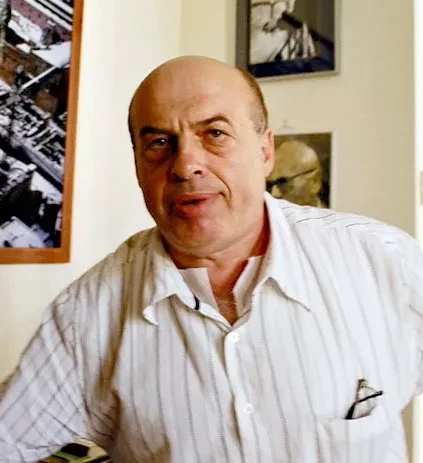
In April 1978, the KGB informed the Central Committee of the CPSU on the "upcoming trials" over the traitors. For a year and three months for treason, eight people were brought to criminal liability. One of them, Nathan Scharansky (the future minister in the Israeli government), was sentenced to 14 years in camps for passing the lists of Soviet “refuseniks” abroad indicating the place of work.
The Leningrad Radio Engineer Leonid Lubman also tried to transport the records abroad - and was accused of transferring secret information to American intelligence. GRU employee Anatoly Filatov and physicist Alexander Nilov were really recruited in Algeria, both agreed to work for the CIA. But the traitors in this note are also named by the famous dissidents Yuri Orlov, Miroslav Marinovich, Nikolai Matusevich, Alexander Ginzburg, Balis Gayauskas .
In order for Soviet statistics to be clear: in the 1981 report, the KGB reports the exposure of two American agents, two West German "from among Soviet citizens", six Chinese. In 1982, 20 people were held accountable for treason, of which seven of them were actually for espionage, the rest tried to escape from the USSR.
The 64th article also operated in the first years of the existence of modern Russia. In 1993, the KGB was reorganized again. The federal counterintelligence service (FSK) was supposed to catch traitors and spies for this. But it was not very clear what law to judge her “customers” by. The flight from the USSR was no longer suitable.
In 1994, FSK officers detained the director of foreign economic relations of special engineering and metallurgy JSC Vadim Sintsov . After the arrest, he somehow gave an interview with television and admitted that it was really a year ago, during a business trip to London, he was recruited by British intelligence.
Then, in 1994, FSK detained an employee of the 14th Research Institute of the Navy Moses Finkel .
He himself came to the American embassy and offered secret information in exchange for 15 thousand dollars and the opportunity to emigrate to the family. They paid him only a thousand, and then he was found counterintelligence.
In 1997, the new Criminal Code of the Russian Federation entered into force, and instead of “treason to the Motherland” the concept of “state treason” appeared in it.
By concepts
State treason, Art. 275, (1997) -
Spying, issuing state secrets or other assistance to a foreign state, foreign organization or their representatives in conducting hostile activities to the detriment of the external security of the Russian Federation.
Keywords here are “hostile activities” and “damage to external security”, without this betrayal.
Under the new article in 1997, Sintsov and Finkel were convicted, the first was sentenced to 10 years of strict regime, the second - to 12. Both are repeated, they were not denied relations with foreign intelligence.
And in Russia a new page has already begun in the history of the fight against traitors. It began with the first and until recently the last business, in which treason was charged with a journalist.
"Now you will sit down because the court is now our"
In 1997, the FSB officers (FSK lasted until 1995) detained a military journalist, captain of the 2nd rank Grigory Pasko. He collected data on the disposal of radioactive waste in the Pacific Fleet.
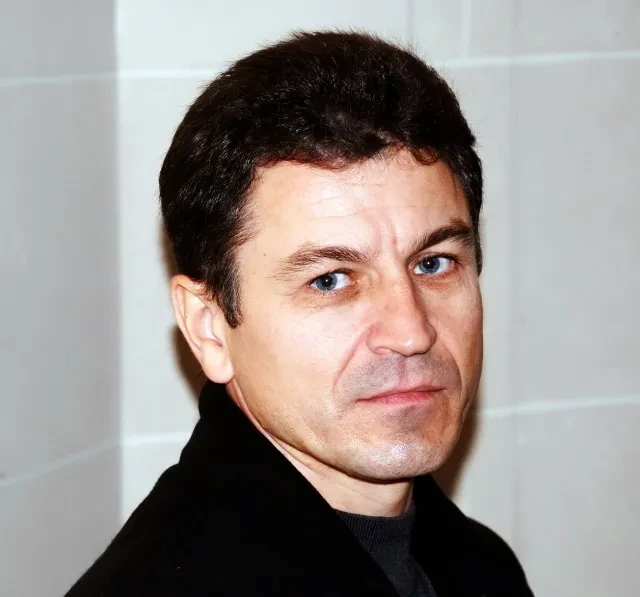
“In the early 90s, there was a surge of lawmaking in Russia and new laws appeared-about the protection of the environment, about the press, about GOSTIN,” says Grigory Pasko. - Article 7 of the Gostaine Law contained a list of what could not be classified under any conditions. This list includes data on epidemiological, sanitary, radiation safety of the population. And I began to deal with a topic that no one wrote to me. But it turned out that progressive laws do not mean that the old Soviet institutes advanced forward. One of them is the KGB, although it was already called in a new way-the FSB.
Pasko was accused of espionage in favor of Japan: supposedly he was going to convey the information containing GOSTain, the Japanese press. In the course of the process, it turned out that since 1995 he was monitoring him, and his conversations were heard without any sanction. In the case, fake protocols and signatures of witnesses were discovered. The court issued a ruling on this subject to the Pacific UFSB.
The accusation of Gosizman with Pasko was removed, in 1999 the court found him guilty only of exceeding the official powers, sentenced to three years in the colony and immediately released on amnesty.
The prosecutor's office appealed the sentence of Pasko, and in a new way he was listened to in 2001. He recalls how an FSB officer approached him in court and said: “Now you will sit because the court is now ours.”
In the debate, Grigory Pasko’s lawyer insisted that all the information that the accused allegedly wanted to transfer to the Japanese has long been published. But Pasko was found guilty of Gosizmen, the court sentenced him to four years in a maximum security colony.
Orientalist, an employee of the Asian Ministry of the Russian Foreign Ministry, Valentin Moiseev, in 1998 made a report “The Politics of Russia on the Korean Peninsula” at the Russian-Korean Symposium at the Institute of Economics of the Russian Academy of Sciences. He handed the printed theses to the report to the Korean colleague. By this time, theses have already been published in the institute collection. Moiseev was detained on charges of espionage in favor of South Korea. The Moscow City Court sentenced him to 12 years in the colony, but the Supreme Court canceled the verdict on the grounds that he was "cannot be recognized as legal and reasonable." In 2001, the Moscow City Court revised the case, Moiseev was still found guilty, but the term was appointed much lower than the lower - 4.5 years.
The scheme according to which Grigory Pasko became a Japanese spy, and Valentin Moiseev - South Korean, will take root at the FSB:
People will begin to be accused of treason for the disclosure of information taken from open sources.
Another thing is that at different times the courts will relate to this differently.
The ecologist, captain of the 1st rank Alexander Nikitin , accused of Gosizmen in 1995 for the preparation of the report “Northern Fleet-a potential risk of radioactive pollution of the region”, in the 2000th, the court fully acquitted. Like the employee of the Pacific Oceanological Institute Vladimir Soifer, whose security officers somehow found secret documents in the apartment. These will be the latest acquittal sentences for the cases of Stateizer in modern Russia.
In October 2001, Vladimir Vetrov and Boris Goldstein were sentenced to three years in the years in Saratov. Their company was sold to the Chinese by microwaves, and one part in the devices was made by the secret NGO "Almaz".
In August 2003, an employee of the Pacific Oceanological Institute Vladimir Schurov received a two-year term for sending equipment to China stipulated by a contract for joint research.
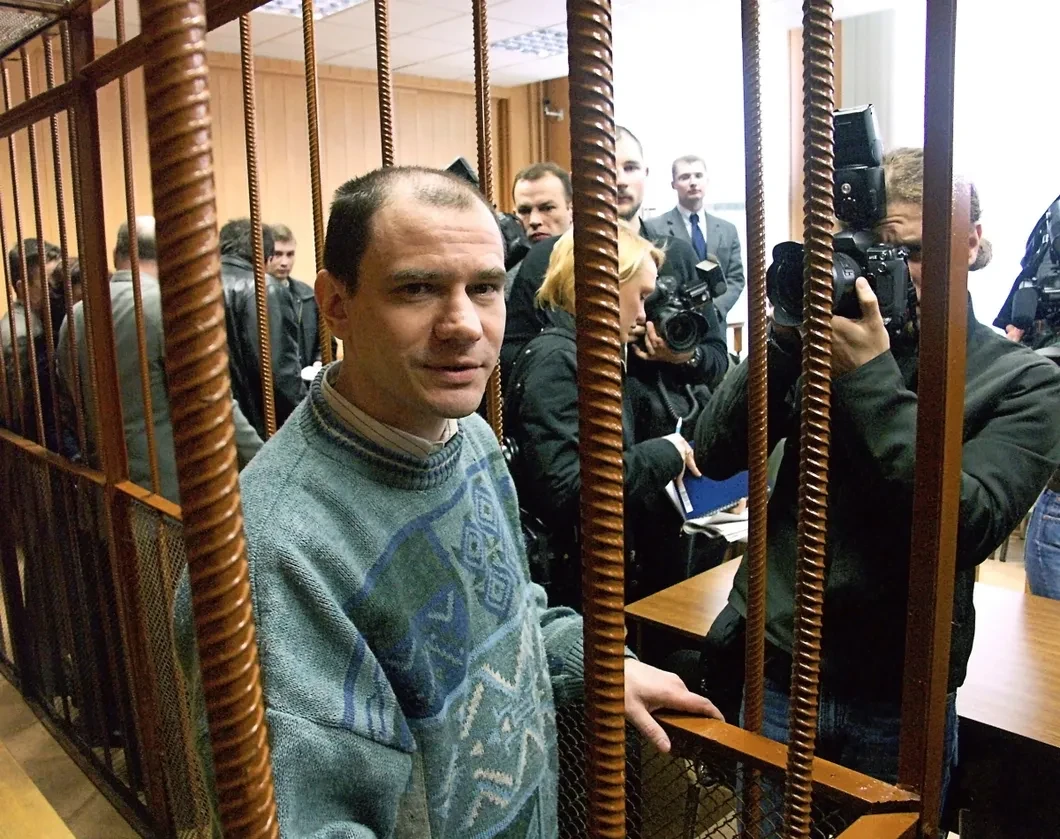
In April 2004, the Moscow City Court sentenced the 15 years in a maximum regime colony of the Institute of the USA and Canada Igor Sutyagin . He was accused of transferring to the British company related to American intelligence, Russian weapons information. Sutytin did not deny the fact of the transmission of information, but claimed that he took it in open sources.
And with the Krasnoyarsk physicist Valentin Danilov, the FSB did not immediately cope. He was judged in 2003, a jury was already operating in Russia. And the collegium issued an acquittal. With difficulty, the prosecutor’s office will be able to revise the verdict, and in November 2004 Danilov will receive 13 years of strict regime.
Even then, it will become clear that the FSB can interfere with the correct sentences: jury.
The Chekists began to lobby for amendments to the law. And in 2008, articles on stateisms and terrorism were withdrawn from the jurisdiction of the jury. Since 2010, the jury cannot consider any matters where there is a mention of GOSTYNA.
In 2010, the FSB began an investigation into the case against professors of the St. Petersburg military commissar of Yevgeny Afanasyev and Svyatoslav Bobyshev . When scientists flew with lectures to China, the Chekists secretly examined their baggage, having copied the information from the laptops, and found data on the telemetry of the Bulava missile. Experts repeated that telemetry as such has no value. In addition, the information that the professor drove to China was not classified at the time of trips.
Scientists received their 12 and 12.5 years in colonies.
But the initiators of the criminal case made another drawback in the legislation. And in 2012, the article on the Stateizer was changed:
Since then, a potential traitor does not necessarily know what is dealing with the state. He will be informed about this in a timely manner of the FSB.
Act!
Clamp the case of Ivan Safronov! The charge must be public. Sign the petition
"Or in other cases ..."
Since 2012, the concept of Gosizmen in Article 275 of the Criminal Code of the Russian Federation has been formulated as follows:
By concepts
State treason, Art. 275 (2012) -
... Spying committed by a citizen of the Russian Federation, the issuance of an international or foreign organization or their representatives of information constituting a state secret, a trusted person or who became known to him in the service, work, study, or other cases provided for by the legislation of the Russian Federation, or the provision of financial, material, technical, consulting or other assistance to an international organization or their representatives in activities aimed against the security of the Russian Federation.
Simply put, the information that you handed over to a foreigner does not have to cause damage to the homeland so that your act is called treason.
Moreover: you should not be a bearer of GOSTain, you could never give receipts that you will store it. She simply became known to you "in other cases." You could even tell a foreigner, but only provide him with “different help”.
Then, in 2012, a new article 283.1 appeared in the Criminal Code of the Russian Federation- “The illegal receipt of information constituting state secret” . The fact that the information you receive is a state of GOST, you will also learn from the Chekists at the right time.
According to the “team 29”, created by lawyer Pavlov, about 100 people have been convicted in Russia for 20 years in Russia. Another 278 were sentenced to disclose GOSTaina.
In the reports of the Judicial Department of the Russian Federation, cases under the 275th article have been allocated since 2009. Not all cases fall into statistics, it does not take into account the decision of the military courts, but the trend is understandable. In 2009, under Article 275 of the Criminal Code of the Russian Federation, four sentences were issued, in 2010-five, in 2011 and 2012-six, in 2013-four.
In 2014, the annexation of Crimea happened. The number of sentences for the Stateizer immediately increased to fifteen. For 2015-16 - twenty more (if you select by publications in the media, then more than thirty). In 2017-18, the number of cases in the 275th returned to the “reset” level. But there were sentences under the new article - 283.1 (on the collection of secret information). As for the cases of espionage, according to them, the judicial department of the Russian Federation recorded 1-2 sentences per year, in 2018 the number of spies increased to four.
Who are they - these villains who rushed to change their homeland and collect its precious secrets?
"In an unidentified place, he handed over to unidentified agents ..."
In the summer of 2008, in Sochi, the saleswoman in the market Ekaterina Harebava saw a column of Russian military equipment and sent SMS to a friend to Georgia. They took it in 2013, and in November 2014 they sentenced it. Kharebava is a citizen of Georgia. Therefore, she was sentenced to six years in colony for espionage.
In the same 2008, another resident of Sochi Oksana Sevastidi received an SMS from a Georgian acquaintance, he asked if tanks were really in her city. Sevastidi replied that "they used to stand."
Seven years later, in January 2015, she was detained, and a year later, the Krasnodar Regional Court sentenced her to seven years for the Stateismman.
The “team 29” lawyer Pavlova began to seek a review of the case, it received publicity, and President Putin pardoned Sevastidi.

In March 2014, pensioner Petr Parpulov was arrested in Sochi. He was charged with the Stateizer, but did not say what it was. Thanks to the efforts of the lawyer Oleg Eliseeva, Parpulov still learned that in 2010 he and his wife during a trip to Georgia discussed the content of the notes in the Krasnaya Star newspaper with a friend who turned out to be an employee of Georgian intelligence services. In 2016, the Krasnodar Regional Court sentenced the pensioner to 12 years in colony.
In April 2014, in Vyazma, many children Svetlana Davydova heard in a minibus that military personnel were leaving on a business trip. She suggested that they were sent to Ukraine, and called the Ukrainian embassy. In January 2015, Davydov was arrested. The lawyer Pavlov took up her protection.
The prosecution turned out to be a “fork”: if the mother -in -law came up with everything, then there is nothing to judge for, and if there is anything to be judged, then we must admit that the Russian military is really massively departing to Ukraine. The charge with Davydova was removed.

In May 2014, Radio Engineer Gennady Kravtsov was arrested. He was charged with a resume newsletter into foreign companies. As is customary in the resume, he indicated the previous places of work. And in the past, Kravtsov served in the GRU. In 2015, the court sentenced him to 14 years in the colony for the Stateizer.
In February 2015, a completely unexpected character fell under the 275th article. Evgeny Petrin once served in the FSB, then he was fired, or he himself quit-and went to work in the Russian Orthodox Church. In the Moscow Patriarchate, he worked in the department of external church ties. What information Petrin could convey to American intelligence - a riddle, the press only surfaced “in an unidentified place at an unidentified time transmitted to unidentified agents ...”. But in June 2016, the court sentenced him to 12 years in a maximum security colony.
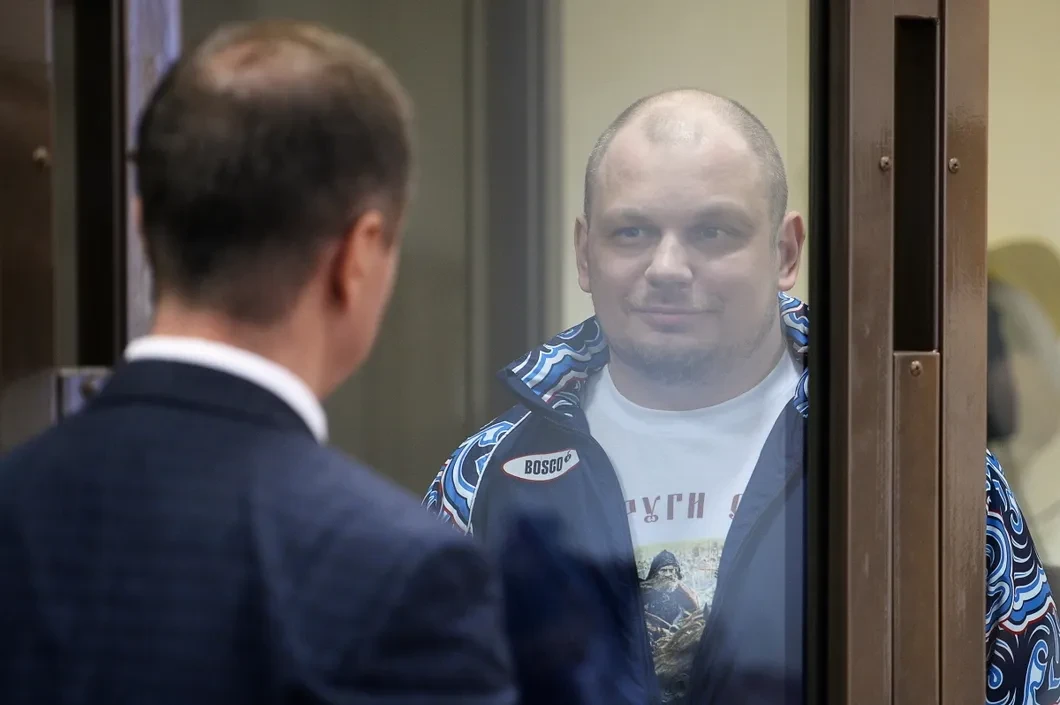
The military sailor, the captain of the 1st rank Vladislav Nikolsky , began to judge the Stateismman in 2014. The accusation seemed all the more strange that Nikolsky was known as a patriot from the patriots, an active member of the Black -Hundred Club of Russian Thought. And now he was accused of transmitting data on the airborne ship "Zubr", but not to anyone, but to Ukraine. The court sentenced him to eight years in prison.
"And the KGB has not changed"
There are many other things under the 275th article, known, but we are not called here, because everything cannot be listed. Or those about which in the file cabins of the courts say: "The information is hidden." Nothing flowed into the press about them, the FSB prudently takes from all subscriptions about non -disclosure, and the courts listen to cases in closed mode. Such “nameless” cases were examined by the Altai Regional Court in 2018, Trans-Baikal, Krasnoyarsk and Khabarovsk-in 2017, Kaliningrad Regional-in 2015, 2016 and 2020, Primorsky Kraeva-in 2018, Rostov Regional-twice in 2019. This is only what can be found directly on the sites of the courts.
According to the FSB, citizens spied in favor of Lithuania, the Czech Republic, the United States and all of NATO at once, cheated on their homeland with Ukraine and Georgia - depending on which country at the time of the initiation of the case was the relations spoiled.
According to the “team 29”, Georgia in the list leads: 26 people were convicted of espionage in her favor. In second place are American spies: 18 sentences, in the third - Chinese: 17 sentences.
Many children, pensioners, military, civilian - accused for every taste became traitors.
Now, 23 years after the case of Grigory Pasko, according to the article on the Stateizer, they are pursuing a journalist.
“Nothing has changed,” says Pasko himself. - The laws changed, the country changed, but the KGB never changed.
Read on the topic
Ivan Safronov. «Даже не имеющие допуска к секретам могут стать жертвами спецслужб». «Новая газета» требует максимальной публичности делу журналиста! Публикуем его текст 2019 года