
Translated material
Journalists and spies
The case of Ivan Safronov. Aeroflot and dogs. Total surveillance under the pretext of security
- In Russia, a campaign began against journalists: Svetlana Prokopyeva was sentenced to a large fine, Ivan Safronov was arrested.
- Aeroflot was in the center of the scandal due to the refusal to export pets and their owners from China with one flight.
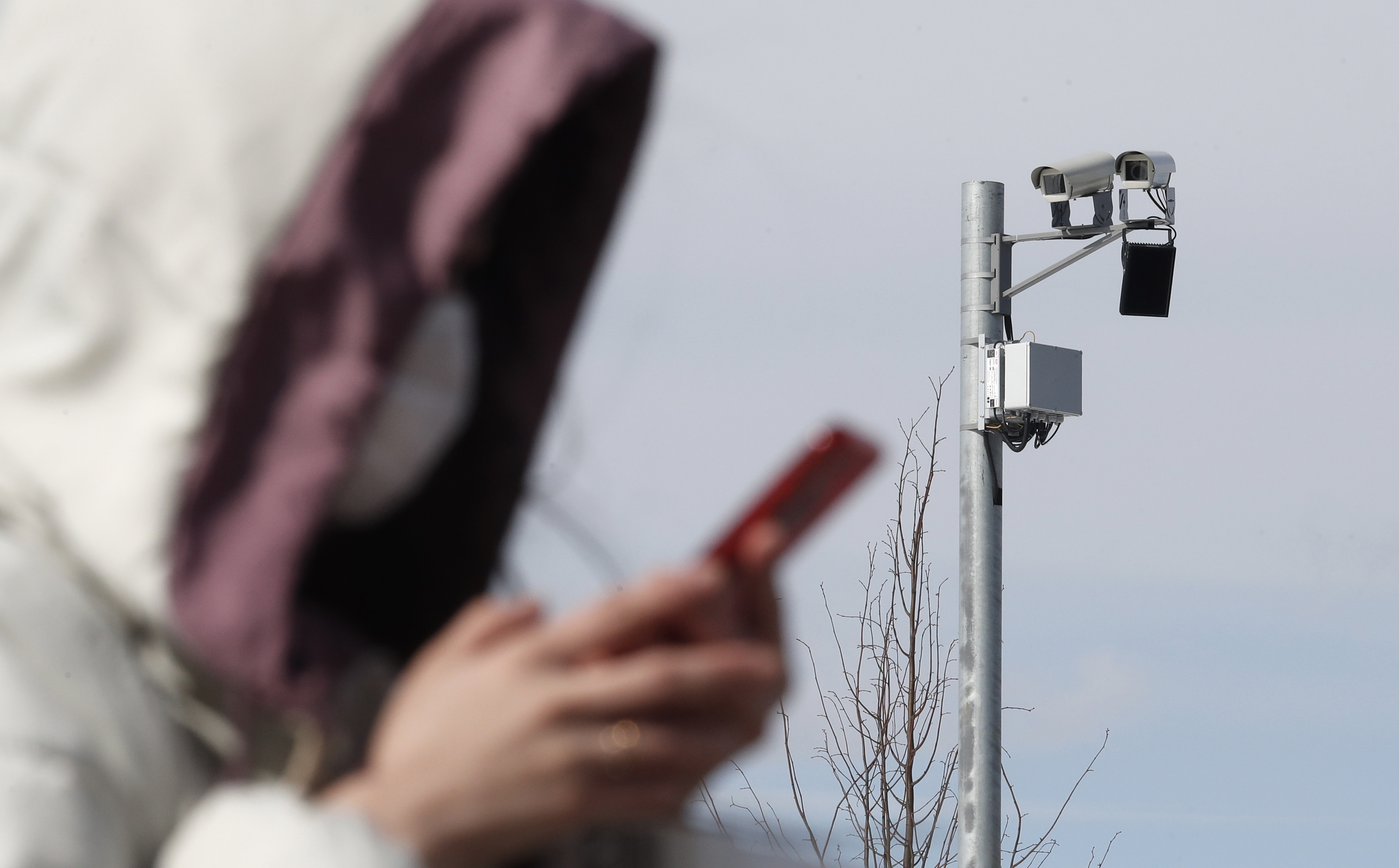
- In Russian schools, a video surveillance system is installed with the possibility of facial recognition.
Film for words and arrest for the Stateizer
From "justification of terrorism" - to "Gosizman". It is such an accusation, apparently, that the Federal Security Service intends to bring to an adviser to the head of Roscosmos, and in the recent past, the military observer of Kommersant and Vedomosti Ivan Safronov. He was detained at the exit from the house on the morning of July 7, and in the evening of the same day was arrested for two months. Journalists who came to the FSB building in Lubyanka in solidarity with Safronov were also detained.

The case of Ivan Safronov. Aeroflot and dogs. Total surveillance under the pretext of security
The text of the copyWidth PX Height PX
The url has been copied to your clipboard
No Media Source Currently Available
0:00 0:03:35 Download the media fileIn the Radio Studio, Liberty is the editor -in -chief and founder of the project "Project" Roman Badanin , in the video, a lawyer Ivan Pavlov, who defends Ivan Safronov , in the video.
Roman, according to your version, what is happening to Ivan Safronov? Is this revenge, as Ilya Barabanov suggested? An attempt to discredit independent journalists? Or (such versions have already appeared) one of the episodes of the war of the Kremlin towers?
Roman Badanin: Of course, the nonsense is nonsense that this story is not related to journalistic activities, since everything that Safronov was doing before Roscosmos was journalism one way or another. And if he told someone something that our FSB calls "disclosure", then this also happened in the framework of his journalistic activity. Of course, the reason for everything that happened is in his journalistic work that he excavated something: I don’t know what exactly, and how a journalist I want to figure it out. We are now at the beginning of some very important choice, and there are every chance that we do not recognize the truth: this is the whole problem.
Maryana Torocheshnikova: Because this business is classified?
Roman Badanin: Yes, because it is "state treason." I want the case to be as open as possible, only after that we can say something specific.
Maryana Torocheshnikova: Ivan, Safronov, like any other journalist, could have access to a state secret?
The formulations are so vague that you can bring anything under the state secret
Ivan Pavlov: The fact is that there is still some Soviet approach to the institute called "state secret". In Russia, this is not a state, but departmental secret, since all the lists of information subject to secretly are published separately, and they classify orders on the approval of these lists. It turns out an absurd situation. Firstly, an ordinary citizen who does not have admission to state secrets cannot access this list, get acquainted with him and understand what is a secret and what is not. Secondly, in one department they do not know what is a state secret in another. In addition, the formulations of very many points of these lists are so vague that anything can be brought under the state secret.
And finally, those experts who decide whether or not one or another state of state secret, guided by these lists, are employees of the first (either regime or secret) departments. And it is clear that these are the very people who are directly related to the FSB: they are either personnel employees of this structure or persons affiliated with it. And if the FSB orders an examination from these people, then it can be assumed that it will not be objective.
In such conditions, the line between secret and non-secret information is completely erased, and special services, in principle, have the opportunity to pursue any person who operates with some sensitive information. And who could it be? Scientists and journalists. And look, now a number of well-known Russian scientists, up to academicians, are involved in the most terrible article of the Criminal Code "State treason": by the way, from 12 to 20 years in prison-not a joke. And the last sentence to the journalist for Gosizmen was sentenced in 2001 - Grigory Pasko , whom I also defended. Since then, of course, a lot of water has flowed: journalism, journalists, and courts have changed. We now live in a completely different country.
Maryana Torocheshnikova: Moreover, with the new constitution.
Roman, your publication just specializes in journalistic investigations. Do you have any concerns now, after the initiation of the case against Ivan Safronov, that they will come for other investigators, that they will all begin to declare “spies”?
Roman Badanin: They come for a long time. And why are we going to discuss yesterday? .. Cases, when reporting journalists had certain problems, were not necessarily related to the state secret and were not even necessarily furnished with state secret.
Maryana Torocheshnikova: drugs, extremism, terrorism: whatever.
Roman Badanin: If your question is whether an article about the state treason and GOSTINE will be a new instrument against journalists, then it may well. I will explain how it works in the editorial offices, for example, in ours. When releasing each large text, it undergoes the so -called legal examination and legal cleaning. Law professionals specializing in the media read out each text and give recommendations on many issues: from extremism to the so-called secrets specially protected by law (there is such a thing in Russian legislation): the secret of correspondence, medical secret, personal data, and the secret of kinship. In principle, all these recommendations are easy for them, because all this is written in the law, and each person can see it. But there is no such law in which a lawyer can look and say: “It seems to me that here you are crossing through a state secret,” because he has nowhere to see. Therefore, as long as we are engaged in topics related, for example, with a defense industry, there is always a risk of getting into this trap.
Maryana Torocheshnikova: Although you take information from open sources.
Roman Badanin: Of course. We find a source that tells us, for example, about how the troops of the Trans -Baikal Military District were introduced into the Donbass. Is it a secret or not? We have obtained socially significant information regarding hundreds of thousands of people in our country, and we must inform it to these people.
Maryana Torocheshnikova: That is, people should know about this, despite the fact that this can be declared a state secret?
Roman Badanin: Yes. Of course, your duty is to tell.
Maryana Torocheshnikova: Can what is happening around and in the case of Ivan Safronov lead to the fact that publicist journalists who convey to people a socially significant but secret information will be held accountable?
Roman Badanin: This could have been the same with Ivan Safronov. Why didn’t they use the "state treason" before? Honestly I will tell you: I don't know. My assumption: it was believed that there is a dozen more convenient and fast articles that are enough to shut up their mouths to reporters, so they were used. “State betrayal” is, of course, the extreme case that Safronov’s extremely speaks, that is, if someone is angry with him, then he is very angry, and if someone wants to indicate their place to the journalists as a whole, then he really wants it. Here everything indicates that they were very preparing this business.
Maryana Torocheshnikova: On the other hand, they left their way for retreat. The 275th article of the Criminal Code says: "A person who committed the crimes under this article (and a couple of articles-MT) is exempted from criminal liability if it has voluntary and timely message or otherwise contributed to the prevention of further damage to the interests of Russia." Is it possible to assume that they, relying on this item of the article, will roll back, if what?
Roman Badanin: No, voluntariness is implied only in advance.
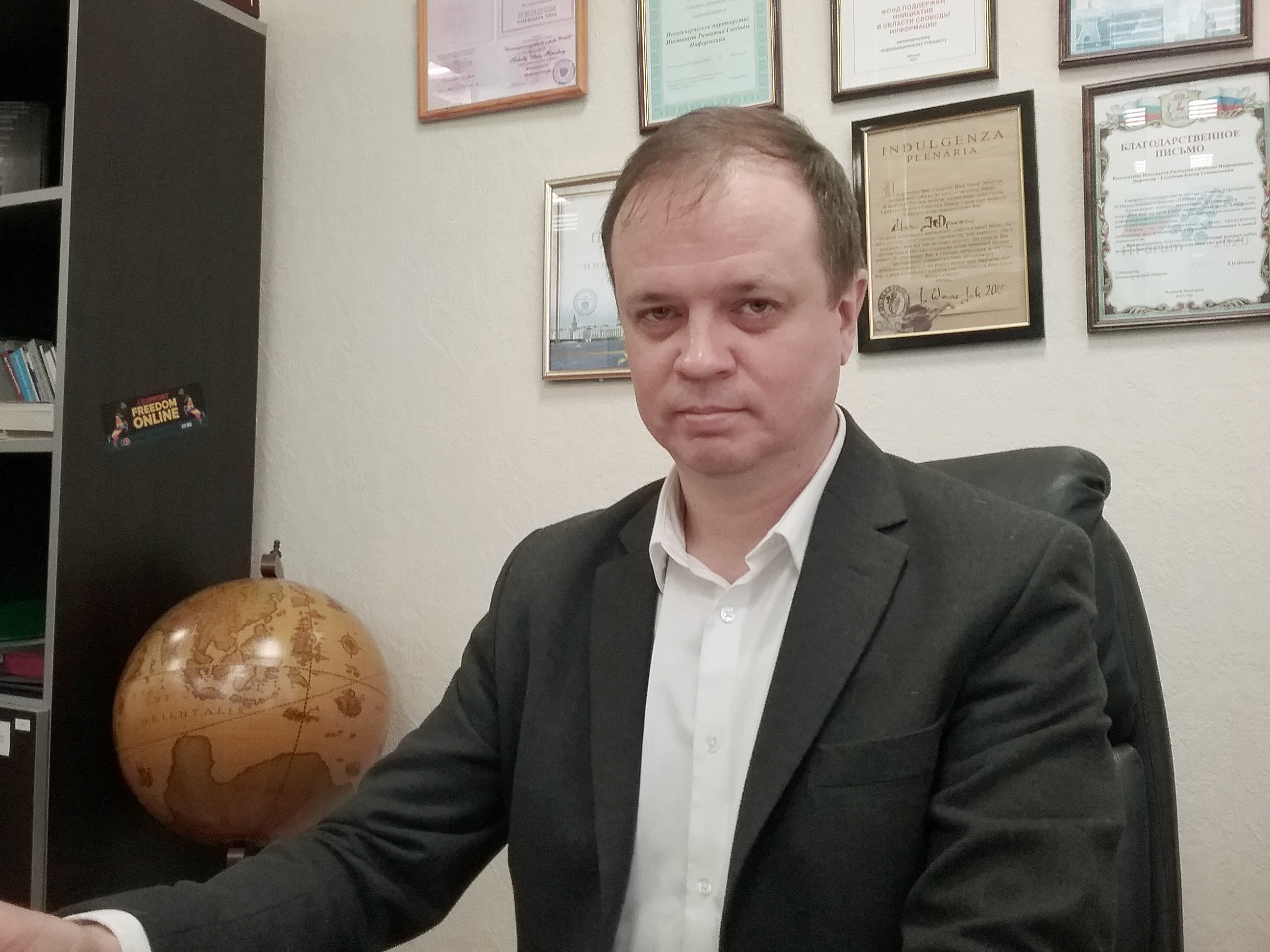
Ivan Pavlov: This is a note to the 275th article is more intended for the case when a person really spy, and then decided: "Oh, what am I doing?! I will come and make a confession, I will turn to the state security organs, and they will tell me what to do." Typically, state security organs make such a person a double agent, that is, they immediately turn him over, and for some time he supplies the misinformation of his original consumer of this information. And, redeeming his guilt in this way, he is exempted from criminal liability. But we are now talking about some abstract case that has nothing to do with Ivan Safronov.
I want to agree with a novel that gave examples with how a journalist acts in the field when he receives information, for example, about the movement of troops from Russia to Ukraine, to the Donbass. Immediately recall the case of Svetlana Davydova. The mother of seven children, a resident of Vyazma in the Smolensk region was arrested in 2015. In April 2014, she was driving somewhere in the "minibus" and heard how a soldier next to her, talking with someone on the phone, said that his military unit was transferred to the Donbass to fight. She was frightened for the future of her children, called the Embassy of Ukraine and said: "What to do?! Now there will be a war!". And in January 2015, that is, nine months later, she was arrested and accused of treason on this episode.
Maryana Torocheshnikova: There was a large public campaign - and managed to recapture it, the case against Davydova was stopped.
Ivan Pavlov: Indeed, she was released from the investigative isolator after a few weeks of being there precisely by the public campaign. I participated in this matter as a defender and in no case exaggerating my role, but I say directly: it was released by public opinion: in two days we collected 50 thousand signatures under the petition about its release. They said that the mother of seven children should not be in the pre -trial detention center, but at home with children, despite what she did. The merit of the defense here is that we nevertheless achieved the termination of her criminal case with the help of examinations and competent raising questions to experts.
Maryana Torocheshnikova: Is it possible to repeat this success in the case of Ivan Safronov?
Ivan Pavlov: It all depends on public opinion, especially since today journalists are the strongest corporation in our country.
Maryana Torocheshnikova: Nevertheless, probably, one of the most vulnerable. Roman, do you believe in the power of public opinion in the case of Ivan Safronov and in the affairs related to the persecution of journalists?
Publicity, civil protesses and civil defense are the only thing that can make the process open up
Roman Badanin: In principle, I believe, but so far I am not satisfied with the quality and scope of the campaign that takes place in Safronov.
Maryana Torocheshnikova: But people throw directly from single pickets, which has never happened before.
Roman Badanin: No, it was either. When the pickets for Ivan Golunov began, they still managed to bring the first pack of people to the car carrier. But there were much more there, and the action was much more intense. “Betrayal” - invented, real, semi -presented, falsified - this is an article with which no one wants to be solidarized, even implicitly, although we all understand that Safronov is not a traitor ...
Maryana Torocheshnikova: "The effect of rotten fish."
Roman Badanin: Yes. Perhaps this was the calculation. So, I believe that publicity, civil protest, civic activity and civil defense are the only thing that may not get the journalist from prison, then at least force the process, and this is already important. There is nothing more to hope for.
We do not take mine
“Aeroflot” this week again hit the center of scandalous history due to the refusal of the transportation of pets. Citizens of Russia who bought tickets at a export flight from Shanghai to Moscow, at the airport were in front of a tough dilemma: to hand over a ticket or leave their pets in China. On the eve of the departure in the company’s call center, they were assured that it would be possible to register animals on board without any problems at the airport. As a result, not everyone was taken.
"Big Brother" will look
In Moscow, on July 1, a five -year experiment began to establish a legal regime related to the development and implementation of artificial intelligence technologies in a wide variety of spheres of life. And many, judging by the comments on social networks, this was alarmed. People are afraid of total surveillance, interference in private life and leakage of personal data. But do not worry: we are already following us, not the first year, and without any experimental regimes.
In our studio - the head of the international practice of the Human Rights Group "Agora" Kirill Koroteev . He represents the interests of two applicants to the European Court of Human Rights - this is a politician Vladimir Milov and activist Alena Popova, who complain about the use of persons recognition technology at the rally on September 29, 2019 in Moscow in support of the accused in Moscow case.
What is wrong with the recognition of persons? Indeed, over the past time, everyone has repeatedly explained what this is for our own safety. Why suddenly Milov and Popov went to Strasbourg to be indignant at the video review?
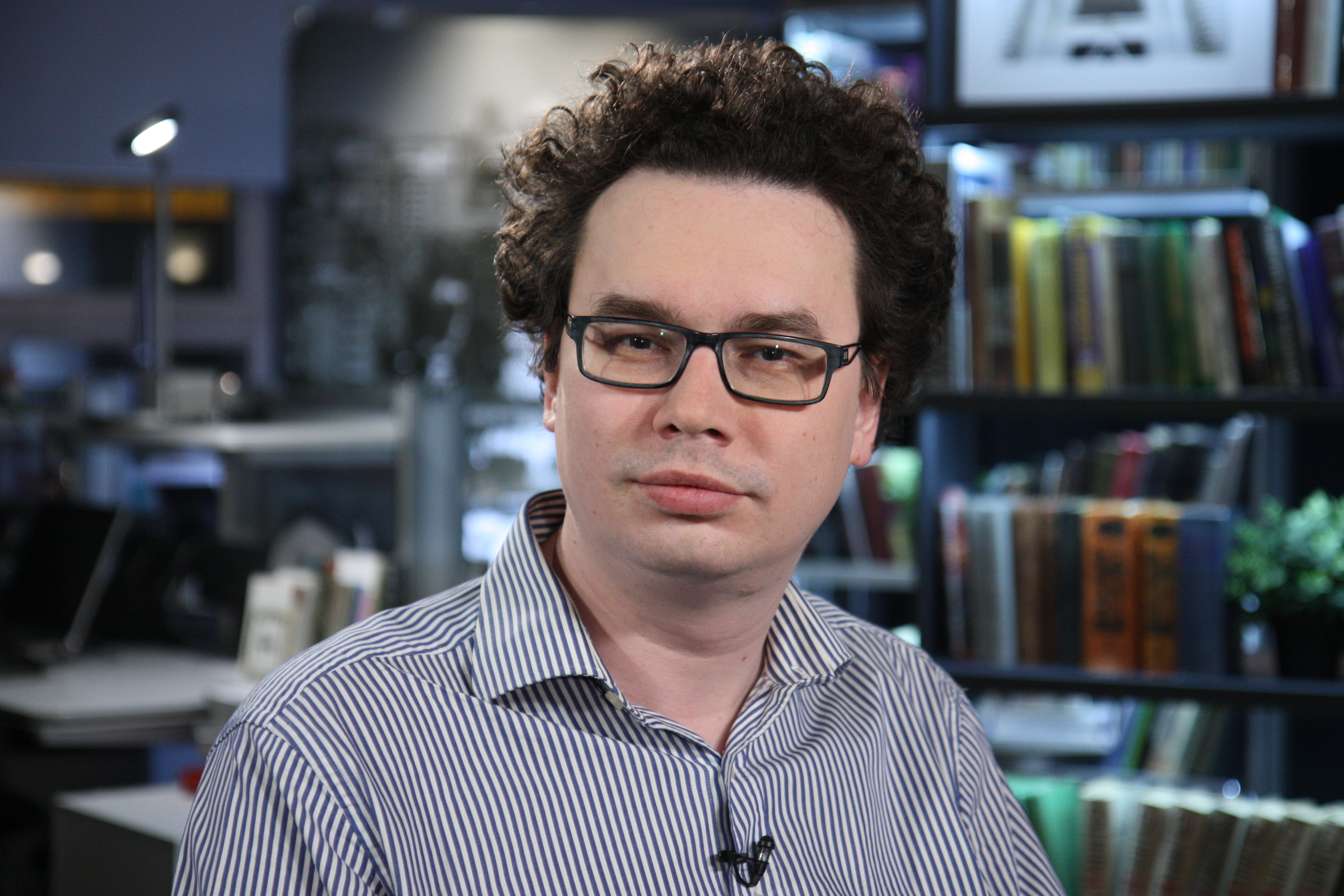
Kirill Koroteev: Indeed, the technology is not new, it has been developed for a long time. It was first used on football fans and football hooligans. It is always very clearly visible whether it is really about the problem of security or mass surveillance. Let me remind you, on September 29, cameras stood at the entrance to the opposition rally, respectively, everyone who passed was photographed, his face was recognized, and this is recognized by the Moscow authorities and the Ministry of Internal Affairs.
Maryana Torocheshnikova: And this was taken note.
Kirill Koroteev: We do not know this, and this is one of the problems.
Maryana Torocheshnikova: How does this story differ from ordinary video surveillance in banks, on the streets, from all these video cameras in the yards, in the entrances that have existed for a long time?
Kirill Koroteev: That is the position of the Moscow authorities, the position of the Ministry of Internal Affairs: nothing new happened. The cameras work, help to delay people, turn on and disconnected when necessary. But problems here are at several levels. The first is a new level of possibilities for collecting data about a person, because unique facial features, in contrast to what the Moscow Department of Information Technology and the Ministry of Internal Affairs is saying, is our personal data. This is a set of zero and one, by which each of us can be recognized, and the authorities keep a huge database of our photos.
Maryana Torocheshnikova: For example, at the entrance of an apartment building there is a video camera that shoots all who enters and leaves. This helps to reveal some criminal cases: it is clear when the offender went into the porch and when he went out. But as long as what this camera has embarked on, no one knows who went there. And this system with recognition automatically sends somewhere information about the fact that it was Ivan Ivanov then that came in, and immediately information about his passport data is tightened and everything that has accumulated on it during this time. So?
We do not know how far the possibilities of the authorities are going on, but they are certainly huge
Kirill Koroteev: The system has such a potential. We do not know how far the possibilities of the authorities are going on, but they are certainly huge. And this means that you entered this entrance - and the entrance found out if you have unpaid taxes. But the problem is that the Moscow authorities did not disclose the algorithms that they use. And although their documentation allows you to connect the collected data with the data stored by federal authorities, we have never been told by what databases this check passes, and which is not with, and most importantly, what obstacles to connect all cameras to the database of all our passports, because the image is for each of us older than 14 years. This is the potential of total surveillance of where you are and what you are doing, and this information can be used at any time. The event on September 29, 2019 shows that the government, the Moscow authorities, and the Moscow Central Internal Affairs Directorate photographed all active oppositionists as of this day.
Maryana Torocheshnikova: as well as just people who share such values.
Kirill Koroteev: Although the Moscow authorities claim that these data have never been stored and were not processed anywhere, they say that it was in order to compare those who are on preventive and other accounting.
Maryana Torocheshnikova: You contradict yourself. You said that we are talking about the potential possibility of total surveillance of all citizens. Some time ago, we had the project "Constitution and I": we asked ordinary people to comment on the articles of the Constitution of the Russian Federation. В частности, комментируя положение о неприкосновенности частной жизни – тайну переписки и прочее, многие говорили: "Мне скрывать нечего, я не против. Если это нужно для безопасности – пожалуйста. Переживают только какие-то шпионы". Что вы можете на это возразить? И потом, о какой частной жизни можно говорить на митинге? Вас и так видели там десятки, а то и сотни людей.
Кирилл Коротеев: Обработка персональных данных, не требующая согласия, – это большая проблема. Например, в Европе такое согласие – прямое требование норм Евросоюза, поэтому там сейчас, по действующему правилу, распознавание лиц невозможно. Частная жизнь здесь – не вопрос того, были или не были вы на митинге. Это обработка ваших персональных данных и возможность для государства бесконтрольно хранить эти данные о вас и следить за вами. То есть мы не можем исключать того, что факт пребывания людей на этом митинге был каким-то образом учтен. Мы этого не знаем, и именно это является проблемой.
Марьяна Торочешникова: Мы не знаем и того, как распорядятся этой информацией.
Кирилл Коротеев: Да. У нас есть много известных случаев, когда персональные данные, которые находились в распоряжении властей, утекали, продавались, использовались для персонального преследования тех или иных активистов.
Марьяна Торочешникова: Был же большой скандал в связи с историей, связанной с пропусками в Москве во время режима самоизоляции: выяснилось, что паспортные данные, которые заполняли люди для оформления пропуска, никак не были зашифрованы, и их мог вытащить кто угодно. Я даже не знаю, исправили ли это.
Кирилл Коротеев: А сейчас та же самая проблема с электронным голосованием.
Марьяна Торочешникова: Поясните, пожалуйста, почему вы пошли в ЕСПЧ. Что сказали Милову и Поповой в российских судах?
Кирилл Коротеев: Мы пошли в Европейский суд потому, что его постоянная практика по всем российским мерам слежки и оперативно-розыскной деятельности в том, что в России нет эффективных средств правовой защиты. Это не значит, что мы не пробуем к ним обратиться. У нас было уже несколько судебных заседаний по этому поводу в Москве, которые сейчас вернулись в Тверской районный суд. И этот суд должен теперь рассмотреть заявление Владимира Милова, но не заявление Алены Поповой, так как у нее раньше был в чем-то похожий иск, который касался распознавания лиц, но по другим событиям и обстоятельствам. Московские суды на данный момент приравняли тот иск к этому: Попова может пожаловаться на распознавание лиц только один раз. Но в том-то и дело, что события и обстоятельства применения технологии распознавания лиц в двух процессах были разные.
Марьяна Торочешникова: Да кто сейчас во всем этом разбирается?! Вы же видите, что происходит в России: законы трактуют так, как удобно судьям.
Кирилл Коротеев: Это тоже не новость, мы с этим сталкиваемся много лет.
Марьяна Торочешникова: А почему вы идете в Европейский суд? Вы исчерпали все средства защиты?
Кирилл Коротеев: В данном случае мы вообще не обязаны обращаться в российские суды. Это постоянная практика ЕСПЧ. И если вы на такие вещи, как слежка или прослушивание телефонов, жалуетесь сначала в национальные суды, то вы пропускаете необходимый шестимесячный срок. Российские суды в данном случае неэффективны, сказал Страсбургский суд. Тем не менее, мы используем доступные нам средства защиты. Мы с Аленой Поповой будем жаловаться и дальше, чтобы ее дело тоже было рассмотрено.
Марьяна Торочешникова: Но страна же с 1 июля живет по новой Конституции, в которой среди 206 поправок записано, что теперь международное право вовсе не является приоритетным для России. По этому поводу даже выступил спикер Государственной Думы Володин, который сказал, что нужно проанализировать международные договоры Российской Федерации на соответствие верховенству Конституции. И тут же он сказал (я цитирую по сайту Госдумы): "Необходимо уведомить все международные организации о принятой норме Конституции о том, что основной закон нашей страны теперь доминирует над теми решениями, которые приняты и будут приниматься". При этом в действующей Конституции есть еще другая статья, которую не убрали и не отменили, и она как раз говорит о приоритете международного права над российским. Так вот, в этой ситуации есть ли смысл обращаться в Европейский суд, если сейчас решат, что выполнять его решения не надо?
Кирилл Коротеев: Тут много разных аспектов. Во-первых, Конституция ничего не говорит про то, что международное право больше не является приоритетным над федеральными законами.
Марьяна Торочешникова: Даже эта поправка? Кирилл Коротеев: Эта поправка, безусловно, нарушающая международное право, касается возможности не исполнять отдельные решения, если это скажет Конституционный суд. И КС только два раза использовался (пассивный залог здесь мне кажется правильным) для того, чтобы отказаться от исполнения решений. Во всяком случае, пока это достаточно штучная работа, а все остальные решения так же не исполняются или так же исполняются, как и раньше. А Володин был стороной в споре, по которому недавно вынесено решение ("Рашкин против России"), поэтому он говорит как заинтересованное лицо.
Марьяна Торочешникова: То есть все-таки остаются шансы на то, что Европейский суд рассмотрит вашу жалобу, вынесет решение – и Россия будет обязана его исполнить? Кирилл Коротеев: Они уж точно не затронуты конституционными поправками и зависят от того, насколько мы можем убедить Европейский суд.
Марьяна Торочешникова: Мы будем наблюдать за всем происходящим, тем более что это касается буквально каждого. "Большой брат" смотрит на нас.