
Translated material
What Gaudeamus reminded of
It was a real revolution, the world has become different. But not the proletarians rebelled, students raised the rebellion
It is not so easy to get to the Champs Elysees - the residence of the president of France, even if you are waiting. I had to languish in a small porch, surrounded by police officers, while the duty officers behind the locked door found out what they should know. Then the guard in the courtyard led to the entrance, on the second floor he handed over - from hand to hand - to the local duty officer. He spent it to the reception room. The secretary opened the door, and I was facing a person whose name, surrounded by a heroic halo, is known to me from my youth.
It was hot in the cabinet with trimmed windows, but the owner puffed up a cigar felt excellent. From the piercing gaze of his blue eyes, at times became uneasy. He, no doubt, had the ability to understand people. The skill acquired in dramatic situations. For example, in a prison, where the owner of the cabinet, adviser and friend of the then president of France, the well-known leader of the left movement Debre once spent three years.
“I want to remind you,” Debre told me about the 1968 revolution, “that the events began with the fact that at the University of Nanter tried to limit the sexual freedom of youth.” Now there is no such problem, no one limits youth. The uprising of students played a significant role in the development of society, rights and freedoms, and emancipation of women.
Epidemic of attempts
Something happened in 1968 .... Sometimes the attempts follow one after another, as if killers are covering some epidemic. In April 1968, three bullets were planted in the famous leader of the Westberlin left student, Rudy Duchka. In April, Martin Luther King, the world -famous leader of the Law for the Law of the Black Americans, shot Martin. In June, Senator Robert Kennedy was killed, who was waiting for a victory in the presidential election in the United States.
In February 1968, students in Boston declared a hunger strike in protest against the participation of the United States in the Vietnamese War. Soon ten thousand students went through a march in Paris. It was only the beginning!
Young people, outraged by racism and war in Vietnam, took to the streets in Memphis and Mexico City, in Washington and Tokyo. Left youth rebelled in West Berlin, Paris, London.
Student rebellions grew into a real uprising - in America, Europe and Asia.
Of course, it all started not one day. In 1968, what was accumulated for years. After the Second World War in Europe, America, Asia-a rise in the birth rate, Baby-boom, and in the 60s, especially many young people entered universities. The audiences are crowded. Students discuss each other and argue with the university administration.
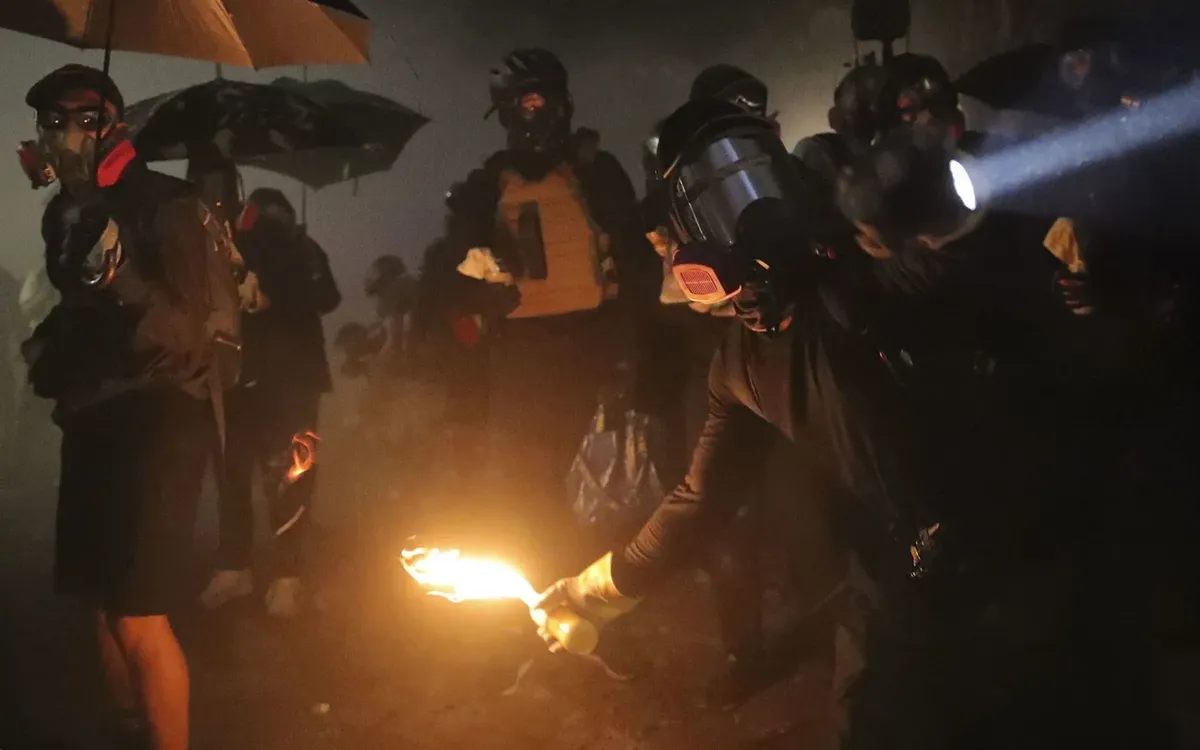
The first protests in student towns, in campus-not because of the war in Vietnam. I did not like university order, living conditions in hostels, strict rules that limit freedom. Students exploded, demonstrating passion and rage. And then the wave rolled, sweeping away everything in its path.
“New Left” - this term was invented by the American sociologist Charles Wright Mills. He wrote a job called "Letter to the New Left." New left -wreks broke out of the walls of campus. Young people made themselves talk about themselves as political power. It seemed that students storm the very foundations of the bourgeois state. Student protest connected with deep discontent of the Vietnamese war.
The first television
The era of the heyday of the media has come, first of all, television. The blue screen burned in every house. The TV in a certain sense helped protesters, uniting the rebels - within the country and abroad.
And the war in Vietnam so outraged the Americans because it was the first television war.
Thanks to the highly professional work of American reporters, the audience saw what was happening there.
Hanoi imposed a bloody war on the United States for exhaustion, trying to kill as many Americans as possible to make Washington leave Vietnam. President Lindon Johnson allowed the generals to answer the attacks of the Vietnamese bombing. But the North Vietnam was not an industrial country whose economy can be destroyed from the air. Lindon Johnson saw that war is eating resources and money that is needed "for internal use." He wanted to build a great society. But I did not know how to get out of Vietnam without the enemies did not lower all the dogs on him.
As a result, the country hated its president. Newspapers printed letters of prominent Americans:
“Dear Mr. President! You killed so many northern and southern Vietnamese. How can you sleep at night? "
Anti -war sentiments covered such significant layers of society that Lindon Johnson did not dare to run for the next term. In the presidential election in 1968, Richard Nixon won, who promised: “I will not drop the atomic bomb on Vietnam. I will not introduce the troops either to the North Vietnam, or to any other country of the region. ”
Nixon was chosen so that he would end the war.
White and black
If not for the Vietnamese war, Lindon Johnson would be considered an outstanding president. He was most busy with social reforms and played a crucial role in that the dark -skinned Americans achieve equality.
The commission appointed by the President came to the conclusion that the country is split into two: into black and white America.
They are not equal and each exist on their own. At that time, American society - with the exception of liberals - believed that the dark -skinned people were fairly deprived of the right to vote, walk with the whites to schools and cinema, go in tram, dinner, swim with whites in the pool, sit next to the bench ...
It was believed that blacks are a backward and genetically inferior people. This justified racism and segregation. A dark -skinned man did not dare to reach out a white woman - he could be accused of trying to rape. Black couples were forbidden in public not only to kiss, but also to show their feelings. At the intersection, the white driver gained an advantage.
It was especially difficult to black in the south of the country, in the former slave states. Senators and congressmen from the southern states were very influential on the Capitol Hill, and the presidents did not risk their argument with them. In addition, any presidential candidate depended on votes of voters in the south.
The Kennedy brothers were the first to take a chance when John was elected president and made his younger brother Robert Minister of Justice.
The authorities of the southern state of Alabam did not allow white and black children to study together. The Federal Court recognized the laws of Alabama on segregation contradicting the constitution. But the state governor George Wallace called on fellow citizens not to obey the federal government, not to execute the court decision and keep the defense at the school doors.
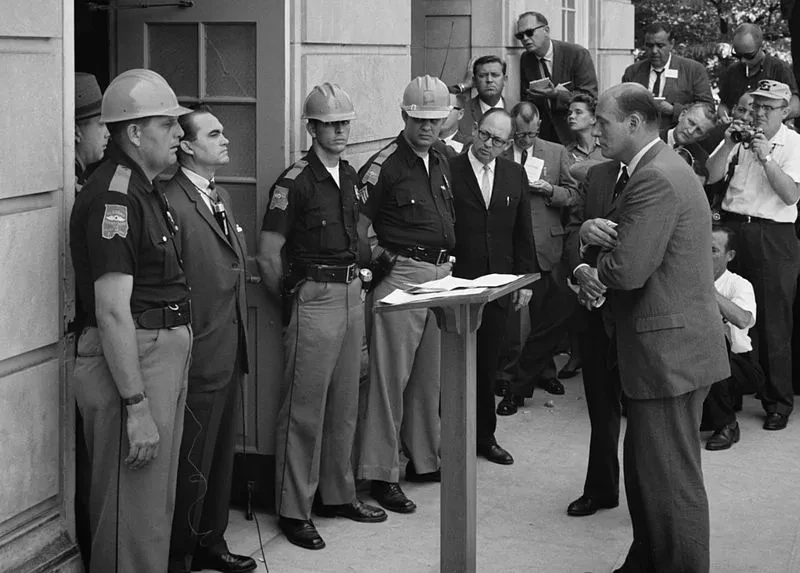
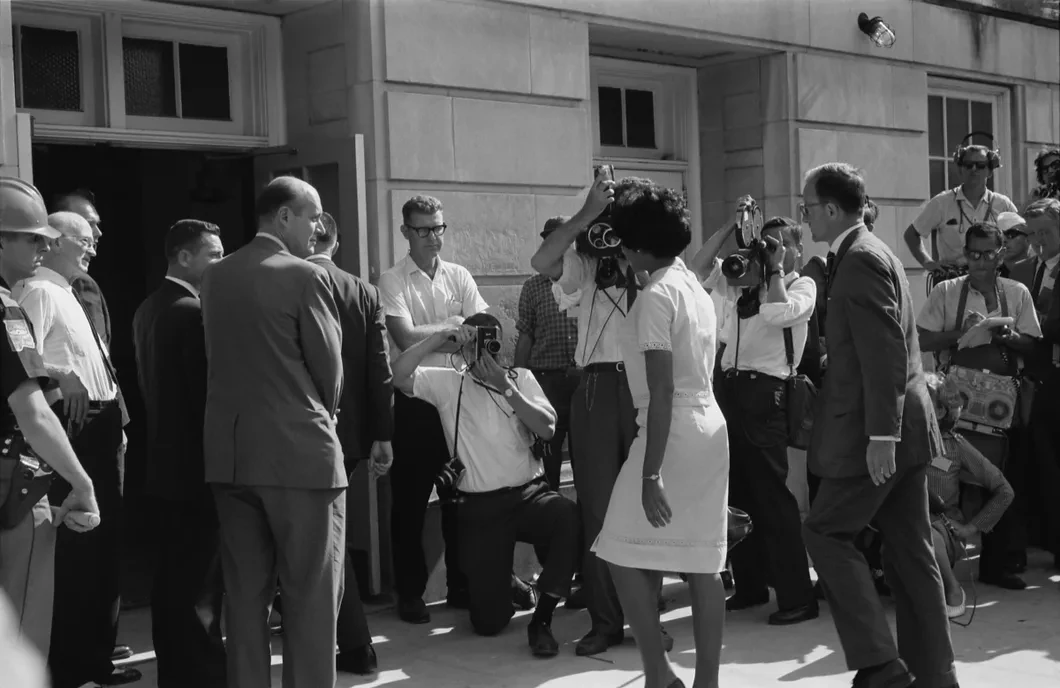
Two dark -skinned students - a young man and a girl who were enrolled in the University of Alabama, was simply not allowed there. Governor Wallace, who was supported by many whites, said that he would not allow blacks to study at his university. President John Kennedy and Minister of Justice Robert Kennedy decided to force the governor to fulfill the court decision, although they understood that this would damage them in the eyes of southerners.
Robert Kennedy asked his brother to sign a decree on sending the National Guard to Alabam. When the guard arrived, Governor Wallace retreated. He viciously told reporters: “The next year is the election. The south will say its word. The south does not like some guys. ”
In November, President John Kennedy was killed.
“ We are guilty! "
In the same 1963, in Washington, the march went to protect the civil rights of the black population. The Americans gathered, black and white, from all over the country. They sang: "We will overcome everything!" Many famous people performed at the rally, including the popular actor Bert Lancaster. One of the speakers spoke very emotionally:
- We need freedom! Freedom! Freedom!
The march was of great importance for the country. White Americans decided that they should help their black fellow citizens, because the whites are guilty of their suffering. In those years, dark -skinned activists eagerly read reports of the struggle against colonialism in Africa, they were inspired by the victory of the revolution in Cuba, the successful struggle of the Algerians against France. The struggle for the equal rights of the dark -skinned became part of the global confrontation of white imperialism.
The famous speech of Martin Luther King, which ended with an excited monologue, where the words “I have a dream” sounded in history. He called for abandoning violence and wanted black to become full -fledged citizens of America.
White Americans accepted the blame for the murder of King or, more precisely, for not being able to stop the growth of hatred, which made the murder possible.
One person shot, but millions of others internally supported him and considered the murder of King a good idea. And the Americans have changed!
At the end of the twentieth century, people with a dark color of the skin became part of the establishment.
Having grown up in Alabama Kondoliza Rice, the first black woman who became the State Secretary of the United States. At one time she was called the most influential woman in the world. The first to be the first to apply for the White House, and then the Secretary of State Colin Powell. He was unusually popular, but did not want to run. Barack Obama, who felt like the successor of the case by Martin Luther King, wanted and won twice in the presidential election.
And where are the Communists?
In Paris in May 1968, it seemed as if the anarchists rose. And as a result, almost half of the civil servants were striking. In May events, the usual bourgeois also participated in the students. It was a completely unexpected uprising against the state.
The participants in the uprising were surprised at their hands and did not know how to finish all this. Everyone was waiting for the Communists to behave. It is difficult to come up with a more favorable situation for taking power.
The leadership of the Communist Party endlessly consulted whether to storm the Champs Elysees? They could not decide whether they were revolutionaries or not.
The first secretary of the Central Committee of the Communist Party Georges Marche and his environment knew that false statistics hide the slow decline in the Communist Party. The Communists were waiting for either the revolutionary situation or the parish of the Soviet army. He said at a press conference in 1951, freezing with happiness, the then leader of the Communists Maurice Torez that the Red Army can "one fine day to join the Champs Elysees as an army of liberation."
But the European Communists did not want to live as badly as the senior Soviet brother. Soviet experience has ceased to be attractive to the world communist movement.
At the party congress, Georges Marche said:
- There is no democracy and freedom, if there is no pluralism of political parties, if there is no freedom of print ... It is clear that we have disagreements with the CPSU on this issue.
The Yugoslav journalist Frane Barbayri came up with the term "Eurocommunism". French, as well as Italian and Spanish communists picked up this word, referring to a more liberal and pretty alternative to the Soviet version of communism. The Central Committee of the Communist Party of France abandoned the idea of the dictatorship of the proletariat. The Communists stopped objecting against European integration and NATO.
Eggs and cobblestones
The leaders of the youth revolution defended the right to civil disobedience, which should be entered into the Constitution, which is made in many states: people have the right to a peaceful demonstration of protest even under erroneous slogans. If they are dispersed, violence occurs.
Young people defended the freedom of personality, the right to choose, breaking the wall of silence and the hypocrisy, breaking the overwhelming forms of life. May 1968 helped to realize the value and dignity of human life.
Students achieved their goal. They were not only allowed to listen to any music, wear long hairstyles and dress as anyone pleased. The uprising of students, supported by workers and in the fever of those days called the revolution, played a significant role in the development of society, rights and freedoms, and emancipation of women. Therefore, we can say that May 68 was successful.
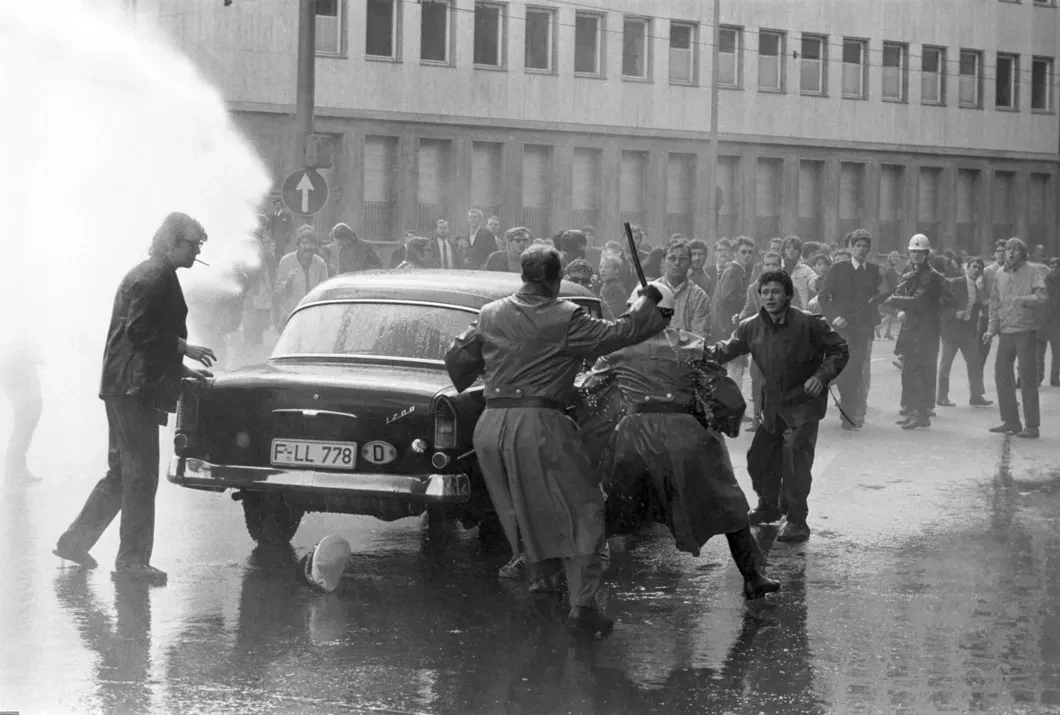
Students built barricades. The rotten eggs and cobblestones of decent severity entered their arsenal. But the students did not grab the weapon. They offered to stop and think.
The bloody experience that smeared the face of revolutions did not pass without a trace. Stalinist repressions had a destructive effect on the left movement and served as a warning to entire generations of the left intelligentsia regarding the use of violence even for the most good purposes. The youth, who erected barricades in Paris, least of all wanted a repetition of such an experience. But some of the young rebels still took up the weapon. And since then in Paris everywhere - even in the Champs Elysees - the machine gunners are walking around: the French are afraid of terrorists. And not only the French.
Fans of Nestor Makhno
The fire that the people of 1968 lit up gradually faded. The rebels, who went out into the streets with red banners and built the barricades, matured, returned home and arranged a prosperous life for themselves.
“The ruler of the Duma” Professor Herbert Marcuse, whose labors were read out by humanitarian students, passed away from the disputes of modern philosophers. Franz Fanon, the ideologist of the partisan war in the Third World, is forgotten. Rudy Duchka, the leader of the rebellious Westberlin youth, remained out of work. Yoshka Fisher took up politics: the recent anarchist and pacifist became Germany Foreign Minister.
In Germany, the 1968 generation questioned all the traditional rules of behavior. Young people did not like the life in which "the Germans indulged in two of their favorite studies: stupidly injected and spared themselves." Young Germans, who grew up in free thought, were indignant at the generation of fathers and grandfathers, who not only participated in the crimes of the Third Reich, but also constantly lied. The youth revolution made the federal republic open, less notorious and more tolerant.
Daniel Kon-Bendy, the most popular figure of the Parisian barricades, a fan of the anarchist Nestor Makhno, after the 68th and did not overturge, and did not pick up the machine gun. He went to work as the teacher in kindergarten, then joined the movement of the "green" and was elected as a deputy of the European Parliament.
***
After 1968, Europe combined common values, ideas and principles: legality and justice. Liberal democracy and market economy is the only successful way of developing modern society; There is no other model that would demonstrate the best result. The European policy after 1968 was a historically determined rejection of sovereignty, the self -restraint of sovereignty, the transfer of powers from states to pan -European associations, an interest in the development of integration, and not in stubbornly defending national interests.