
Translated material
"We did not survive the pandemic"
What public damage will cause the closure of private museums
July 10 is returning to the offline Pushkin Museum. A video in which employees carefully clean the sculpture of Nicky of Samofraki, and the drawn Pushkin, announcing the slogans about the preservation of the social distance and carrying masks, calls visitors to the Museum named after himself are already hanging on the PLAMI website. The atmosphere is festive, and one could even consider on July 10 the day of returning to the “normal” cultural life, if not for one “but”: while state museums open their doors one after another, many private galleries and exhibition halls remain closed, and forever.
During the quarantine, private traders wrote a collective letter to Mishustin with a request to include museums of any form of ownership in the list of the most affected by the coronavirus from the OKVED 91.02 - “Museum activities”. Support measures were taken, but the director of the Association of Private Museums Alexei Shaburov believes that in any case, the pandemic does not survive about thirty percent of the museums-simply because, firstly, most of them have a contractual relationship with tenants, and secondly, because formally they do not fall under the category of private cultural institutions and, accordingly, are not part of the most affected by the most injured from Pandemia of the industry.
To the question: “And what, in fact, is the difference between private museums that are considered cultural institutions, and the same, but not falling into the sphere of culture?” - Alexey Shaburov replies:
- The Federal Law on Museum Fund No. 54 clearly says that the museum is considered a non -profit organization. The specifics of registration of the institution, preparation of documents, etc. are associated with this. And many, unfortunately, did not pass this procedure, and although the “Museum” sign may hang over the door, they are not legally as such, but are LLC, IP, etc. Moreover, they can in the same way exhibit or engage in research activities.
That is, the difference is exclusively legal, but commercial organizations do not receive any support.
Because of this and due to the crisis, a large cultural layer that has accumulated over the past 20-50 years can simply disappear.
It is a pity, but this is a fact.
Although active negotiations from the Ministry of Culture on support are underway, if not financial, then at least information.
Shaburov is also the president of the Sokolniki KVC, where a temporary hospital was placed during the isolation. There is no question of converting the pavilions back to museum activities and, most likely, will not be going on until March 2021.
-We are now in an equal position with VDNH or “Expocenter”, the same thing happens in our colleagues in China, in Spain, in New York.
Of course, as an adequate person, I understood that this measure was necessary, but still the first reaction to the message about the closure of the center was a shock: it was necessary to stop many years of activity, to dismiss people - a large staff of staff, compiled in twenty years, lost.
Of course, it was necessary to open the hospital, but it is interesting how the government will act now, at the exit of quarantine. We proposed to unlock the pavilions partially, to give at least two of them to exhibitions - half of all exhibitions would calmly fit in them. But while they answer us: wait.
In addition to museums located on the territory of temporary hospitals, other small private museums were closed during the quarantine period at different points in Moscow. Everyone has one reason: the inability to pay rent. The disappearance of these, already outside the zone of attention of classic tourists of private traders, can be invisible to the uninitiated, but behind each of these museums there is the story of a family relic or an unusual collection, which began to collect several centuries ago one of the great-great-greats ...
In 1915, one famous pharmacist of the Russian Empire named Ferrein, who traveled at that moment in Europe, brought Grigory Gzhelev the latest model of an electric iron - a very status at that time a gift. A few decades later, this iron found in the house of great -grandfather Mikhail Gubanov and decided to continue the collection, and after another 20 years the number of ironing exceeded one and a half thousand. Among them were steam, coal, gas, for gloves, for hats, for socks, for ties, and special presses for playing cards.
Naturally, at some point, one of the family members came up with the idea to create a museum. The premises were rented in the territory of the Izmailovsky Kremlin. About six months it took to repair, and then I had to study the museum case.
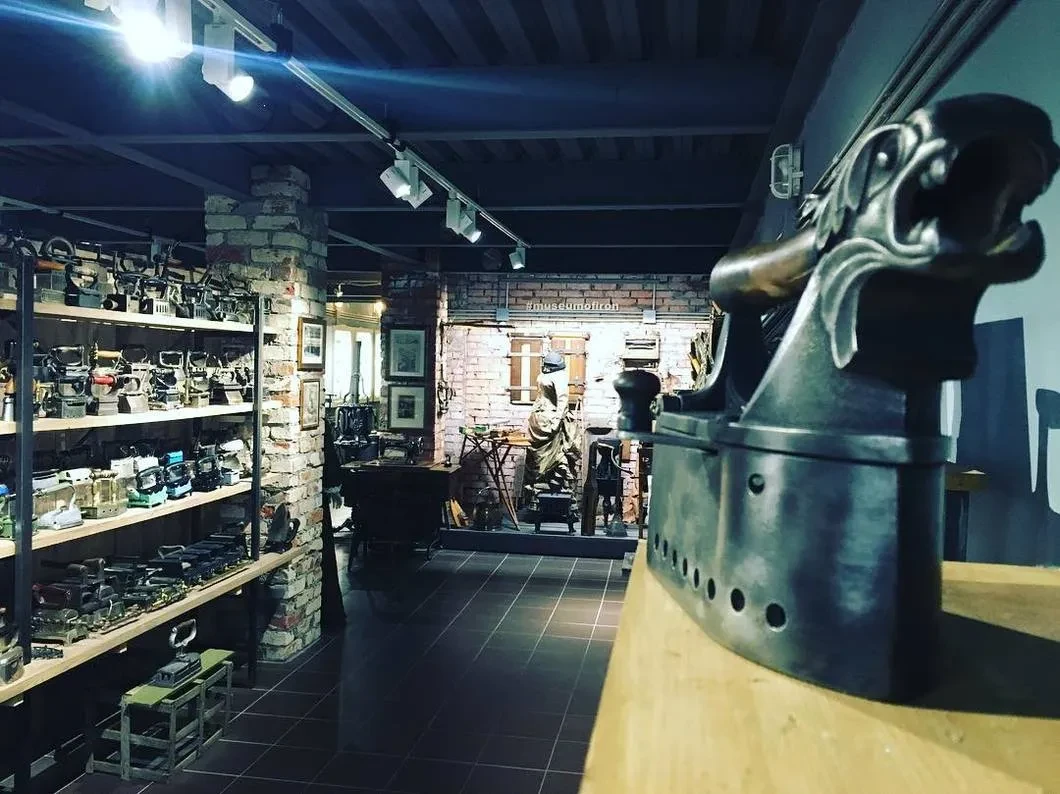
The director of the museum, Maria Novikova, explains that at first no one even knew where visitors came from the museum:
“It seemed to us that we would open the doors, and the curious people themselves would come to us. But everything turned out to be a little more complicated. ” The museum was far from tourist traffic, and there were days without a single visitor.
The lessor offered another room, “closer to civilization”, but with the same repair costs. The creators of the museum rebuilt him again and opened last June. After waiting for the "dead season" - autumn and winter - were preparing to start working in full in spring and summer. And then the pandemic came.
“We closed, and the rental rate continued to be accrued,” says Maria. - Naturally, no discounts could help: when museums open, it was not clear, and then in any case there was the same “dead season”. Debts grew, and we wrote a letter to the lessor that we were moving away.
Of course, I would like to open again - those who we had, write to us, ask: how? What? And when? But with rent, we will not deal with things more: we do not want to engage in commerce. It forces us to neglect the quality, think only about how much you need to beat off a day, and all the money goes to pay for bets, and not to replenish the collection, not for the salary of guides. You need your own room: either your house, or, perhaps, some friendly sites, art-clusters. We want to engage in museum activities, and not count money.
In the same place, in the territory of the Izmailovsky Kremlin, two more private traders closed during quarantine. The first is the “royal pantry”, the museum of the history of the award system of Russia. More precisely, from a legal point of view, not a museum, but the same IP that does not fall into the category of private cultural institutions. When the Kremlin territory was closed to visitors, Director Pavel Ugolkov took the collection to the warehouse:
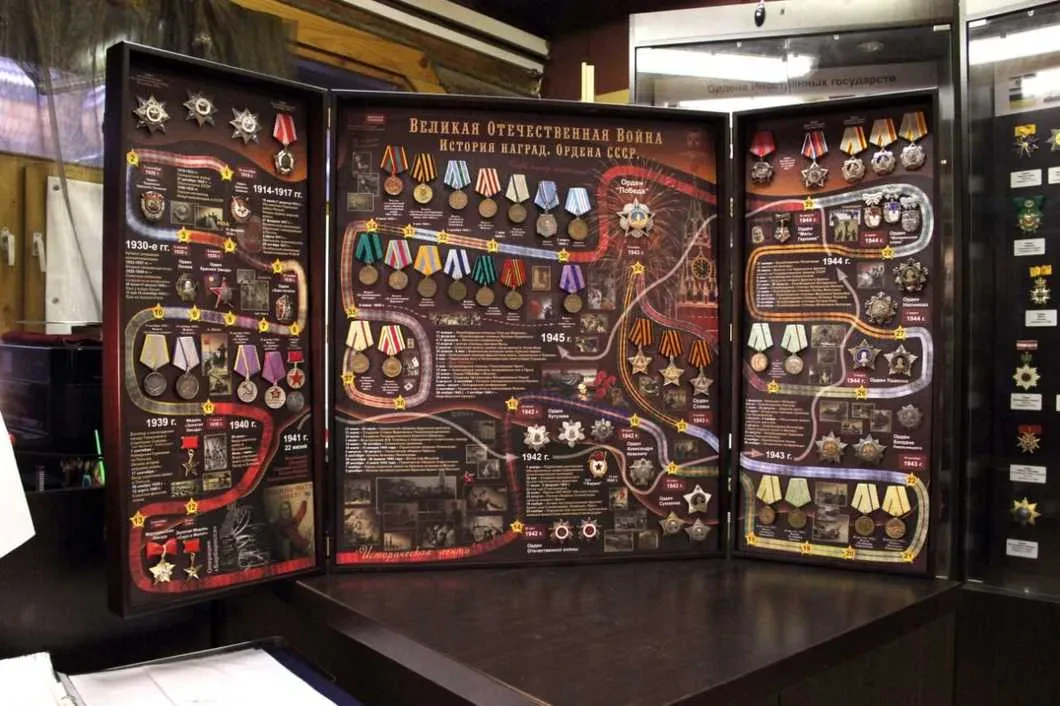
- I thought that the preservation of the collection is the main task. There were simply no other options. And any Internet active was unable to somehow change the existing financial situation: this is just an additional reminder of themselves on the network. There is no “living” visitors to a private museum. And before the isolation of the plans, there were various projects: for example, on the eve of the 75th anniversary of Victory, together with the Moscow branch of the RVIO, we developed a mobile mini-exhibition “Mobile Museum” of the history of the awards of the Great Patriotic War and the Russian Empire. On folding stands, all the orders of Russia were presented in a chronological order with a binding to historical events.
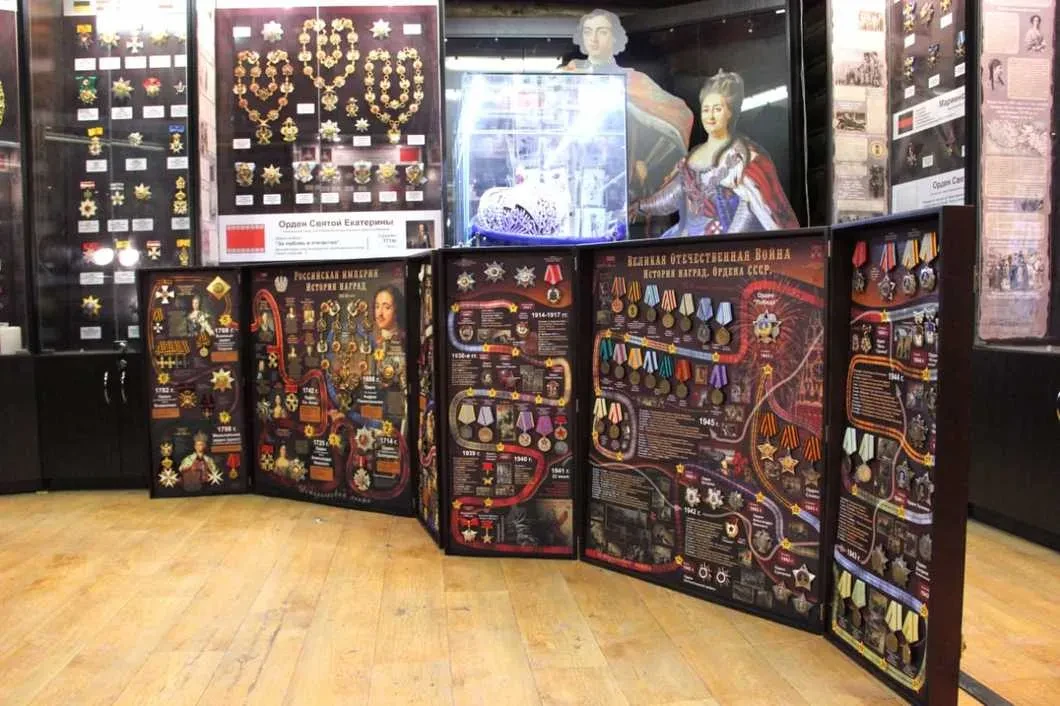
It was planned to visit various events dedicated to the holiday. But the pandemic made its adjustments: it was possible to participate only in a meeting with veterans.
The closed neighbor of the “royal pantry” is the club-museum-museum “Masks and figures of the world”, most of which was collected in the 19th century in a family of hereditary doctors. Its exhibits are African and Asian masks, female jewelry of tribal unions, artifacts from Latin America and Oceania, products of Russian masters from wood and ceramics, a collection of skeletons.
All this is also now inaccessible to visitors' eyes, but, according to the director Tatyana Bolynova, temporarily:
- We did not close, we moved from the territory of the Izmailovsky Kremlin. It so happened that the pandemic became a decisive factor, and we had to move out. While the ban on mass events is in force, we, of course, cannot open: we are actively working with groups, especially with children with developmental features, because our museum-club is tactile, exhibits can be touched. But since the collection is large, part of it is exhibited even in the city near Moscow.
True, several exhibitions could not open due to the insulation regime.
There are among private traders those who dared to completely translate their activities online. The Gingerbread Museum, which used to be in Khokhlovsky Lane, became an interactive creative studio.
“We did not survive the pandemic,” says director of Ksenia Nikitashin. -We have only online format, but as a museum we, in fact, do not exist. It makes no sense to think about opening until 2021: most of the museum’s work is based on master classes, on work with children.
And even a month before the closure, it was clear what everything was going to: parents began to worry about the children, excursions were canceled, attendance dropped sharply.
There are no prospects for opening yet, so we are among the victims.
Like our culture.