
Translated material
With a Bessarabian accent
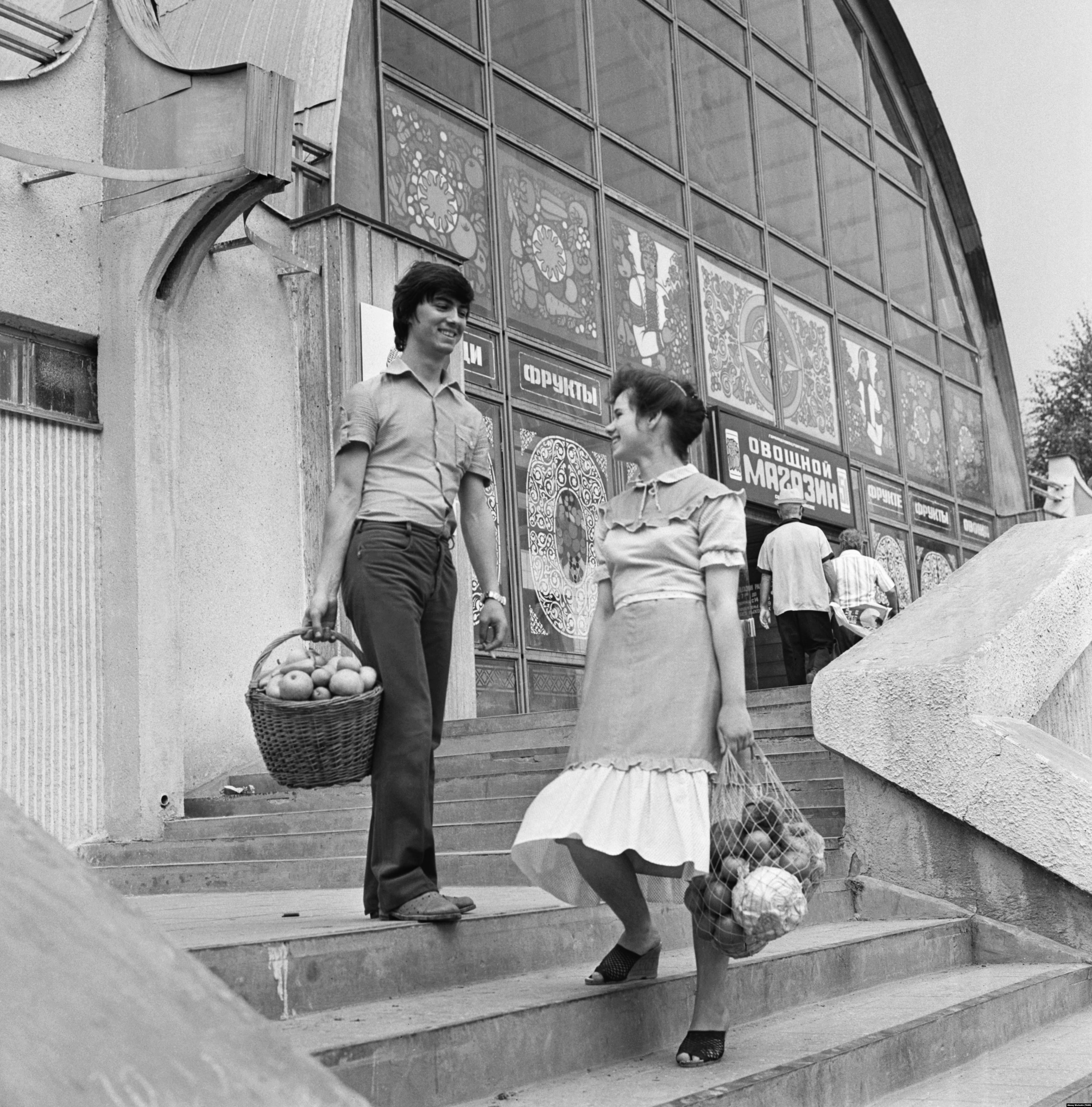
In the section "Native Language" conversation with journalist Ivan Paukov. He comes from Chisinau, studied in Leningrad, collaborates with the press of Latvia, lives in Trieste (Italy).
- Ivan, you were born in Chisinau, grew up in Chisinau, went to school - this is your hometown, your small homeland. On what language soil did you grow out of what linguistic litter?
-The CR was very colorful, beautiful fragments-it was a living SOR, something sprouted from it all the time. A little clarification: Bessarabia, in particular Chisinau, in the classical imperial tradition, always entered the zone where they spoke bad Russian. This is true, but true only formally.
The Russian language in Bessarabian conditions at all times, from 1812, when the empire annexed the interfluve of the Dniester, Pruta and the Danube, there was a welcome language. It was the language in which people wanted to speak. How did they say on it? It turned out as it turned out. A huge number of very different nations lived there, and there was no conventional language adopted as Lingua Franca. The term "Russification", which is extrapolated on Bessarabia, is quite arbitrary, because there was no struggle there. A large empire presented a language that arranged everyone. For two decades, excesses occurred in the kingdom of Romania between the two world wars. It was that in any language, except for the newly -minted state Romanian, it was forbidden to speak in public space. For 20 years of stay under the Romanian crown, Bessarabians managed to stimulate in their desire to know and speak Russian much more than in two centuries under the crown of Russian.
For 20 years of stay under the Romanian crown, Bessarabians managed to stimulate in their desire to speak Russian much more than in two centuries under the crown of the Russian
I remember very well the elderly people who spoke six to five languages, the native, of course, was Yiddish, good French, good English. I had a teacher at school, she taught English, French, if necessary, taught Romanian. In Russian, she spoke monstrously, but she really wanted to talk on him. She was uncomfortable that she knew the language of the subject somewhat better than the language in which she was charged with, for the school was Russian -speaking. Yes, of course, there was an audience that spoke on Surzhik. This was mainly the Ukrainian population, which, on the other side of the Ukrainian border, spoke on the same Surzhik. There was the concept of "Slav". It was possible to read in the newspaper: "A young lady, Slavyanka, wants to meet. Nationality is indifferent." I was sitting at a desk with Armenians, with the Serbs, of course, there were a lot of mixed families, Romanian-Sysygan, Jewish-Ukrainian. I’m not talking about the south, I'm not talking about Gagauzia, which is now very holding on to the Russian language, although they speak strange Russian, but they love it, they like it. The whole south was populated by the Germans, they spoke German, but, of course, they needed Russian, since it was the language of the administration. During this period, in Bessarabia there were quite a few Ashkenazi, which got there from the northern regions of the Russian Empire, some migrated from the Austro-Hungarian, someone fell from the Romanian principalities. Chisinau, like the city of semi -Jewish, did not exist at the time of the annexation of Bessarabia, he became such during the 19th century.
- You are talking about what has given the imperial language, the Russian language, this language periphery, Bessarabia. Can something periphery give the imperial language?
—Dod Knut, who is considered a poet of Russian emigration, an emigrant Russian poet, formally did not live in Russia for a day, he did not escape from the October Revolution, the October Revolution or the Civil War, which, in fact, did those whom we know how the emigration. No, Dovid Knut lived in Bessarabia and arrived in Paris in 1920 by Romanian subjects. Formally, it belongs to the very large and poorly known in Russia vast Eastern European emigration to the western part of the continent, to Britain, France, Belgium. The main waves took place in 1926-27-it was the moment when in Poland and Romania introduced the percentage norm, and it was advisable to get higher education, therefore, of course, Jewish youth left. The percentage norm in Eastern Europe was not only in the Czech Republic. Dovid Knut appeared in France in 1920, he had quite little publications in his hometown, it was short poems in pennies in common publications, ambitions were different, but I also wanted to know the Russian language as Russian literature was written. The phenomenon of Knut is that he mastered this language in fact in Paris, rotating among Russian emigration, Moscow, St. Petersburg. As we can imagine, the social distance in this situation was greatly simplified. He arrived in St. Petersburg, as Korney Chukovsky did, for example,, probably, he would have gone for several years to scratch the Olympus. In Paris, everyone was in the same boat, everything was at an extended hand.
The phenomenon of the whip is that he mastered the Russian language actually in Paris, rotating among Russian emigration, Moscow, St. Petersburg
I have to tell you that his nearest circle of communication with which he started was very different people, but people are also partially from the imperial periphery. It may not be as colorful in a linguistic sense as Bessarabia, it was Ilya Zdanevich, Valentin Parnens from Taganrog. Not surzhik, but not the perfect Russian language. It was a melting tiger. In general, the road was not long to Olympus, but we remember what part Vladislav Felicanovich Khodasevich took part in it. Although, of course, in Necropolis we read about their clashes about the words strange from the point of view of Khodasevich: "This cannot be said in Russian." "Why, in Chisinau, they said so." "Well in Chisinau." In the end, Khodasevich was the son of the Vilnius Pole and Jewish, he also did not come from what was considered to be a linguistic metro. In general, the "Chisinau funeral" of the Dovid Knuta is a little break out, although Russian emigrant poetry was very many -sided. But I see the “Chisinau funerals” not there, I see them where Paul Tselan is, where Bruno Schulz, although they wrote in other languages.
- You were about 20 years old when you left Chisinau to study in Leningrad. Are you faced with another, with a new language reality? You mentioned Korney Chukovsky, Chukovsky or Mikhail Kuzmin, he is from Yaroslavl, they recall that when they arrived in St. Petersburg, they just had to learn the right stress in dictionaries, they read dictionaries. For you, the language reality in Leningrad differed from the Chisinau language reality?
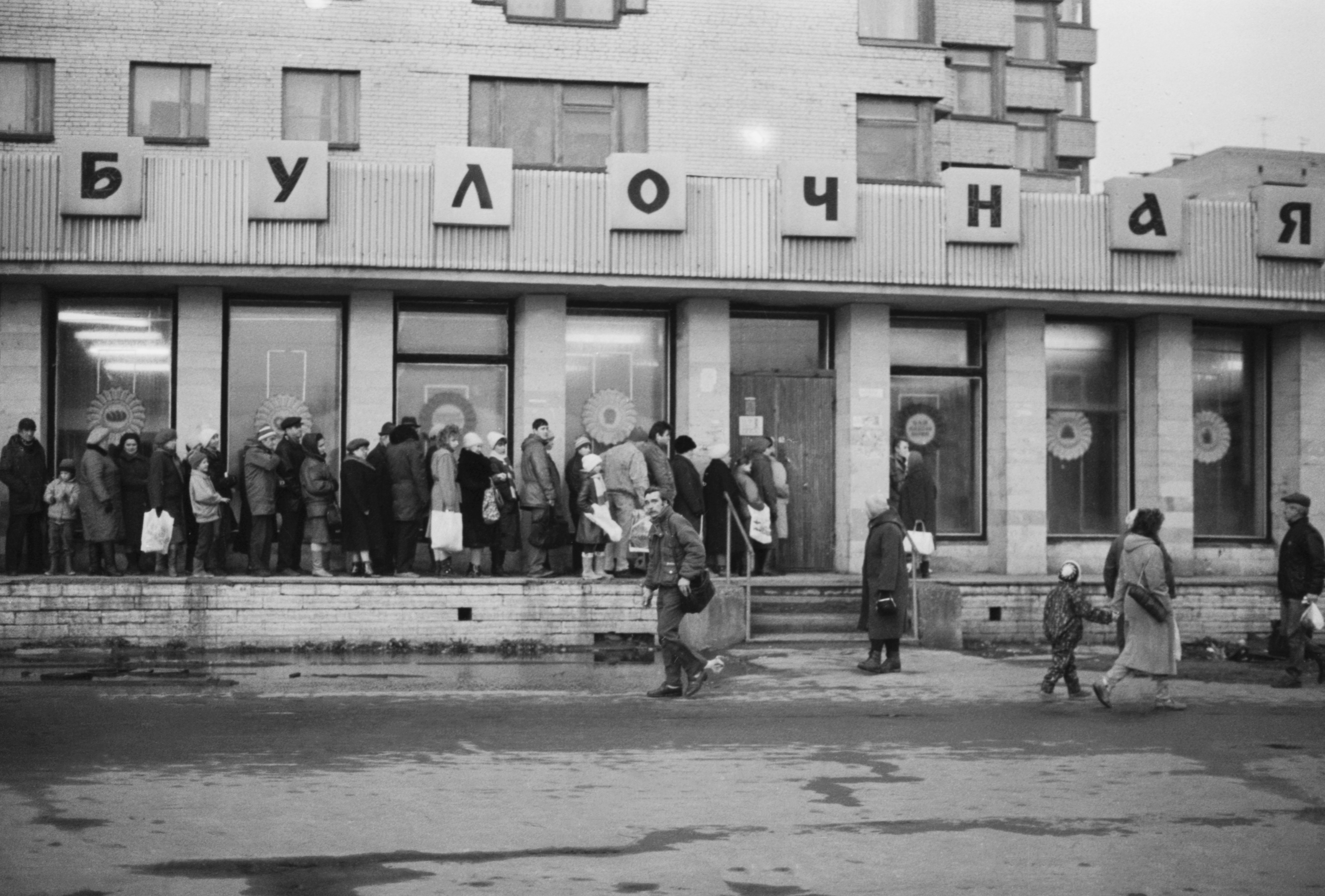
- I was a little broken out of the Chisinau language reality. Again, there was some kind of set of specific words. So, if we talk about the language, I think that I would get to Moscow, I would have a few more inconsistencies, although in Moscow, then, probably, they already spoke as you like. Somehow my southern origin was not read. It, of course, was read in another: I didn’t go skiing, I didn’t drink vodka, I didn’t know the meal, I still don’t know him, neither in cranberries, nor in the clogging-all these are incomprehensible, terrible, sorry, not politically correct, marvelous things, I never felt that I would need it, pleasantly and useful. But, yes, there were very strange performances in Soviet Leningrad, there was local terminology, because all the bakery, which was white, was called "BUY", I could not get used to it. I stubbornly called it white bread and I received it somewhere in the face, I was called for this “Moskal”, because there is no white bread-they have white bread in Moscow, and we have bread, then black. Black bread is a tautology. In the central Russian provinces there is a third version: give me a bunch of bread. Big language, large territory.
- Ivan, Mayakovsky has such a poem "Fifth International", he wrote it in 1922. There he has a line where he calls Latvia and Lithuania "political fragments." I think this expression is not devoid of imperial skin. At the same time, in Riga he had a lot of fans. He would hardly have called the Russian language "linguistic fragments", for example, in Latvia, where he was loved. So the geography of your life has developed: you are a subject of Latvia. You are in Latvia with your Russians, do you feel comfortable in Riga?
- In Riga, everyone feels comfortable with Russians. If at the same time he is able to speak Latvian, then comfort is huge. As for the Russian language, in Latvia the watershed is not in the language of the family, but to the place where education was received. That is, my Latvian friends, who studied in St. Petersburg and Moscow, spoke a beautiful, juicy, figurative Russian language. The people who received education in Riga, quite Russian in their origin, spoke the language right, but rather fresh. “I was lying yesterday with pressure and foot,” as a trainee, who came to my school, once said to teach the Russian language. “Sorry, children, I didn’t come yesterday, I lay with pressure and foot,” it is impossible for Riga. In Riga, no one opens, no one puts forward a secretary’s box - this will definitely be a “shuffle”. I remember at first my Riga editors said: "It is clear that you are not from here."
- For several years now you have been living in Trieste - this is your home, you have your own apartment there. Once Triesta was a fashionable city, I'm talking about the beginning of the twentieth century. It was a gear city of cultures, a bite of languages, the city of James Joyce, Italo Zvevo, Umberto Sabo, and in the 19th century even Stendhal, he worked there in the consulate of French. These were the times when Trithus was part of the Austro-Hungarian Empire and the imperial language in Trieste was the German language. How did the fate of the Imperial German language have been in Trieste, the city that was part of the Austro-Hungarian Empire?
Vienna language policy - it was not the language policy of St. Petersburg or Berlin, it was much softer, it respected local languages
- Trieste really entered the Empire, but was rather not the language periphery of German. Goricia was the nearest city, also on the border. Goricia or Gertz in German, Goricia-this is in the words, is located on the border of Slovenia and Italy. If we open the documentation not only administrative, for example, but also the documentation of the Jewish community of the city-everything is in German. In Trieste, historical documents of the Austro-Hungarian period, I am not talking about earlier periods, are usually bilingual. The language policy of Vienna was not the language policy of St. Petersburg or Berlin, it was much softer, it respected local languages. But the city of Trieste is a distant language periphery of Italian, although it extended on to Dalmatia, fading, this is the last breath of Slovenian's language. That is, in this place two language peripherals came together, and the German turned out to be from above. Yes, the German language had to know if you wanted to continue to study in Vienna, but if not, then it was possible to speak Italian. That is, the situation of Italo Stars, in whose family they spoke German, since the priest was Ashkenazi from continental Austria, not coastal, the language in their family was German. Umberto Sabo, another Italian writer from Trieste, from the Sephardic family, his surname does not sound in German, but this is another situation. Sabo, by the way, from a family where Italian spoke, this choice was made by his ancestors for a very long time, maybe it was not a choice. In the situation with Zvevo it was a choice. He could write in German, but in the sense of the language for Scripture, the choice was made in favor of Italian. German could not come to Trieste as a newly -minted " Lingua Franca ", as, for example, Russian came to Bessarabia, because this" " There was already Lingua Franca, and it was an Italian, trieste dialect, which was said by the Slovenians living there, which was spoke of Italians and other Jews and Armenians. There were many Armenians, now there was no one left.
What happened to German today? This is a language that is honorable to know. Our brightest star is Claudio Magris, a Germanist by education, the main thing of his life is a book about Danube, written in two versions, it was not transferred to German, he wrote it in German after he wrote it in Italian. This is a case of bilingualism, but this is a rather rare case. Cases of bilingualism in Slovenes are quite frequent. At the moment, probably, there are a certain number of Slovenian writers who are considered completely national classics in Ljubljana, but it so happened that their whole life passed in Trieste. Not to mention the fact that the Patriarch, in the sense of the long -lived of modern Slovenian literature, is Boris Pahore, his most famous book is called "Necropolis", this is a book about the life of the Slovenes in the Mussolini period in Trieste, where Pachore was born. Hello still. He was born in Austria-Hungary in 1913, remembers the pogrom of the Slovenian House of Culture and a fire at the beginning of the First World War. The last time I saw him and heard him last January, and in August we will celebrate his 107th anniversary.
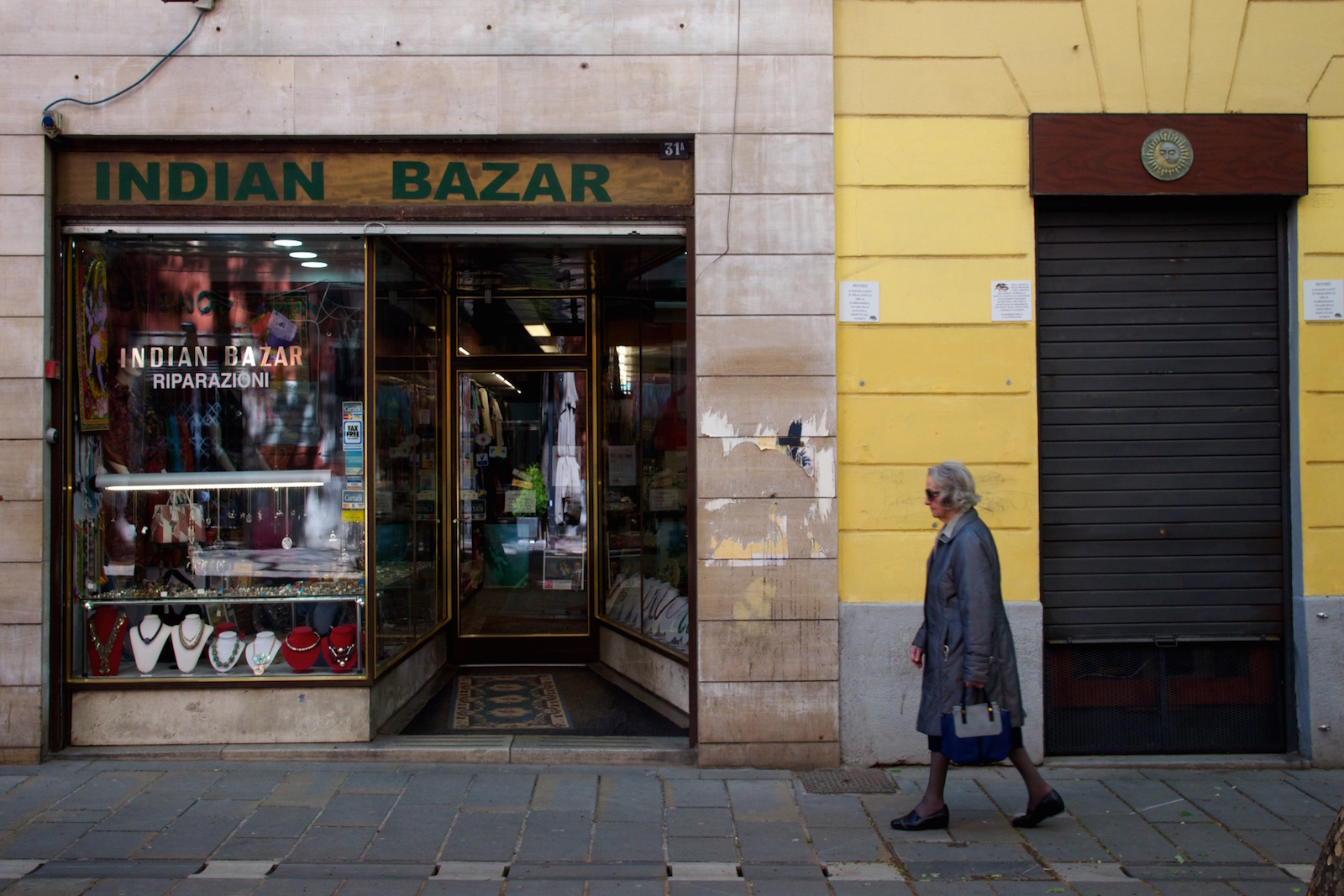
- James Joyce wrote in Trieste a story called Jacomo Joyce. That is, Jakomo is James. Are you worried that you are walking in the streets that Jacomo Joyce once walked?
- If we return to Bessarabia again, then few people lived there a full life of famous people. Either he was born, or died, or spent some years. In this sense, Trieste is generally a completely normal continuation of what I have been used to for a very long time. It is wonderful that this is a literary city. And it is remarkable that the authors were not only Italian, words that were English -speaking, were German -speaking, there were visitors. This is normal, it should be so.
Further in the program:
“My favorite tools” with composer Vladimir Khobystov and adjustor Eduard Klovsky.
How to cheer the guests? Says the mass-earner Vitaly Gerasimov.