
Translated material
Singing stagnant
The grandiose exhibition "Non -Wem" dedicated to the art of stagnation was opened in the Tretyakov Gallery
Time, from afar, looks like a swamp, in fact is alive and seeking. There is usually little officiasis on the Crimean than unofficial ones, there is usually little mode from the faithful singers of the regime, except for bank accounts.
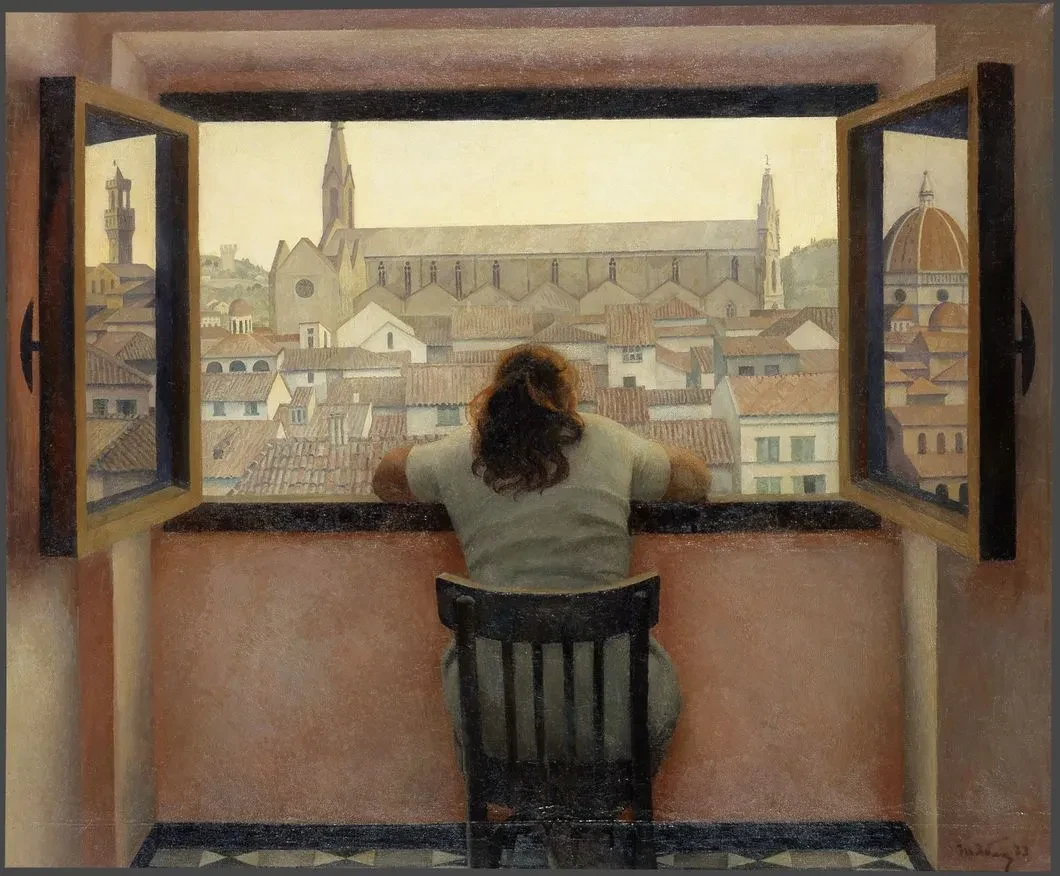
He went into the room, hit the other! If you do not know in advance the plot of the exhibition on the Crimean shaft, you will not immediately understand what unites three portraits of Brezhnev and mystical visions, surrealism and love for the Italian revival. The sunset of the Soviet Union looks like an unexpected combination of incompatible, simultaneous flowering of a hundred different colors, the triumph of pluralism.
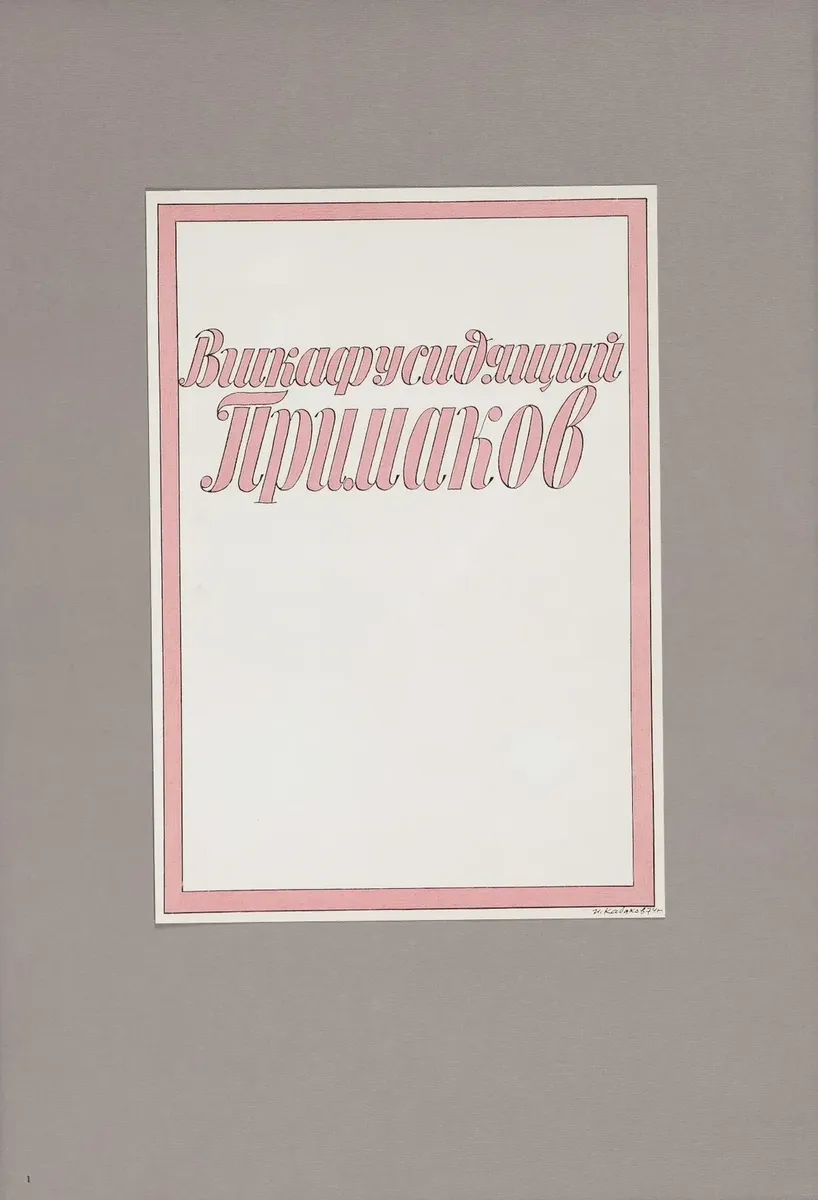
This time, curators Kirill Svetlyakov, Julia Vorotyntseva and Anastasia Kurlandtseva did not recreate the era in many of her manifestations, as three years ago, when they made a large -scale “thaw” in the same halls. Now they have not taken away the most obvious things, there are no many iconic works and authors, although you can talk about gaps only in terms of taste. The presence of the full-time singer of the patriotism of Ilya Glazunov is evidenced, both the author and the character: Boris Orlov made him the hero of the Golden Name cycle, where three silts met, Kabakov, Repin and Glazunov, in his own way the artistic iconostasis of the 70s.
True, there is no Glazunovsky portrait of Brezhnev at the exhibition: among the three images of the Secretary General - they dominate in the first hall - a huge mosaic of the work of Nadia Leger is distinguished, the same size and in the same technique is the image of Ekaterina Furtseva, echoing and at the same time in many ways of a sincere minister of culture, without which not to describe the history of Soviet art until 1974, when Furtsev She passed away.
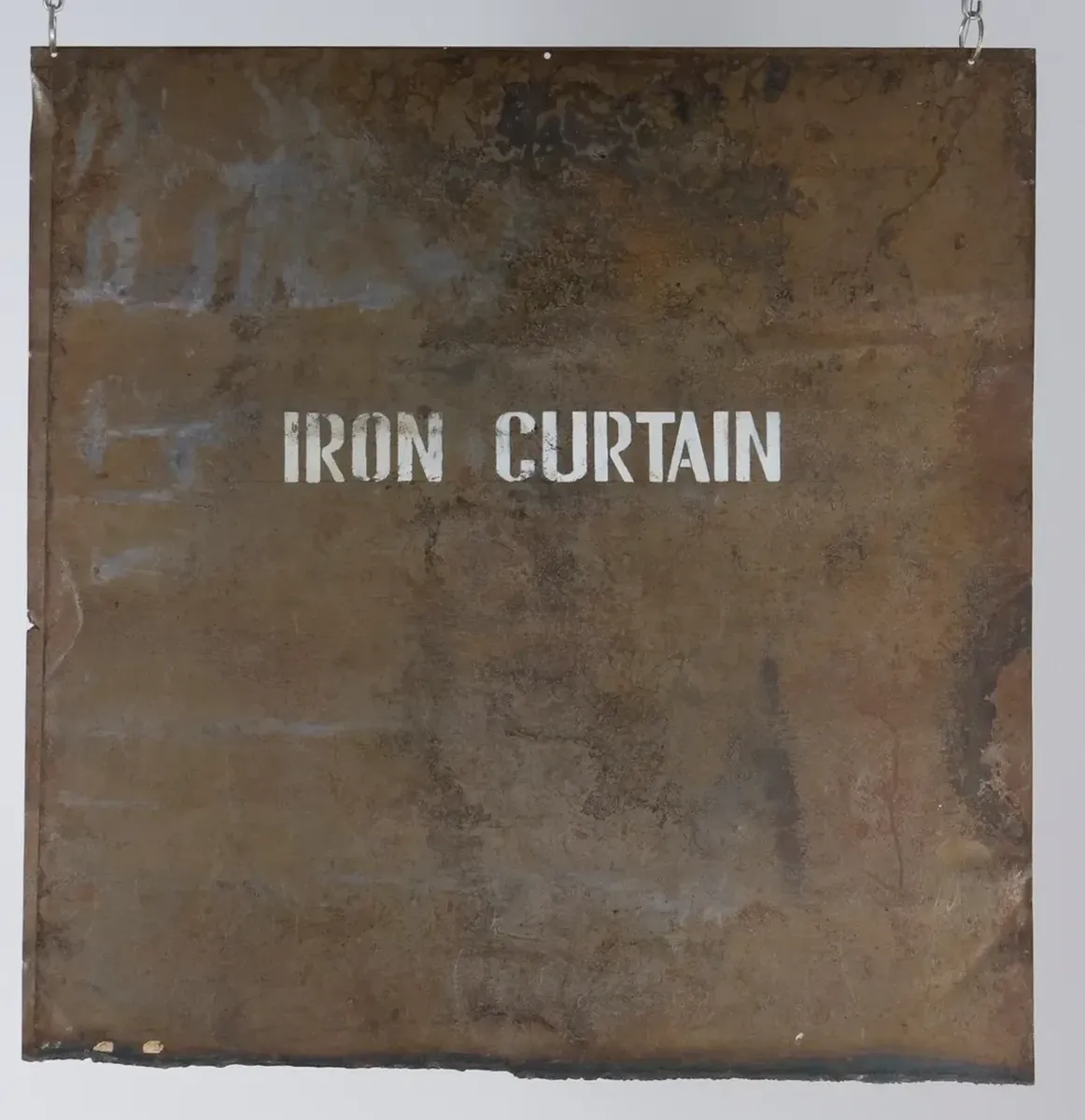
But the framework of the exhibition is wider, they spread from the commissioning of troops into Czechoslovakia until 1985, although 1974 remains largely milestone, at least for the number of losses-Gennady Shpalikov, Vasily Shukshin, died on the set, Viktor Popkov was shot dead by the collector ... But the era of stagnation has no clear dates, like any living process, it began for long It did not end, judging by many signs, and today - or so makes the inconspicuous rhyme of history think?
There is no clear division at the exhibition of official/underground art, sometimes the border is too thin, and those who are proud of the Tretyakov Gallery itself today, and who are dominated by the exhibition at one time also among the greetings, the “portrait of the father” of the same Popkov became, for example, an event in the 1982 Biennale Venetian. However, Biennale then had different faces and different roles. So, in 1977, its Levak director decided to show the unofficial art of the countries of the Eastern Bloc. As a result, they collected works that had already fallen from the USSR abroad, but this was enough for official Moscow to boycott Biennale-78.
What portraits say
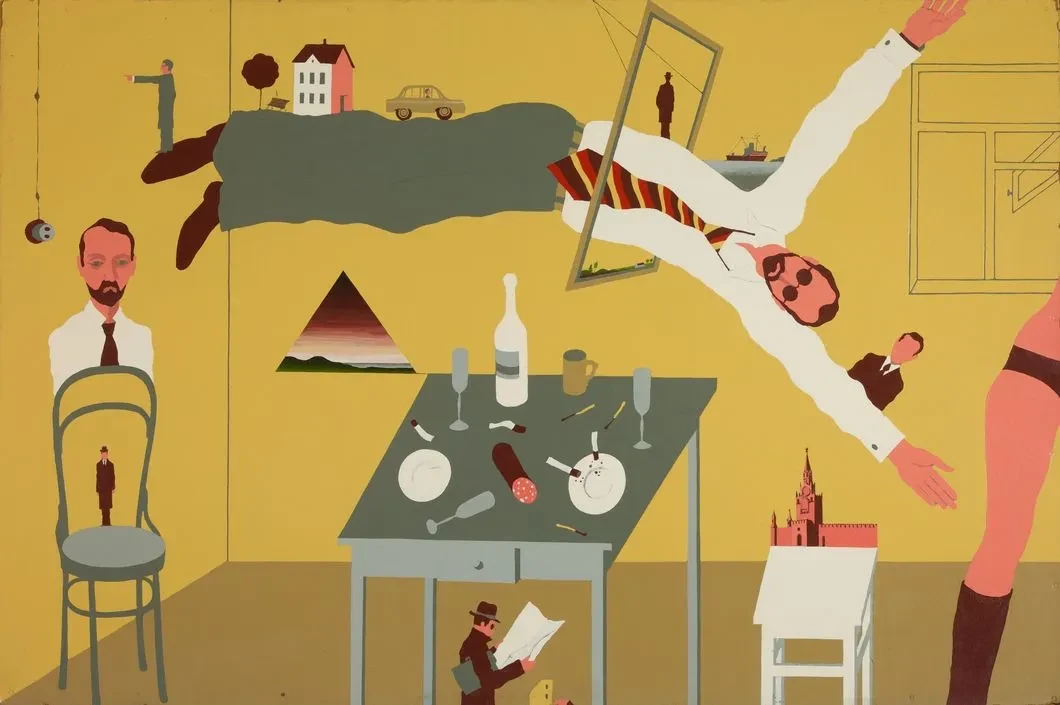
By this time, many artists were already squeezing into emigration, the remaining reservation in Moscow was created in the exhibition hall of the city committee of graphs on Malaya Georgian, alternatives and in Leningrad - in the Crimean there are many photographs of those years, including Igor Kalmin’s picture from the exhibition in the 1975 Nevsky recreation center. And two years later, Valentin Serov (1947–1988) captured the work of the Nest group that disappeared for natural-derivative reasons: a portrait of Andrei Sakharov and near Sol-Alexander Solzhenitsyn. In the neighborhood - “Meeting of A. Solzhenitsyn and G. Belle at the cottage of M. Rostropovich” the works of Komar and Melamid from the collection of Shalva Breus - the meeting is imaginary, since the real was held in Moscow; It is curious that this is also a hidden reminder of Furtseva - she began to pursue Rostropovich for giving a shelter to Solzhenitsyn, as a result, both were abroad.
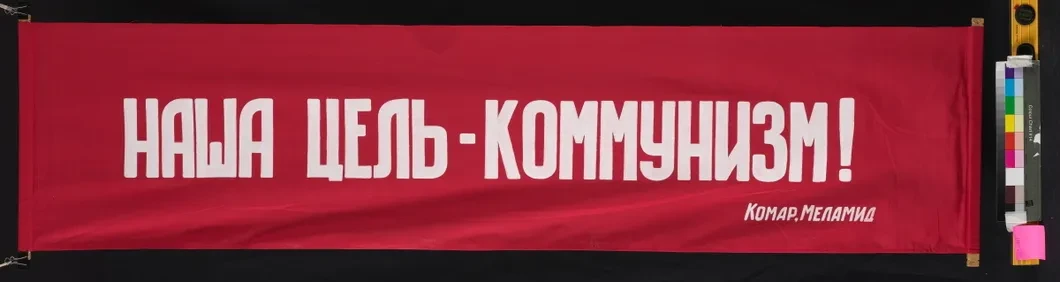
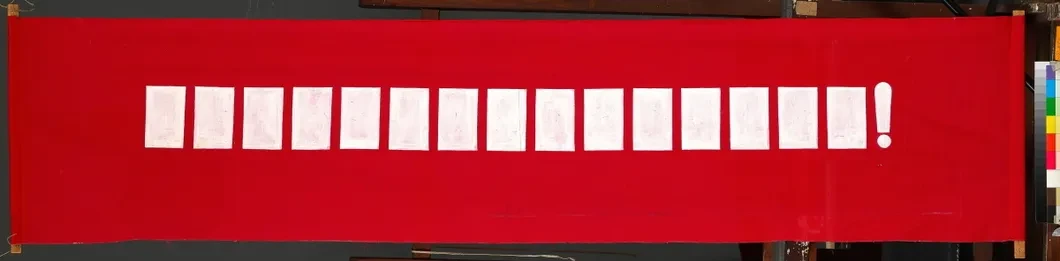
The famous dual self-portrait of Komar and Melamide with the inscription “SOC-Art” is also exhibited, the profiles on the red background remind of the leaders of Marxism-Leninism (one of the artists, however, can remind Trotsky, here is the sabotage!).
Although it is “nonsense” according to the plot principle - from “childhood” and “communities” to “disappearance” and “history and stopped time” - many portraits have gathered here, and not only political figures, but those who are associated with art, as a famous diplomat and collector, graduate of IFLI, Vladimir Semenov, captured by Dmitry Zhilinsky. For many years, Semenov was at Gromyko Deputy Minister of Foreign Affairs, and began a crazy career crazy during the years of repression in NKID: in two years - from the adviser to the embassy in Lithuania to the head of the III European department, the path today seems incredible. In his biography there are dark pages as the suppression of the uprising of workers in Berlin in 1953 and undisguised Stalinism in late speeches . His collection included the classics of avant -garde and contemporaries, Lentulov was adjacent to Drevn, and Kandinsky with Falk.
There is talk that he took some works from the authors for free, with the words "in my meeting to be honored with them."
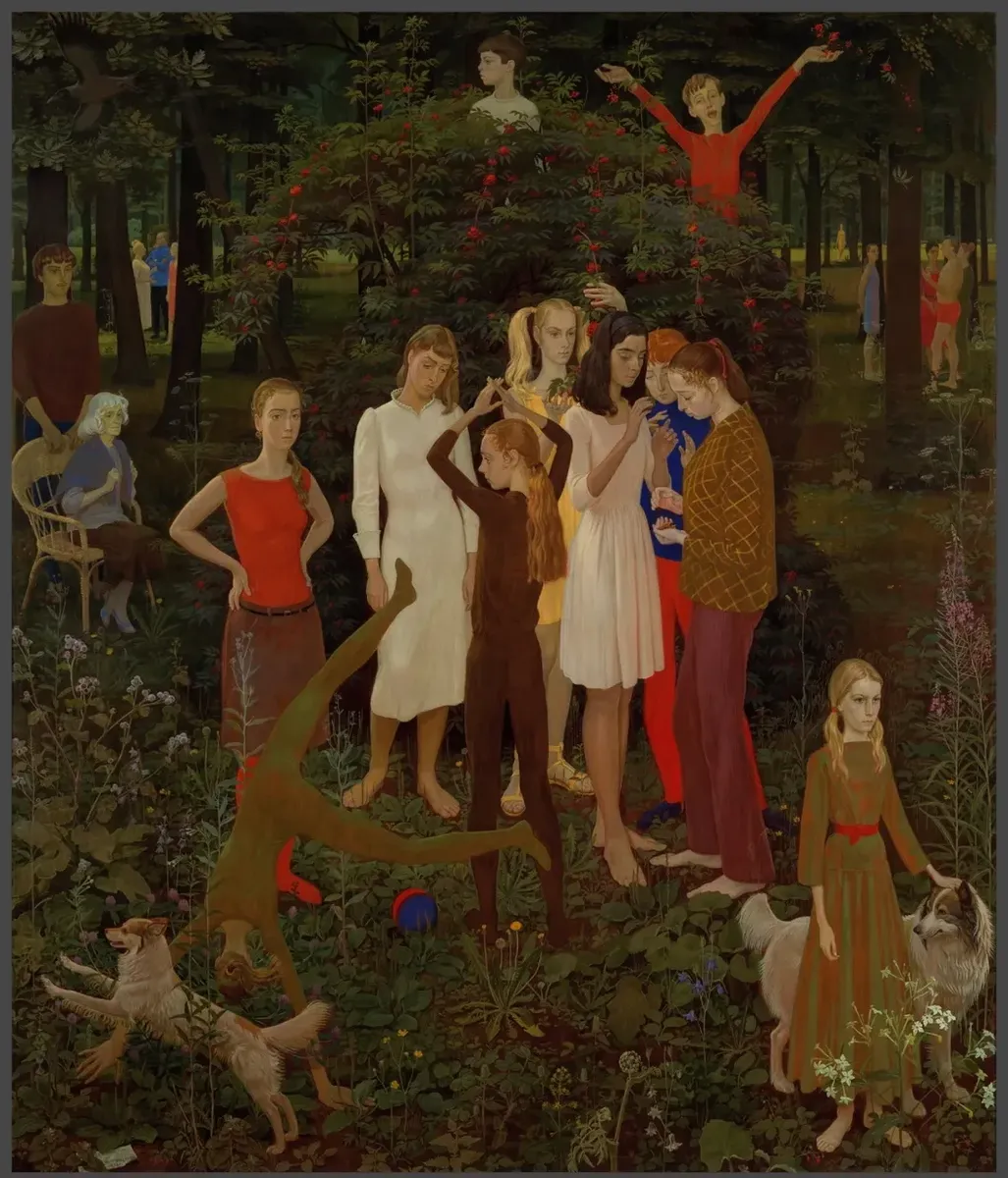
Semenov advised the famous German collector Peter Ludwig, who actively bought unofficial art in Russia. His other well -known consultations include a conversation with Andropov about George Kostaki - it was Semenov who supposedly recommended the disgraced Greek as a “decent” person and contributed to his departure from the USSR. So it is not for nothing that the label is recalled in the relationship of the “-customer artist” and the pair of “Sandro Botticelli-Medici”-with a slightly adjusted adjustment to Soviet reality.
But perhaps the most interesting on the Crimean - portraits of the people themselves. There is an unexpected self-portrait of Bard and artist Yevgeny Bachurin, his song “Tree” in the 80s sang in many bonfires in the 80s. This is a picture from the collection of the Tretyakov Gallery, as well as the excellent self -portrait of Alexei Tegina, who entered the collection only last year. Boris Talberg’s double self-portrait “Tet-A-Tet”, where a naked author talks with himself dressed, is known, unlike the unexpectedly abundantly shown Baltic states-so, Latvian lawyer Utans is represented by a geometrically drawn “photographer D. Zande”. They say that in the Baltic republics there was no division into official and unofficial art, the tolerance of the local authorities differed from the capital.
The searches of the style were associated with Western experience, the lucky magazines and albums were brought from business trips, but more often they fell into the country thanks to Western diplomats, journalists and collectors.
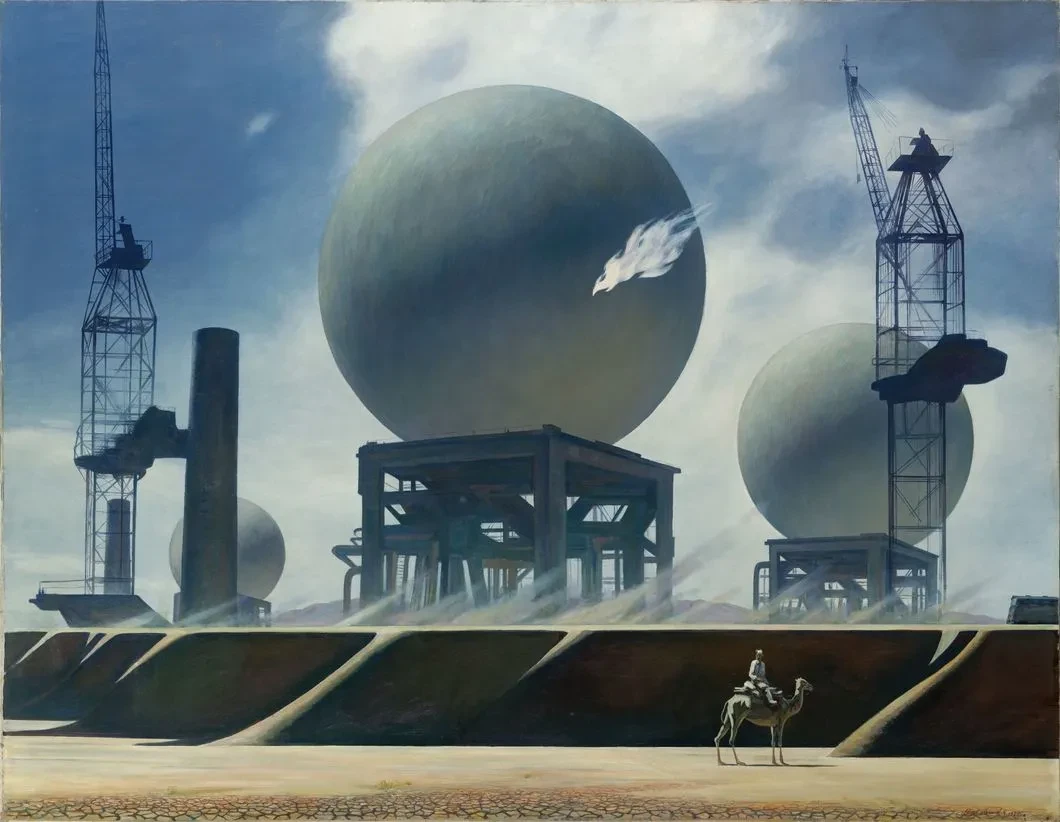
The wide masses were fond of Dali, narrow - Magritte. The West, like the shore of utopia, has some of the reproductions, others - to visiting visas.
Some after another, Mikhail Grobman, Vagrich Bakhchanyan, Oleg Kudryashov, Lidia Masterova, Lev Nusberg, Ernst Unknown, Rimma and Valery Gerylovina left ... The list is endless - unlike the choice of the remaining remaining, forcibly immersed in the principles of double life.
As another hero of the current exhibition Igor Makarevich said, the sixties “professed an honest and open path of life. And in the seventies they have already abandoned this and mastered the technique of doubles. The seventies were actually a collapse of hopes and departure in the present underground. ” Perhaps the status of the underground determined not only the interest of Western collectors and mass media in it, but also the well -known provincialization of Soviet culture, many of its talents turned out to be victims of provincial discourse. Many were drawn to the West, but did the West pull for Soviet experience? As a result, success at Western auctions was waiting for a unit. They did not even save the search for mystical.
Between the "sacred" and the sacred, from the "oven" to the spiritual
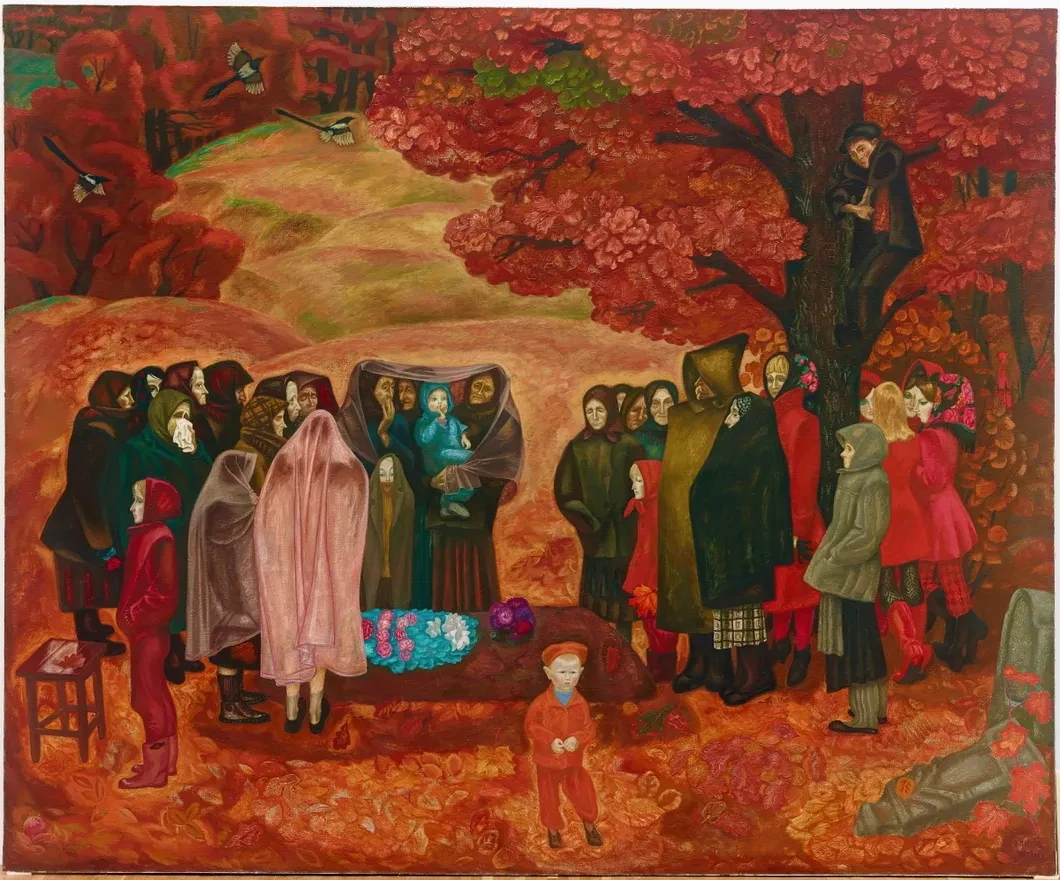
One of the halls was given to religious mystics - those whose spiritual experiments developed away from television ideology. This did not exclude mystical breakthroughs into a public space - the Tretyakov Gallery shows seven “visions” from the “Apocalypse” series Vitaly Linitsky (now Metropolitan Stefan). It seems incredible, but in 1975 these works were put up in the Pavilion "House of Culture" at VDNH, the photos prove that they were taken away by the central place.
The same hall also shows a fragment of the film “Pervorossians” (1967) of Evgeny Schiffers, he was shot to the anniversary of the October Revolution, the script was based on the poem Olga Bergholz about the communities who went to the mountains to build a commune in 1918. They are admonished by Lenin (Vladimir Chestnokov), but they take it hostilely in place, the case ends with a collapse.
Many dictionaries mistakenly indicate the director of Alexander Ivanov, who at one time withdrawing Sholokhovskaya “Raised” and “Soldier” according to the story of Viktor Nekrasov “in the trenches of Stalingrad”. Formally, this is true: in 1967, Ivanov came to the second creative association of Lenfilm with a new team, including theater director Evgeny Shiffers. He had already set up several sensational performances in Leningrad (alas, no records), was unkindly seen by the regional party committee and publicly quarreled with his teacher George Tovstonogov.
Ivanov was on the set of Pervorossiyans as an observer, the film was shot by Schiffers. Theatrical aesthetics turned out to be difficult for the admissions committee, and the picture was met in silence at the surrender. “Pervorossiyans” were not banned, because honest people had just received the State Prize for the next role of Lenin, but they decided to release the tape on 32 copies on a 70-mm film and abandon copies of 35 mm format, which meant the planned failure: there were few large-format cinemas in the country, the cash desk was made by the usual projectors. Over the years, all copies of Pervorosyans have disappeared; The negativity survived at the State Film Fund was not so long restored, it looked like a scientific feat.
After the filming of Schifferx, he was actually excommunicated from work in the theater and even more so in the cinema, only in 1991 he set the film “The Way of the Tsars” and began to print his philosophical and religious works. But the "firstborn" was seen by those who needed it. With Schiffers, who became a guru for many not only scenes in the world, Merab Mamardashvili and Alexander Pyatigorsk, the creator of “hieratic painting” Mikhail Schwarzman and Dmitry Aleksandrovich Prigov communicated. The artists, however, were not easy to withstand the ideological density of Shiffer’s thought, its uncompromising, and in some ways peremptority, sooner or later they left his circle.
As a result of rejection, as they say, the ironic terms of Moscow conceptualists “oven” and “sacred” arose. The irony looks like the back of any pathos, but the figure of Schiffer itself was admired. Yuri Karyakin said that in his entire life he met one brilliant man - Schiffer. Valery Zolotukhin compared him to Schnitsky: “They are very similar to persons and radiation energy, and both good ones, despite their thoughts hardly pronounced in words, judgments. No, they did not become embittered, they do not curse the flood time, they did not reconcile. No, they opposed him with their active life. Avvakumov courage. " The recording in the actor’s diary echoes the Schiffer's essay essay, where the righteous in place extends the “Higher Call”, and he prays about patience in order to survive in this complete immobility.
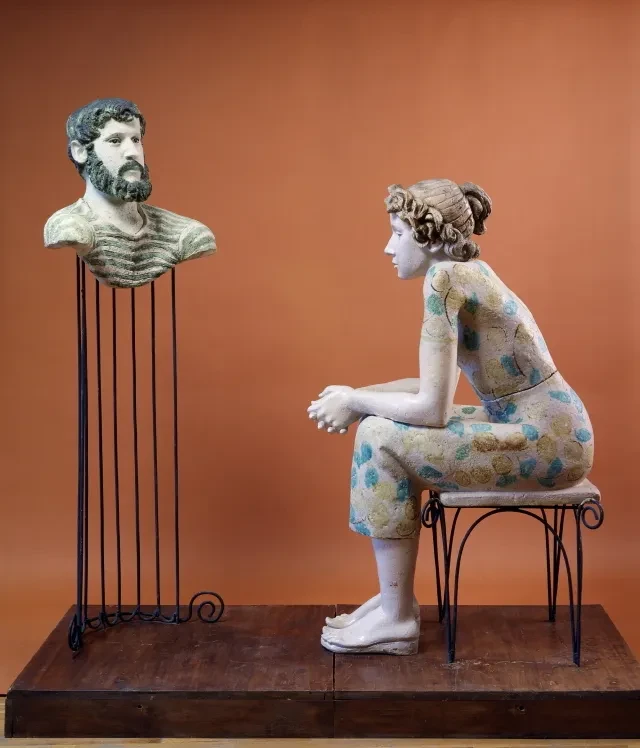
In a sense, life in stagnation is also an attempt to survive in complete immobility, when the emigration of the external replaces the emigration of internal.
But cyclicality is also characteristic of social life. Although the exhibition seeks to avoid frank sociality, one way or another, he returns to it all the time, among the films shown - the iconic “flights in a dream and in reality”, and everything ends with the final shots of “Assy”, where Tsoi sings “our hearts demand”.
The art of the era of change is the topic of another exposition. And then, perhaps, another, in order to finally understand - so forever, or not without any way, or sometimes they return?
Interview with the curator
Kirill Svetlyakov: "These artists are afraid of eternity, which will erase them into powder"
- How did the pandemic affect the final selection of work?
- It was not possible to get a painting by Bulatov from Paris, several interesting things from the Ludwig museums in Cologne and Budapest.
- Are losses traumatic for the concept of the exhibition?
-They did not become so critical, but several important things as the “horizon” or “Krasikov Street” Bulatov, already in the 70-80s were abroad. Bulatov 70s is now simply inaccessible in Russia.
-In our museums, still a deficiency of the most important layer of unofficial culture?
- Much was in Western meetings, but still artists often engaged in copyright repetitions. Those compensated for the absence of certain works, although sometimes they were done late, already in the 2000s, they have no aura of time, authenticity. We refused, for example, Bulatov’s “Glory” of the CPSU: the second option was written differently, it is more poster, deaf, this feeling of space leaves, and the first is more transparent. Previously, they created things without timing, the artists had a lot of time, they did not look at the watch. Then, when the circumstances changed, it became less. The art of the 70s is solid work. And the art of the 60s is sometimes more dynamic in style and more energetic, speed is felt there.
-The 60s rhymed with the revolution, ideas and inspiration scooped up in it. And with what rhyme stagnation rhymes?
- With the western postmodern. In the West there was a lot of polystilistic painting, there was a mixture of styles in Italian art, there are a lot of it in America in the early 80s. Soviet artists also watched how dashing quotes and David Sally and Julian Schnebel, their art was built on endless references. But the Soviet artist sometimes experienced a greater pathos, he wanted to enter into a dialogue with the whole history of world art. More-and this did not have the sixties-the seventy people are very afraid of eternity, they experience fear that eternity will erase them into powder.
This fear, that not everyone will take into the future, even Ilya Kabakov has, the fear of the question "Are I great?" This is the ego, the form of the fixation on itself, which, perhaps, causes the cultural fear of oblivion. He was at Prigov, just a hysterical fear of oblivion.
But the Kabakov phrase about the future, where they will not take everyone-this is irony, is he sure that they will not take him?!
The saving irony, but it is very serious, it testifies to a tense existence, which looks almost strange during the period of social stability. Perhaps the fact that people lost the coordinate system is associated with a certain cultural vacuum. The measurement of yourself with eternity arises when you do not know what to measure yourself with. I asked the American curators if the Americans had such fear? No, they did not think such categories, did not compare themselves with Leonardo da Vinci, they compared themselves to representatives of their generation. In this sense, they did not compete with eternity and were not afraid of it.
You are talking about the narcissism of the generation of stagnation-but the 70s are marked with interest in psychology, Roman Italo Zvievo “Zeno's Obad” was no less popular than the epic of Proust. Self -digging looked like a response of time, narcissism - an attempt to save.
Yes, this is a search for identity. But in narcissism, I see an admiration through a particular era. It is one thing when a person is interested in the era, another - when he begins to enter into it. Soviet retrospectivists have a lot of this, so we play the Renaissance, here-in something else; Of course, they are looking for themselves, they know themselves through this, but there is a lot of admiration in this.
Is there no reproach for modernity in this love? They want to be in another dimension, and not at the construction sites of communism.
Isn't that strange?
It is no longer strange than if I wanted to go to construction sites.
Of course, there were also enthusiasts of industrial culture. But Prigov has the term “cultural sanity” - how a person feels the culture of his time, its problems either does not feel them at all and is engaged in flights in a dream and in reality. I observed very ambitious artists who lead their genealogy from Vermeur, Pierrot della Francesca, Tarkovsky has it.
Some destinies, characteristics of character and psyche are not always a reflection of general trends, historical process?
They themselves enter themselves in a great story.
Should I trust the artist’s self -description?
Not that they talk a lot about themselves. There are talkers in this sense, but the same retrospectivists do not say so much, they just intrigue, they are intriguing, prefer to be more silent. Maybe this is also a stagnant phenomenon-to remain silent, to portray something with the language of gestures, and the interpretation will be born by itself. If I tell everything, I judge the field of this interpretation. Some artists we talked with are extremely reluctant to reveal the details. Sometimes they can recall that they were prompted for some decision, but they will not explain it. А вот концептуалисты многое объясняют про себя, и так в процессе объяснений себя и формируют.
К выставке вышел хорошо составленный и дизайнерски безупречно оформленный каталог под названием «Это было навсегда. 68/85»; есть онлайн-версия. Среди авторов статей — Наталия Адаскина, Александр Боровский, Илья Будрайтскис, Виктор Мизиано, Алексей Юрчак.
Атмосфера: что читать и смотреть
Выставка «Ненавсегда» рассчитана на тех, кто жил во времена того застоя, и тех, кто по молодости его скорее мифологизирует, не всем будут понятны иные детали.
Помочь может литература — например:
«Московские повести» и «Время и место» Юрия Трифонова,
рассказы Юрия Казакова,
«Поиски жанра» Василия Аксенова,
пьесы «Утиная охота» и «Прошлым летом в Чулимске» Александра Вампилова,
а также «Протокол одного заседания» Александра Гельмана.
Среди фильмов режиссеров, не показываемых в рамках выставки, —
«Познавая белый свет» Киры Муратовой,
«Парад планет» Вадима Абдрашитова,
«Осенний марафон» Георгия Данелия,
«Осень» Андрея Смирнова,
а также «Мы, нижеподписавшиеся» Татьяны Лиозновой.
Адрес выставки: Третьяковская галерея на Крымском валу, до 11 октября.