
Translated material
Sofia fell
Why could the Russian Orthodox Church and the Russian state could not prevent the transformation of the cathedral into Istanbul into a mosque?
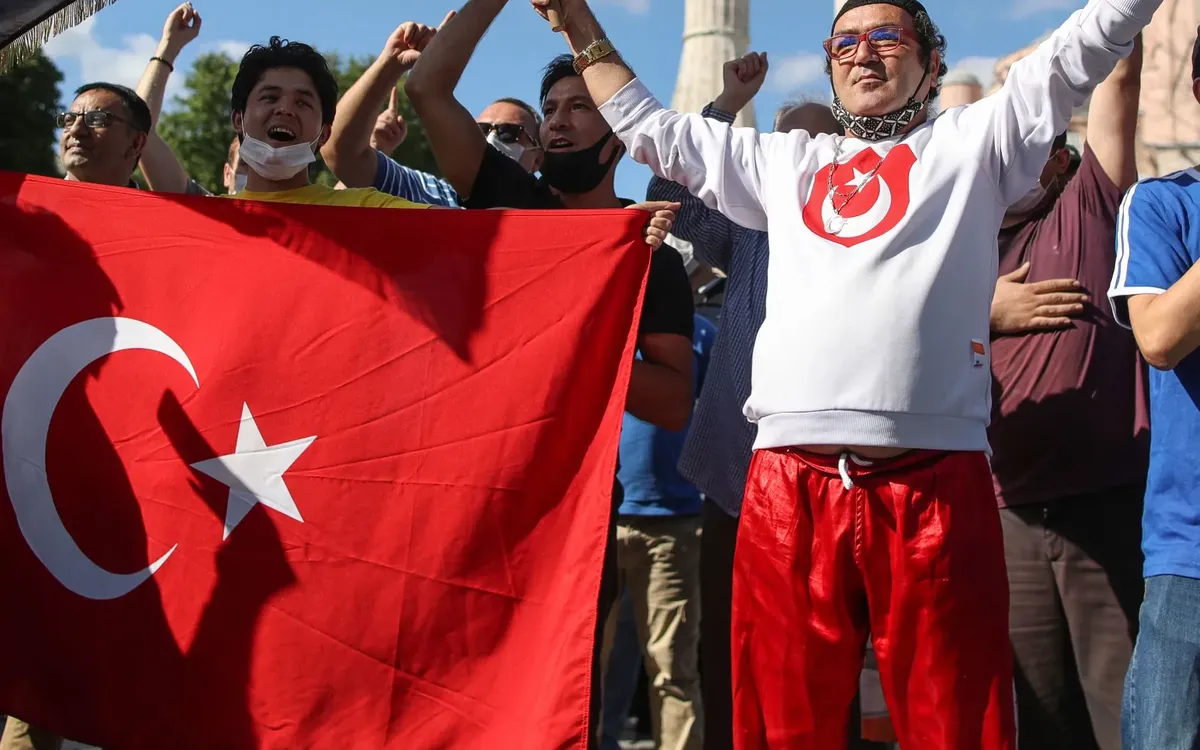
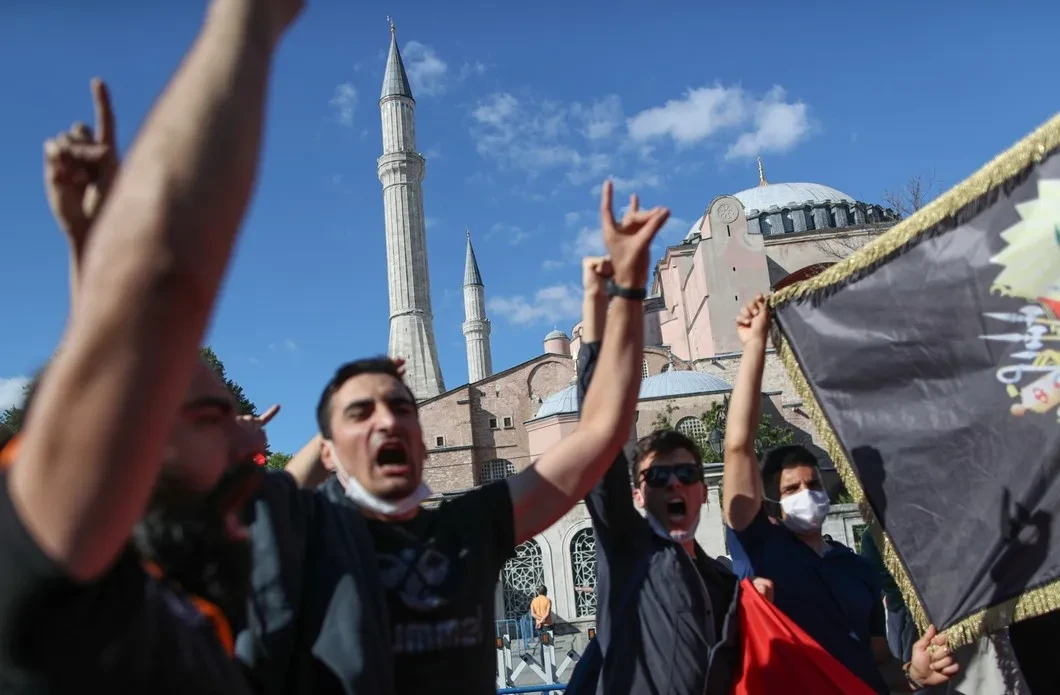
What the Islamists of different countries have been talking about so long. On the evening of July 10, Turkish President Recep Tayyip Erdogan issued a decree on the transformation of the temple of St. Sophia in Istanbul from the museum to the mosque. This temple has been from the moment of winning the capital of Byzantium by the Turks in 1453 before the publication of the decree on the foundation of the Aiya-Sofia Museum in 1934. The decree became the apogee of the course of Mustafa Kemal Ataturk for the secularization of Turkey, to turn it from the Asian caliphate into European democracy. Earlier, since the beginning of the VI century, Sofia was the largest temple of the Christian world.
The legal opportunity for a revolutionary decision by Erdogan was provided by the State Council of the country. On July 2, during a 17-minute meeting, he decided that the fate of Sofia could be determined by the presidential decree, since in 1934 no law was issued on this issue. True, ataturka decrees were not able to question before - like Lenin's decrees in the USSR. But times are changing ...
Erdogan was persuaded to preserve the museum in St. Sophia "The whole world." This is the rare case when the positions of the United States and the Russian Federation, the Moscow Patriarchate and Constantinople coincided (despite the breakup between them). UNESCO, on the list of worldwide cultural heritage of which is the Cathedral, warned Turkey about the danger of such a decision.
“St. Sophia” is one of the key symbols of Russian culture and religiosity. The Tale of Bygone Years claims that the aesthetic admiration experienced by the ambassadors of the Kyiv Prince Vladimir in this temple caused the baptism of Rus'. In a statement against a change in the status of the temple, Patriarch Kirill emphasizes: "He is especially dear to the Russian Church." “The dream of Sofia served as a sacred justification of the endless Russo-Turkish wars, and the government synod in anticipation of the victory of Russia in the First World War developed the rank of consecration of the cathedral.
The position of Russia
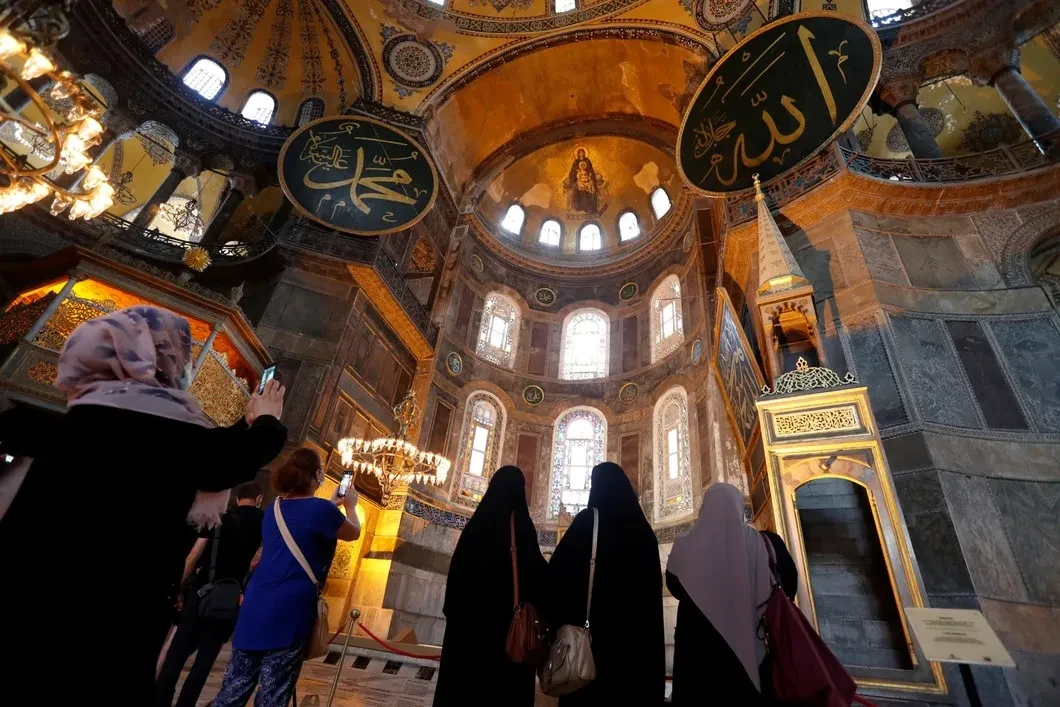
“Saint Sophia” was almost 500 years of a mosque - and this was not the best to affect its cultural values. Firstly, numerous extensions distorted the architectural appearance of the cathedral and still interfere with its holistic perception. Secondly, in accordance with the canons of Islam, Byzantine frescoes and mosaics with images of Christ, saints and angels were destroyed or plastered.
The little that was preserved from them was cleared only during the restoration of the 1930s. Among other things, UNESCO anxiety is caused by the fate of these treasures of world culture:
Will Turkish Muslims now in the newly open mosque offer their prayers to Byzantine Christian images or will they begin to smear them again?
The same anxiety sounds in the statements of the Russian side. True, they are not added to persuasiveness that the same “neoarchic” process for which Turkey is criticized is in Russia itself. Museums that occupied monastery and church buildings that are transferred to the Russian Orthodox Church are massively closed throughout the country. Often (as it was, for example, in the Ipatiev and Solovetsky monasteries), irreparable damage to museum collections is caused.
UNESCO's opinion in such cases is ignored as easily as Turkish: for example, the Novodevichy and Solovetsky monasteries unconditionally transferred to the Russian Orthodox Church are also included in the World Cultural Heritage list. The only difference is that the monuments of Christian origin are transmitted here nevertheless to Christians, and the question of smearing frescoes does not seem to get up.
But here everything is not so obvious: over the past 30 years, there have been many cases of barbaric circulation of representatives of the Russian Orthodox Church with historical monuments and even the destruction of entire temple complexes (some examples of this kind are given in the publication of the “new”).
In the circulation of the State Duma of the Russian Federation to the Turkish parliament of July 7, very correct words are said: "It is necessary to take all possible steps in order to prevent damage that can be caused by a hasty change in the status of the museum." As if such words were warmed by the souls of the defenders, say, the Isaac's Cathedral in St. Petersburg or the Ryazan Kremlin!
But, alas, the practice of double standards, established in the foreign and domestic policies of the Russian Federation, does not allow itself to apply those rules, the execution of which require from others.
Patriarch Kirill, in a statement of July 6, transfers the main emphasis to “insulting the feelings of believers”, which in the Russian Federation, as you know, constitutes a criminal offense.
“Any attempt to humiliate or trample a thousand -year -old spiritual heritage of the Church of the Church of the Constantinople Church,” he notes, “both before and now he perceived and perceives with bitterness and indignation. The threat of "Holy Sophia" is a threat to all Christian civilization, and therefore our spirituality and history. And to this day, for every Russian Orthodox man, "Holy Sofia" is a great Christian shrine. "
True, in this case, in this case, Bastrykin or Krasnov will begin to initiate criminal cases against Erdogan - as is done in relation to foreign politicians weaker. In the conditions of international isolation, the Kremlin really values the remaining connections with Turkey - to see this, just look at the shelves of Russian supermarkets.
From the standpoint of faith
If you look at the problem of Sofia from a religious point of view, then it will not be so simple. In modern Orthodox and Muslim communities, the confrontation between liberals and conservatives - supporters of secular adaptation or revival of archaic is growing.
For a long time, Türkiye was the center of the Euro -Eislav movement, one of the leaders of which was the theologian Fethullah Gulen, declared the worst enemy of the current Turkish regime. One of the values of the Euroislav is respect for the “people of Scripture” (Christians and Judaists), which excludes the appeal of their temples in the mosque. For Euroisham, any monotheistic temple is a shrine.
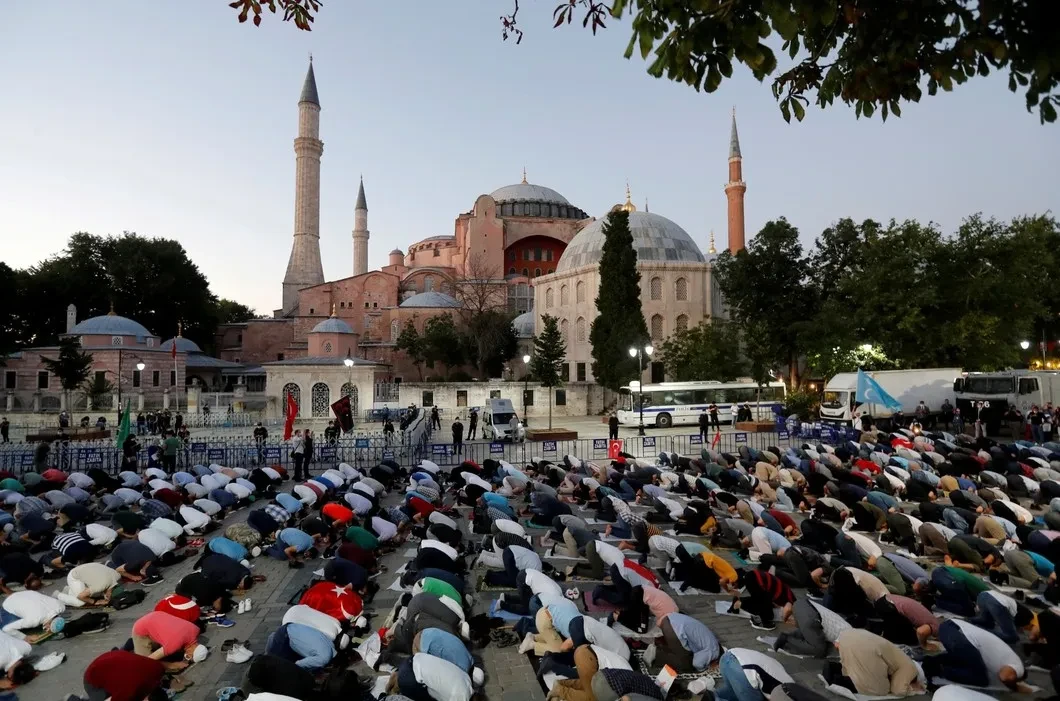
Having proclaimed a course on Neoarchic, Erdogan is trying to tear out leadership in the Islamic world from the Arab countries, primarily Saudi Arabia, a stronghold of Wahhabism, where Christian or Jewish prayer buildings are completely prohibited.
A similar division is observed among the Orthodox. If the liberals believe that Muslims worship the same to God as Christians, so there is nothing terrible in the opening of the mosque, then the conservatives consider Islam as “worship of the devil” (such definitions are contained, for example, in the old publications of the liturgical book “Trebnik”).
True, in this matter, a “strictly canonical” look enters into a clinch with the “geopolitical”. If the main enemy of Orthodoxy is considered the West, then the idea of an alliance with zealous Muslims who are ready to wage a sacred war against him looks very seductive. The late Archpriest Vsevolod Chaplin spoke with such calls.
A reasonable proposal made by the Armenian Patriarch of Constantinople Saac II. He urged to allow both Muslim and Christian prayers in “Holy Sofia”. But the Turkish authorities can hardly hear him.
By the way, world Orthodoxy could not speak with any consolidated position on this issue-largely due to the lasting split of the Moscow Patriarchate with Constantinople.
Intra -Turkish layouts
The process of Islamic archaization of Turkey, sometimes called neo -osmanism, is somewhat reminiscent of the process of Orthodox archaization of Russia with its "symphony" of the Russian Orthodox Church and the Kremlin. But in Turkey, the cult of its founder - Kemal Ataturk, whose portraits hang in every office and are printed on money are supported. And Ataturk was a small -religious person and an ardent supporter of secularization.
Returning the “Sofia” the status of the mosque, Erdogan, as it were, crosses through the tradition of Ataturka, throwing the bridge to the corresponding wactan (gift) of the Sultan Mehmed II of 1453. This is where now it is necessary to look for the sources of Turkish statehood.
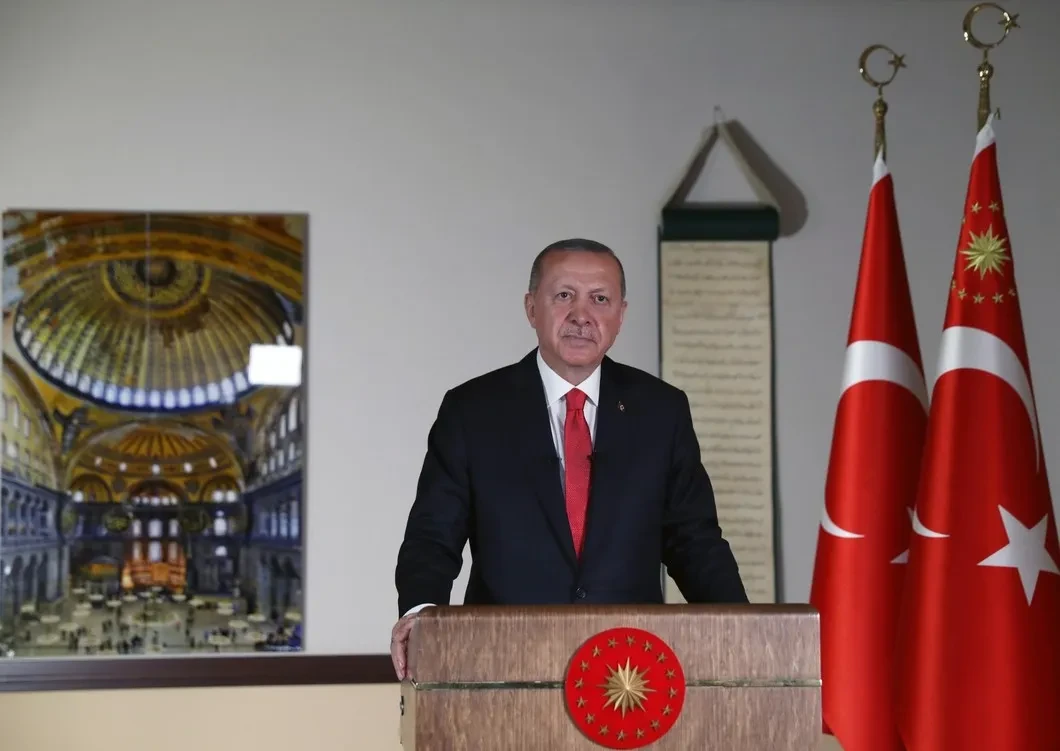
The ideology of the ruling party of justice and development (PSR) (it is called “Ak-Party”-a white, or pure party) implies that the collapse of the Ottoman Empire was the “largest geopolitical catastrophe of the twentieth century”-as a collapse of the USSR for Putin.
The electoral base of the PSR, the conservative village and poor small cities, are the “deep people”, while large cities, including the 15 million Istanbul, are liberal. This was well shown by the dramatic elections of the mayor of Istanbul in March-June 2019. It should be noted that with some similarity of Erdogan and PSR with Putin and “United Russia” in their anti-Western and ultrapatriotic rhetoric of Turkey, very far to the level of political monopoly that has developed in the Russian Federation. The opposition in the country is quite strong and popular.
Conventionally, the pro -European candidate of Ekre Imamoglu ran for the mayor of Istanbul from the opposition “alliance of the nation”. According to the results of the counting (80% of the vote), his opponent from the PSR, former Prime Minister Binali Yyldyrym, was the leader. However, as a result, with an advantage of several thousand votes (tenths of a percent) defeated Imamoglu. After a series of recounts of votes, he took office, but Erdogan achieved the cancellation of the election results, and the mandate was taken from Imamoglu. With a new vote on June 23, Imamoglu won with a convincing advantage, and Erdogan resigned himself that Istanbul passed into the hands of the opposition.
Turkish political scientists consider the epic with Sofia as a kind of “revenge of the Islamists” to the most freed city of the country.
In the municipal elections in a number of other large cities, the PSR also lost a leading position, having received no more than 40% of the vote.
Accusations of Erdogan and PSR in Islamism in 2015–2016. The official Moscow also shared. On December 2, 2015, TASS quoted Deputy Minister of Defense Anatoly Antonov, who personally accused the president and his family of oil trade obtained by the Islamic State ( prohibited in the Russian Federation . - Ed. ). It was supplemented by the head of the National Center for the Defense of the Russian Federation Mikhail Misintsev:
“The financial flows from the resale of petroleum products are aimed not only at enriching the highest military-political leadership of Turkey. In large volumes, they return to the Syrian Arab Republic in the form of weapons, ammunition and mercenaries of various stripes. In the last week from the territory of Turkey to the ISIS and Jebhat-An-Nusra detachments ( both organizations are prohibited in the Russian Federation. - Ed. ) Through up to 2 thousand militants, over 120 tons of ammunition and about 250 units of automobile equipment for various purposes. ”
Since then, however, Putin’s relationship with Erdogan has established themselves, and they no longer remember the “sponsorship of terrorism”.
Türkiye suffered from coronavirus pandemia no less than Russia: the economy collapsed, the ratings of the PSR and Erdogan fell. The story of Sofia is designed to again mobilize the saddled electorate.
***
Of course, Russia, which has taken to protect the Orthodox civilization, was very unconvincing in this story. There are too many contradictions with this role: geopolitical interests do not coincide with church ones, it is strange to protect Constantinople after many years of exposure in the "heresy and split."
It remains only to be consoled by the fact that in the world of “neoarchic” and “neo -symphanism” religious slogans play a deeply auxiliary role among political.
The Mosque "Holy Sofia" will become only symbolically, nominally.
Several dozen people will gather in it for prayer once a week. But it will remain real, and the most popular in Turkey by the tourist object.
To refuse income brought by more than three million tourists annually (data for 2019), the entrepreneurial Turkish people will not be able to under any regime.