
Translated material
We always work with tragedies
How social workers take care of elderly people during the pandemic
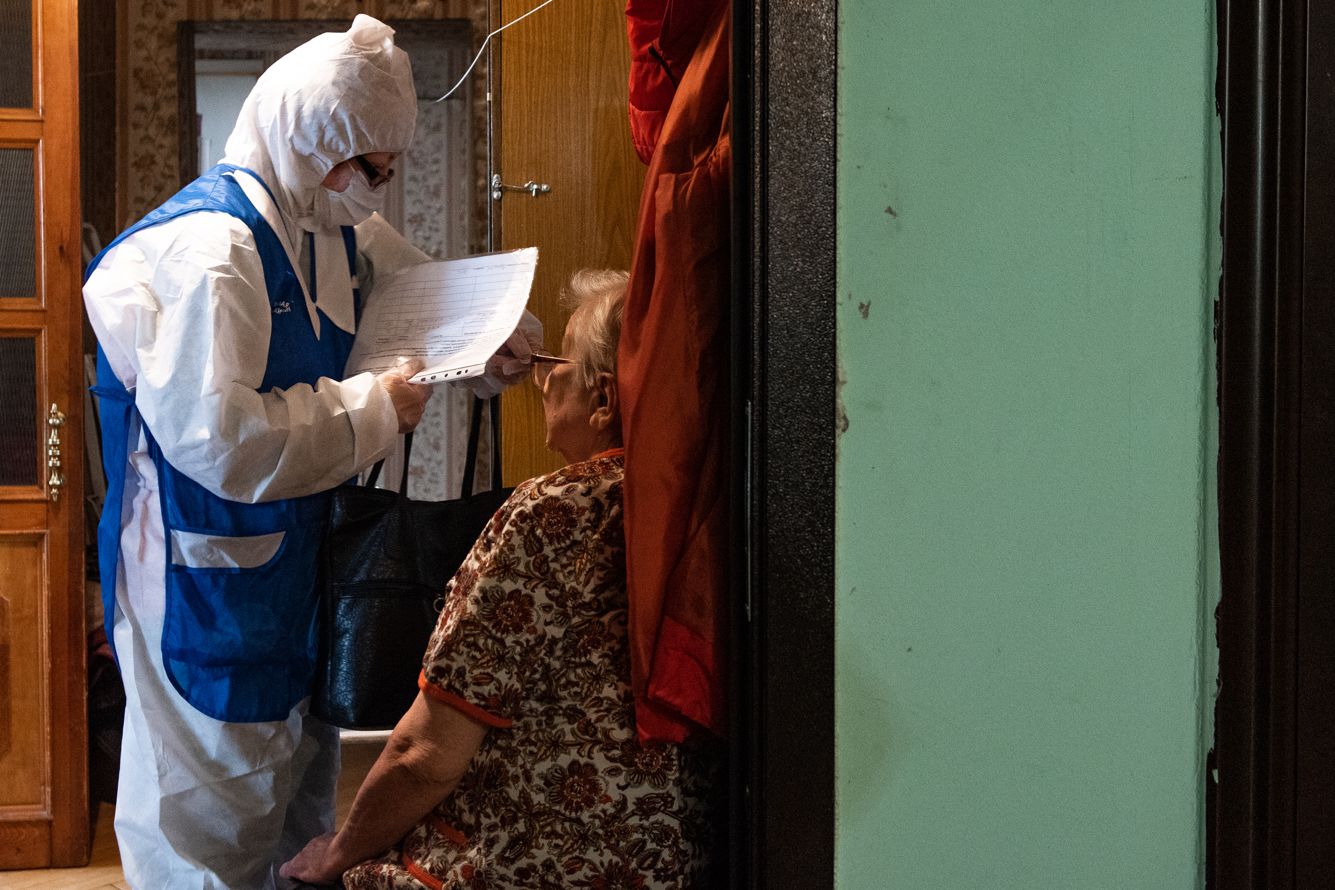
During the Pandemia of Coronavirus, the help of social workers is especially in demand. Older people who were at risk are not recommended to visit public places, contact other people and even see relatives. For many of them, social workers became the only help at this time. Meduzacare talked with some of them.
The article that you read is part of our Meduzacare philanthropists support program. In July 2020, it is dedicated to Cerebrail Paralysis. All materials can be read on a special screen .
Nadezhda Kartashova, social worker of the state institution of the Kirov region
I myself am from a large family, my mother had ten children, I am the ninth. And how much was carried out on my hands! I saw the diseases of relatives, I was very sorry for them. Once they asked me for my grandfather to see, I went from a private person. And then I realized that I can’t - I feel sorry for them all. Among my wards there are those who do not have children. They will call: "Nadia, for the sake of God, only you do not leave us." Of course not. I love my profession very much.
I am 59 years old, ten of them I am a social worker. I have my own vehicles, I go, I divorce products. For me and my wards, this is very convenient, especially now. I have [wards] - 16 people. The schedule is from 8 to 17, but it happens on the weekend I will go if someone calls. Each twice a month has wet cleaning, drug delivery, change the passport, go to the administration - a lot of things, enough work. In addition to its wards, during the coronavirus, additional [wards] in military service appeared - I work as a volunteer. These people are not standing on permanent maintenance, but they can take something dispositively on contactless delivery. This was not there before.
During the epidemic, it has become a little more difficult to work. On ordinary days, you knew that it was necessary to do wet cleaning, cook food, bring food, prescribe medicines. You have a ribbon - a conveyor. Prior to this, relatives, relatives, neighbors talked with the wards, and now everything went to us: both products and a newspaper to bring. If earlier the grandmother herself went out, then now not - everything is strictly at home. Nobody fell ill from my wards, because relatives did not come to them.
Many do not understand what an epidemic is. They say: "Well, come, come on, please." At first it was necessary to explain why sitting at home. At first, the wards were offended, they did not understand. It’s difficult for them, hard - everyone needs his own approach. If I have concessions, I will make concessions: I’ll come, I’ll remove it. A person cannot sit in the mud. My grandmother goes into the room, and I will do something to her. The main thing is the main thing that no one abandons them or leave them. They say: "We ourselves do not go out, only you do not leave us." Well, how can I leave you, my girls? I call them dolls.
I myself am not afraid to get infected, since I observe all precautions: always in a mask, in gloves, there are all means of protection. I worked, got into the car and think for myself: “If you get sick, you will get sick. Not one I - everyone can [become infected]. " Afraid - then sit at home.
Tamara Pushkareva, patronage employee of the Hesad Abraham charity center
I’m 55 years old, I’ve been working as a volunteer for four years in the Hesad Abraham Center in St. Petersburg. My responsibilities are to care for the elderly. I have two wards who live in half an hour from me. Prior to this, they were in other areas of [city], and I traveled in transport.
One grandmother is 87 years old, the other 93. All sores. But the granny of 93 years is an activist, she walks, for her this is the most important thing. We walked a lot with her, went to the park earlier. The second grandmother was broken by the neck of the thigh. We walked with her that year, but there was no active walk. During Covid, the main minus is that you cannot go out into the street. The wards would like to breathe, it is hard to sit in the same room. They have no movement, bone tissue is atrophied. Without walks, depression begins. Therefore, we do exercises. I have conversations with them, read poetry, drink teas, do massage. Although recently one of the grandmothers wanted to urgently walk, get to Sberkassa. And we went out, gloves, wearing a mask.
The frequency of visits with Covid did not change, we work in the same mode. I go to one grandmother every day, to the second four times a week. I clean, cook, wash, iron, mine, recently prepared for the summer: they dyed my hair, cut their nails. The elderly themselves do not wear masks, but they are calmer when I am in it.
I have no fear of getting sick. The immune system should work, we already have enough of our sores. And you can’t get sick, because with whom will my grannies be? I worry more for them than for myself. You can’t get sick in any case.
Anastasia Smolko, Director of the Kirov Center for Social Service of Elderly and Disabled Citizens
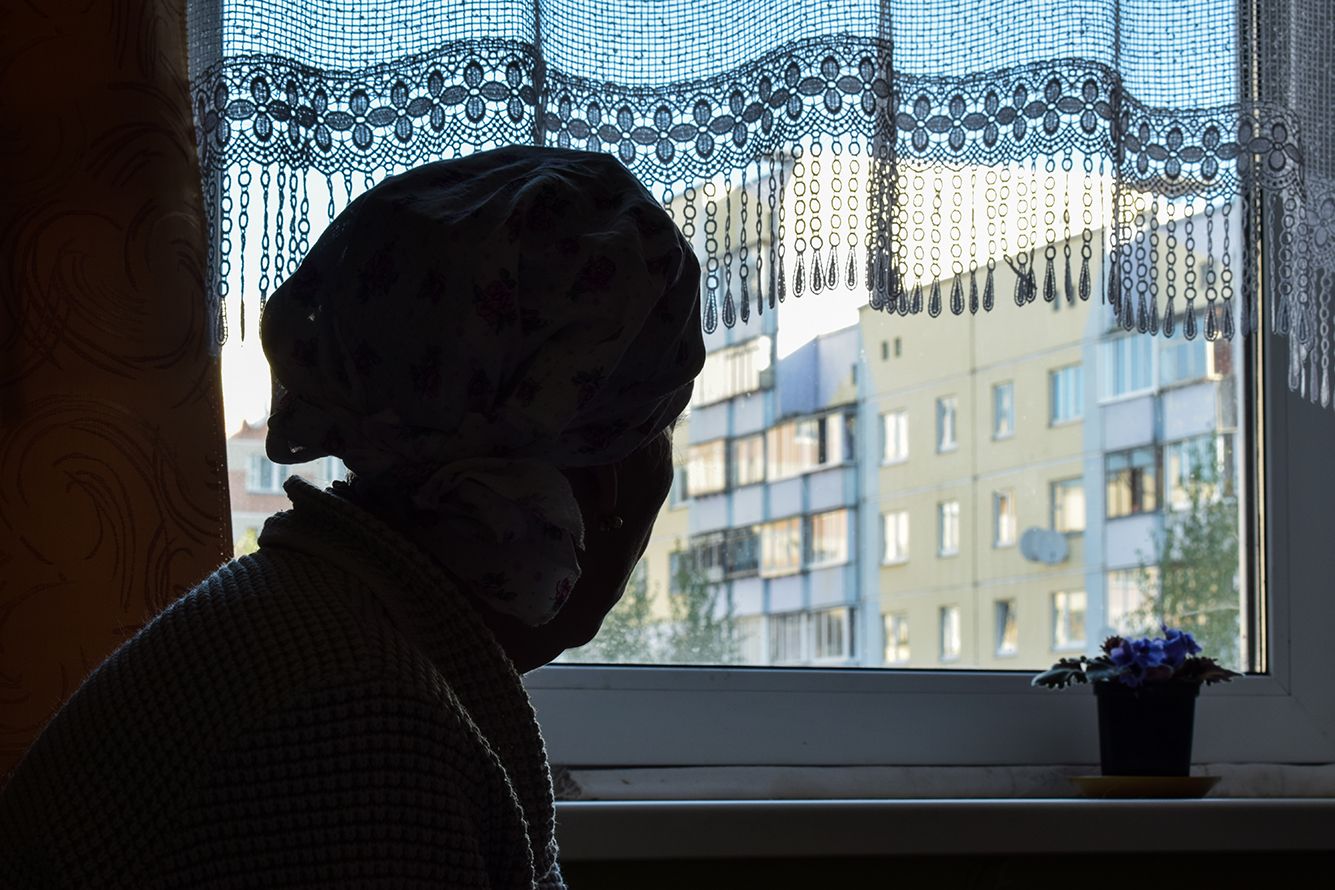
Our center is located in a city where the population of the total area is about 30-35 thousand people. Today, 560 people are attached to us - and about 3,500 people receive one -time services. 93 employees work - of which 60 people work in the village, in the villages: many people have no gas, sewage, the well is located on the street. The remaining 33 people serve the urban population. In each small rural settlement, 1-2 social workers are fixed. They live there, come to us once a week. Mostly we have women from 40 to 55 years old. On one social worker, on average, there are 10-13 wards.
Our work during the pandemic has changed a lot. Previously, we not only rendered services at home, but also tried to pull the wards from home as much as possible, involve volunteering, and instill the idea of active longevity. Because of the coronavirus, all additional services were suspended to minimize contacts. Previously, social workers washed the windows, did wet cleaning, helped cook food. Now, if possible, it is better not to even enter the living quarters. We call relatives and decide how the insulation will take place. If relatives have the opportunity to come or take an elderly person to their place for the duration of the pandemic, providing them with isolation accommodation, then they do this. But there are few of them, five percent. If a person is in such a state that he needs to cook food, but there is no one from relatives [help], then we will not leave.
As soon as we entered the quarantine period, our founder - the Ministry of Labor and Social Protection of the Kirov Region - handed us Sizes: masks, gloves, disinfectives. We gave them to each employee in the hands. All social workers are very afraid to become infected, but they are worried no longer for themselves, but not to become the peddles. Doctors receive already sick people, their task to treat. And we have a completely different task: the main thing is to protect. And any violation of the adopted norms, epidemiological measures can, unfortunately, have a fatal character. If an employee gets ill, he will infect 10-15 elderly. Therefore, at the very beginning of [Pandemia], employees received the strictest briefing on compliance with all measures [security], we also recommended that they follow the insulation mode. If signs of SARS appear, a person does not go to work. We had no suspicion of coronavirus, but if we were, then the person would immediately be removed and the doctors would have already communicated with him.
In May, the institution took part in the charity event #Mlue. 924 sets of products came from the region, which were received by citizens over 65 with a wealth of less than 12 thousand rubles. The employees of the urgent social services department, who were re -qualified during the pandemic. These are psychologists, hairdressers, drivers.
During this time [for service] we accepted only 5 new people - we were forced, since people needed emergency assistance. The rest we ask you to do this after the pandemic. For us, the main thing is the health [wards], which means the minimization of contacts.
Our workers are hardened, they understand that their wards depend not only on the physical, but also of the emotional state. We believe that if you observe all measures, everything will be fine. We try to treat humor. We always work with tragedies, coronavirus is not news. We know that our task is to improve a person’s life before his final. Therefore, the pandemic for us is not as terrible as for others.
Maria (name changed), patronage sister of the Service service
I am 50 years old, for ten years I have been working in the Mercy Authority in Moscow. The request from the dispatcher comes the requests [from the wards], you talk to these people, agree on the trips, go and solve their problems. Sometimes this is a consultation, sometimes you seek codes or you yourself take [a person] under supervision to go on a schedule. There are those for whom we are looking after for years. [During the pandemic], the load increased due to the fact that more patients appeared who could not leave the house, did not know what to do. There was a patient who could not leave the house due to the self-isolation regime-there was no one to bring food and help her, there was no social worker behind her [enshrined]. The woman’s husband lives in the same apartment, but does not help, the son also does not help. In such cases, we make contact with the local center of social services and with common forces decide what to do.
Usually my patients are post-stroke patients, [people] with traumatic brain injuries, with severe diabetes. In the elderly, there are a lot of chronic diseases, all are disabled groups of 1 or 2 groups. And when Covid is superimposed on this, the condition is very serious.
Some wards could not be hospitalized [with coronavirus]. The hospitals were crowded, and they were left for home treatment. I helped to hospitalize, methodically called an ambulance once every half an hour, they switched to doctors there. It was necessary to explain that the person of the first group is disabled, he was put in a clinic on home quarantine, and he signed an agreement that said that he was obliged to disinfect his premises twice a day, and a person is sitting in a stroller. I explain that a person cannot do it physically, he has shortness of breath, [he -] insulin -dependent, that with the lungs is unknown. Anti -human leave [his] at home. When she laid out everything on the shelves, they decided to hospitalize. I did it all day.
At the same time, I taught relatives to care, we brought beds, anti -ore mattresses, diapers, diapers. All the time in protective costumes. Even during the pandemic, no one canceled strokes, and during this period they happened. There was a case: a man received a stroke, [he] was taken to the hospital - and there, in the reception of rest, he clings to Covid on top. He was treated, received a negative result of the test and discharged. But the person did not become healthy from this, he lies, he has pressure, increased weakness, his complication, no one knows what to do with him. One of these wards eventually died at home from coronavirus. In my practice, in some cases, even walking without a stroke was returned from the hospital with bedridden with unfinished inflammation.
During the pandemic, we continued the trips only with the difference that some people did not let into the house, and those who let go were always in masks. We regularly consult some patients who are on quarantine due to Covid by phone, provide everything necessary. And when they recover, we visit them. It happens that you come and wash a person, because he is overgrown, groomed, and nearby a wife, who is also weak and does not know what to do with it. She has depression herself, her hands dropped. Now all patients are recovering from Covid - this is a very long rehabilitation process.
I myself am afraid to get infected, but this fear drives into the work frames and instructions about what I should do so as not to get sick. Correctly dress, protect yourself, take disinfection, not to contact face to face.
Recorded Alexander Sivtsova