
Translated material
Officials responded to the publication of Medusa about the leakage of data from Internet recipients. We analyze their arguments
Spoiler: For some reason, the Moscow City Hall believes that the series and passport number are not personal data
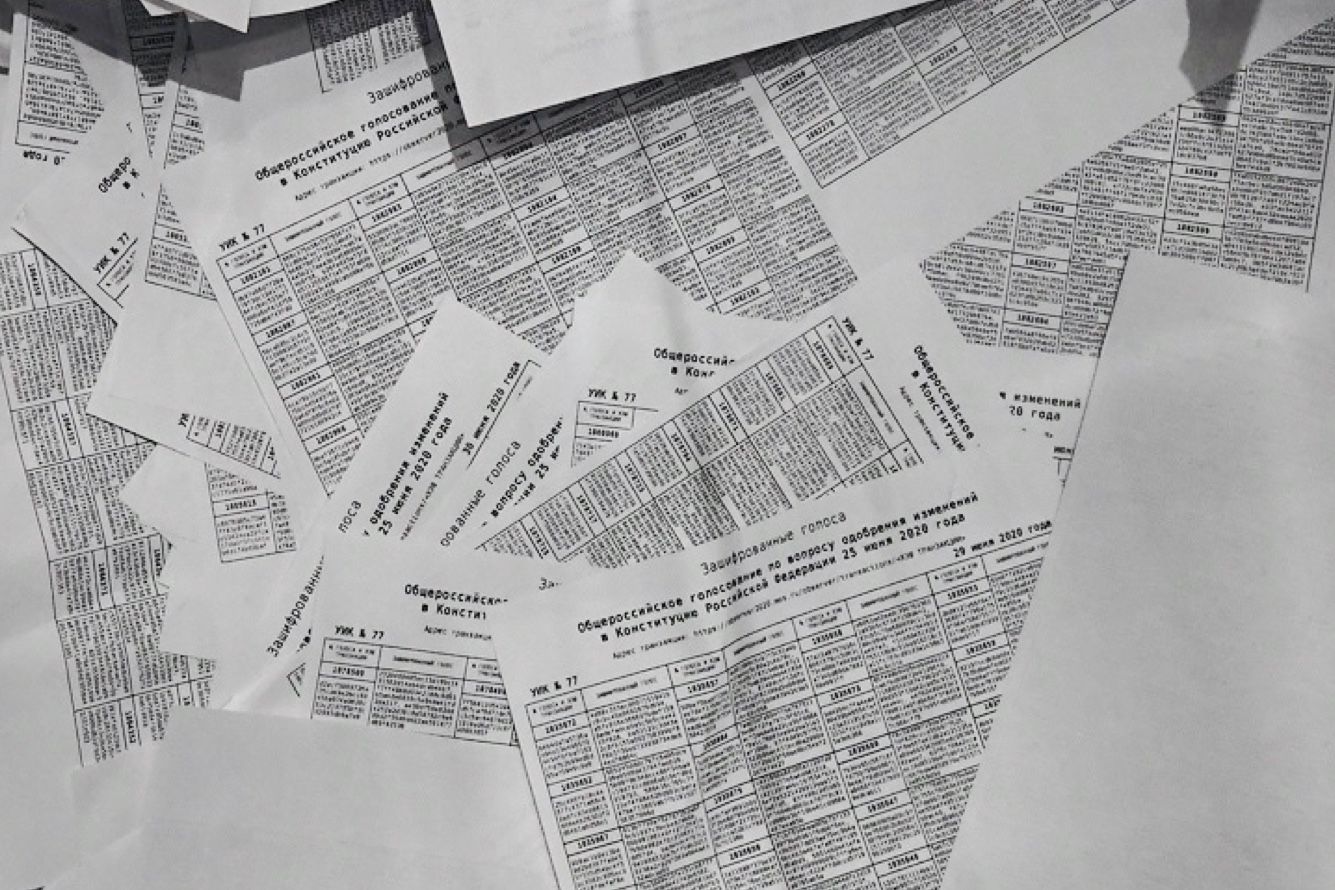
On the day of the publication of Medusa, officials from the City Hall of Moscow and the Ministry of Communications of the Russian Federation commented on it about the flowing database of Internet recipients. The head of the department for improving the territorial administration and the development of smart projects of the Moscow Government Artem Kostyko wrote a note “Why the authorities did not post personal data in open access” on their blog on the website of the Echo of Moscow radio station. The unnamed interlocutor of TASS in the press service of the Ministry of Communications of the Russian Federation told the agency that the passport data of voters in principle could not led. Medusa analyzes the arguments of officials in detail and explains what is wrong with them.
Degvoter.zip archive was in the public domain
“The application was available for downloading at a closed link and was located in the parking archive, and passwords were distributed through protected data channels only to the persons authorized to use the service” ( press service of the Ministry of Communications )
“Further in the text-it is a pity, many people do not read the materials further than the heading-“ Medusa ”in fact, he herself admits that she received everything from an employee of the electoral system-only the members of the ticks and the PECs had access to these installation files, that is, no databases of Internet recipients appeared in any open access . Another question is that someone decided the working document (instructions) and the work files to give to journalists from Medusa-we congratulate the “Medusa” on the fact that they have such reliable sources of information ”( Artem Kozhostko )
On the morning of July 1, the application with the data of Internet recipients was available for downloading to anyone who wanted on the website of the State Services. The source of Medusa sent us only the instructions, but not the archive of Degvoter.zip with the program. The archive was in the same place as a special service for checking Internet recipients-on a third level of the third level Checkvoter.gosuslugi.ru . Access to this service was also free at first, it was limited only after publishing Medusa about the launch of this service: we began to demand a login and password from the site visitors. At the same time, access to the degvoter.zip archive was limited.
The fact of free access to the archive can be confirmed using Web.archive.org. On July 1, he saved a copy of the file from the Checkvoter.gosuslugi.ru site (now the degvoter.zip archive is excluded from the issuance). The web archive does not know how to automatically save copies of sites and files, access to which is closed by login and password. Moreover, this service respects the restrictions that the site administrators prescribe in the special Robots.txt file, and does not allow you to save the files that are clearly prohibited for indexing, even if you can download them physically. That is, on the morning of July 1, there was not even a ban on indexing the degvoter.zip file on the “State Services” website, not like downloading.
Hesh-Summa is not a random sequence of signs. The publication of such information can harm voters
“The series and passport numbers before loading to the application were encoded and represented by randomly the sequence of signs (hash-shumma ), which did not allow identifying a citizen. Hesh Summa are not personal data. The publication of such a random set of symbols cannot harm citizens ”( press service of the Ministry of Communications )
Not a single hash-sum can be a random set of characters. If a hash-function is used with the same arguments at the entrance, then at the exit it always returns the same line, the same hash-shumma. Otherwise, it would not be a hash function, but a random number generator. It is the fact that when calculating the hash-smoke with the same arguments, the same line is always obtained that allowed the Degvoter.exe program to check whether the specific passport was listed in the list of Internet recipients and whether its owner received an electronic ballot.
The passports of Internet recipients were cherished in such a way that Medusa did not compose any problems to restore the series and passport numbers. The same person or other person on whom the voter depends. With the help of series and passport numbers, the employer could check whether his employees signed up for remote voting; To find out which of them eventually received an electronic ballot, and punish the disobeying. The fact that some employers in Moscow forced their employees to sign up for an Internet voting confirmed the authorities themselves.
Series and passport number is personal data
“But further the most interesting. “Medusa” loudly calls this “personal data of voters”. Why was there nothing in the public domain, I already explained, and now the most important thing: why this database is not personal data . The files that were sent to the PECs are a register of passport numbers. Without a name and date of birth. The series and number of a passport without other data does not allow you to unequivocally identify a person - these are just numbers divorced from people. It is impossible to restore the entire register of voters on this database, because the voter register is people, personal data and so on. And in the appendix, which was created for the PEC members to verify the status of the voter, only a series and passport number were contained. And that’s all ”( Artem Kostyko )
The series and number of the passport allow you to identify most Internet recipients. With rare exceptions, the series and number of a particular passport are unique. To find out who is hiding behind a specific number, for example, an employer who forced his employee to vote. Or any person who has access to the bases of Russian passports, including leaked.
The re -use of the same series and passport numbers is so rare that Degvoter.exe developers have not taught their program how to get to such cases. In the database of Internet recipients, Medusa found 97 pairs of records with the same series and passport numbers. In the 91st case, two contradictory marks corresponded to each specific series and the passport number: the voter received an electronic ballot and the voter did not take part in remote voting. When checking such passports using the Degvoter.exe program, she did not warn about the presence of a second record for a passport with the same number and series, but clearly allowed or forbade a full -time “paper” vote.
Russian courts and Roskomnadzor, which is the main regulator in the field of personal data protection, consider the series and number of the passport personal data. In the postal commentary on the law on personal data developed in 2014-2015, Roskomnadzor employees states: “In particular, the number of identifiers (data that allow you to unequivocally identify an individual), which themselves unambiguously determine an individual, can be classified: the number and series of passport; insurance number of an individual personal account; taxpayer identification number; biometric data; Bank account, bank card number. " In their decisions, Russian courts love to copy this wording. The regional divisions of the RKN simplified it and clearly argue that the number and series of the passport are precisely personal data.
The courts used to be different
On July 25, 2011, the Federal Law on Personal Data has changed the definition of personal data.
New wording : “Personal data - any information related to a direct or indirectly defined or determined individual (subject of personal data)”
The old wording : “Personal data is any information related to a certain or determined by such information to an individual (subject of personal data), including his surname, name, patronymic, year, month, date and place of birth, address, family, social, property position, profession, income, other information ”
The previous wording with the list of specific personal data allowed the courts to argue that since the series and passport number are not mentioned there, they are not personal data. For example, several arbitration and Moscow courts of general jurisdiction stubbornly argued that the series and number of the passport are not related to the personality of a citizen, but to the form of a document certifying his identity.
But already in 2014, Moscow courts recognized the passport data personal. The new wording allows the courts to recognize personal data not only explicit identifiers like passport data, TIN, SNILS, but even static IP addresses and cookies.
The fact that impersonal personal data was posted into free access does not make them less personal.
Invalid passports from the base of the Ministry of Internal Affairs are true invalid. And on the accounts tied to them, you could register for voting
“I will dwell separately at the numbers of passports, especially on those that Medusa calls“ invalid ”and calls for everyone to check. I am glad that information technologies and open data in Russia are developing in any other country. However, do not forget that the base that is located on the network is a service, an interface - it cannot be guided as a truth in the last instance. The truth in the last instance is the system of interagency electronic interaction - abbreviated SMEV. It was with her that the data of passports in the CEC and the Ministry of Communications were checked ”( Artem Kostyko )
Five days later (three workers of them), after publishing an article on the leak of personal data , the Ministry of Internal Affairs got rid of only 24 of 4720 records. All these 24 passports were considered invalid on May 22.
On the air of the Ekho Moskvy radio station, the host of the Point program Sergei Oseleso said that both of its passports-old and new are indicated in the leaked database of Internet recovers. Oseledko registered to participate in the Internet voting on the old passport, on June 18 he received a new one and updated his passport data on the "public services". As a result, his old passport without voting was on the list of invalid passports published by Medusa.
Two readers of Medusa also stated that they found their old passports in the list of invalid (we have a series and numbers of their documents). Both readers, judging by the marks, voted in their old passports. “Yes, my passport is invalid due to loss, but loss of passport does not block access to the“ State Services ”portal and does not interfere with vote,” one of the readers explained. Theoretically, such voters could vote first remotely, and then in person: come to their polling station, present a new passport and “prove” the PEC to members that they are not Internet recipients at all.
What is left without comment
Some data from the database of Internet recipients do not agree with official reports.
- It is not clear how many Internet recipients were registered for voting. The authorities estimated the number of 1,90,726 people voting. In the flowing base there was exactly the same number of records, but 97 passports were recorded there twice, and the presenter of the Echo of Moscow found two different passports in the database.
- It is not clear how many people the so -called electronic ballots received. The authorities claimed that 1,107,648 ballots were issued. But in the database, only 1 107,594 voting marks were in free access.
- It is not clear how the testing of passport data was organized if it allowed to take part in the vote according to the old passports.
Denis Dmitriev