
Translated material
New wave of Russian #Metoo
How does it differ from previous flash mobs? Should you take an apology? Can different generations agree? Researchers answer
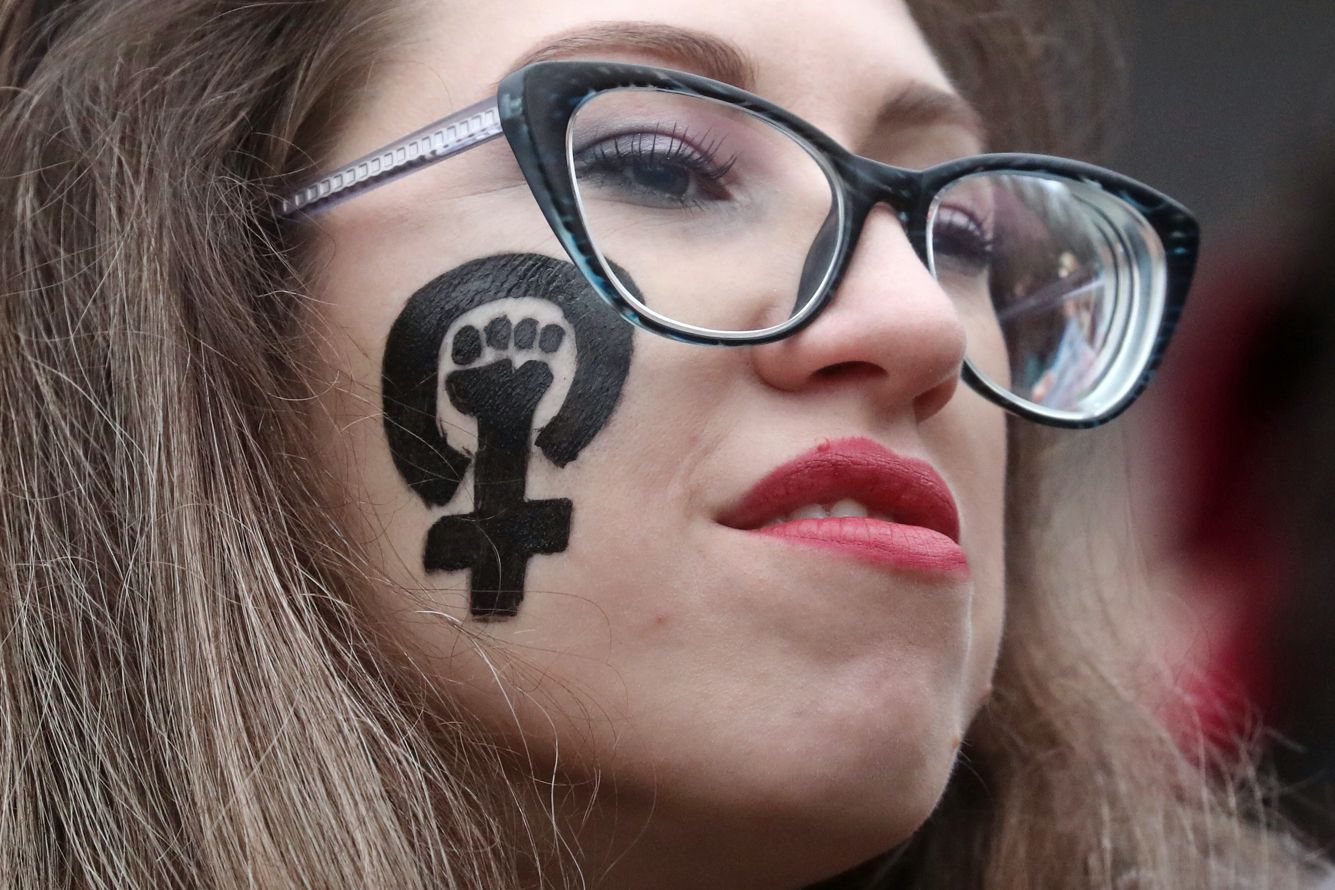
On July 12, the Violet Harrician Er wrote on Twitter about her experience of abusive relations. Her performance led to a spontaneous flash mob: users of social networks have been publishing stories for three days about how they encountered sexual, physical and psychological violence. Most of these stories concern the former or current media employees ( read more here ). "Medusa" asked social researchers to try to answer the main questions about the new wave of the Russian #Metoo. How does this flash mob differ from the previous ones? How do its participants and participants use the language of psychology? Do I need to take an apology? And is it possible to come to an agreement between generations?
Anna Temkina, Professor of the European University in St. Petersburg, co-director of the gender research program
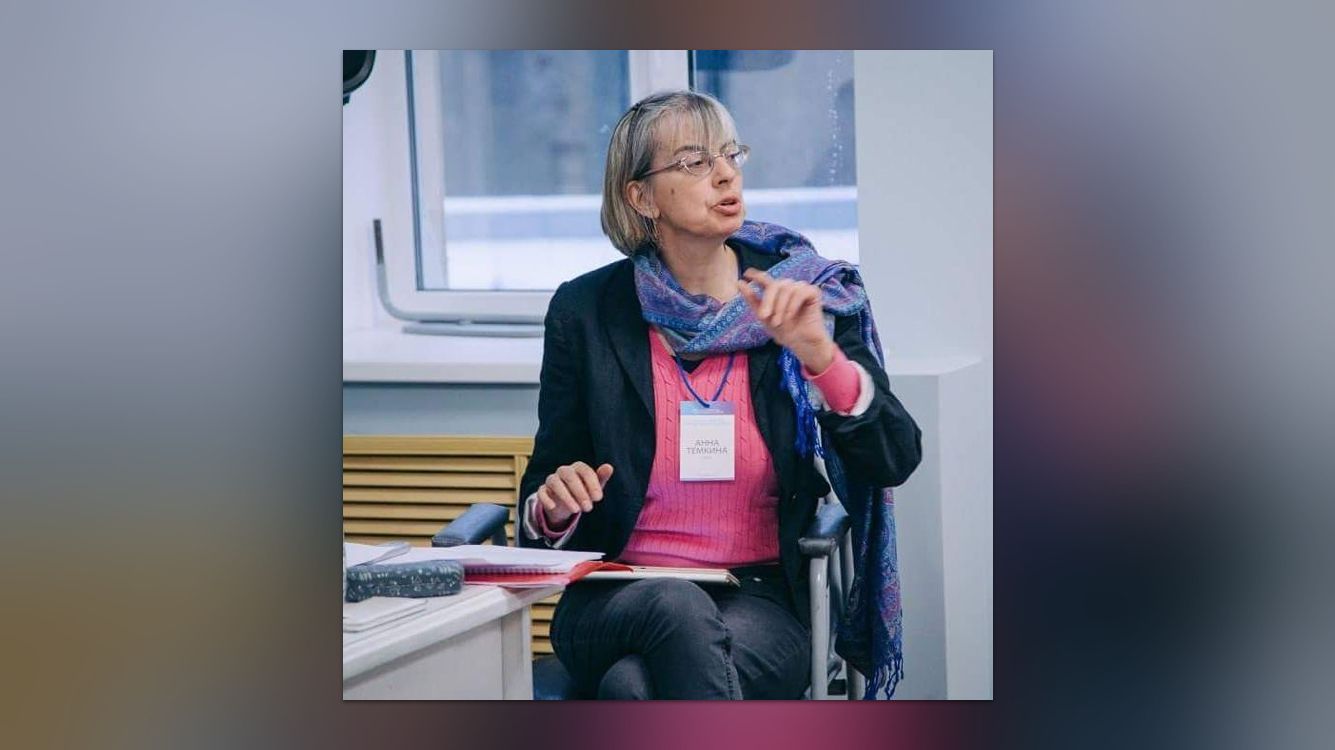
With the recognition of journalists on Twitter about harassment and Harassment, it becomes clear that the concept of “violence” - as “harassment” or “harassment” - expands and changes meaning. The rules of interpersonal gender interactions are changing, not at this second, but in a long time range.
The old rules cease to work: in particular, the rules no longer work that were granted in late Soviet times, when men were prescribed to actively care for (including “harassment” in the modern sense), and women to receive these signs of attention and approve them. Then this was also called “harassment”, but with a positive sign. Samples of masculinity, which moved in the late Soviet times and which have been preserved today - activity against a woman, including sexual, attention signs, sexualized interaction. It was believed that the “real man” should “pester”. And the “real woman” should be in demand and receive harassment, it should be included in this sexualized game. The game is dangerous, there may be undesirable consequences, but you need to play.
What was this game and remains dangerous? Double gender standards are still preserved. A woman can be imposed on the rules of the game, but she may not want to, but may want to participate in this. However, she does not always have a choice. Strength, power, resources in a broad sense are on the side of men. The position of a woman is considered voluntary: if she still does not want to play according to these rules, she should dodge. However, it does not always work out, since power is most often not to its side. It is not on her side to economic and status resources, not on her side social prestige. In a society of double gender standards, a woman is structurally vulnerable. When social changes take place, society becomes more liberal, a person thinks about his dignity and boundaries. Such a structurally determined vulnerability becomes problematic.
In addition to the historical heritage, there is another aspect - “culture of violence” in society, even regardless of Gender. What can be done with those who go to the rally and just stand with the poster? They can wring their hands. Violence is normal, legitimate, and this is an approved way to solve problems. And when there is such a “culture of violence” in society as a whole, it easily takes different forms and spreads to other zones (violence in the family, for example, or in partnerships). If the power acts through violence, does not stop interpersonal violence according to the law, then others can act the same way.
However, many women and men cease to arrange it. People talk more and more about personal boundaries, bodily integrity and empathy. Everything happens literally before our eyes, and this is a long painful process. We are like in Stalker: we go and do not know what will happen next, we understand only when we probe the soil under our feet. You can’t definitely grab the knee for the knee, but can you still flirt? And smile? And invite you to drink? And to show persistence? Where are the boundaries of the permissible? Now there is a revision of a variety of boundaries, and this is a long difficult process. It concerns the body, and emotions, and sexuality, and gender roles. It concerns politics, and economics, and power.
In Russia, it is very superficially known what gender research and feminism are as a theory that can give answers (or at least raise the correct questions) about how gender relations are formed in society. These topics are little studied, irony, skepticism and sarcasm are manifested towards them. “All this is nonsense, this is not a science,” say both the townsfolk and many scientists. Although the Western community has been doing this for more than 50 years, and all educated people know the basics - and it is simply impossible to be a social researcher without this knowledge.
Gender studies explain that there are cultural norms of masculinity and femininity, they change, they are affected by economics, politics, state, interpersonal interactions, science, religion, medicine. In Russia, many young people are interested in this, but men and women of the Soviet generation simply have no idea about this. It is believed that this is some kind of exotic, alien, even harmful knowledge, it is not necessary, since nature controls the relationship between a man and a woman. And such "nature" pushes a man into sexual activity, including harassment. No, modern young people say. This is not nature, it is culture, society, politics and cultural violence - this is what is pushing.
Another feature is our political insecurity. Yesterday it was discussed that journalists became the object of a political attack, and immediately journalists became the object of another discourse - against harassment. If not become journalism, then it becomes more and more a real profession that has an independent voice, and this situation creates a political vulnerability. Moreover, it is here that other painful problems are revealed. Harassment is in society everywhere (in the army, for example, or in medicine), but most professional communities do not have an independent voice. And the journalist already has it. And the journalist (ka) is not ready (a) to be more silent either about political or about personal attacks for freedom and dignity.
Young generations are sensitive to their personal borders, attentive to emotions, can understand what is happening to them, know what gender inequality and feminism are. But the Soviet generation (and this is partly a metaphor - it can live in younger age groups) is in a difficult situation. It is no accident that many men who are accused of harassment are from this generation. For them, the problem of harassment is a surprise that fell on the head. Many sincerely do not understand what the problem actually is. However, if five years ago they said: “What are the apologies? What are you talking about at all? " - Now there is a search: "What to do?" This is a lot of work, there is no need to wait for a quick result.
Are you good to apologize or not? While we are almost at a zero point. There are no other tools, except to bring the problem of violence in public discourse. Recently, this did not lead to any result. When there was a case with the [deputy Leonid] Slutsky, this did not lead to anything, no one even apologized. And now the new stage is the formalization of apology.
How next? A very difficult question. We also remember that we would not want our private life to analyze the public (party committee and trade union), and on the other hand, institutions are needed, procedures for which you can act. This is not yet, and it seems strange to many that there should be such a procedure in general. There is also a lack of trust. Who will sit in ethical committees there and our intimate painful problems discuss? But this is the next step that will happen soon - the creation and recreation of such institutions.
Psychotherapy [to whom men who are faced with accusations of violence can help a specific person to cope with internal stress, but it would be nice if psychotherapists owned the basics of gender research and feminist knowledge. Psychotherapy will help a specific person, but the very problem of gender inequality is social and structural in origin. Sociologists, political scientists, anthropologists, specially trained social workers, NPOs and politicians - those who can change society should already work with it.
Let us explain it by analogy with the feminist slogan of the 1970s-Personal Is Political ( “personal is political” ), which has not lost its relevance to this day. At that time, women, prosperous housewives of the middle class, massively went to psychotherapists with alcoholism problems and other addictions. However, in the wake of social movements and in personal interaction, they discovered the similarity of psychological problems, came to an understanding of the external circumstances that form them. Behind individual problems is a structure. Which? Patriarchal, unequal distribution of power and resources. And when this problem was discovered and identified as structural, only then social changes began.
The psychologization of our language is the syndrome of emotional capitalism. He speaks the language of psychology, social and cultural phenomena are psychologized. Emotional suffering is also recognized in the psychological language. And this language is ambiguous, mutual. On the one hand, he can be simply formal to call and close the problem, but he appears to ensure that people do not consider their suffering insignificant that they think about him in a psychological language. The language of popular psychology can be a label, but it gives rise to deeper processes, creates tools for a new attitude of a person to himself.
The big problem that arises in connection with this discussion is empathy and personal boundaries. Sociologists in the West have long been talking about "cooling" in personal relationships. This leads to an increase in individuality and the strengthening of personal boundaries. Capitalism begins to calculate emotions - who invests and receives how much. We don't love it very much. We are those who were born in Soviet culture and were brought up in the passions of classical literature. This is unpleasant for us, but these are the processes that late capitalism brings in an in a in a in a way, since a person becomes rational, calculating everything, including what was previously separated from the market: love, sex, care, emotions.
The questions appear: “How many emotions do I invest?”, “Do I get back?”, “Am I suffering from this?”, “Why?”, “What can I do to change the situation?” Previously, such a question was not posed, but if it was still posed, the answer was granted: "I am a woman, if I suffer, then this is fate." Now the answer is: “Why should I suffer?” If my emotions suffer, then it is necessary to rebuild relationships, get out of them or go to a psychotherapist. Or declare publicly about suffering, find the social causes of the problem. Paradoxically: “cooling” pushes to attention to their own emotions and borders.
But "heat" at the same time does not cease to be value. The balance has to be built in a long painful negotiation work in order to learn how to enter into warmer relationships, maintaining your own boundaries. This is a job for decades, not reduced to individual psychotherapy, and it is no coincidence that society as a whole is increasingly talking in the psychotherapeutic language.
Oksana Moroz, Associate Professor Shaninka , author of the "Blog of an evil culturologist"

The fact that the headlines about the journalistic environment are now coming out, as if finally realized what was happening there is bad. The whole situation is a general measurement in the hospital.
In the public sphere, the idea of violence changes, and the very concept is expanding incredibly. What was previously considered systemic violence, unnoticed, on which the hierarchies in society were built, and which the researchers discussed among themselves, sprouts into the public sphere. The attitude to the dignity of a person is becoming more and more reflective.
On the other hand, the maximum distribution of social networks as a evidence space is of great importance, where we can talk about things that we did not want to talk about before. A taboo is removed with those who used to be personal, which were discussed in a narrow circle or at serious sessions from the experience of injuries.
There is a clash of different norms, not only moral and ethical, but also the norms of publicity. Some believe that it is important to call a spade a spade, but there are also people who consider it waving dirty linen. The clash of different positions gives the strongest effect of confrontation. There is a feeling that protecting the right to say, we protect our right to borders and ourselves. Often this gives rise to secondary aggression. We discuss the case of violence and do it so aggressively to each other that there is no way to talk about the complex experience of the victims of violence, the experience of authors of violence - and [there is no way] to get utilitarian benefits. Not in the sense that everyone who needs to be apologized, but in the sense of developing rules, codes, norms of behavior, regulations. The discussion is on the growing spiral of mutual aggression.
There is a problem that many cases that we are discussing are discussed in English -speaking terms. In the Russian language and in the Russian environment, there are not so many people who in depth understand what Abuez, Harassment are not as labels, but know what is behind these words. That Harassment, for example, is not only a sexualized action, but these are different types of offensive actions. People who use these words cause irritation in the second side. They do not really understand how Abuez and Harassment differs, they think that they speak with a bird's tongue, where they are hung with labels of what happened.
Now on Twitter the situation is a little opened, because there people say in great detail what happened to them. There is an opportunity to understand what a person implies, speaking of Abuez and Harassment. To mechanically tell what happened, you need great courage. People who begin to talk about it understand that the first to be accused, they will be. They will receive nothing from the fact that they revealed the mechanism of harassment in their relationship. But without such an autopsy, opponents will not understand what is at stake.
When the votes of the victims are growing, we receive a response from the support group of those who are accused. The more people are integrated into some environment, the more he received support. For example, [the host of the rain] Pavel Lobkov received more support, as it is most mounted on Wednesday. Then the mobbing begins - mutual persecution. The victims are told that they are dramatized and their themselves are to blame, there is a victimbleming, and they try to explain their position.
As a result, everything reaches the level of aggression, where the discussion rolls to: “Here you are boomers, you don’t understand anything, you have an old ethics, you yesterday, the world has gone far ahead.” This statement is dictated by irritation, since you have a feeling that you are crossed out. But this is not a solution. Instead of joining the dialogue, an OR appears on both sides.
When a man says that he lacks empathy, this indicates the features of male gender socialization, which is built on stereotypes, that men do not cry. But if you switch from this to the level of practical reasoning, any conversation that empathy is not enough and a person does not understand borders means that a person is not responsible for his actions. The conversation that a person does not really understand what others feel is a demonstration of psychopathy. And none of these people says that he is a psychopath. They say: "We do not feel a new norm." But this is not a new ethics, this is the recognition of the subjectivity of another person. The recognition of another person by man.
The main thing is that people say with their mouths, what things they do not like - until this will be, there will be friction. We are moving towards identification diversity and the only opportunity to live is to learn to understand each other, learn to talk about ourselves and learn to accept others through a conversation.
Grigory Yudin, philosopher, professor Shaninka
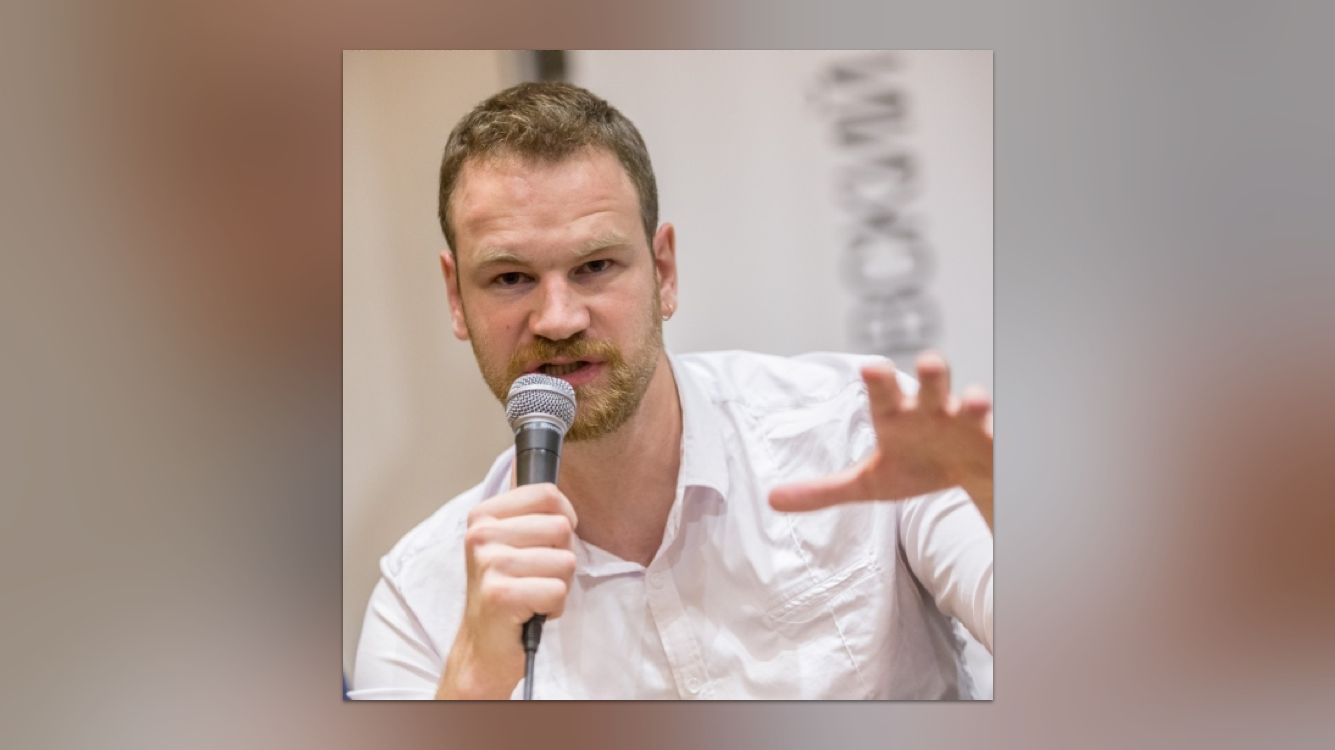
First of all, you need to understand that we are not in the center, but on the second circuit of the global tendency of discussion of violence and inequality: Russia is increasingly integrating into global cultural life, and these conflicts are inevitably reached us faster.
The dominant form of modern politics in the world has become an identity policy, built mainly on defending the rights of certain groups, forms of social life, to protect them from external influence. The identity policy is based on the idea of “negative freedom”: my freedom here means freedom from external coercion. Until a certain point, this is quite effective: all groups that begin to fight for recognition begin with bad positions, where they are oppressed and refused to be equality. Since identity policy is a successful tool in a liberal society, it gives a result.
Однако проблема в том, что принцип негативной свободы не признает никаких внешних границ, для него другой человек — это всегда потенциальный источник моей несвободы. Но тогда человек может чувствовать покушение на свою свободу где угодно. Этот принцип заряжает нас особой эмоцией: «Дайте мне право быть тем, кто я есть, и не трогайте меня». Это нормальная эмоция эмансипации, но дальше возникает проблема: ведь «быть тем, кто я есть» — это тоже растяжимая категория. Этот принцип ничего не говорит нам о том, где заканчивается мое «я». Сегодня я могу быть тем, кто я есть, а завтра я начинаю чувствовать, что ваше присутствие в окрестностях не позволяет мне быть тем, кто я есть. And it turns out that I can interpret any obstacle as a restriction of my freedom and violence. Это становится особенно очевидно, когда мое «я есть» натыкается на чье-то чужое «я есть», и оба считают, что находятся в собственной зоне, а попытка выдавить их из этой зоны — это насилие.
Это общий кризис политики идентичности. В истории с правами черного населения в Америке мы видим те же эксцессы, за которыми стоят такие же проблемы. Люди отстаивают свои права, но дальше, когда ты заряжаешься этой эмоцией, внутри этой схемы идентичности уже нет возможности остановиться. Ты можешь любой взгляд оценить как посягательство на безопасность. Невысказанная утопия, которая стоит за идеей негативной свободы, — это мир, в котором я один и меня никто не трогает. Но никто, конечно, не хочет быть один. Поэтому все заканчивается тем, что каждый межчеловеческий контакт оказывается болезненным, порождает вину и требует извинений.
Сейчас люди начинают признавать, что им не хватает эмпатии. Но это тупик — откуда в этой схеме может взяться эмпатия? Эмпатия — это способность почувствовать себя на месте другого человека, стать частью его духовной жизни. Но как это сделать, если у вас нет общей духовной жизни? Ведь «каждый купил себе железную дверь, сидит и не знает, что делать теперь». Недостаток эмпатии — это не только личная недоработка человека: культурная ситуация не располагает к тому, чтобы проявлять эмпатию. Она располагает расходиться по углам и ни с кем не коммуницировать. Непонятно, как эмпатия в этой ситуации может выработаться, если исходить из расширения негативной свободы, где каждый должен защищать свой пузырь, в котором ему будет свободно. Тогда пузырь раздувается до бесконечности.
В результате часто такие конфликты разрешаются через апелляцию к начальству, через требования установить законы и полицейские меры, защищающие людей друг от друга. Но тогда пропадает возможность горизонтальной коммуникации, люди уже не могут договариваться.
Вопрос о том, является ли извинение (например, со стороны мужчин) лицемерием, социологически не имеет смысла. Появляется новая норма, и когда кто-то извиняется, он неизбежно отчасти делает это из-за того, что опасается внешних санкций, а отчасти — из-за того, что, как говорят социологи, «интернализует» норму, то есть принимает ее внутрь себя. Проблема в том, что защита идентичности не говорит ничего о том, что делать после извинения. Нет никакого готового сценария, как себя вести: хорошо, больше я так делать не буду — а как надо делать? Может, лучше тогда вообще никак не делать и на всякий случай не подходить?
Выстраивание собственных границ необходимо, но в сегодняшней логике часто они начинают создавать пузыри. Чего сильно не хватает в культурной ситуации, в которую мы вместе со всем миром сегодня заходим — это договоренности о границах. Хороший терапевт как раз учит выстраивать границы и коммуницировать на эту тему. Тут нужно хотя бы минимальное доверие, ведь такие договоренности возникают на горизонтальном уровне — как в отношениях на работе, так и в отношениях внутри пар. Если доверия нет, эта функция переносится на начальство: все бегут жаловаться ему. Иногда роль начальства выполняет общественное мнение. И тогда ситуация становится не горизонтальной, а сверхвертикальной. Если искать защиты у очень сильного, то это, может быть, защитит тебя от соседа, но сделает совершенно беззащитным от централизованной власти.
Альтернатива негативной свободе — совместная свобода, подчинение совместно выработанным правилам вместо навязывания своих правил другим. Все это может быть неустойчиво, подвижно, но мы чувствуем себя свободными, если сами управляем нормами, которые регулируют нашу жизнь, а не потому что нам эти нормы кто-то навязал. Понятно, что эмансипирующаяся группа всегда говорит: «Вы этого не замечали, но мы всегда жили по вашим правилам, и нам это никогда не нравилось». Это сильный посыл, но он сам по себе еще не создает никакой новой нормы. Чтобы острая фаза культурной войны закончилась, должны формироваться новые нормы, и это может происходить только снизу — в организациях, в университетах, в сообществах — там, где у людей есть возможность принять участие в выработке правил.
Представление, что только сам человек является единственным критерием оскорбления и сам определяет меру возмездия, — это вызывает тревогу. Именно такая динамика, а не извинения, будь они искренние или нет, вызывает общественное напряжение. Извинения — это нормальный процесс. В них люди пытаются восстановить свои отношения с человеком или группой лиц: извиняюсь — значит, я признал свое предыдущее поведение неверным и хочу восстановить отношения. But what to do next? Дальше нужно найти канал, мост, на основании которого между этими людьми можно построить новые отношения. Иначе это опять будет то же самое: мы будем искать повод, чтобы снова обидеться, а потом извиниться.
Прогрессивные группы должны, по идее, отличаться большей рефлексивностью, но мы видим, что они на это не способны — и поэтому скандалы все время возникают как раз в той среде, где их, казалось бы, не должно уже быть. Отсюда подозрение в лицемерии их извинений. Но это не проблема конкретных мерзавцев, это социальная проблема. У людей нет готового решения. Понятно, чего не надо делать — а что можно делать? Ведь мы впитываем определенные сценарии с детства. Они нам, может быть, не нравятся, но мы хотя бы на бессознательном уровне чувствуем, как они работают. А что делать, если от них отказаться? Многие чувствуют, что их заставляют снять культурный слой и выйти голыми на мороз.
Насилие — это не индивидуальная проблема, потому что это социальное отношение. В него включено как минимум два человека. Если не считать случаев изнасилования в подворотне, где действует только один человек, во всех остальных ситуациях есть некоторая форма травмирующих отношений и обе стороны ее воспроизводят. Это часто интерпретируют как то, что «оба виноваты». Но это вообще неправильная постановка вопроса — не надо искать виноватых. Важно понять, почему люди каждый день воспроизводят отношения, которые им делают больно (очень часто такие отношения травмируют всех участников).
Такие отношения невозможно преодолеть, сказав, что во всем виноват Петров. Конечно, в санкциях есть важный символический смысл — они дают всему обществу понять, что властные иерархии не вечны, что из них можно выйти, что мы все в конечном счете равны. Возможно, Петров виноват и должен быть подвергнут санкциям — но одно только наказание Петрова не позволит начать действовать иначе. Есть большая разница между виной и ответственностью — ответственность помогает понять, что я могу сделать, чтобы изменить свою ситуацию, а вина просто парализует, вызывает желание ее на кого-нибудь перевалить и производит новых жертв.
Recorded Alexander Sivtsova