
Translated material
Style catastrophe
About the school of constitutional sculpture and architecture
The constitutional maneuver gave rise to a strong but different reaction. Hot heads, unrestrained in the language, call the incident to the political sphere of the century, unprecedented mockery of the very idea of free will. Citizens more sober on their heads believe the same triumph of unity of power and people, an apotheosis of the readiness of a mature and responsible part of the population to believe and go to the way. At the same time, quantitative calculus of popular love and falsifications confirming it is distracted from qualitative assessments in the coordinates “beautifully - ugly”. And in vain: in this sport, a general artistic impression sooner or later outweighs the technique of execution of mandatory elements. In addition, the word “ugly” has an ethical meaning in our state-forming language, for many in this life something still meaningful.
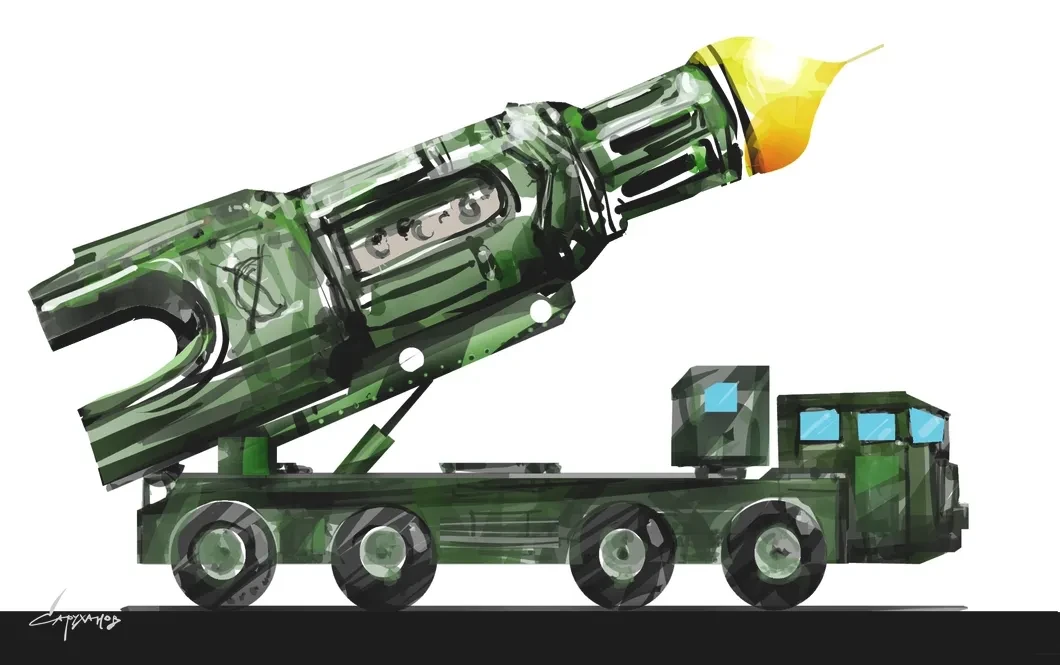
Beauty is a terrible force! And vice versa ...
Aesthetic is usually dissolved in an integral assessment, but extracted when the good is sparkled, and atrocities with a captivating grace.
Spectators of “Seventeen Moments ...” easily separate the high design of the Gestapo form from the charms of this organization itself. But the harmony of the abomination of the plan and the goal with the ugliness of embodiment and implementation is a separate achievement. In this, future Annals and chronicles are completely ruthless: they tend to rather condensate paints than to forgive pettiness with claims. Therefore, in particularly ugly cases, the grateful memory of the descendants preserves precisely this - small -grass, cowardly fuss, especially offensive against the background of the majestic history of the Fatherland.
Aversion and shame are stronger than disagreement and fear.
No easier in operational policy. The rejection of the shape and style begins somewhere at the level of the digestive tract, like vomiting or diarrhea, and this, contrary to the illusions of power, is not treated with brainwashing. Our "home philosopher" can still believe in other ideas, but when "I do not believe!" Our inner director and critic pronounces, it is hopeless.
From bastings with the correction of tastes and re -educating feelings, people are only strengthened in their assessments, also quietly beast.
As a result, it turns out that the conflict of “aesthetic disagreements with the authorities” is stronger than any other disagreement. In the “divided nation”, split aesthetically and ethically, people with requests are usually smaller, but this is a convinced core, which you cannot sell a policy with a shower for a new aroma. But sooner or later sniffing masses themselves begin to break into the air.
Attempts by the authorities in advance to prescribe themselves in the future textbook of history only exacerbate the situation.
Military-political numerology
Particularly rude and visibly, the style gives itself out in the monumental and decorative design of the modes, as it was in Germany with the creations of Arno Breker and Joseph Torar, Albert Speer and Leni Rifenshtal.
“Stone clothes” of architectures leave cyclopic traces completely, with treacherous complacency, exposing the beauty of the general political form, from ideology to political technologies.
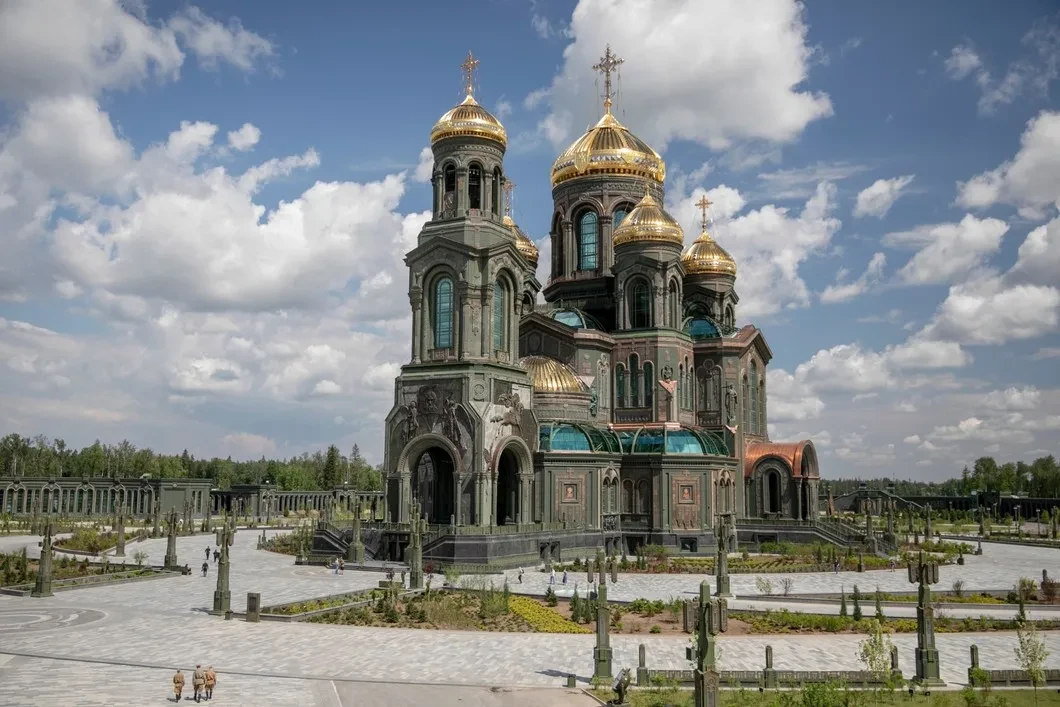
The concept of the Church of the Ministry of Defense is frightened by the multilayer symbols of numbers and literature of images - the techniques of an excellent low sample.
With numbers and words in architecture, they rush when it itself is not convincing enough to speak for itself with its own language.
In the marchs of such talkativeness, they weaved with a murderous phrase: "It is fine in verses."
Metaphoric exercises are seductive for amateur performances, but also dangerous to turn romance into a caricature. The sonorous name of the Boomerang’s wheeled combat platform, which flashed at the parade, is immediately read literally, visualized ... and flies back.
The main image of the “Temple-warrior” in the camouflage of the color of Khaki and with the gold helmet of Alexander Nevsky on the dome also does not grow together, even literary. Administrators and military, understanding human speech, but not the balance of masses and the composition of spaces, are on such creative. But the verbal formulas discipline the figurative system and allow it to build it “like according to the Charter”, making anyone by the co -author of the object.
The numbers and numbers completely fascinate the employees of all the clans, these Pythagoreans of postmodern. The attachment of the project by any date immediately removes for the instances the question “why”. For architectural sizes, this relieves the question "why." In the belfry of a military temple, 75 meters of height symbolize the 75th anniversary. The diameter of the main drum is 1945 cm, and the dome is 22 m 43 cm (at 22.43 in 1945 an act of surrender was signed). The number of days of war (1418) is captured twice: in the height of small domes and in the length of the "Road of Memory" ...
The great architect Leonid Pavlov equated the side of the cube of the computing center of the USSR State Planning Commission to 42 meters - one millionth circle of the Earth. But no more: otherwise, such symbols begin to determine not just sizes, but proportions and ratios, such as height and width. For visual geometry, all these significant dates and numbers are completely alien and random.
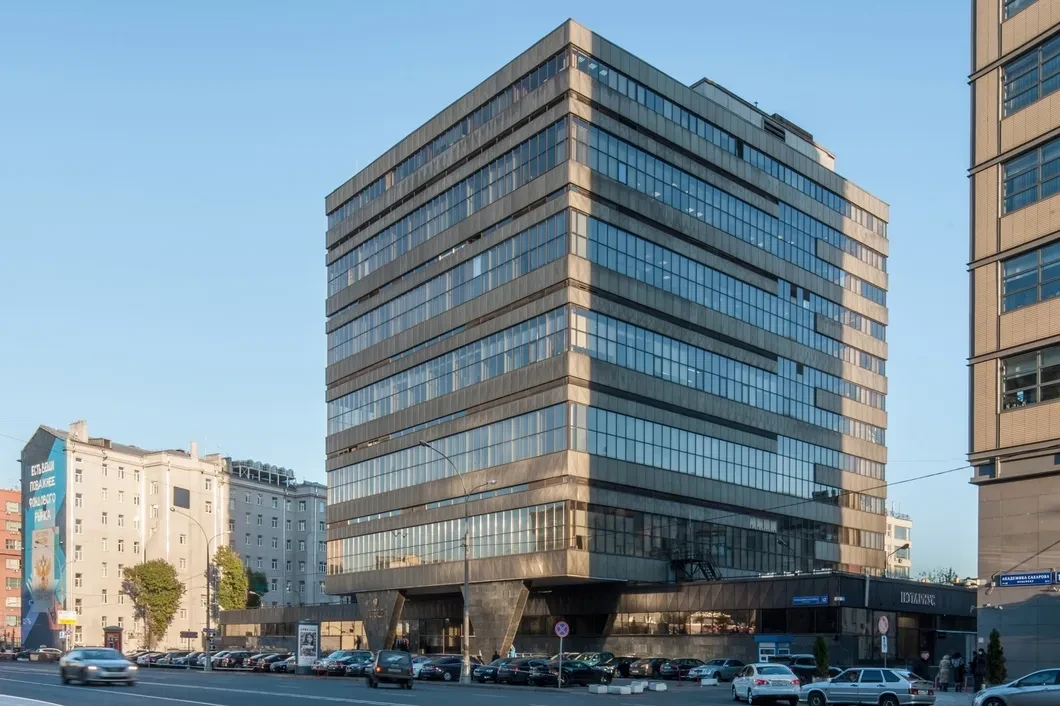
It is how to derive a “golden section” from the biography of Italy or Leonardo or build an chord in terms of the ratio of some “iconic” frequencies in Herza.
Everything is said about the incommensurability in the art of word and image in Laocone Lessing, and you just need to know this.
Large small forms
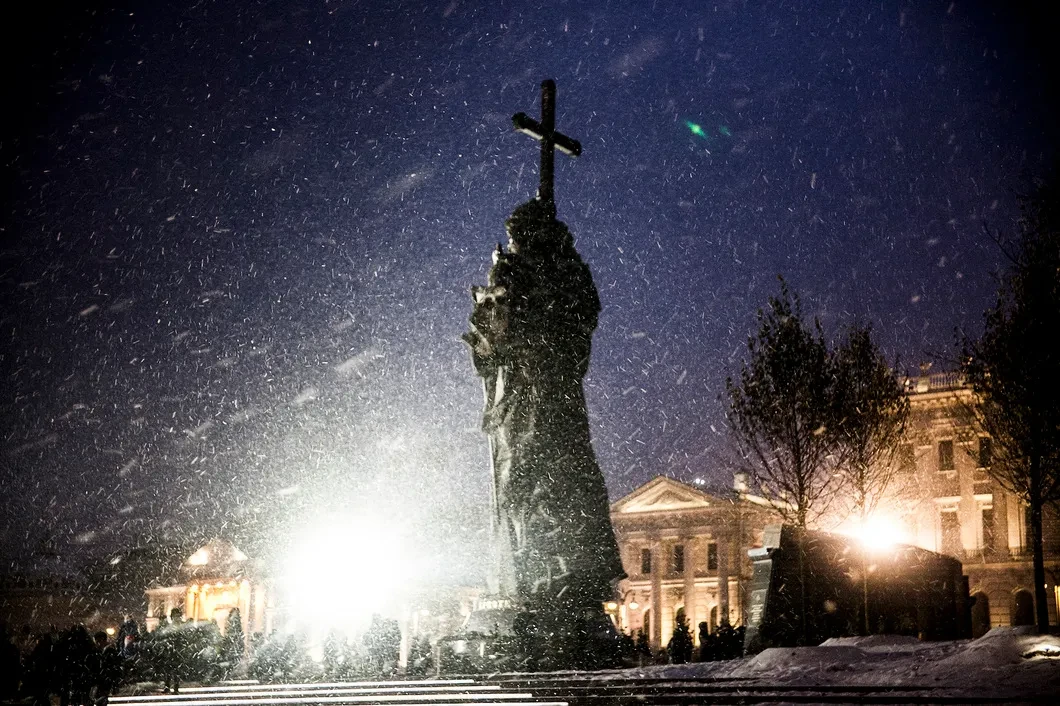
A real architect for the suffered proportions will be successful and will strangle anyone. But the pedestal under Prince Vladimir, without blinking with an eye, was sequent in two -thirds to fit into the UNESCO limit.
Since there are no such ridiculous proportions between the “doll” and “tumbo” in nature, there is a suspicion that the bottom was not drained, but fell to the Russian Federation from the UN.
All this is a long -standing problem of the relationship of architecture and politics. The “thaw” thawed the legacy of the Russian avant -garde, and a unique school of new monumentalism arose in the USSR. However, in the 1990s of small forms, people with other abilities moved to the authority of great money and proximity to power.
The middle decorator Zurab Tsereteli became the court monumentalist, but this genius of monumental management was not taught that the air conceals the volume, and therefore the limbs of figures in a large space should be made thicker. Hence the “grasshoppers” and “dragonflies” of the obelisk on Poklonnaya Gora.
Dasha Namdakov, the main artist of the Church of the Ministry of Defense, is also an interesting sculptor of large small forms, forced by his beautifulness reminiscent of a megawell or gigantic Nezsk. Hence the temple is extremely whimsical and sophisticated aesthetics of thinned limbs - the merger of the “steppe distance” with the canons of Orthodoxy. Only military discipline allows the Russian Orthodox Church to stoin such libertarianism.
All this is the natural creatures of external dictatorship with complete impotence of the workshop community and professional criticism. The change of architectural authorities in Moscow led to the frontal cleansing of entire institutes, bureau and workshops, often from the best. In the most part, there was a limited “pool” elected with clogged entrances. Good people did not fight each other like the immortal Highlander, but they just aborted them with special cynicism from the central project in Garden quarters.
It is not clear how the competition was put forward by a very unpopular author with the creation of alien and frankly weak. Another correctly constructed microplebiscite according to the scheme: there will be only one - who was nothing.
Aesthetics and ethics of conveyor personalism
The main problem is that this kind of organizational, administrative philanthropy with decisive votes based on private-state co-financing is completely not balanced from the fully destroyed professional community of architects, artists and critics.
Personnel autocracy with many intermediate local dictatorships and at different levels of “verticals” is almost accurately reproduced not only in politics, but in all areas of life.
In this elite, everyone builds his own personal road leading to his own temple-or to something like that.
Since the logic of “cone” or “funnels” works itself, the degradation of the style becomes a general line of development. To the extent that personalist regimes poison both society as a whole and the communities of almost all levels and specializations, the substance of convenient incompetence pops up, in whose miasms any authorities feels like the creator of immortal creations. And even an immortal crown of creation.
Normal despotism largely limits arbitrariness on horseback and center. Already a floor below power and “specialists” coexist on the basis of asymmetric and unreliable, but still balance. Even a relatively enlightened autocracy does not engage in creative handling, trying to leave behind the adhering cultural layer.
For all the ideological, political and other dependence on the authorities in the USSR, much is preserved and the workshop environment-the Academy of Sciences and Arts, creative and trade unions, the Institute of Expertise and Criticism.
This environment at least supports the level of science and art, education and education, technology and technology.
Most of the current picturesque-sculptural “geniuses at the court” against that background would have remained on the patch of truly great ones-and, in any case, they did not build individual social elevators with a hungry crowd on the stairs.
In a terrible dream, it was difficult to imagine that urbanism in the USSR instead of urban planning philosophy, theory and practice would reduce the transfer of coatings, plywood arches and light bulbs on trees.
The GKNT would never dare to impose a model of planning and reporting to all Soviet science, invented invented by several dreamers, somewhere they heard something about bibliometry. But the GKNT oversee the "State Register of Scientific Discoveries of the USSR" - and there was something to oversee.
Now, the Ministry of Education and Science oversees the statistics of journal publications, which has recently been abandoned in China.
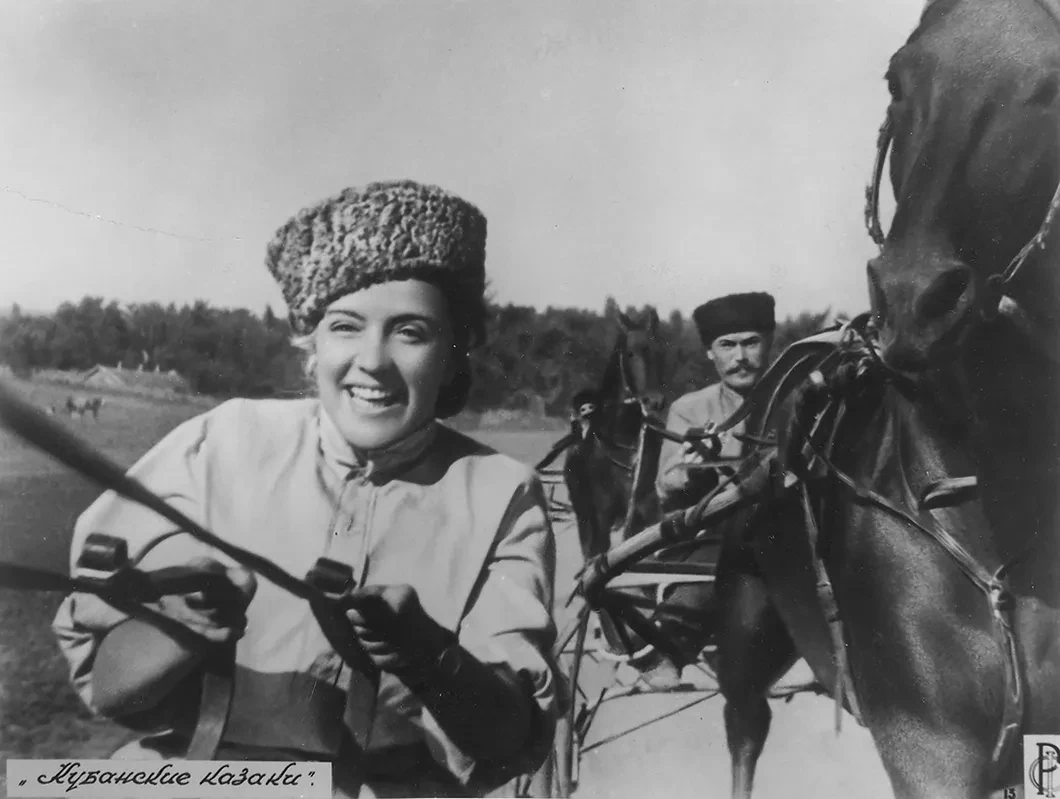
Even the “Kuban Cossacks” (not to mention the Soviet cinemas about man in general and man in the war) in their ideological and stylistic niches are far ahead of the current action about tankers with basketball players. But we are planting the best theatrical directors - so that the state itself is not universally financed to finance such success.
Behind the fatal failures in technology and technology, the degradation of political technologies and official ideology pops up. Without discussing the goals of the current policy - in general and in its individual manifestations - it is difficult not to admit that everything is about the same, reasoning theoretically, it would be possible to do at least not so clumsy that in the corridors of the customer itself it sounds: “Again, the squinted ones were condemned!” And even "morons, b ...".
However, reasoning practically, one cannot but admit that there could be no other. The entire system of setting tasks, selecting performers and distribution of the order leads to such results. On the "land" is completely dominated by the continuous incident of the performer. You go down the plans that are impossible with any normal means, and the performers, fighting for survival in the system, begin to fulfill them and overfulfill, regardless of the means and not thinking about the form.
These small “winners” are not judged, because otherwise the next time they will not do anything at all.
As a result, all responsibility for the form falls on the general customer, drawing his caricature image in the present, in the political history of the country and the world.
All this is logical to the extent that there was no such personalization of influence and local arbitrariness at various levels in the entire history of observations, including autocracy, totalitarianism and the ideocracy of stagnation. Literally everything begins to be done through the stencils of large plebiscite. But if in this style a political triumph can somehow be simulated, then such methods cannot be forced to work as an economy, social sphere and culture, the production of knowledge and the introduction of technology.
The metaphor of the amendments
All this cannot but affect political lawmaking, including constitutional. It is not necessary for the special insight and fantasy to see in all this many generic features of politicians in general, including in projects such as “206 amendments”.
You can leave lawyers on the conscience of how these innovations generally comply with the norms and the very subject of constitutional law. But as ideological dominants and ideological constructs, they too much resemble the literature of images and the sign symbolism of the same military temple.
Purely literary schemes are invented, similar to the image of a fighter in the helmet of Alexander Nevsky, and turn into ideologems: the new constitution protects the country from collapse, culture - from inattention from the authorities, pensioners - from robbery by the same state.
To understand how empty all this is, one must not read the amendments themselves, but to look at how specially trained passers -by and individual cultural figures are agitated for amendments on the TV.
The standard scheme "I vote" for ", so that ..." does not work out once. In order to maintain the integrity of the country, it is necessary not to fit mantras, but to change the political economic strategy, really fraught with a new round of disintegration.
To promote culture, one must at least understand that culture does not come down to the heritage of the past, but lives now and forms the future.
Especially if this very legacy literally during the campaign continues to crumble with the same state, die without support, or is given to pocket investors. It is strange when the state itself gives constitutional instructions for indexing pensions, without doing this, of its own free will and conscience, according to the existing laws.
A separate conversation deserve large small tricks in the preparation, organization and conduct of this similarity of plebiscite.
To arrange a fateful survey precisely in the midst of a pandemic, to stretch it in time and sharply expand the possibilities of abuse - all this seems to the organizers by political subtlety and grace of the decision, although in fact it covers the entire project with a large blurry spot, moreover, very badly smelling.
No matter how important an imitation of the result is now important, at least some good policy is not done on the principle of "after us at least a flood, and there the grass does not grow." Sooner or later, the population comes out of political self -isolation.
The peaceful constitution and the military temple unites not only the style of innovations and the nature of their embodiment, but also the creative atmosphere itself. From a small distance it is clear that the authors of both constitutional ideas and literary and distribution images in architecture, in fact, talk exclusively with themselves. More precisely, with their own idealized reflections. Superfall - like yourself and make an impression on yourself. It doesn't matter what they think and what others say:
Professionals will be deprived of the right to vote, and the masses will explain how she should understand all this, what to think and what to admire.
Not the most wise position in the face of an increasingly critical fall in the support of power by the population. When the country comes out of anabiosis (and sooner or later this happens), all the tragedy of betting on helpful mediocrity at the cost of a gap with a creative class, etc. is manifested.
The temperature of the protest
Political aesthetics are usually attributed to the category of optional, “hinged” jewelry, such as curbs and illumination. This is a mistake! The logic of taste often decisively works in the social space, and in political life, and in historical times.
If we talk about history, then the inevitable museumification turns all the exhibits over time into “a little art”, therefore, even in the exploits of squeezing money and power, it is the style that the style gradually comes to the fore.
As for the current policy, it is important to understand that the protest differs not only in quantitative indicators, but also with “temperature”, and heating power. In the moments of especially intensive political induction, the energy of rejection is deceived, spreading as a forest fire. And this energy to a much greater extent is determined not by the diet, but by experiencing, that is, aesthetics and ethics, the reaction to style and shape. What does it mean even an offense for deception in comparison with finally lowering disgust! Or at least a simple, but sensual antipathy. It is believed that an aesthetic insult, an insult to taste - from the most serious. It is here that it happens that a person would like to forgive - but cannot.
In politics, everything is as in life: “There is no past for a woman. I fell out of love - and became a stranger to her. "