
Translated material
Wonderful neighbor: family secrets of Belarusian authoritarianism
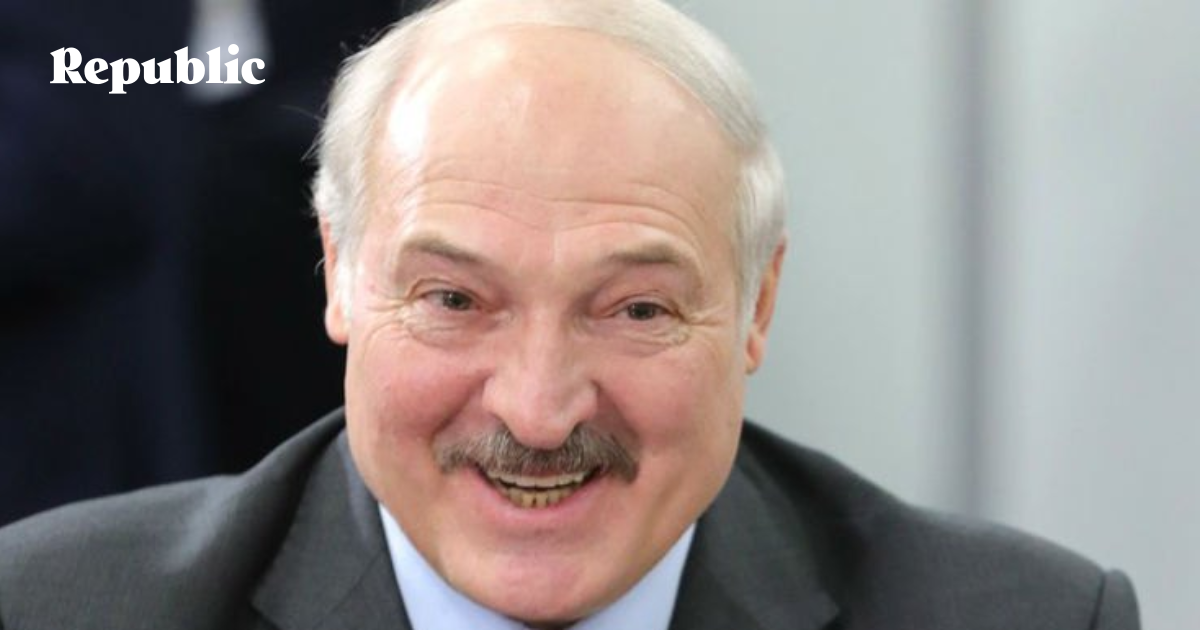
Belarus for Russians is closer than a neighbor, because without five minutes a part of the Union State, which has been formed and formed since 1998, but has not been designed. Well, what if? Suddenly the real unification of our countries will still take place? Therefore, the interest of our countries does not fade away with each other. Moreover, during periods of shocks such as the next election of President Lukashenko.
At a recent meeting with Russian Prime Minister Mikhail Mishustin, Lukashenko formulated this proximity as follows:
“As for our relations, you should know that we are not going anywhere, as some try to imagine Belarus ... We are on this piece of land. She has always been close and dear to the Russian person, Russian, she will always remain like this, even if we will not want to: peoples without us will figure out how to live. But I would like to be present in this process. ”
Russia and Belarus look at each other as in a mirror. Despite the huge differences: in the territory, population, the presence of nuclear weapons and large mineral reserves in one country and there are no more in common - they have much more in common. And the most important common feature is the irremovability of the authorities based on power structures. We know a lot about how this happened and exists in Russia, let's see how this happens in Belarus.
Infliance in Belarusian
Alexander Grigoryevich Lukashenko was elected President of the Republic of Belarus in 1994. For 26 years he has been holding this post. And he intends to get to him once again in August 2020. The secret of his electoral success is simple to genius - he puts all his real competitors in prison, therefore, if during the life of Lukashenko (and he has excellent health in his almost 66 years), the change of power will happen, then not as a result of the elections.
If Putin literally dragged the senior comrades into power, then Lukashenko made his way himself, using his personal qualities: cunning, the ability to maneuver, capture the mood of the majority, adapt to the situation, and depict a “person from the people”.
By education, the historian, according to the experience of the political worker, in the late 80s, Alexander Lukashenko took the post of director of the Gorodets state farm in the Mogilev region, where he was one of the first to introduce a new management method-a rental consecutive-and became the hero of newspaper publications. In 1990, he was elected as a deputy of the Supreme Council of the BSSR, having held his election campaign under the slogan "to save the village from extinction." In the Supreme Council, Lukashenko did not join any ideological wing and took the position of the “truth -to -house for all the good”, which turned out to be the most profitable. At first, he violently criticized the nomenclature, party leaders and the Soviet economic system, which, according to him, demanded market reforms. Then he turned 180 degrees and also began to violently criticize the privatization, scold the transition to the market, which, in his opinion, was the main cause of corruption, and advocate for "creating a single state with the former republics of the USSR, primarily with Russia." In general, he always “kept his nose in the wind”, sensitively capturing the mood of the population.
Subscribe to read the whole
Make a subscription Redefine.media to read Republic
Subscribe [you can pay for a Russian or foreign card. The subscription is extended automatically. You can unsubscribe at any time.]
Where are the money subscribers going